REVIEW · YANGON
Yangon Heritage Walks
Book on Viator →Operated by Asian Tour Myanmar · Bookable on Viator
Yangon can feel like a blur on your first day. This 2-hour express heritage walk helps you get your bearings fast with colonial buildings, history talk, and smart photo stops. I especially like the focus on the colonial core and streets like Pansodan Street, plus the way an English-speaking guide turns landmarks into real stories you can use while you explore on your own. The only real catch is it’s short—so you’ll mostly view key sites from the outside rather than settle in for hours.
In my experience style, this is the kind of tour that’s good value because it trades a bit of depth for real momentum. You’ll cover the highlights at a walking pace with a small group—maximum 15—so you can ask questions without shouting over everyone. If you’re the type who wants to linger at every corner, plan a little extra time before or after.
In This Review
- Why this walk works so well
- Key highlights I’d circle on your map
- Getting oriented: an express route you can actually finish
- Yangon City Hall: the “center of the colonial city” start
- The High Court: architecture you can read if someone points it out
- Pansodan Street: where colonial buildings turn into real photo lessons
- Hla Day shop: shopping with a purpose, not a hard sell
- How long is the tour, and where does it end?
- Price and value: what $25 buys in real sightseeing time
- Who should book this Yangon Heritage Walk?
- What I think makes the guide experience special
- Weather and pacing: the two realities to plan around
- Should you book Yangon Heritage Walks?
- FAQ
- What is the duration of the Yangon Heritage Walks tour?
- What time does the tour start?
- Where is the meeting point?
- How many people are in the group?
- What’s included in the price?
- What are the main stops on the route?
- What happens if weather is poor?
Why this walk works so well
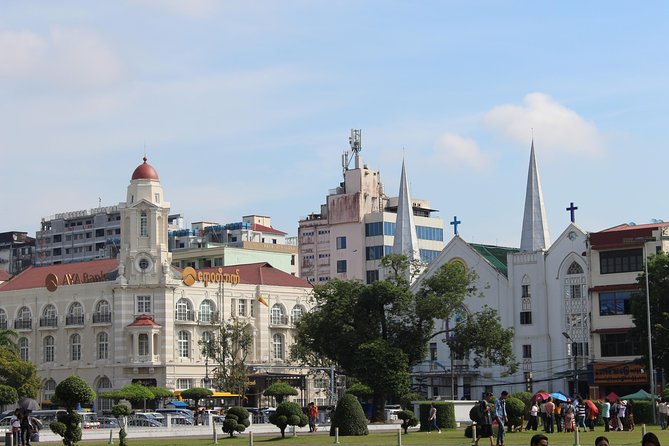
You’re not just ticking off famous buildings. You’re learning how Yangon grew into Myanmar’s largest city and former capital, and why that history still shows up in architecture and everyday habits. You also get a practical endpoint at Nanthida Harbor, which can help you plan the rest of your day once the tour winds down.
A great bonus: the guide led beyond the usual script in at least one case when people had lots of questions. That flexibility makes the experience feel more personal, not like a rushed checklist.
Key highlights I’d circle on your map
- Pansodan Street colonial photo stops that are perfect for quick framing and learning
- Yangon City Hall and nearby former Rowe & Company history in one stop
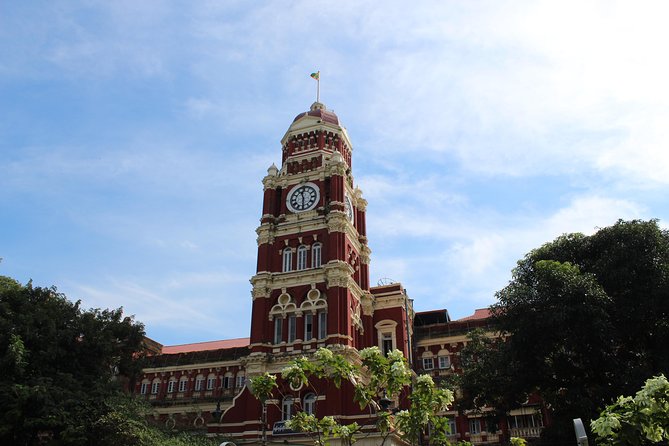
- High Court architecture details from the 1911 brick-era design
- Small-group experience (max 15) so questions stay easy
- Hla Day shop visit at a non-profit social enterprise for quality local crafts
Getting oriented: an express route you can actually finish
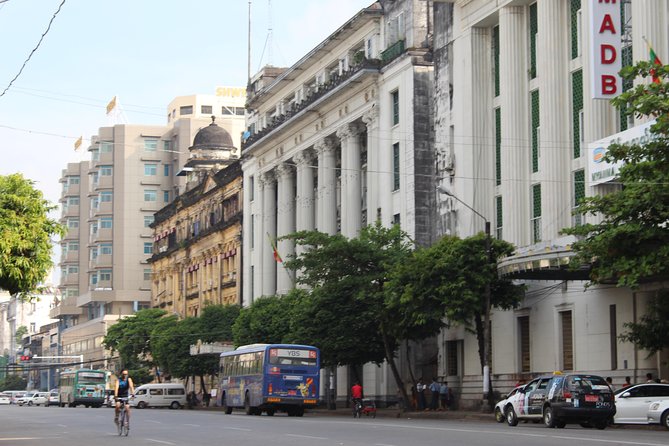
This is an “see a lot, learn a lot” walking tour. In about two hours, you’ll move through the colonial-era heart of Yangon and stop often enough to take photos without feeling like you’re sprinting. It’s timed for first-day planning, especially if you’re short on time or you want a clean starting point before going deeper on your own.
The route is built around landmarks that are close together in feel and theme: government buildings, official-looking architecture, and the kinds of streets where style and power used to be front-and-center. That makes it easier for you to remember what you saw, because your brain connects similar buildings right away instead of spreading them across the whole city.
And because it’s a small group, you avoid the usual crowd chaos. You can ask questions, and you’re not stuck staring at the back of someone’s hat all day.
Yangon City Hall: the “center of the colonial city” start
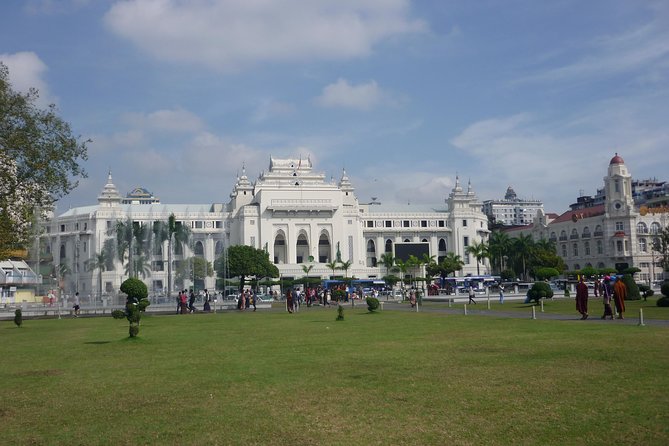
The tour kicks off at Immanuel Baptist Church (opposite side of Yangon City Hall). The meeting spot is right by Maha Bandula Park St, with coordinates listed as Q5F6+J59, so it’s workable whether you’re navigating by phone or simply following street landmarks.
From there, you start at Yangon City Hall, described as being at the heart of the colonial-era city. Even if you’ve only just arrived, City Hall is a smart first stop because it sets the tone: this is where civic Yangon shows itself through architecture.
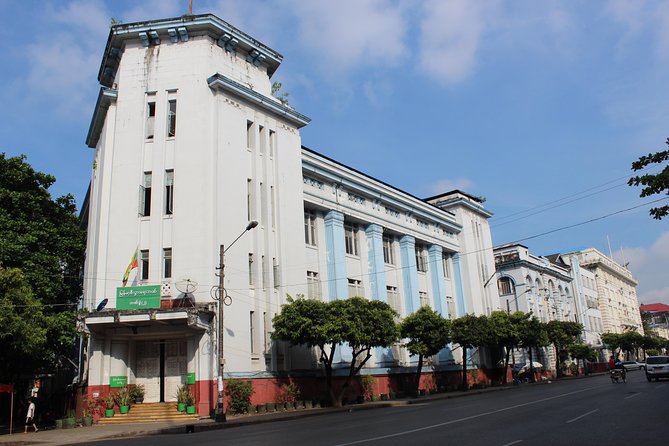
There’s also nearby context that helps you connect dots. The former Immigration Department building is mentioned as having been designed in 1910 to become the country’s most upmarket department store, Rowe & Company. That kind of detail matters because it reframes the building. It stops being a random facade and becomes a clue to how trade, migration, and administration shaped the city.
One small consideration: since the tour is an express format, you’ll want to keep your pace steady and stay ready to move. If you’re slow on the legs, bring that up early or plan a slower day around it.
The High Court: architecture you can read if someone points it out
After City Hall, you head to the High Court, a 1911 brick building designed by architect John Ransome. On a self-guided walk, you might glance at it and think: big old building, government vibes, done. With a local guide, you get the kind of explanation that lets you “read” the structure as part of a bigger story.
I like this stop because it’s a change of pace. City Hall gives you civic energy. The High Court adds a different mood—more formal, more rule-based, and more connected to how colonial administrations tried to project permanence.
You’ll also get a rhythm to the walk: stop, look, listen, take a photo, then move on. That structure is perfect for people who want to learn but don’t want to schedule a full half-day sightseeing block.
Pansodan Street: where colonial buildings turn into real photo lessons
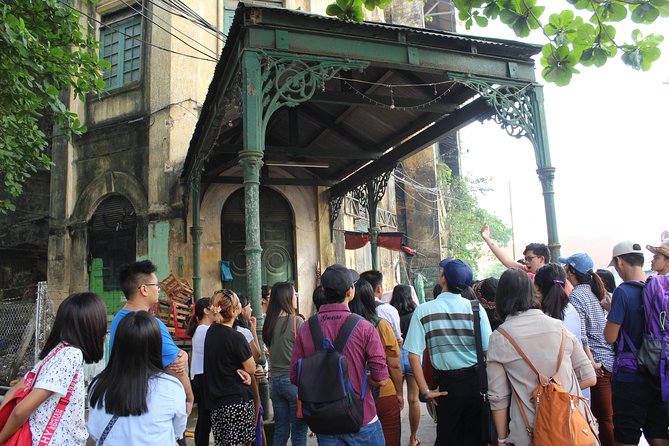
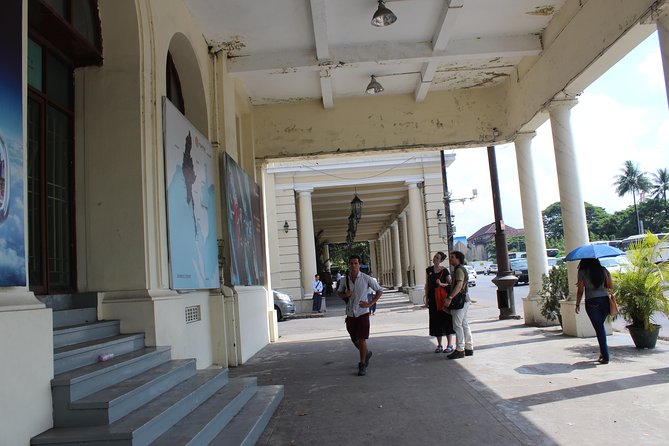
One of the most fun parts of this tour is the stretch along Pansodan Street. This is where the colonial buildings start stacking up in your view, and the guide’s job becomes easier: you can learn while you’re actively comparing facades.
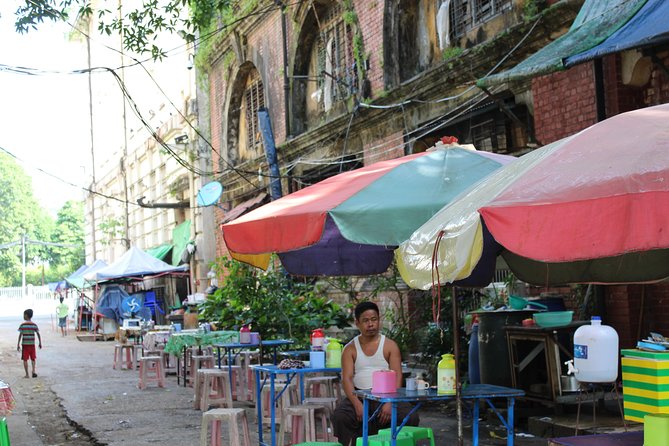
The tour includes plenty of photo stops here, which is a big deal. Yangon’s streets can be visually intense—signboards, traffic, scooters, people moving fast. Photo stops help you slow down long enough to notice details, like building style differences and street-level character.
Pansodan also works as a cultural connector. Even if you’re not an architecture nerd, you’ll get why this area feels like a time capsule. The city’s modern life is happening right next to older forms, and you learn how those layers coexist.
Practical tip: bring your best walking shoes. Two hours doesn’t sound long, but you’re covering ground on uneven sidewalks and you’ll probably stop more than you think you will.
Hla Day shop: shopping with a purpose, not a hard sell
After the architectural hits, you get a final thematic stop at Hla Day. It’s described as a non-profit social enterprise shop, and it’s where you can browse traditional handicrafts.
This is a smart place to visit because it shifts the focus from buildings to people and work. You’re seeing how local crafts connect to livelihoods, not just buying souvenirs as objects. If you care about what your money supports, this stop gives you a more thoughtful option than a random market stall.
You can browse at your pace, ask questions, and look for items that feel genuinely local rather than mass-produced. The tour frames this as a quality stop, so it’s less about pressured shopping and more about giving you an easy entry point into Yangon’s craft scene.
How long is the tour, and where does it end?
The tour runs for about 2 hours. Start time is 9:00 am, which is helpful if you want cooler conditions for walking and photos.
Your meeting point is in front of Emmanuel Baptist Church (the tour notes this as the start) at the address area near Maha Bandula Park St. The end point is listed at Nanthida Harbor. That end location can be convenient if you plan to keep exploring by heading toward the harbor area next, or simply if you want your walking day to finish somewhere with options.
Also: confirmation is received at booking, and the tour uses a mobile ticket. If you’re traveling with limited connectivity, that’s one less headache.
Price and value: what $25 buys in real sightseeing time
At $25 per person for an about-2-hour guided walk, this is priced like a value-oriented city introduction. You’re paying for three things: a guide who can explain what you’re seeing, a route that hits major landmarks efficiently, and photo-stop pacing that prevents you from rushing through without context.
If you’re sightseeing on your own, you might spend similar money on transport and then still miss the “why” behind places like City Hall, the High Court, and the Rowe & Company reference tied to the former Immigration Department building. Here, the guide gives you that connective tissue in a compact timeframe.
Is it the cheapest thing in town? Maybe. But it’s also not trying to be a bargain-basement street walk. The quality here is the structure: you get the city highlights without having to plan them like a full-day itinerary.
Who should book this Yangon Heritage Walk?
This tour fits best if:
- you’re visiting Yangon for the first time and want a quick orientation
- you like photo stops with actual information behind them
- you prefer a small group where questions are easy
- you have a tight schedule and still want culture, not just photos
It may not be ideal if you love slow travel and want to sit with a building for an hour. This is an express format. You’ll walk, look, learn, and move. Then you’ll be ready to explore more deeply afterward.
What I think makes the guide experience special
A recurring theme from the experience style is that the guide doesn’t just recite facts. One review specifically mentions the guide So men as having a strong grasp of the subject, and the walk ran longer because there were lots of questions across different topics. That’s a good sign for you: it means the guide can adapt to your curiosity instead of forcing everything into a rigid timetable.
The tour also includes an English speaking guide, which is a real quality-of-life factor in Yangon, where street signs and local context may be harder to interpret quickly.
Weather and pacing: the two realities to plan around
This tour is noted as requiring good weather. That makes sense because you’re mostly outside, walking and stopping along the route. If rain or heavy heat is in the forecast, expect a reschedule or refund option, since poor weather can cancel the experience.
In terms of pacing, the duration is short and the group size is capped. That helps the experience feel organized, but it also means you’ll want to stay ready to move at each stop. Bring a bottle of water if you like, wear comfortable clothes, and keep your day flexible.
Should you book Yangon Heritage Walks?
Yes, if you want a smart first-day introduction to Yangon’s colonial core. For $25, you get a tight route, a real English-speaking guide, and stops that cover both architecture and cultural shopping at Hla Day. It’s the kind of tour that can save you from wandering for hours without direction.
Skip it only if you’re expecting long interior visits or a slow, in-depth museum-style pace. This is a walking overview that helps you build a mental map quickly—then you can choose what to revisit with more time.
If you like learning while you walk, this is a solid bet.
FAQ
What is the duration of the Yangon Heritage Walks tour?
The tour lasts about 2 hours.
What time does the tour start?
The start time is 9:00 am.
Where is the meeting point?
The meeting point is in front of Emmanuel Baptist Church (opposite Yangon City Hall), near Maha Bandula Park St, Yangon.
How many people are in the group?
The group is limited to a maximum of 15 travelers.
What’s included in the price?
You get an English speaking guide. The tour also notes that the admission ticket is free.
What are the main stops on the route?
The tour covers Yangon City Hall, the High Court, stops along Pansodan Street, and a visit to Hla Day. It ends at Nanthida Harbor.
What happens if weather is poor?
If the tour is canceled due to poor weather, you’ll be offered a different date or a full refund.