REVIEW · YOGYAKARTA
Yogyakarta: Night Culinary and Heritage Private Walking Tour
Book on Viator →Operated by Journeast Indonesia Tour and Travel · Bookable on Viator
Night markets can feel intimidating. This Yogyakarta night culinary and heritage walk turns the chaos of the streets into an easy route with food stops, stories, and local games, and I like that it’s guided by an English-speaking guide. I also like the focus on real local comfort food, especially Nasi Gudeg, plus a spread of snacks and dinner that fit the night market rhythm.
One thing to plan for: it’s a night walking tour, and the experience requires good weather—if conditions are poor, your timing may shift or you’ll be offered a refund.
In This Review
- Key highlights you’ll feel on the ground
- A Yogyakarta night food walk that starts with the streets, not a museum
- Price and value: $30 with dinner, water, and local transport
- Getting oriented at Tugu Yogyakarta Monument
- Jalan Malioboro at night: first tastes and street-performance energy
- Southern City Square and Alun-Alun Kidul: where the stories happen
- Nasi Gudeg and the rest: what to expect from the night-food spread
- How the guide shapes everything: Dora, Krisma, and Yuni
- Riding the night with becak/pedicab/tuk-tuk and bicycle help
- Ending at Plengkung Gading: how to plan your last hour
- Who should book this night culinary and heritage tour
- Should you book this tour?
- FAQ
- How long is the Yogyakarta night culinary and heritage private walking tour?
- Is this a private tour or a group tour?
- What’s included in the price?
- Where do we meet and where does the tour end?
- Does the tour run in bad weather?
- Can the guide accommodate vegetarian requests?
- What is the cancellation policy?
Key highlights you’ll feel on the ground
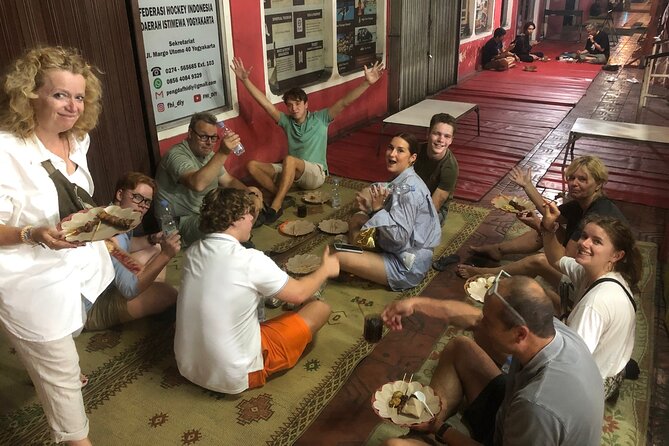
- A private-group pace so you move together through Yogyakarta at night, not with a big bus crowd
- Nasi Gudeg and night-market bites built into dinner and snacks, not treated as a side quest
- Alun-Alun Kidul stories and traditional games that explain why the square matters beyond photos
- Multiple transport options included (becak/pedicab/tuk-tuk) and a bicycle when needed to keep it comfortable
- From Malioboro to Plengkung Gading with local guidance for where to go next after the tour ends
A Yogyakarta night food walk that starts with the streets, not a museum
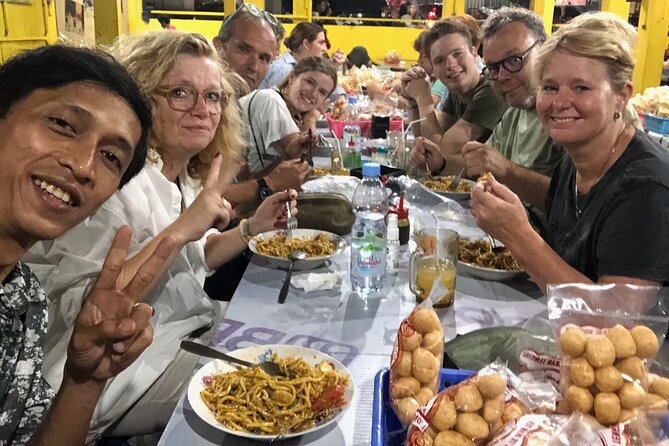
Yogyakarta is famous for heritage, but nights are when the city feels most personal. The streets around Malioboro and the central squares aren’t quiet for sightseeing. They’re alive with music, performers, and the constant flow of people grabbing dinner, snacks, and sweet treats.
This tour is built for that reality. You’re not just walking from point A to B. You’re following a route that uses the night energy as part of the experience, then anchors it with cultural context at Alun-Alun Kidul. If you want something more than photos, this format helps you understand what you’re seeing while you’re eating it.
You can also read our reviews of more tours and experiences in Yogyakarta.

Price and value: $30 with dinner, water, and local transport
At $30 per person for about 3 hours, the value comes from what’s included. You get dinner, snacks, and bottled water, plus an English-speaking guide. You’re also covered for becak/pedicab/tuk-tuk and use of a bicycle, which matters because Yogyakarta’s evening areas can feel longer on foot than you expect.
Another good value signal: the core stops in the route are with free admission. That means you’re paying for people, timing, and food—not entry fees and ticket lines. In a city where you can easily spend more money just trying to find the right stall, a guided route helps you keep your evening focused.
Also, this is a private tour/activity, meaning only your group participates. If you’re traveling as a couple, friends, or solo, you’re more likely to get the pacing and conversation you want rather than fighting for space.
Getting oriented at Tugu Yogyakarta Monument
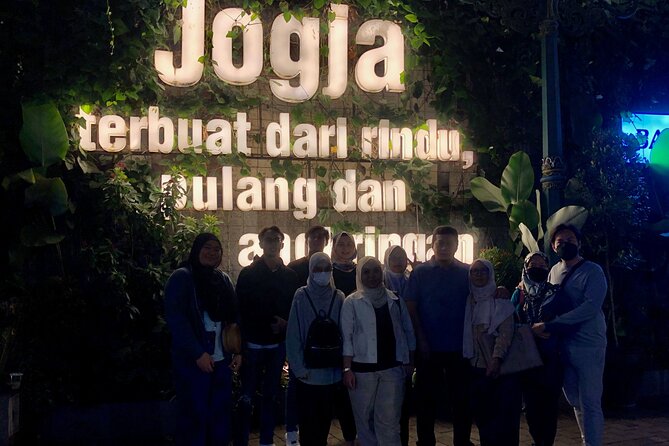
Your tour begins at the Tugu Yogyakarta Monument area. This is a smart meeting point because it’s a well-known landmark and easy to orient yourself with once you step out into the night.
From there, the plan is paced for an evening stroll, roughly 3 hours total. That’s long enough for multiple food stops and cultural storytelling, but short enough that you won’t feel trapped in your seats waiting for the group to move.
If you’re the type who likes to arrive ready, this is where you’ll appreciate having a guide immediately. You don’t have to guess which lanes to cross or where the best street-food energy is concentrated.
Jalan Malioboro at night: first tastes and street-performance energy
Jalan Malioboro is Jogja’s main downtown street, and at night it shifts into a different mode. This is where the city’s street atmosphere takes over—music in the air, performers nearby, and crowds moving like they’ve done this a thousand times.
The tour starts by letting you get your bearings in a way that feels natural: you’re walking where people actually hang out, and you’re tasting along the way. In the reviews, I kept seeing the same theme: guides don’t just point. They guide. Guides like Dora and Krisma were described as fun and flexible, with enough humor and context to make you feel comfortable even if it’s your first time in Indonesia.
There’s also a practical benefit to beginning with Malioboro: you learn the rhythm of the night market before you go to a more story-heavy stop. You’ll likely notice how stalls and snack runs work, how people order, and what kinds of foods show up repeatedly. That makes the next parts feel less like wandering and more like a guided discovery.
And yes, there’s food here—more than one bite, not just a single sample. One review specifically mentioned sampling a range of sweets, which tells you this isn’t only about savory dishes.
Southern City Square and Alun-Alun Kidul: where the stories happen
The tour’s second major stop centers on an alun-alun, the large open lawn square found across Indonesia. In modern-day Yogyakarta, this idea connects especially to the two big open squares connected to kraton palace compounds—so these places aren’t random public plazas. They’re tied into the city’s layout and meaning.
At Alun-Alun Kidul, your guide shares why the square matters culturally and why it has a strong reputation tied to stories that people still talk about. This is the part of the tour where you slow down a bit mentally. You’re not just tasting food and walking. You’re understanding how public space shapes local life.
A key hands-on element: you try traditional games and watch street performers. That matters because it turns “heritage” into something you do, not something you read. Even if you’re not sure you’ll enjoy games, the cultural explanations make it easier to participate with confidence.
Time here is generous—about 1 hour 30 minutes—which is also important. You’ll want that breathing room because squares like this are active. If you only had 20 minutes, you’d miss both the explanations and the playful moment.
Nasi Gudeg and the rest: what to expect from the night-food spread
If you do just one thing in Yogyakarta food culture, it’s smart to start with Nasi Gudeg. It’s a local dish where jackfruit stew is served with rice, usually alongside additional traditional sides and snacks. This tour builds the meal structure around that idea, so you’re not left hunting for it after the tour ends.
Beyond Gudeg, you can expect a range of traditional snacks and Indonesian dishes that fit the night-market flow. The reviews reinforce variety—one person highlighted learning and tasting a “wide array,” while others pointed to multiple stops for sweets and local specialties rather than one large plate at a single stall.
If you have dietary needs, this tour may still work. One review noted the guide handled a vegetarian request without fuss. That’s a helpful sign, but I’d still treat it as a best-case scenario: tell your guide clearly ahead of time so they can plan accordingly.
How the guide shapes everything: Dora, Krisma, and Yuni
On a night walking tour, the guide is the difference between a fun evening and a confusing one. Here, guides named in the feedback stood out for the same reasons: personality, flexibility, and clear explanations.
- Dora was praised for being fun, flexible, and informative. In a city where you can easily feel awkward asking questions, this kind of guide makes it easy to relax.
- Krisma showed up repeatedly as a strong anchor for safety and confidence. One solo traveler (first time in Indonesia) said she was nervous about exploring at night alone, and Krisma felt like the perfect companion through Malioboro and night market areas.
- Yuni was described as generous and very friendly, sharing stories while taking guests through local food. Another review highlighted a wide culinary range under Yuni’s guidance.
There’s also a deeper “why” element in the stories. Multiple comments mentioned learning about Java and Yogyakarta, not just collecting snacks. One review even referenced a culinary-style explanation of Indonesia, which is a reminder that food tours can be educational without becoming a lecture.
If you love asking questions mid-meal—where this dish comes from, why the city does it this way—this guide-led format is where you’ll get your answers.
Riding the night with becak/pedicab/tuk-tuk and bicycle help
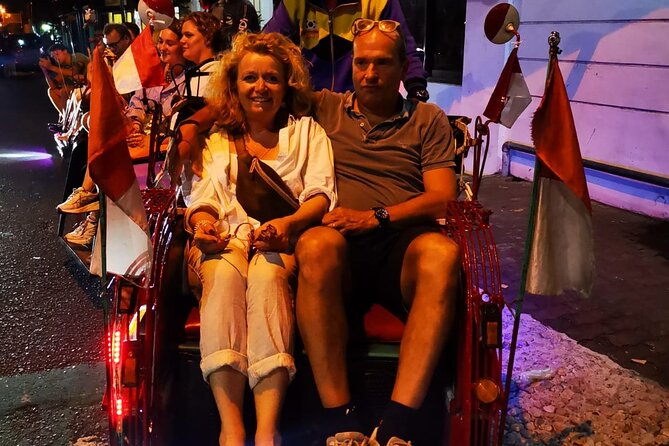
Even when a tour is called a walking tour, smart logistics still matter. This one includes becak/pedicab/tuk-tuk and also offers use of a bicycle, which helps break up distance and keep the evening comfortable.
Why this matters: when you’re moving around after dark, the worst part isn’t just walking. It’s unpredictable traffic, crossing roads, and losing time to getting turned around. Short rides and a bicycle option can reduce that friction while still keeping the experience street-level.
Think of it as balance. You’re not stuck pacing in a straight line for three hours, but you also aren’t stuck in a car with no sense of the city.
Ending at Plengkung Gading: how to plan your last hour
Your tour ends at Plengkung Gading. That’s great because you finish in a spot tied to the local area you’ve been exploring, but it also means you’ll want a simple plan for getting back.
The good news: your guide will help you get back by ordering a taxi or using other public transport. That support helps if you’re tired, hungry, or just trying to keep your night stress-free.
If you’re trying to coordinate a later dinner or a hotel check-in, I’d treat this end point as a reset. Once the tour wraps, you’ll likely feel like you’ve got a clearer sense of where you are in Jogja, which makes the next steps easier.
Who should book this night culinary and heritage tour
This tour fits best if you want a guided route through Jogja’s night food culture without the guesswork.
You’ll probably love it if:
- You’re a first-timer who wants a safe-feeling introduction to Malioboro after dark
- You want street food with context, not just a list of dishes
- You like having an English-speaking guide who can explain what you’re eating and seeing
- You travel as solo, couples, or a small group and prefer private pacing
You might skip it if:
- You hate walking at night or have a hard time with uneven street conditions
- Your schedule is too tight to absorb a ~3-hour evening plan
- You’re traveling during a period where weather may be unstable (the experience requires good weather)
For food lovers, the Nasi Gudeg focus is a big selling point. For culture lovers, Alun-Alun Kidul’s stories and traditional games do the heavy lifting.
Should you book this tour?
Yes, if you want an evening that mixes Yogyakarta street food with cultural meaning and a guide who’s described as fun, flexible, and supportive. The included dinner, snacks, water, plus transport help make the $30 price feel practical rather than pricey.
It’s also a smart move if you’re worried about handling a night market on your own. A private-group guide can turn nerves into confidence fast—especially around busy downtown areas and open squares where it’s easy to feel like you’re just passing through.
If weather is a question for your dates, keep a close eye on conditions. When the night goes well, this is the kind of tour that leaves you with more than full stomachs—you’ll remember the stories tied to the places you ate.
FAQ
How long is the Yogyakarta night culinary and heritage private walking tour?
It runs for about 3 hours.
Is this a private tour or a group tour?
This is private. Only your group participates.
What’s included in the price?
The tour includes dinner, snacks, bottled water, an English-speaking guide, and local transport options (becak/pedicab/tuk-tuk), plus use of a bicycle.
Where do we meet and where does the tour end?
The meeting point is at Tugu Yogyakarta Monument. The tour ends at Plengkung Gading, and your guide can help you arrange your return to your hotel.
Does the tour run in bad weather?
The experience requires good weather. If it’s canceled due to poor weather, you’ll be offered a different date or a full refund.
Can the guide accommodate vegetarian requests?
In at least one past experience, the guide managed a vegetarian request without fuss. You should share dietary needs ahead of time so the guide can plan accordingly.
What is the cancellation policy?
Free cancellation is available up to 24 hours in advance for a full refund. If you cancel less than 24 hours before the start time, the amount you paid is not refunded.