REVIEW · PHILADELPHIA
2.5 Hour Philadelphia History Tour with Washington War Tent Show
Book on Viator →Operated by WeVenture · Bookable on Viator
History in Philly hits different on foot. This 2.5-hour small-group walk strings together Revolutionary-era landmarks in Philadelphia’s Old City, then adds an indoor stop at the Museum of the American Revolution to see George Washington’s war tent during the war. You’ll start at Signer’s Garden, move through Independence National Historical Park, and finish in the Old City area with key sights that shaped the country.
I like two things a lot: the small group size (up to 12), which keeps the pace human and questions welcome, and the fact that the tour includes the museum presentation inside the Museum of the American Revolution—not just a quick pass-by.
One consideration: a lot of the most famous buildings are viewed from the outside, so if your dream is deep interior exploring of every site, you may want to plan extra time on your own.
In This Review
- Key highlights you’ll actually feel on this tour
- Starting at Signer’s Garden and The Signer statue
- Independence National Historical Park: Independence Hall, Congress Hall, Old City Hall
- Liberty Bell Center: history, context, and the myth correction
- Carpenters’ Hall: where Pennsylvania’s government story gets real
- Museum of the American Revolution: the included George Washington war tent moment
- Elfreth’s Alley, Betsy Ross House, Franklin’s Grave, and The President’s House
- Elfreth’s Alley: the oldest continuously occupied residential street
- Betsy Ross House: pass by, then sort the myths
- Benjamin Franklin’s Grave: a quiet moment on Arch Street
- The President’s House: Washington and Adams, plus archaeology and slavery
- Walking tour mechanics: how 2.5 hours fits so many stops
- Price and value: what $45 buys you in real terms
- The guide factor: why names like Tom, PJ, Adam, Maria, and John matter
- Should you book this Philadelphia history walking tour?
- FAQ
- How long is the 2.5 Hour Philadelphia History Tour?
- How much does the tour cost?
- Where does the tour start and end?
- What’s included in the price?
- Do I get into the Museum of the American Revolution?
- Is the tour in English and how big is the group?
- What if I need to cancel?
Key highlights you’ll actually feel on this tour
- Small-group pacing in 2.5 hours: enough time for context without turning into a sprint
- Independence National Historical Park basics done right: Independence Hall, Congress Hall, and Old City Hall with clear takeaways
- Myth-busting at Liberty Bell Center: learn the history and the corrections, not just the famous photo spot
- George Washington’s War Tent presentation included: the “what it looked like” moment you can’t get from the sidewalk
- Old street + founding lore combo: Elfreth’s Alley alongside Carpenters’ Hall and other founding locations
- Stop selection matches first-time Philly needs: you get a smart overview with options to return later
Starting at Signer’s Garden and The Signer statue
You begin at Signer’s Garden at the statue called The Signer (434-498 Chestnut St). It’s a strong opening because it reframes what comes next: these aren’t just buildings. They’re ideas—freedom, representation, and the founding documents made by real people with real pressure on their shoulders.
Your guide uses this starting point to connect the Declaration and the Constitution to the rest of the day. That matters, because once you understand what those signers were trying to create, the stops around Independence Hall make more sense instead of turning into a checklist.
Tip: arrive a few minutes early so you’re not rushing once the tour starts. This route is easy to find once you’re on Chestnut, but it’s still Old City—streets are narrow and people get in your way if you stroll in late.
You can also read our reviews of more tours and experiences in Philadelphia.

Independence National Historical Park: Independence Hall, Congress Hall, Old City Hall
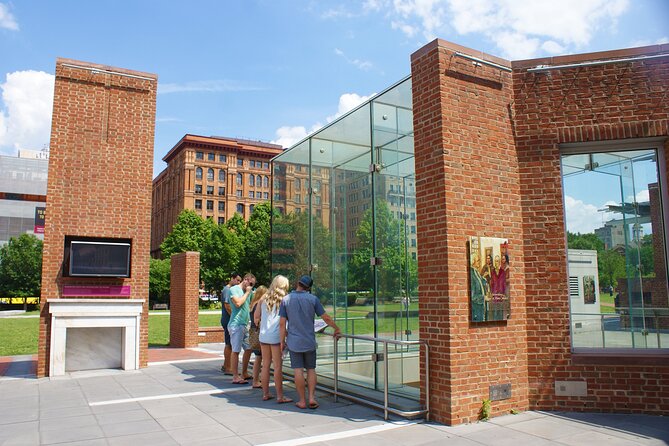
Most of the tour’s big-picture value comes from how it walks you through Independence National Historical Park. The structure is simple: your guide points out the major historic buildings, then explains why they mattered to the birth of modern American government and civic life.
You’ll spend time seeing:
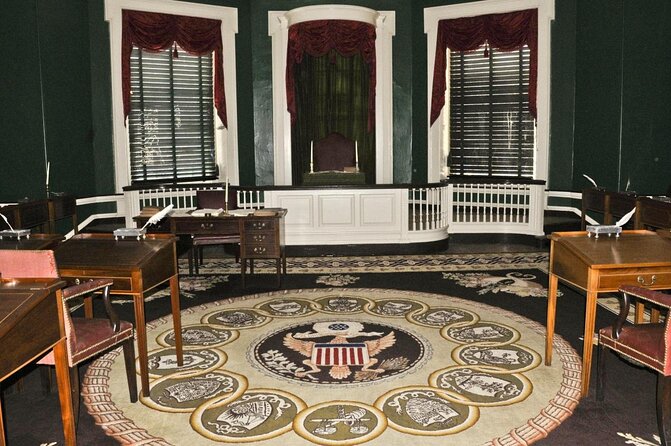
- Independence Hall from the outside, including the surrounding area where you can encircle and understand the setting around the founding work. It’s a quick look, but it’s timed so you’re not distracted by crowds or trying to puzzle it out yourself.
- Congress Hall, one of the adjoining buildings, where the U.S. Congress originally met.
- Old City Hall, where the stories shift from the founding era into how democracy continued to take shape in Philadelphia.
A key detail: this tour is not positioned as an inside-everything day. Admission to these buildings is listed as not included, so you’re meant to learn from the street-level perspective—what each building represented, what decision-making looked like, and how Philadelphia became a global model for democratic change.
If you love learning through explanation (rather than just audio-only apps), this part is where the tour earns its keep.
Liberty Bell Center: history, context, and the myth correction
Next up is Liberty Bell Center. This stop is short, but it has one job: get you past the postcard version of the Liberty Bell and into how it became a symbol used by different movements over time.
The tour also flags common myths. That’s useful because Liberty Bell stories are everywhere, and not all of them are accurate. With a guide, you get the real timeline and what the bell stood for as the country changed.
One practical note: the stop is without included admission, so don’t plan on getting an inside photo. The payoff here is the storytelling and understanding what the bell represented, not the venue experience.
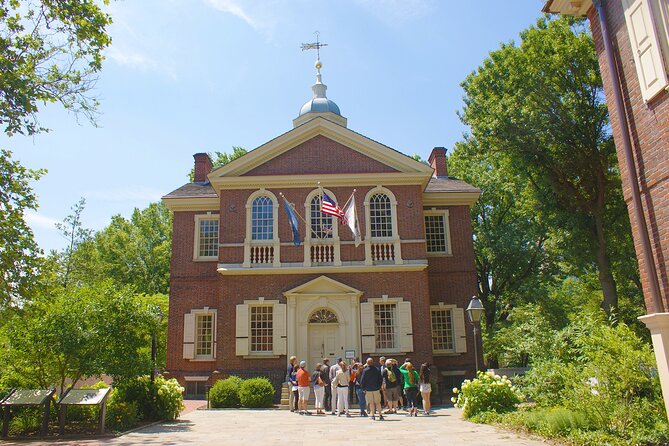
Carpenters’ Hall: where Pennsylvania’s government story gets real
Then you swing to Carpenters’ Hall. This is a fascinating stop because it connects the founding story to Pennsylvania’s own early power structure.
From the outside, you’ll hear how Carpenters’ Hall relates to:
- the Commonwealth of Pennsylvania being founded there
- the importance of the first Continental Congress taking place there
Even though you don’t go inside on this tour, you get enough framing to understand why this building belongs in the same conversation as Independence Hall. It’s one of those spots where the city’s political evolution feels concrete instead of abstract.
Museum of the American Revolution: the included George Washington war tent moment
Here’s the tour’s signature inside stop: the Museum of the American Revolution. The museum is newer than most of the street-side sites, and it changes the mood from outdoor legend to artifacts, interpretation, and tangible Revolutionary-era details.
You’ll go inside for a presentation featuring George Washington’s War Tent—the tent used during many critical moments of the war. This is the part you’ll remember because it’s visual and grounded. It answers questions your brain always has when you look at founding sites: What would life have looked like? What did leadership and campaigning feel like?
After the tour, you get a discounted ticket to see the rest of the museum at a time that works for you. That’s smart planning because you’re not forced into a full self-guided museum run when you also want the walking tour context. Do the presentation first, then decide if you want to go deeper.
If you want a day plan: consider using the discount ticket later the same day (or on another day if your schedule is tight). The presentation sets up the museum so you’ll appreciate the rest more.



Elfreth’s Alley, Betsy Ross House, Franklin’s Grave, and The President’s House
After the museum stop, the route shifts into Philly “daily life meets founding story” territory. You’ll cover several widely recognized names and places, but the best part is how the guide uses them to connect myth, people, and place.
Elfreth’s Alley: the oldest continuously occupied residential street
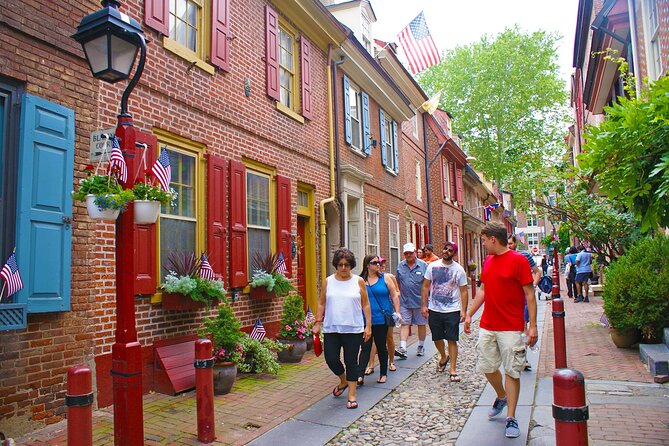
You’ll visit Elfreth’s Alley, recognized as the oldest continuously-occupied residential street in the United States. The guide points out architectural details and the brickwork, narrow homes, and how long this street has kept its identity.
This is more than a cute photo stop. It helps you picture what it meant to live in a city where the founding was unfolding nearby.
Betsy Ross House: pass by, then sort the myths
You’ll pass by the Betsy Ross House, with the tour aiming to correct common stories around Betsy and the first American flag. Even if you already know the basics, having a guide explain what’s supported versus what’s popular helps you leave with a more accurate picture.
Benjamin Franklin’s Grave: a quiet moment on Arch Street
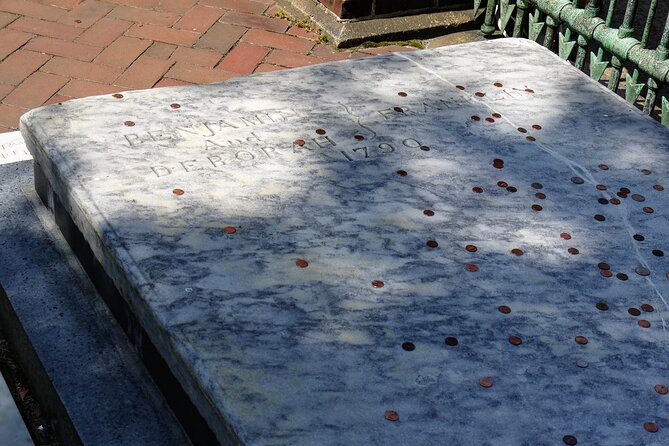
Then you walk past Benjamin Franklin’s Grave while traveling along Arch Street. This is a reflective stop that works well because by the time you hit Franklin, the day is packed with big government moments—and Franklin brings it back to ideas, invention, and practical thinking.
The President’s House: Washington and Adams, plus archaeology and slavery
Near the end, you’ll reach The President’s House area, connected to where George Washington and John Adams lived while President. The tour also notes something important: enslaved people lived at this location, and the site is still an active archaeological area.
This part matters because it keeps the narrative honest. The founding story in Philly isn’t just documents and speeches. It includes the contradictions of the era—and Philadelphia’s physical layers show that up in the ground beneath you.
Walking tour mechanics: how 2.5 hours fits so many stops
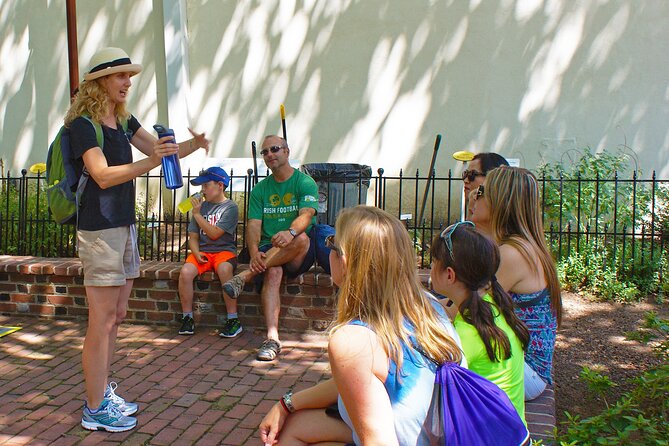
This is a classic “Old City loop” format. You’ll move between sites in a way that’s steady, not frantic, which is where the max 12 travelers limit really helps. The tour timing makes sense too: shorter stops (often around 10 minutes) keep things from dragging, and the museum presentation gets the longer block of time it needs.
Your route also benefits from being close to public transportation, so if your day plan includes other stops, it’s easier to connect the pieces. Service animals are allowed, and the tour is marked as suitable for most people.
What to wear: you’ll be walking on sidewalks around historic districts. Comfortable shoes are the difference between enjoying the stories and feeling annoyed halfway through. Bring a light layer too, since Philly weather can change fast.
Price and value: what $45 buys you in real terms
At $45 per person for about 2.5 hours, this tour works best for people who want a guided, high-impact overview without spending the whole day in ticket lines.
Here’s what’s included that makes the price feel fair:
- a knowledgeable local guide who explains the significance of each landmark
- the George Washington war tent presentation inside the Museum of the American Revolution
- a discounted museum ticket afterward so you can go deeper if you want
- a donation to a local nonprofit historic organization
What isn’t included is also clear: you’re not paying for food, and several major sites are “see from outside” on this specific route. So you’re paying for interpretation, timing, and a focused set of stops—not unlimited building entry.
This tends to be best value if you’re a first-time visitor, have limited time, or want a guided plan that tells you what to come back for later.
The guide factor: why names like Tom, PJ, Adam, Maria, and John matter
One reason this tour earns such a high overall rating is the quality of the human behind the facts. The strongest examples from guide names shared by past participants include Tom, PJ, Adam, Maria Gorshin, and John.
Across those experiences, the themes are consistent:
- Guides keep the stories lively and easy to follow, not lecture-heavy
- They answer questions and adjust if your group wants extra context
- They help kids stay engaged when families are in the group
- Even when some buildings are impacted by outside circumstances, the guide still keeps the day moving with solid learning and recommendations
So if you care about more than just photos—if you want to understand what you’re looking at—this tour’s guide-led style is a big part of the value.
Should you book this Philadelphia history walking tour?
Yes, if you want a smart first pass through Revolutionary Philadelphia. This is ideal for first-timers who want Independence Hall-area context, a real museum moment with Washington’s war tent presentation, and a finish on iconic streets like Elfreth’s Alley.
I would skip it or plan extra time separately if your priority is full interior access everywhere. This route focuses on the meaning behind what you see from the outside, then adds one key indoor experience at the Museum of the American Revolution.
If you have 2–3 hours in your schedule and want a guided storyline you can build on during the rest of your Philly trip, booking is an easy yes.
FAQ
How long is the 2.5 Hour Philadelphia History Tour?
The tour lasts about 2 hours 30 minutes.
How much does the tour cost?
It costs $45.00 per person.
Where does the tour start and end?
The tour starts at Signer’s Garden, 434-498 Chestnut St, Philadelphia, PA 19106, and ends in Old City, Philadelphia.
What’s included in the price?
You get a local expert guide, the George Washington war tent presentation at the Museum of the American Revolution, a discounted entry to the museum after the tour, and a donation to a local nonprofit historic organization.
Do I get into the Museum of the American Revolution?
Yes. The tour includes a presentation inside the museum, and you also receive a discounted ticket to visit the rest of the museum after the tour.
Is the tour in English and how big is the group?
The tour is offered in English, and it has a maximum group size of 12 travelers.
What if I need to cancel?
You can cancel for a full refund if you cancel at least 24 hours in advance. If you cancel less than 24 hours before the experience starts, the amount paid isn’t refunded.