REVIEW · TIRANA
Communist History Tour Tirana & Street Food
Book on Viator →Operated by Good Albania · Bookable on Viator
Communism in Tirana has receipts. This tour links the big political symbols of the communist era with what everyday people actually ate, drank, and walked past, starting in the Bunk’Art 1 bunker museum. I really like the tight flow of stops, and I especially like the way the guide connects buildings and propaganda to real life. One possible drawback: the first stop is in a bunker, so if you’re claustrophobic, this may not be a great fit.
You’ll ride in an air-conditioned minivan, get picked up from your Tirana hotel, and spend the day with a small group (up to 8 people). The pace is long enough to feel like you’re getting the whole story, but not so long that you’re stuck in one place for hours at a time. Expect lots of walking on main streets and squares, with food breaks built in.
In This Review
- Key highlights you will care about
- Why Tirana’s Communist Sites Work So Well in One Day
- Bunk’Art 1: The Bunker Museum That Sets the Tone
- Pazari i Ri Street Food: Qofte, Yogurt Sauce, Chips, Beer
- Skanderbeg Square: Mosques, Clock Tower, and the City’s Main Stage
- Blloku and the Post-Blloku Memorial: Power, Then Memory
- Enver Hoxha Pyramid and Mother Teresa Square: Symbols Up Close
- National Gallery of Art: Socialist Realism and Propaganda, If It’s Open
- Komiteti Bar: Coffee Museum Mood With Raki and Communist Candy
- Price and Logistics: Is $126.16 Good Value?
- Who Should Book This Tour, and Who Might Skip It
- A Quick Word on Guides and What to Look For
- Should You Book This Communist History and Street Food Tour?
- FAQ
- How long is the Communist History Tour in Tirana?
- What’s included in the tour besides sightseeing?
- Do I get admission tickets for the museums?
- Is pickup available from my hotel?
- Is drop-off included at the end of the tour?
- What food and drink will I have during the tour?
- Can children join?
- What if I’m claustrophobic?
- What happens if the weather is bad?
Key highlights you will care about
- Bunk’Art 1: a former nuclear bunker turned museum covering the last 100 years
- Pazari i Ri street food: qofte with yogurt sauce, chips, and beer with lunch included
- Blloku area + Post Blloku memorial: where the regime’s power lived and later the prisoners were remembered
- Enver Hoxha Pyramid: a crumbling former museum with visible layers of time and graffiti
- National Gallery of Art (if available): socialist realist art made for propaganda
- Komiteti Bar: raki tasting plus communist candy during a coffee stop
Why Tirana’s Communist Sites Work So Well in One Day
Tirana can feel like it’s all over the map: modern streets, grand squares, and then sudden reminders of a heavy past. What makes this tour practical is the way it groups the most important communist-era landmarks into one logical loop, so you’re not bouncing around the city on your own.
You’re not just looking at statues. You’re seeing how power tried to control people’s view of reality—through monuments, museums, art, and even neighborhood access. Then you get the human side through food: meatballs with yogurt sauce, chips, pastries, and that raki stop that turns history into a day out, not a lecture.
The tour is also built for comfort: air-conditioned transport, pickup from any Tirana hotel, and a group size capped at 8. That small size matters when you’re navigating short walks and timed entry spaces.
You can also read our reviews of more tours and experiences in Tirana.
Bunk’Art 1: The Bunker Museum That Sets the Tone
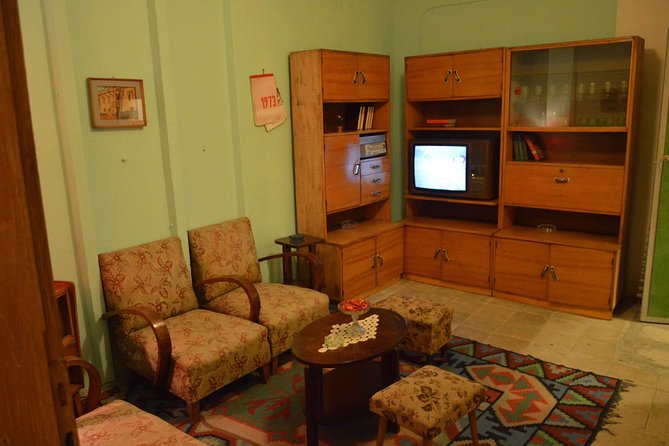
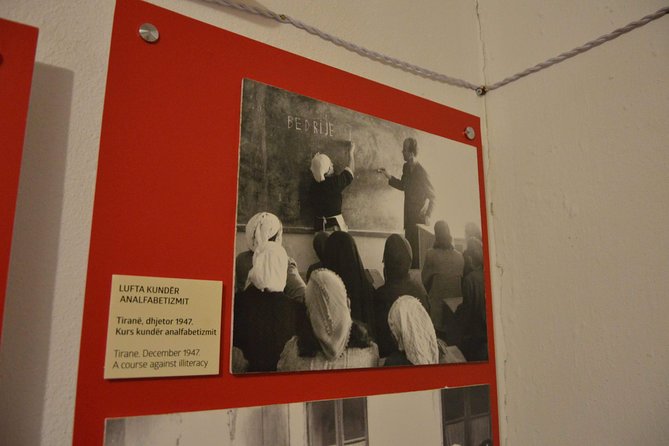
The day begins at Bunk’Art 1, a former nuclear bunker built for dictator Enver Hoxha in case of attack. This is not a light, quick photo stop. Plan for about an hour inside, where you’ll see how the communist era shaped Albania over roughly the last 100 years, with photographs, items, and documents, plus context around the two World Wars and how those eras bled into later politics.
Why this stop matters: the bunker is a physical metaphor. It tells you that the regime expected danger and controlled information accordingly. Even if you only know a little about Albania’s 20th-century story, this place helps you frame what you’ll see later: the slogans, the art style, the monuments, and the controlled zones around leadership.
The main drawback is also the most obvious one. The first stop is in a bunker, and the tour notes it isn’t advisable for people suffering from claustrophobia. If you might have a panic reaction in tight indoor spaces, it’s worth checking with the operator before you book.
Pazari i Ri Street Food: Qofte, Yogurt Sauce, Chips, Beer
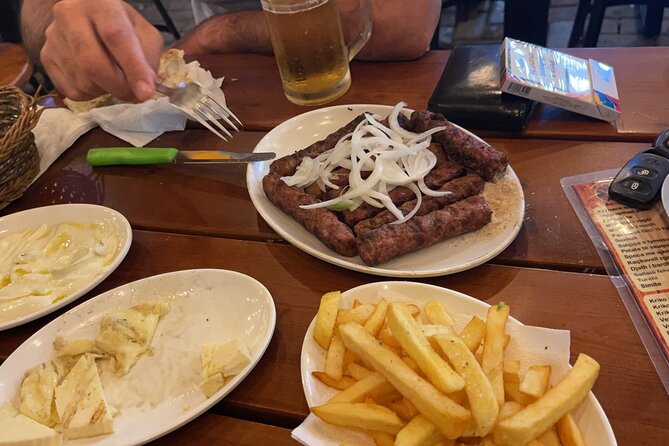
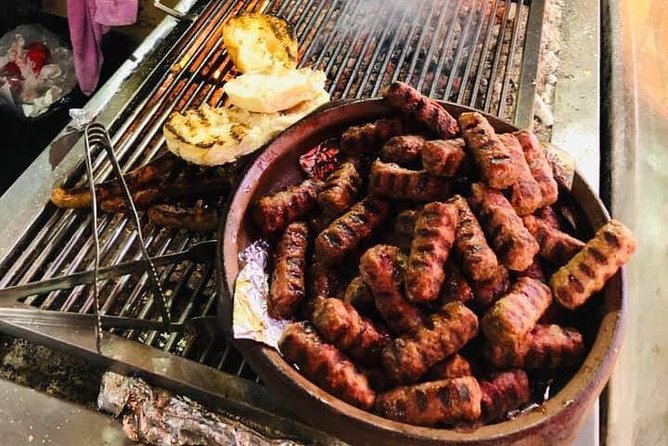
After the bunker, you switch gears fast—in a good way. You head to Pazari i Ri for a street-food-style lunch built around qofte (meatballs). You’ll get them served with yogurt sauce, potato chips, a salad, and it’s accompanied with beer or wine. Raki tasting also shows up later, so this day has several points where the food stops do more than just fill you up.
This is one of the most valuable parts of the whole experience because it’s where the tour becomes genuinely local. In Tirana, street food gives you a “daily life” lens, which is easy to forget when you’re surrounded by political architecture. Meatballs with yogurt sauce and chips might sound simple, but it’s exactly the kind of everyday comfort that makes the political story feel less distant.
Practical note: there’s a minimum drinking age of 18, and the tour includes alcohol options (beer or wine, plus raki tasting). If you’re under 18, this matters. If you’re sober or avoiding alcohol, still go for the food, but you should be mindful that some parts of the menu are tied to adult drink service.
Skanderbeg Square: Mosques, Clock Tower, and the City’s Main Stage
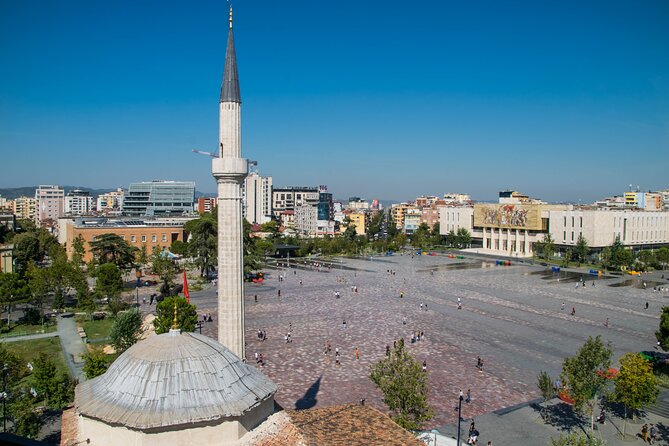
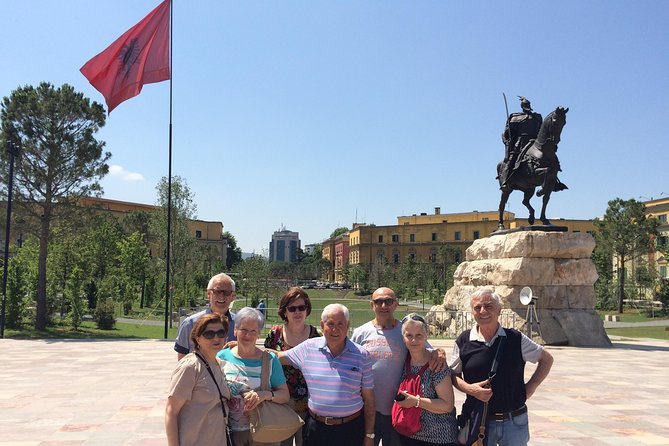
Next comes the city center. You walk toward Skanderbeg Square, where you’ll pass major landmarks around the main square, including Et’hem Bey Mosque and the Clock Tower.
This stop isn’t about entering a building. It’s about learning how Tirana’s identity is layered. Communist-era Albania tried to steer culture through controlled messaging, but the city’s older landmarks still shape the streets people move through today. When you connect that to earlier stops, the square starts to read like more than scenery.
Time is short here—about 30 minutes—so keep your eyes up and your questions ready. A good guide can point out details you’d otherwise miss, like which buildings signal religion and which signal the state, and how the square functions as a public stage. It’s also a good chance to regroup before you head into more politically charged neighborhoods.
Blloku and the Post-Blloku Memorial: Power, Then Memory
One of the most meaningful portions of the day focuses on the Blloku area. This is where the home of Enver Hoxha and other senior regime members was located, an area that was once forbidden to enter. The tour then stops at the Post Blloku memorial, which honors former political prisoners.
This is the kind of stop that makes you slow down. You’re not just seeing “old buildings.” You’re seeing the geography of access—who could go where, and what it cost people when they couldn’t. In many cities, history becomes a statue. Here, history feels more like a lived boundary.
If you like political history, you’ll probably want to ask your guide about how neighborhoods can become symbols. And if you prefer softer history, it still works, because the memorial is about human consequences, not just ideology.
Enver Hoxha Pyramid and Mother Teresa Square: Symbols Up Close
You’ll then see the Enver Hoxha Pyramid, the former Enver Hoxha Museum. What stands out is how time has changed it: its once-white marble walls are now crumbling, with graffiti layered in. A local tour director explains the background, so you’re not left trying to guess what you’re looking at.
Why it works after the bunker and the memorial: the pyramid is another physical metaphor. It was meant to represent authority and control, but it’s now visibly in decay. Even without a long explanation, the building’s current condition communicates a message.
The route also passes by Mother Teresa Square on the south part of the main boulevard. That contrast helps. You go from a communist symbol to a different cultural figure and a different civic tone—still on the same main roads, still part of the same city narrative.
National Gallery of Art: Socialist Realism and Propaganda, If It’s Open
The National Gallery of Art stop focuses on socialist realist artwork used to create propaganda. You spend about 30 minutes here, but it’s noted as conditional: it’s included if available for the visit.
This is a smart choice for a tour like this, because propaganda art is often the missing link. You might know the regime changed politics, but seeing the visual style—what it emphasized, how it framed realism, what it asked people to admire—turns the story into something you can actually see.
If the gallery isn’t available on your day, don’t worry too much. The rest of the itinerary still covers the main physical markers, from the bunker to the pyramid to the memorial. But if you’re an art-lover, this is the stop that can add extra “aha” moments.
Komiteti Bar: Coffee Museum Mood With Raki and Communist Candy
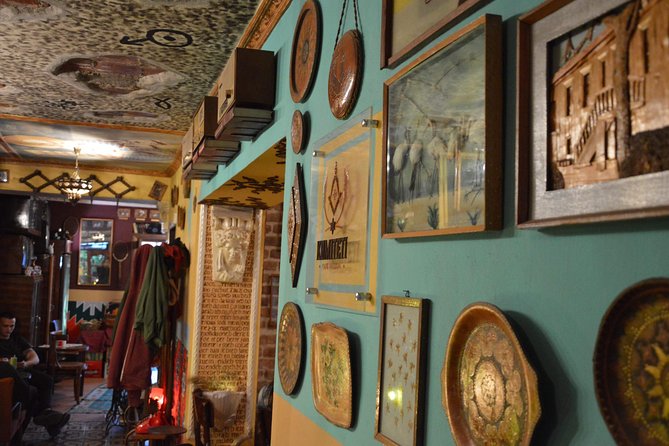
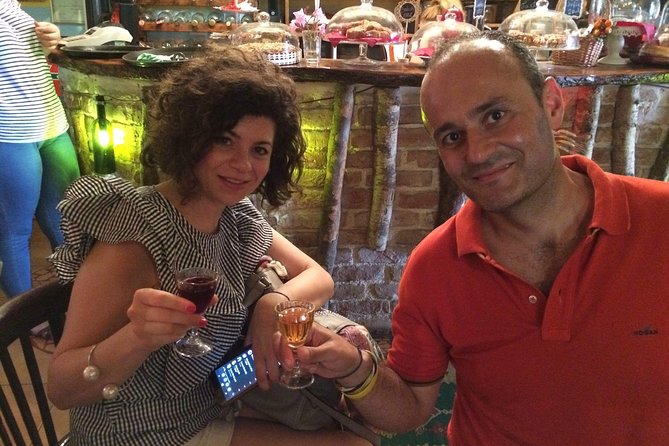
To close the day, you finish with a coffee break at Komiteti Bar, described as a café museum. This is where the tour becomes social and a bit more playful: raki tasting is included, and communist candy is also part of the break, with coffee as a possible extra.
This ending matters for two reasons. First, you’ve spent much of the day in emotionally heavy spaces: political imprisonment memories, authoritarian symbolism, and propaganda art. Second, food and drink help your brain process the story you just heard.
It’s also practical. You get about 45 minutes here, enough time to sit, refill water, and compare notes with your small group. If you’re the type who likes tasting local flavors while traveling, this is exactly that kind of stop.
Price and Logistics: Is $126.16 Good Value?
At $126.16 per person for about 8 hours, you’re paying for more than sightseeing. You’re paying for structured context (a guide), transport in an air-conditioned minivan, admission ticket(s) for key stops, and included meals and tastings.
Here’s what makes it feel like solid value:
- Admissions are included for multiple stops, including Bunk’Art 1 and the sites where tickets are explicitly part of the plan
- Food is included, including lunch around qofte and a raki tasting during the day
- Pickup is included from any Tirana hotel, which saves time and effort if you don’t want to sort out transit
- Small group size (max 8) makes the whole day feel less like mass transit
One logistics point to double-check: the highlights mention pickup and drop-off, but the listed included/excluded items say drop-off isn’t included. In practice, many operators handle this smoothly, but the safest move is to confirm what happens after the final coffee stop.
Also note the tour requires good weather. If weather is poor, it can be rescheduled or refunded, depending on what the operator offers that day.
Who Should Book This Tour, and Who Might Skip It
This is a strong pick if you want Tirana history in a single, organized day, with real local food included. It suits you if you like learning through context: bunker museums, political neighborhood stories, and then the visual language of socialist realism.
Book it if:
- You want a small-group guided day (up to 8 people)
- You’re interested in Albania’s communist era through monuments and museums
- You enjoy street food and local tasting moments, not just indoor sites
- You like having admission tickets bundled so you don’t manage logistics on the fly
Maybe skip it if:
- You’re claustrophobic or easily uncomfortable in tight indoor spaces (the first stop is inside a bunker)
- You want a purely relaxed city stroll with minimal history talk
- You don’t want alcohol at all, since beer and raki tasting are built into the experience and have a stated minimum drinking age of 18
If you do book: pack comfortable walking shoes. Even with transport, you’ll do several walks through squares and central areas.
A Quick Word on Guides and What to Look For
The tour is offered in English, and it may be multi-lingual depending on the day. One standout detail from a praised experience was about a guide named Andi, specifically noted for excellent Spanish. That tells me the guiding can be strong, not just scripted.
When you’re on the day, look for how your guide ties together different parts of the story: bunker fear, pyramid symbolism, memorial meaning, and then the propaganda visuals in the gallery. If your guide does that well, the tour turns from “places visited” into “why it all connects.”
Should You Book This Communist History and Street Food Tour?
If you want one organized day that covers Tirana’s communist-era landmarks and feeds you along the way, I’d book it. The blend is practical: air-conditioned transport, admissions included, lunch and tastings, and a guide who explains why buildings and neighborhoods matter.
The only clear reason to hesitate is claustrophobia risk at Bunk’Art 1. If that doesn’t apply, the itinerary’s structure is a big plus. You get history you can see, taste, and walk through without needing to plan a complicated self-guided route.
FAQ
How long is the Communist History Tour in Tirana?
It runs for about 8 hours.
What’s included in the tour besides sightseeing?
Hotel pickup, transport in an air-conditioned minivan, a guide/driver, lunch, raki tasting, and admission tickets for the listed stops.
Do I get admission tickets for the museums?
Yes. Admission tickets are included for Bunk’Art 1 and the other stops that specify ticket inclusion, including the National Gallery stop if it’s available for the visit.
Is pickup available from my hotel?
Yes. You can be picked up at any hotel in Tirana. You should specify your hotel name when booking.
Is drop-off included at the end of the tour?
Drop-off is listed as not included, so you should confirm what your operator will do after the final stop.
What food and drink will I have during the tour?
You’ll have lunch featuring qofte (meatballs) with yogurt sauce, chips, and salad, and it can be accompanied with beer or wine. You’ll also have raki tasting, and there’s communist candy during the coffee break.
Can children join?
Children must be accompanied by an adult.
What if I’m claustrophobic?
The first stop (Bunk’Art 1) is not advisable for people suffering from claustrophobia.
What happens if the weather is bad?
The tour requires good weather. If it’s canceled due to poor weather, you’ll be offered a different date or a full refund.