REVIEW · ROME
Ancient Mosaic Workshop in Rome
Book on Viator →Operated by Studio Cassio - Arte del Mosaico · Bookable on Viator
Make Roman mosaics, not just memories. This hands-on Roman mosaic workshop at Studio Cassio on Via Urbana is a cool indoor break where you learn by doing, then take home a framed piece that looks like it belongs in a Roman hall.
I love that you create a true keepsake, not a craft souvenir. You cut marble tiles, follow Roman design principles, and leave with a finished mosaic in a sturdy box.
One consideration: this is a 2:00 pm, 2.5-hour activity, so it can be a tight fit on days you already have a heavy morning itinerary.
In This Review
- Key Highlights You Will Actually Care About
- First Stop: Studio Cassio on Via Urbana
- What the 2.5 Hours Really Look Like
- Cutting Marble Tiles: The Skill You Get to Practice
- Designing Your 7 x 5 Inch Mosaic Like an Ancient Artisan
- Meet the Instructors: Restoration Mindset, Not Just Craft
- Coffee, Tea, Water, and a Break From Rome Heat
- What You Leave With: Frame, Sturdy Box, and a Real Souvenir
- Price and Value in Rome: Why This Costs What It Costs
- Who Should Book Studio Cassio (and Who Might Consider Something Else)
- Should You Book This Ancient Mosaic Workshop?
- FAQ
- How long is the Ancient Mosaic Workshop in Rome?
- What size mosaic will I make?
- What’s included in the price?
- What is the minimum age to join?
- Is the workshop offered in English?
- Can I cancel and get a full refund?
Key Highlights You Will Actually Care About
- Small group size (max 7) means you are not lost in the crowd when you need help.
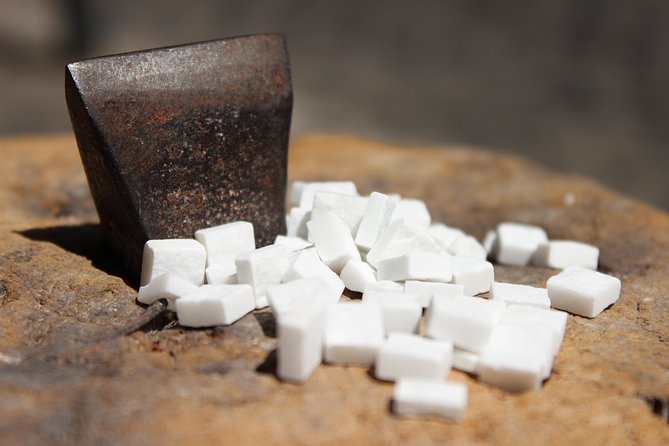
- Marble tile time: you do the cutting and placement yourself, with tools and materials provided.
- Roman design lesson: you start with techniques and history, then build your own composition.
- Take-home protection: a frame plus a sturdy storage box, so your art survives the trip.
- A real studio break: coffee, tea, and bottled water keep the class comfortable and relaxed.
- English instruction: the workshop is offered in English for clear step-by-step guidance.
First Stop: Studio Cassio on Via Urbana
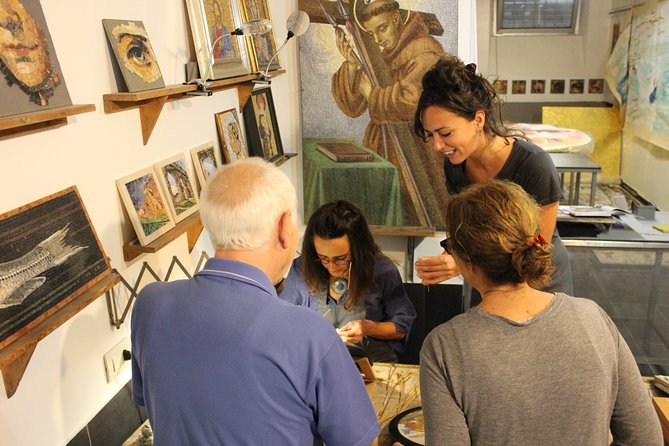
The workshop starts at Studio Cassio – Arte del Mosaico, tucked on Via Urbana 98 in Rome (right where you can pair it with nearby exploring). The meeting point is the workshop itself, and the activity ends back there, so you do not lose time figuring out a second transfer.
It is also set up for convenience. You get a mobile ticket, the studio is near public transportation, and the class is capped at a maximum of 7 people. That small number matters because mosaics are detail work. You want instructors within reach, and you get that here.
If you are planning your day, I’d treat this like a mid-afternoon anchor. Starting at 2:00 pm gives you time to do a morning museum visit or a slow lunch, then shift gears into a calm, practical activity.
You can also read our reviews of more tours and experiences in Rome.
What the 2.5 Hours Really Look Like
This is not a long lecture followed by a quick craft. The flow is built for learning through making.
You begin with an intro to Roman mosaic techniques and the bigger picture of how mosaics were designed, used, and built. Then you move into the hands-on section: you start cutting the marble tiles and planning your textures so your composition actually holds together.
By the end, you have a traditional-style piece guided by what instructors describe as the best principles of Roman mosaic design. It’s a nice rhythm: understand the logic, then apply it, then see your layout become real.
Also, because it is a small class, you get more than just a worksheet. You receive practical guidance on how to place and fit pieces so your finished mosaic looks intentional, not random.
Cutting Marble Tiles: The Skill You Get to Practice
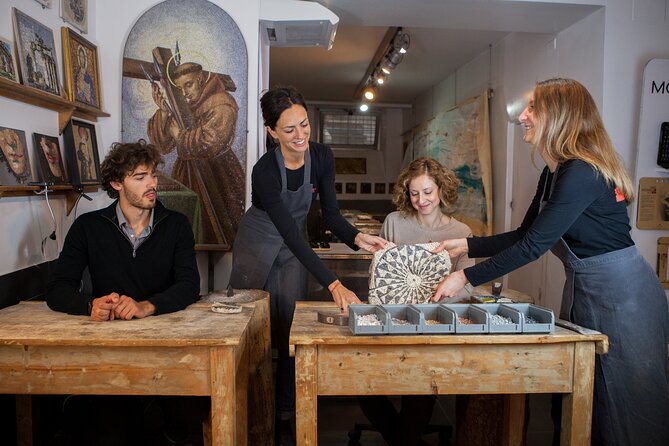
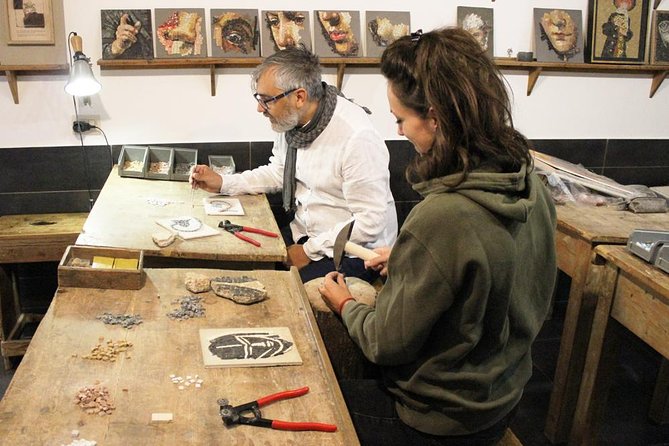
The workshop includes access to high-quality natural local marble plus the tools you need. That is important in Rome because the value of this kind of class is the process, not just the finished photo. Here, you actually do the work.
Expect an experience that mixes patience and precision. You will be cutting and preparing small marble pieces, then working them into your design. Even if you have never done anything artsy, the structure helps. Instructors can point out what to aim for in texture and placement so the mosaic reads like a cohesive artwork.
One theme in the feedback I kept seeing is how therapeutic the work feels once you settle in. Tiny steps, repeated movements, and steady focus can calm your brain in a way that sightseeing often does not. It’s a different kind of Rome souvenir: one you made with your hands.
Designing Your 7 x 5 Inch Mosaic Like an Ancient Artisan
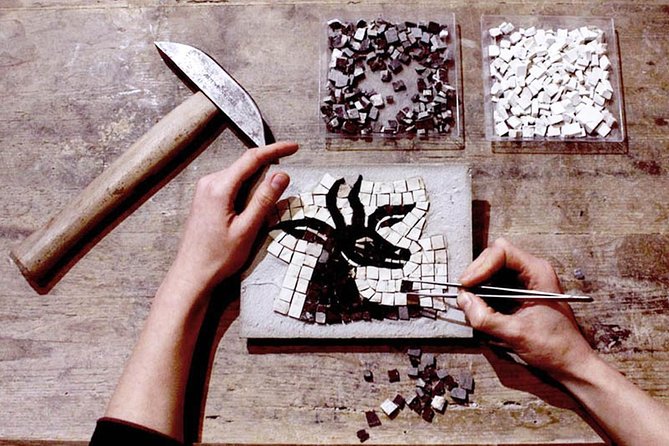
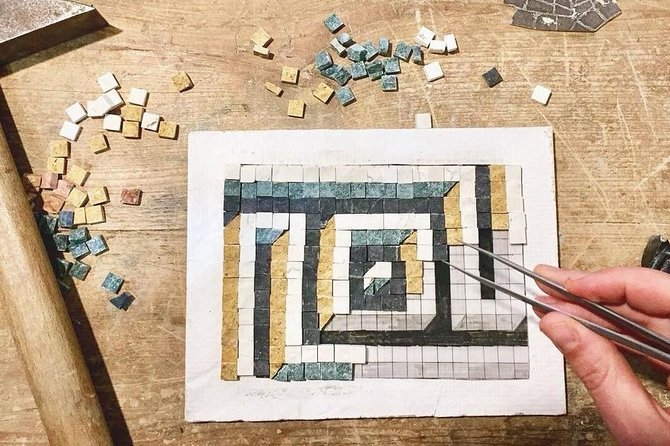
Your final piece is a 7 x 5 inch mosaic, and it is built around a traditional approach. You will choose textures you want in your composition, and then follow a design plan that fits Roman mosaic thinking.
A few useful details to know before you go:
- You will not start from a blank sheet. The studio uses established patterns inspired by ancient mosaics, so you are building within a proven layout.
- You get help shaping how your design comes together, especially around texture choices and overall balance.
The size also affects how you plan. A 7 x 5 inch mosaic is big enough to feel like real artwork, but small enough to finish in one session. It’s the sweet spot for travelers: you get a meaningful product without turning your trip into a months-long project.
You are also learning something that sticks. After you do this, you start noticing how mosaics use small variations in color and texture to create form and movement. That can change how you look at Roman art in museums afterward.
Meet the Instructors: Restoration Mindset, Not Just Craft
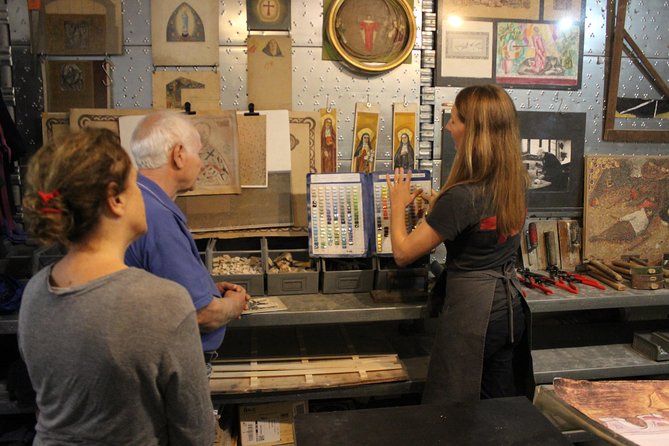
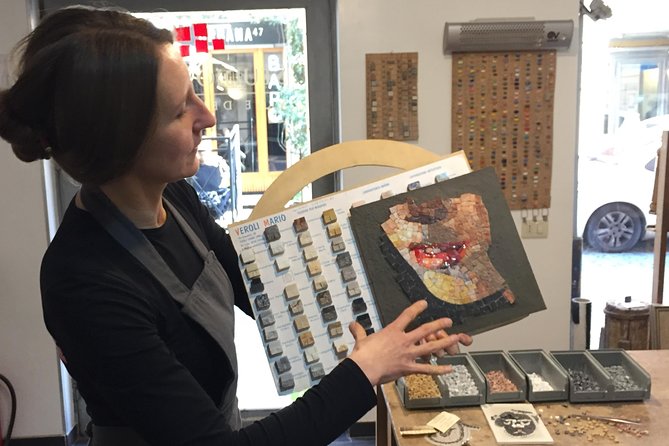
What makes this workshop feel authentic is the teaching style. The instructors are not only there to guide your hands; they also explain the why behind the design.
You may work with instructors such as Eleonora and Renato, or Alex and Leonora, and in some sessions you may hear from Giulia and Giuliana. Across these names, one consistent thread shows up: they connect mosaic making to restoration and the standards of the craft.
One review experience that comes through clearly is the link to restoration work tied to Pompeii and Byzantine churches. That matters because you are not learning a simplified version of mosaics. You are learning the logic behind how professionals think about materials, surfaces, and long-term durability.
It also helps explain why people describe the class as friendly and patient. This is technical, but it is taught in a way that supports beginners.




Coffee, Tea, Water, and a Break From Rome Heat
This workshop is thoughtfully built to keep you comfortable. You get bottled water, and there is coffee and/or tea during the experience.
Small comfort details matter more than you’d think in Rome. A studio setting can be a welcome break from crowds and heat, and a steady drink keeps your focus when you are working with fine pieces. One person even called it a great way to cool down in the AC, which matches the general idea: you get a relaxing indoor window in your day.
The pacing is also calm. You can expect a workshop tone that stays practical and encouraging rather than rushed. That helps if you are traveling solo, or if you have one person who wants art class and another who usually avoids it.
What You Leave With: Frame, Sturdy Box, and a Real Souvenir
Most mosaic workshops stop at making. This one stops at making plus preserving.
Included materials for your finished result are:
- A frame for your artwork
- A sturdy box to store and protect your finished artwork
- Bottled water, coffee and/or tea during the session
That packaging is more than an afterthought. In real life, you’re juggling airport security, hotel space, and moving your stuff around a city. A sturdy box gives you a fighting chance to bring the mosaic home without stress.
You also leave with a deeper respect for the craftsmanship behind mosaics. Once you have assembled enough tiny pieces to understand the difficulty, even famous mosaics in museums can look different. The pattern, the texture choices, and the precision all become more legible.
Price and Value in Rome: Why This Costs What It Costs
At $107.68 per person, this is not the cheapest activity in Rome. But the pricing makes sense when you look at what is included.
You are paying for:
- A guided, hands-on class on authentic Roman mosaic techniques
- High-quality marble and the tools to cut and build your piece
- A frame and a sturdy box so you can take the artwork home safely
- Coffee and/or tea plus bottled water
- A small group setting that keeps instruction close
The best way to think about value here is not money per hour. It is money per outcome and money per effort. You walk out with a finished, framed artwork from real materials, not a craft project made from classroom supplies.
What is not included is transportation to and from attractions. That part is typical. But since the workshop is near public transportation and ends back at the same meeting point, you can plan around it easily.
If you want a “Rome experience” that feels personal and not interchangeable, this is a strong bet.
Who Should Book Studio Cassio (and Who Might Consider Something Else)
This workshop fits a wide range of people. The minimum age is 12, and children must be accompanied by an adult. Service animals are allowed, and most travelers can participate.
Here is who tends to enjoy it the most:
- Art and history lovers who want more than museum photos
- Travelers who want a practical skill they can keep practicing at home
- Parents looking for a structured activity that is patient and beginner-friendly
- Solo travelers who want an easy social setting (the group is small)
You might choose another option if you:
- Hate detail work or fine motor tasks
- Have no room in your schedule for a fixed 2:00 pm start and about 2.5 hours of focused work
But if you can manage a couple of hours of careful making, this is one of those activities that changes how you see Rome.
Should You Book This Ancient Mosaic Workshop?
Yes, if you want a Roman craft experience with real instruction and a tangible payoff. This is not a rushed souvenir stop. It is a guided studio session that teaches technique, design, and the mindset behind mosaic making, then ends with a framed piece you can protect and take home.
Book it early in your trip if you can. You’ll get more out of mosaics in museums when you already understand how texture, layout, and materials work together.
If your group values hands-on learning, you’ll likely find this worth it even if only one person is the art enthusiast. The way the studio supports beginners makes it easier for everyone to participate.
If you want, tell me your travel dates and what else you’ve scheduled that day (museums, tours, long walks). I can help you place the workshop into a realistic Rome itinerary without stress.
FAQ
How long is the Ancient Mosaic Workshop in Rome?
The workshop runs about 2 hours 30 minutes.
What size mosaic will I make?
You will create a personalized mosaic that is 7 x 5 inches.
What’s included in the price?
Your ticket includes access to natural local marble and tools, a frame, a sturdy storage box, your own finished mosaic creation, bottled water, and coffee and/or tea. Instruction is offered in English.
What is the minimum age to join?
The minimum age is 12. Children must be accompanied by an adult.
Is the workshop offered in English?
Yes, the workshop is offered in English.
Can I cancel and get a full refund?
Yes. You can cancel up to 24 hours in advance for a full refund. If you cancel less than 24 hours before the experience starts, you will not receive a refund.