REVIEW · ROME
Rome in a Golf Cart Shared tour of Catacomb Ancient Appian
Book on Viator →Operated by Rome in golf cart · Bookable on Viator
Appian Way without the long slog. This Rome golf cart experience mixes fast sightseeing with a real visit to the Catacombs of Saint Callixtus, including audio and live support. I like the way you trade heavy walking for breezy rides between major sights, and I also like the focused stops that keep you from feeling rushed.
Two things I genuinely appreciate: you get a small group cap (max 7) and the itinerary still hits big-name landmarks like the Colosseum area, the Circus Maximus, and the Pyramid of Cestius. The other win is that the catacombs part includes entry, guidance, and time to actually take it in.
One consideration: the tour depends on good weather, and the catacombs stop can switch to Catacomb of Sebastiano if Saint Callixtus isn’t available. If you’re hoping for flexibility on the fly, plan for a little adjusting day-of.
In This Review
- Key reasons this golf cart tour works
- Rome by golf cart: what you’re really buying (and why it’s smart)
- Colosseum exterior photos: the classic hit without the crowd maze
- Circus Maximus pass-by: envision the races where the track is gone
- Orange Garden (Giardino degli Aranci): skyline photos with a calm pause
- Pyramid of Caius Cestius: why the cart makes the view better
- Baths of Caracalla: big ruins, quick context, no long trek
- Catacombs of Saint Callixtus: audio guidance with real-time help
- Ancient Appian Way from San Sebastiano Gate: original paving and tomb reminders
- Price and value: what $321.86 buys you in real terms
- Small group touring: how max 7 changes your experience
- Guides you might meet: Calippo and Valerio’s kind of energy
- Practical timing and what to expect day-of
- Who should book this Rome in a Golf Cart tour
- Should you book it? A quick decision guide
- FAQ
- Where does the Rome in a golf cart tour start?
- When does the tour end?
- How long is the tour?
- How many people are in the group?
- What’s included in the price?
- Are tickets for other sites included?
- Which catacombs will we visit?
- Is the tour offered in English?
- Is the tour dependent on weather?
- Is the tour accessible by public transportation?
Key reasons this golf cart tour works
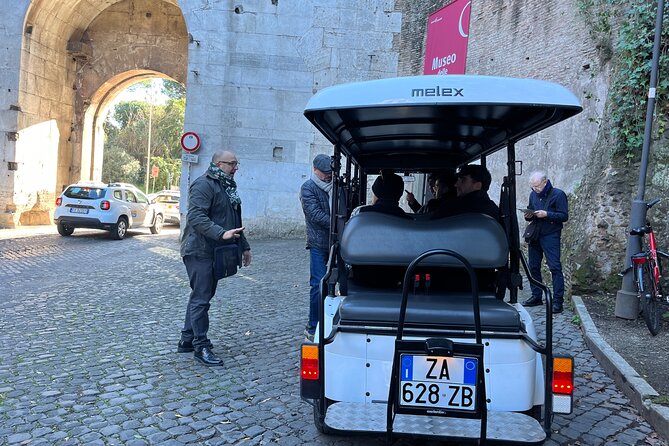
- Max 7 people means more attention and fewer bottlenecks at stops.
- Catacombs of Saint Callixtus entry is included, not an optional add-on.
- Audio + live support helps you follow what you’re seeing underground.
- Pyramid of Cestius views from the cart make a usually quick photo stop feel more dimensional.
- Ancient Appian Way at San Sebastiano Gate lets you see original paving without extra hikes.
Rome by golf cart: what you’re really buying (and why it’s smart)
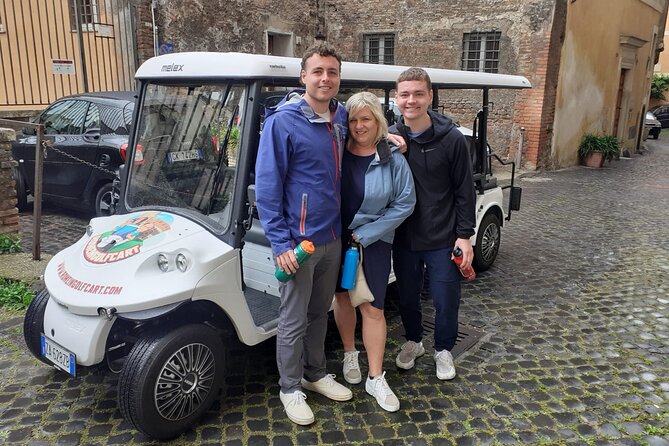
Rome on foot is great—until you hit day-2 sore legs and day-3 questionable decisions. This tour is built for the reality that you can see a lot while walking less. You’re in a golf cart, so transitions between sights happen fast, and the driver route helps you string together viewpoints that would take too much time on foot.
The 2 hours 30 minutes timing (approx.) is also a clue about the style of this outing. It’s not trying to be a deep, all-day archaeology seminar. It’s a “get your bearings fast” format: you cover the highlights, slow down where it matters, and then end back at the starting point.
That balance is where the value shows. Even with the price at $321.86 per person, you’re not paying for just a ride. The catacombs entry is included, and you get an on-site guided experience there instead of a quick drop-off.
You can also read our reviews of more tours and experiences in Rome.
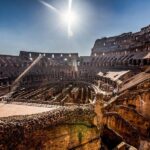

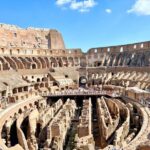
Colosseum exterior photos: the classic hit without the crowd maze
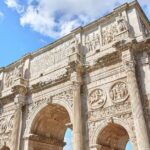
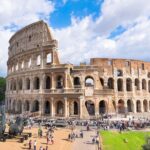
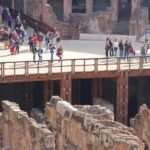
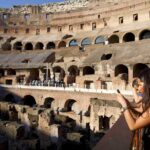
The tour kicks off with a stop for exterior photos at the Colosseum area. You’re not going inside here—this is about the immediate wow factor, with the cart keeping the pacing easy. You get those iconic views before the rest of the day’s sights stack up.
This matters because the Colosseum is the one monument in Rome that tends to set the mood for the rest of your day. Seeing it from outside lets you register the scale, take your photos, and move on without losing time in lines or long, exhausting detours.
If you’re the type who wants the big-picture Rome first and the details later, this ordering helps.
Circus Maximus pass-by: envision the races where the track is gone
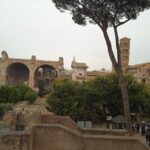
Next up is Circus Maximus. Today it’s a green space, but you pass through it with the idea of what it used to be: a huge chariot-racing stadium. Even if you can’t see original racing infrastructure clearly from the cart, the stop is built for imagination—helping you frame the space as a place where Roman citizens gathered for centuries.
This is a good “breather” moment. It’s only about 20 minutes, and it doesn’t ask you to work hard physically. Instead, it gives your brain a quick switch from modern Rome back to ancient spectacle.
Orange Garden (Giardino degli Aranci): skyline photos with a calm pause
The Orange Garden (Giardino degli Aranci) stop is one of those Rome moments that feels simple but is actually useful. You get views over the skyline, time to pause, and a chance to photograph the city from above.
Because you’re not hiking through several viewpoints, this is the kind of stop that works well even if you’re not super into architecture. It’s mostly about perspective: Rome’s layers, the way the city spreads, and the fact that your day of ancient sites is still happening inside a living capital.
It’s about 20 minutes, which means you can enjoy it without losing the thread of the rest of the itinerary.
Pyramid of Caius Cestius: why the cart makes the view better
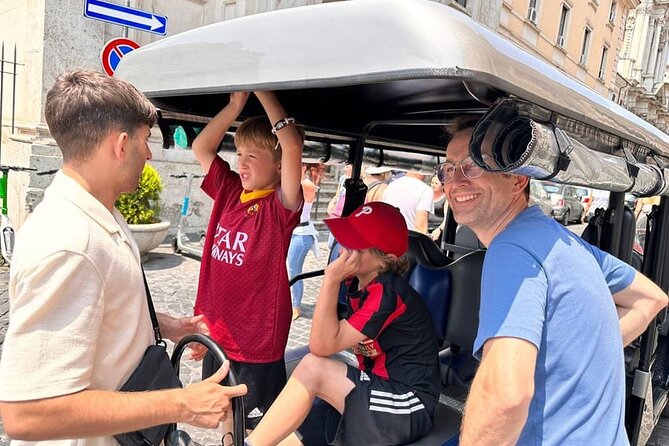
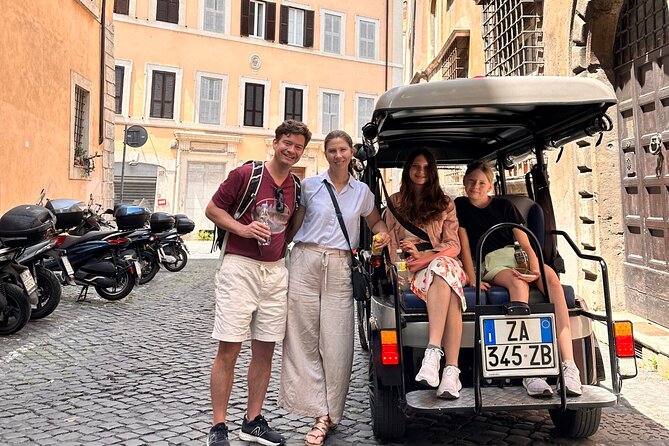
The Pyramid of Caius Cestius is the sort of monument that can feel like a quick stop if you walk up to it fast. Here, you see it from the golf cart with a 360-degree perspective. That’s the difference: you can take in the shape from more angles without weaving around crowds or fighting for position.
The tour also frames this stop as a calmer alternative to the usual congestion, and the timing and cart setup help. About 20 minutes gives you enough time to do the basics—photos, quick look-around—and still roll forward before you get impatient.
If you like your Roman sights to feel visually distinct (not just “another stone wall”), this one delivers.



Baths of Caracalla: big ruins, quick context, no long trek
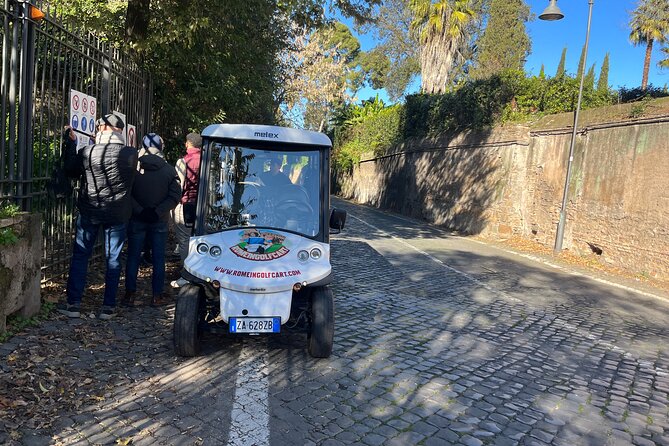
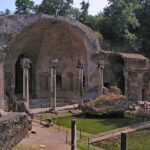
After the pyramid, you’ll stop at the Baths of Caracalla. These ruins are massive, and the tour includes a view from a cart-friendly angle framed by Roman pines. You’re getting the scale of the complex more than detailed close-up study, which fits the overall pace of the day.
What you should take away here: baths weren’t just places to get clean. They were social spaces, part of daily Roman life, and part of how emperors displayed power through public works. Even a short stop can give you that mental picture, especially if your guide is good at connecting what you see with what it meant.
This stop is about 15 minutes. If you want more time on ruins, you may wish the day had one extra stop, but within 2.5 hours, this pacing keeps things moving.
Catacombs of Saint Callixtus: audio guidance with real-time help
Now for the centerpiece: Catacombs of Saint Callixtus. The tour includes entry (about 45 minutes) and uses an in-person and audio guide format, plus live support. Underground like this can be confusing on your own—signs are limited, history is easy to mix up, and the rooms can start to look similar. Guidance matters.
You’ll reach the catacombs area from the San Sebastiano Gate by golf cart, with roughly a 10-minute ride. During that ride, you’ll pass along the Aurelian Walls built under Emperor Aurelian, which gives you an extra layer of context on the way in.
One practical thing to note: if Catacombs of San Callisto is not available, the tour goes to Catacomb of Sebastiano instead. So even if your day doesn’t go exactly as pictured in your head, you still get the catacombs experience without losing the main theme.
Bring mental flexibility and you’ll likely enjoy this part more, because catacombs are all about atmosphere and interpretation—not just photo opportunities.
Ancient Appian Way from San Sebastiano Gate: original paving and tomb reminders
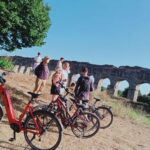
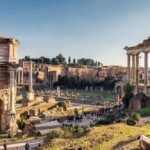
The tour ends with the start of the Ancient Appian Way (Via Appia Antica). This is about 30 minutes, and it’s not just scenic road time. You’re specifically shown the beginning of the route where original paving still survives in sections.
You also get context about tombs of Roman consuls along the way, and you’ll see the Imperial Gate of San Sebastiano, which has remained since the 3rd century AD. The cart changes how this feels: you’re able to cover ground and still keep your legs fresh for the rest of the day.
If your goal is to connect Rome’s street-level present to its ancient backbone, this is the stop that gives you the most “I get it now” feeling. Even a short visit can make the Appian Way feel like a real corridor through time instead of a line on a map.
Price and value: what $321.86 buys you in real terms
Let’s talk money without pretending it’s cheap. At $321.86 per person, you’re paying for several things at once: the golf cart transportation, a small-group cap (max 7), and included catacomb entry with both audio and live guidance.
Here’s how that translates into value:
- If you were to add catacomb entry and pay for guided time, you’d likely spend a similar total once you factor in access plus a guide’s time.
- You also save energy. For many people, the cost isn’t only dollars—it’s the risk of a day that turns into museum sit-downs because your legs quit.
- Most other stops are exterior/photo or cart views with free admissions listed, so you’re not paying extra at every turn.
So I see the pricing as best for people who want an organized route with real structure, and who’d rather spend on guidance and access than on piecing together separate tickets and transport.
Small group touring: how max 7 changes your experience
A group size limit of 7 travelers matters more than it sounds. With smaller groups, you get fewer traffic delays in the pickup/drop-off rhythm, and you tend to have an easier time hearing explanations at stops.
It also helps in the catacombs portion, where audio guidance is only useful if you can actually follow it. In a large crowd, underground sound can be chaotic. Here, the structure is more controllable.
If you care about asking questions and not feeling like you’re being brushed aside, this size is a practical advantage.
Guides you might meet: Calippo and Valerio’s kind of energy
From names that have come up with this style of tour, Calippo is associated with being helpful, showing visitors what they want to see, and answering questions on the spot. Valerio is linked with both driving and history, with a passion for Rome that turns the route into a story instead of just a drive-by.
You can’t count on a specific guide, but you can count on the fact that the experience is designed for questions—especially since the catacombs component includes live support rather than only a prerecorded track.
If you want an outing where explanations don’t feel like homework, choose the time slot that fits your schedule and show up ready to talk.
Practical timing and what to expect day-of
This is a 2 hours 30 minutes (approx.) loop that starts and ends at the same place: Piazza della Trinità dei Monti. After that, you’ll move through several sites by cart, with a few stops built around short time windows for photos and viewpoints.
Because the tour depends on good weather, plan to dress for changing conditions. Rome can be warm and bright early, then cool down quickly, and catacomb visits can feel cooler than the surface.
Also keep an eye out for Jubilee-related messages. Some monuments may be under restoration, which can affect what’s accessible or what you see in a stop.
Who should book this Rome in a Golf Cart tour
This fits best if:
- You want to cover major sights without committing to hours of walking.
- You care about a guided catacombs experience with entry included.
- You like a set route with defined stops and limited time at each place.
- You prefer a small group environment (max 7).
It may be less ideal if you want an intense, slow-paced study of one monument or if you hate being outdoors between short indoor segments.
Should you book it? A quick decision guide
Book this tour if you want a smart way to connect Rome’s big monuments with the Underground highlight of the day, while saving your legs. The catacombs stop, with entry plus in-person and audio guidance, is the anchor that turns this from a “nice ride” into a structured cultural experience.
Skip it or choose a different option if you’re chasing long, in-depth time inside multiple buildings, because this itinerary is designed for short stops and efficient coverage.
If you’re trying to get the most out of limited time in Rome, the golf cart format makes sense, and the Appian Way ending gives you one of the most satisfying payoffs for the effort of the day.
FAQ
Where does the Rome in a golf cart tour start?
The tour starts at Piazza della Trinità dei Monti, 00187 Roma RM, Italy.
When does the tour end?
The activity ends back at the same meeting point.
How long is the tour?
It runs about 2 hours 30 minutes (approx.).
How many people are in the group?
The tour has a maximum of 7 travelers.
What’s included in the price?
The package includes entry to the catacombs, an in-person and audio guide, and a bottle of water.
Are tickets for other sites included?
Admission tickets to other sites are not included.
Which catacombs will we visit?
The tour visits the Catacombs of Saint Callixtus. If that isn’t available, it will switch to the Catacomb of Sebastiano.
Is the tour offered in English?
Yes, it’s offered in English.
Is the tour dependent on weather?
Yes. It requires good weather, and if it’s canceled due to poor weather, you’ll be offered a different date or a full refund.
Is the tour accessible by public transportation?
It’s near public transportation, and most people can participate. Service animals are allowed.