REVIEW · ROME
Pantheon Elite Guided Tour – Rome’s Iconic Ancient Temple
Book on Viator →Operated by Vatican Tour Company · Bookable on Viator
Rome’s Pantheon hits you fast. This guided walk is short, focused, and packed with meaning behind the stone. You’ll see how the same building holds Roman myth, Augustan engineering, and Christian-era reuse, all while staying inside your schedule.
Timed entry and small groups make it feel manageable, even at peak hours. I especially love the way the tour explains what you’re looking at (not just where it is), and how you get to the dome details without getting lost in the crowd. One thing to consider: it’s still the Pantheon, so outside areas can get busy, and the experience depends on good weather.
Guides can really change the visit. I like that this tour consistently features guides with strong storytelling and good pacing—people mention names like Donatella, Viviana, Elena, Amanda, Sylvia, Nina, Samantha, and Silvia. The result is that you finish feeling like you understood the building, not just the postcard.
A possible drawback: audio and crowds aren’t fully predictable. There have been complaints about headset clarity, though the operator says the system has been upgraded and the team carries backup gear if you flag an issue right away. Also, the Pantheon entry area can be loud and crowded, so don’t expect a quiet museum moment outside.
In This Review
- Key things to know before you go
- Pantheon Elite: a short, high-impact 1-hour format
- Meeting at Antica Salumeria (Piazza della Rotonda) and getting timed entry right
- Stop 1 inside the Pantheon: myths, Augustan building, and who’s buried here
- What to watch for while you listen
- Stop 2 exterior reset: columns, circle shape, and the dome’s oculus
- Why the guides matter at the Pantheon (and what you’ll likely notice)
- Headsets, crowds, and how to get the best sound
- Dress code at the Pantheon: the quick rule that saves your tour
- Price check: why $41.08 can be a smart value for an hour
- Who this tour suits best (and who should consider alternatives)
- Quick practical tips before you book
- Should you book this Pantheon Elite Guided Tour?
- FAQ
- How long is the Pantheon Elite Guided Tour?
- Is the tour offered in English?
- Where do we meet for the tour?
- What group size should I expect?
- Is admission included?
- What clothing do I need to wear?
- What if the weather is bad?
Key things to know before you go

- Small group (max 20) keeps the pace human and questions possible
- Headsets are included to hear the guide clearly in busy areas
- Timed tickets help you avoid the long, free-for-all entrance crush
- A focused 1-hour format fits a packed Rome day without dragging
- Knees and shoulders covered is required inside the Pantheon
- Two-part experience: a main interior visit plus a fast exterior reset for the dome and oculus
Pantheon Elite: a short, high-impact 1-hour format
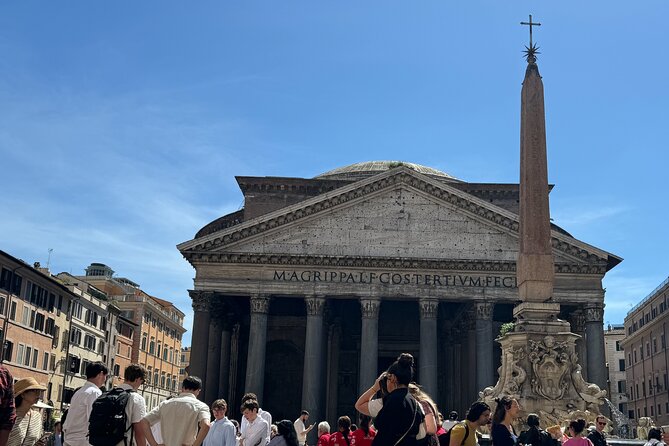
If you want the Pantheon, don’t overthink it. This tour is built for the real-life problem of Rome: you have limited hours, huge sites, and crowds everywhere. You get a guided experience that’s about 1 hour approx., so it can slot into the morning or afternoon without forcing you to abandon other must-sees nearby.
The best part is the focus. Instead of treating the Pantheon like a random stop, the guide connects the building to the big stories that Rome tells about itself—myth, empire, and then the later Christian transformation. That’s a big upgrade from walking in alone and hoping your eyes catch every clue.
And yes, the building is famous. But what makes this tour valuable is the structure of the visit. You get a planned interior segment first, then a short exterior moment that helps you “read” what you just saw.
You can also read our reviews of more tours and experiences in Rome.



Meeting at Antica Salumeria (Piazza della Rotonda) and getting timed entry right
Your start point is easy to find: Antica Salumeria, Piazza della Rotonda 4, 00186 Roma RM, Italy. The tour ends back at the meeting point, so you’re not dealing with the usual awkward “where do we part ways?” feeling.
This is also one of those Rome setups where timing matters. It’s typically booked about 48 days in advance, which is a hint that the popular time slots go quickly. Pick a time that works with your day, and if your schedule is flexible, choose a less hectic hour if you can.
The tour uses mobile tickets, which is handy (no paper to lose). It’s offered in English, and you’ll be near public transportation—useful if you’re trying to avoid parking stress in central Rome.
Most importantly, you’re not relying on walk-up entry. The experience is designed around named, pre-booked time slots, which helps the group get inside in an organized way. You still have to deal with the Pantheon’s real crowd energy, but the chaos is handled better than a free-for-all line.
Stop 1 inside the Pantheon: myths, Augustan building, and who’s buried here
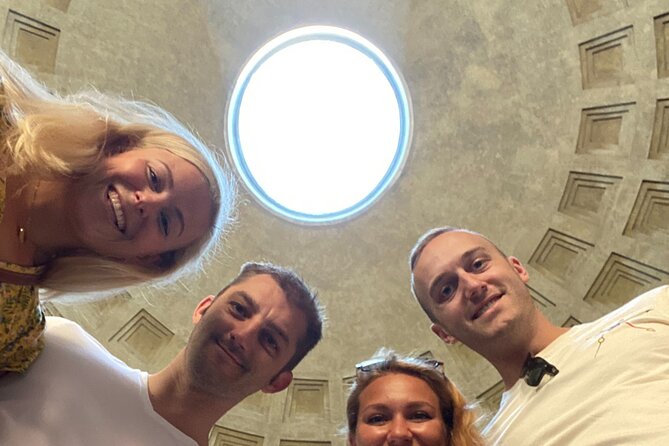
This is the heart of the tour: about 40 minutes with admission included.
You’ll start with the Pantheon’s deep tie to Rome’s origin stories—how the myth of how Rome came to be connects to this sacred space. You’ll hear about the sacred temple tradition and the fields of Mars, which were originally outside the city walls, and the founder story of Romulus.
Then the guide shifts to the real reason the Pantheon still feels so powerful: the later Augustan structure that stands today. The framing helps you understand why this building matters beyond its fame. It’s not only old—it’s old and still standing in a state that lets you actually study the design.
One of the most compelling parts of the interior segment is how it moves through time. The tour highlights the fact that, over centuries, the Pantheon became something different—a Church—and how pagan and Christian meanings can occupy the same walls. If you like your history connected instead of separated into neat boxes, this is the part you’ll feel most.
And then there’s the human side: you’ll learn about the tombs of a king and a queen and the ashes of Rafaelo (Raphael). That detail changes how you look at the interior. You’re no longer only admiring architecture—you’re noticing what the space was meant to hold, protect, and remember.
What to watch for while you listen
Try to keep an eye on how the guide points out key architectural features as stories are told. Even if you already know the Pantheon looks “cool,” the guide will push you to notice structure and purpose—how the building’s form supports the experience inside.
Stop 2 exterior reset: columns, circle shape, and the dome’s oculus

The second segment is short—about 15 minutes—and admission isn’t included again because this part is outside.
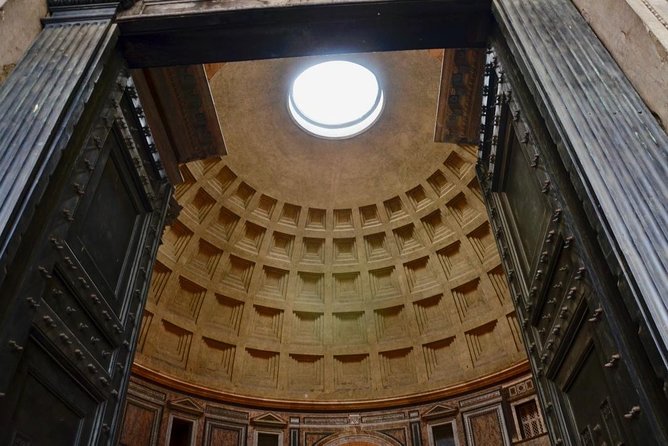
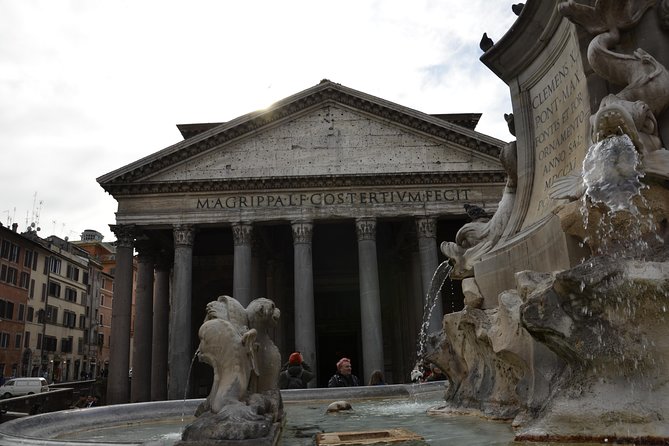
This is where the guide helps you make sense of what you just experienced inside. You’ll get the exterior overview: the columns, the circular temple formation, and how the layers of history are visible when you look at the monument with context.
The dome is the star, and the guide brings you back to the single most famous hole in the ceiling: the oculus, open to the sky. You’ll also hear the myth attached to it, including a story about Romulus being struck by lightning.
Why this matters: when you’re inside, it’s easy to get overwhelmed by scale and crowd noise. The exterior reset helps you “connect the dots.” You leave with a mental map you can carry even after the guide steps away.





Why the guides matter at the Pantheon (and what you’ll likely notice)
At the Pantheon, the guide isn’t a luxury—it’s the difference between seeing and understanding. People often come for the dome, but they leave talking about the storytelling and pacing. Names like Donatella, Viviana, Elena, Sylvia, Nina, Samantha, and Amanda show up again and again as standout guide figures.
What you should look for in a good guide here:
- Clear explanations that match what you’re seeing in front of you
- Enough structure that your brain stays organized in a crowded space
- A willingness to answer questions without making you feel rushed
This tour format encourages that kind of guided visit. With a max group size of 20, you’re more likely to actually connect with the guide rather than listen from far away.
And yes, weather can affect comfort. Someone might show up on a rainy day and still have a good experience because the guide keeps momentum and focus. If it’s sunny, you’ll likely appreciate the oculus moment even more.
Headsets, crowds, and how to get the best sound

A lot of Rome tours live or die by audio. This one includes headsets, which is a big deal when you’re standing near the center of attention. Hearing the guide clearly lets you keep following the stories instead of guessing.
There have been a few issues reported in the past, like headset clarity. The operator’s response says the headset system has been upgraded and that backup gear is available if something goes wrong. So here’s your practical move: if you can’t hear, don’t quietly suffer. Flag it right away and ask for a replacement.
Crowds are unavoidable at the Pantheon, but the timed entry approach and small group size help. You may still experience a crowded entrance area, yet the group generally moves in an organized way rather than getting scattered.
My advice: don’t try to race ahead for photos during the listening parts. Let the guide set the rhythm, then capture pictures in the small pauses. That way you’ll actually remember what you saw.
Dress code at the Pantheon: the quick rule that saves your tour

This is not a suggestion. There’s an entry requirement: cover knees and shoulders upon entry.
That means no bare shoulders and no shorts that expose your knees. If you’re traveling in summer and you’re used to Rome’s flexible street style, treat this as your reminder to pack one reliable layer—light scarf, thin cardigan, or whatever works for your comfort.
Plan this, and you’ll avoid the stressful moment of figuring it out right when you arrive.
Price check: why $41.08 can be a smart value for an hour
At $41.08 per person for about an hour, you’re paying for three things that matter in Rome:
- A guide who explains what you’re looking at
The Pantheon is iconic, but it’s also layered. Without context, it’s easy to admire and forget. With a structured tour, you walk away with a clearer sense of how myth, empire, and Christian-era reuse all fit together.
- Admission included for the main interior stop
The interior segment includes an admission ticket, so you’re not paying again on top of the tour cost.
- A controlled group experience
With a maximum of 20 travelers, it’s easier to hear, ask questions, and stay together than with larger crowds.
Is it “skip the line”? Some people say it felt like that, and it helps in practice because the tickets are timed and pre-booked. But the best way to think about it is this: you’re buying a smoother entry experience and the guided interpretation that makes the time count.
If you’re the type who likes history with specifics—Romulus stories, Augustan structure, the dome’s oculus myth, and the tomb details—this price feels reasonable. If you mostly want photos and don’t care about explanations, you might feel the cost more.
Who this tour suits best (and who should consider alternatives)
This is a great fit if you:
- Love ancient history and how religion and culture evolve
- Want a focused plan that doesn’t eat your whole day
- Like architecture details explained in plain language
- Prefer a small group with time for questions
It’s also handy if you’re juggling logistics and want a tour with a clear meeting point and a return to the same spot.
It may feel less ideal if you:
- Want a totally quiet, slow, solo experience
- Are uncomfortable in crowded public spaces
- Need a completely flexible route with no structure
Still, even with crowds, the small group and headset setup are designed to keep the experience smooth.
Quick practical tips before you book
You’ll enjoy this most if you:
- Choose a time slot you can reach easily via transit
- Arrive ready for the knees-and-shoulders rule
- Bring a small patience buffer for exterior crowds
- If audio is off, tell the guide immediately so you can get a working headset
Also, pick a tour time that matches your energy level. Morning and afternoon options exist, so you can aim for the pace that works best for you.
Should you book this Pantheon Elite Guided Tour?
If you want the Pantheon done right in an hour, I’d book it. The value comes from guided meaning (Roman myth to Christian reuse), not just famous walls. The small group size, headset support, and timed entry approach make it a practical way to experience one of Rome’s biggest icons without turning it into a half-day project.
Skip it only if you’re strictly photo-first and story-last, or if you know you dislike structured group pacing. Otherwise, this is one of the easiest ways to turn the Pantheon from a stop on your list into a place you actually understand.
FAQ
How long is the Pantheon Elite Guided Tour?
The tour is about 1 hour (approx.), with roughly 40 minutes inside the Pantheon and about 15 minutes for the exterior portion.
Is the tour offered in English?
Yes. The tour is offered in English.
Where do we meet for the tour?
You meet at Antica Salumeria, Piazza della Rotonda 4, 00186 Roma RM, Italy.
What group size should I expect?
The tour has a maximum of 20 travelers.
Is admission included?
Admission is included for the main Pantheon interior stop, while the exterior portion is free.
What clothing do I need to wear?
You need to cover knees and shoulders upon entry to the Pantheon.
What if the weather is bad?
This experience requires good weather. If it’s canceled due to poor weather, you’ll be offered a different date or a full refund. You can also cancel for a full refund up to 24 hours before the start time.