REVIEW · ROME
Ancient Ostia Antica Semi-Private Day Trip from Rome by Train with Guide
Book on Viator →Operated by City Wonders Ltd · Bookable on Viator
Half-day. Big payoff in ancient Ostia. I love the included train tickets and the way this stays a small-group day trip (max 12), so the ruins feel human and not rushed. One thing to plan for: there’s a fair amount of walking on uneven ground with transfers on and off the train, so you’ll want moderate physical fitness.
You meet your guide around Piramide-area transit / Piazza Ostiense 11 and ride southwest to Ostia Antica. Once there, you follow the main street, Decumanus Maximus, spotting landmarks like the Baths of Neptune and the amphitheater, with guide stories that connect the stones to daily Roman life (and guides like Barbara, Alberto, Laura, and Cat have earned praise for making that explanation easy to follow).
In This Review
- Key highlights to look for
- Ostia Antica: Why This Port City Feels Different From Rome
- Piramide-Area to Piazza Ostiense: The Train Part That Makes It Stress-Free
- The 2.5-Hour Walk: Decumanus Maximus to Real Urban Life
- Baths of Neptune and the Mosaics: Art With a Job
- The Amphitheater and Forum Corners: Seeing Power Up Close
- Guide Quality Is the Real “Included Extra” (Barbara, Alberto, Laura, Cat)
- Price and Value: What $59.26 Buys You in a Half Day
- Pace and Practical Comfort: What to Expect on the Ground
- Who Should Book (and Who Might Not Get the Fit)
- Should You Book This Ancient Ostia Day Trip?
- FAQ
- Where do we meet for the tour?
- How long is the tour?
- Is this a small-group tour?
- What’s included in the price?
- Is the Ostia Antica entrance ticket included?
- Do I need hotel pickup?
- Is the tour in English?
- What kind of physical fitness is required?
- What if the weather is bad?
Key highlights to look for
- Small-group cap of 12 for a calmer pace and more back-and-forth with your guide
- Round-trip train + Ostia Antica entry included, so the day doesn’t get pricier at the last minute
- A focused 2.5-hour walking route through the best-preserved parts of the site
- Landmarks you can orient yourself with, from Decumanus Maximus to the Baths of Neptune and the amphitheater
- Practical guide style, including keeping the group moving and pointing out where you can refill water on hot days
Ostia Antica: Why This Port City Feels Different From Rome
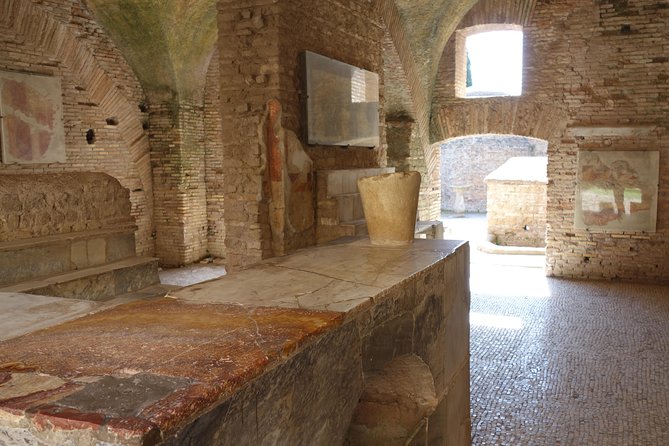
Ostia Antica is often called a little Pompeii, but that nickname undersells it. Yes, it’s archaeological and dramatic, but the bigger feeling here is everyday life. You’re walking through a port city that supported Rome—so you start to understand how people ate, worked, shopped, worshiped, and went to the baths.
What makes the site so satisfying is how much is still visible and how many building types you can spot close together: main streets, shops, apartments, temples, and public spaces. The ruins date back as far as the 4th century BC, and the overall layout helps you picture a full town rather than a set of isolated monuments.
And this is a great antidote to the Rome overwhelm. Rome can feel like you’re constantly moving between famous landmarks. At Ostia Antica, the scale is big, but the story is more grounded: this is how the city behind the empire actually functioned.
You can also read our reviews of more tours and experiences in Rome.

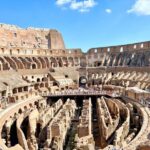
Piramide-Area to Piazza Ostiense: The Train Part That Makes It Stress-Free
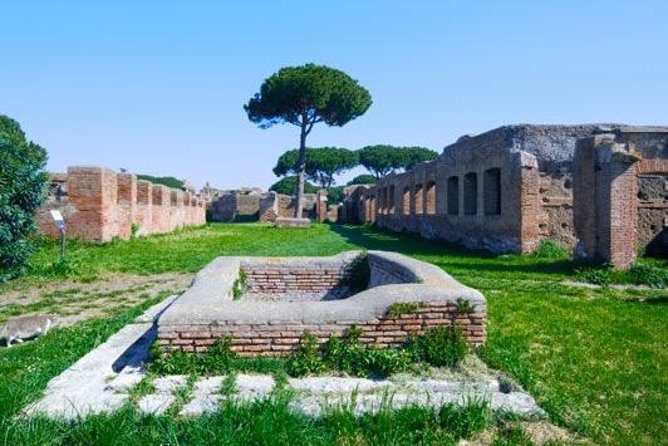
The magic here is the logistics. You meet your guide near public transportation (the meeting point is listed as Piazza Ostiense 11, Rome) and then you head out by train together. Train tickets to and from Rome are included, so you don’t have to do the math while traveling.
The trip itself is part of the value. Instead of building your own day plan around buses, timed tickets, and figuring out where to stand to enter, you show up, follow your guide, and let the group handle the pacing. Reviews strongly suggest the guide leadership matters here—people feel guided from the station to the site and back, not left to figure out the first step.
This tour also sticks to a half-day schedule (about 4 hours total). That’s not random. A tight schedule can be the difference between seeing the highlights well and spending your energy just getting oriented.
The 2.5-Hour Walk: Decumanus Maximus to Real Urban Life
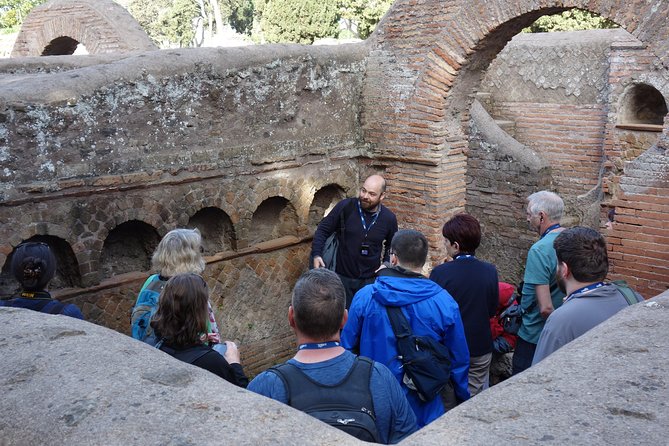
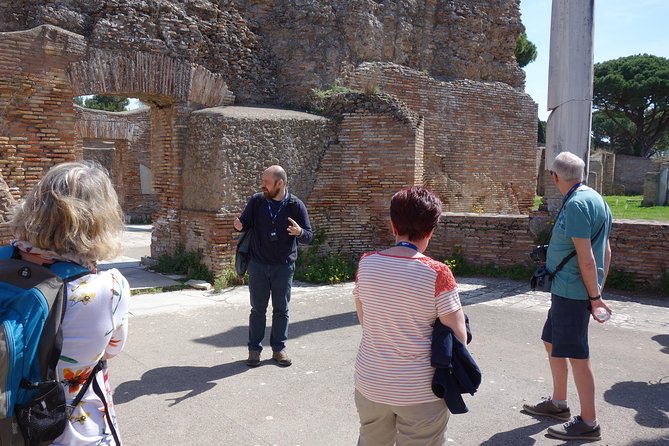
Once you arrive at Parco Archeologico di Ostia Antica, you’re in for a leisurely guided walk for about 2.5 hours. The goal isn’t to cover every corner like a museum marathon. It’s to help you understand what you’re seeing while you’re actually there.
Your route begins with the main street, Decumanus Maximus. This matters because a street is how you read a city. As you walk, you can start to connect what’s around you: storefronts, civic spaces, and the flow of daily movement.
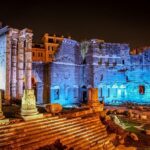
You’ll also pass through key public and commercial areas tied to the port city economy. The site includes structures such as the Forum of the Corporations and the Collegiate Temple, plus taverns and public baths. The guide’s job is to translate this into plain language: who used these spaces, why they were placed where they were, and what the design implies about Roman life.
One practical upside of this style is that it prevents the ruins from feeling like random stonework. With a guide, you’re not just looking at ruins—you’re building a mental map while you walk.
Baths of Neptune and the Mosaics: Art With a Job
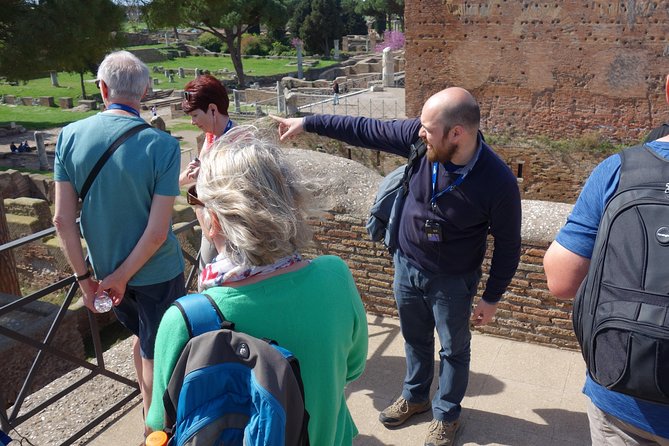
A highlight stop is the Baths of Neptune. Roman bath complexes weren’t just places to clean up; they were social hubs, with architecture and art designed to impress and to create status.
At Ostia Antica, you also get the benefit of mosaics that are easier to appreciate when you know what you’re looking at. The Baths of Neptune are topped by a mosaic depicting the Roman god of the sea, with a four-horse chariot. That kind of detail is exactly why a guided visit can feel more satisfying than a self-guided wander—someone helps you connect symbols to the world that made them.
You’ll also see intact Roman statues along walkways. Even if you don’t consider yourself an art person, this helps you get oriented. Statues and street art are cues that the town wasn’t a construction site—people lived, worked, and gathered here, long before the ruins became a draw for modern visitors.
The Amphitheater and Forum Corners: Seeing Power Up Close
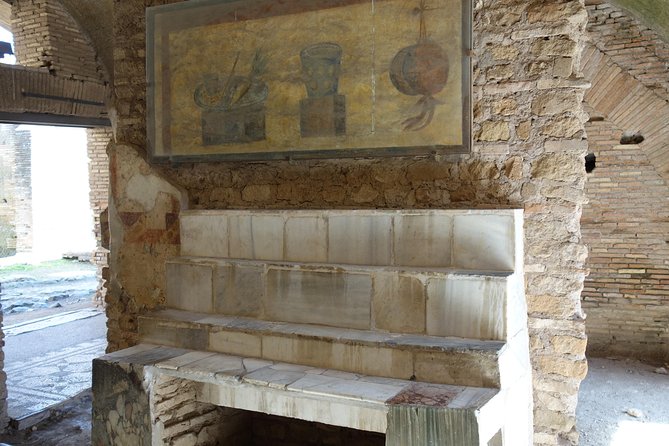
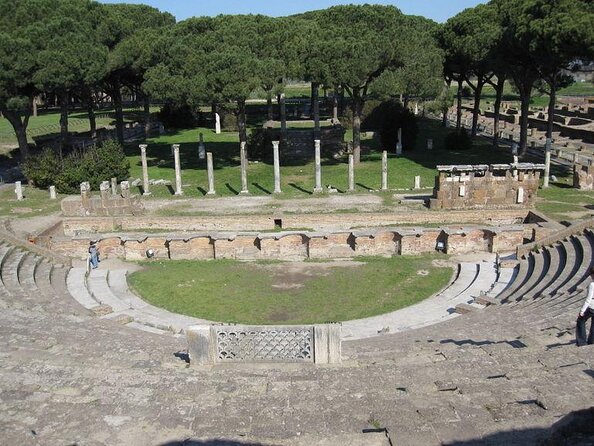
You’re not done once you leave the baths. The route includes a chance to see the amphitheater and take photos from it. The amphitheater dates to 12 BC and was built to hold about 3,500 spectators. That scale is what makes Ostia feel big in your mind—even though it’s quieter than the Rome headline sites.
Sitting in or near the amphitheater gives you a different angle on ancient life. It’s entertainment, yes, but it’s also civic theater. A place that size tells you that crowds, events, and public spectacle were part of the day-to-day rhythm.
Around you, smaller buildings like ruined shops and living quarters help complete the picture. You can start to connect entertainment spaces to the work spaces and home spaces you saw earlier. The result is a more coherent sense of how a Roman port town functioned.
If you’re the type who wants to keep exploring after the guided portion, you might appreciate that the site has more than what’s covered on the timed walk. The museum is mentioned as an extra stop option in the broader visit experience, and it’s there if you want to go deeper once the guide finishes the core highlights.



Guide Quality Is the Real “Included Extra” (Barbara, Alberto, Laura, Cat)
This tour’s biggest differentiator is the guide-led storytelling. The ruins are strong on their own, but the best guides make you feel like the city has a soundtrack: trade routes, daily schedules, public spaces, and what people argued about.
Several guides have been highlighted by name in feedback: Barbara for friendliness and strong engagement; Alberto for clear explanations and pacing; Laura for connecting the ruins to Roman life and keeping the group moving through crowds of school-age visitors; Cat for being informative and friendly; Eduardo for passion and warmth; and Rob for making the site feel less overwhelming.
Here’s what you should take from that pattern. A great guide doesn’t just list facts. They point out details you might otherwise miss and they keep the group steady. One review even mentioned shade planning on a hot day, plus tips on where to refill water bottles—small moments that make a half-day plan feel comfortable instead of brutal.
That matters because Ostia Antica is a walk-first experience. If you end up with a guide who explains slowly and clearly, the half-day feels worth it. If you don’t, you can still enjoy the site—but you’ll likely wish you had more context as you move.
Price and Value: What $59.26 Buys You in a Half Day
At about $59.26 per person, this is priced like a guided half-day that avoids the common add-ons. The entry ticket is included, and so are the round-trip train tickets from Rome.
That inclusion is the real value. If you were piecing this together yourself, the total often gets higher once you add transport time, ticket logistics, and a guide fee. Here, you pay one price and the day is managed from station to ruins and back.
Time value also matters. At roughly 4 hours total (including the travel and the guided walk), this is a good match for a Rome itinerary that’s already packed. It won’t consume your whole day, and it won’t force you into an all-day museum schedule either.
The tradeoff is that you’re not doing a full-site, slow, museum-heavy tour. You’re doing the highlights in a guided format, and that’s exactly what makes it work for half-day planning.
Pace and Practical Comfort: What to Expect on the Ground
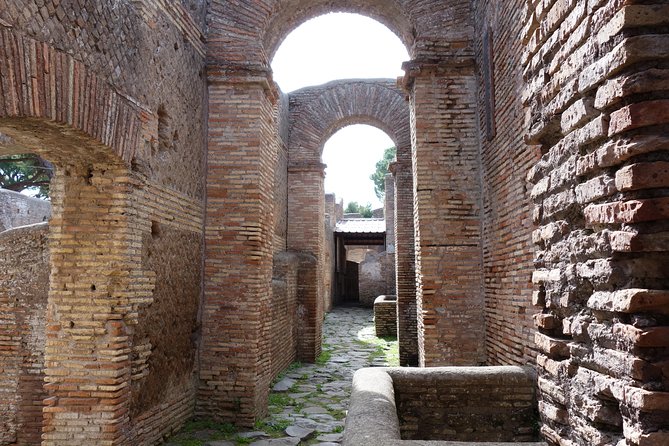
This is a moderate physical activity day. The site walk includes stairs and uneven ground, and you’ll transfer on and off the train. One review specifically flagged that this can be challenging for limited mobility, so if that’s your situation, plan carefully and consider whether a walking-heavy format is right for you.
Hot weather is another reality. If you’re visiting in warm months, expect sun exposure and plan to rely on guide pacing and shade breaks when available. Many guides have been praised for handling heat with practical decisions during the walk.
Also, bring the right ID if you’re traveling with children. Children under 18 might be asked to show an ID card at the site entrance, so don’t leave that at the hotel.
Finally, expect a group format. This is semi-private with a maximum of 12 people, which is usually a sweet spot: small enough for questions, large enough that you’re not stuck with endless one-person pacing.
Who Should Book (and Who Might Not Get the Fit)
Book this if you want:
- A half-day Rome plan that reaches an ancient site without extra headache
- A guide-led walk that helps you understand daily Roman life, not just monuments
- A calmer alternative when you want to avoid the biggest crowd magnets
Consider skipping (or booking a different format) if:
- You need step-free ease, since the walk involves stairs and uneven ground and includes train transfers
- You want more time at the site than the guided window provides
It also helps if you like learning in motion. If you enjoy getting orientation while you’re walking—Decumanus Maximus first, then major civic and entertainment spots—this route style tends to click fast.
One small but important pro tip from the feedback: arrive early for the meeting point. A common suggestion was to be at the meeting location about 20 minutes ahead and to read the day-of meeting instructions carefully so you don’t waste time hunting for the group.
Should You Book This Ancient Ostia Day Trip?
I’d book it if your ideal day in Rome includes easy transit, a guided route through the best-preserved parts of Ostia Antica, and a half-day schedule that won’t derail the rest of your trip. The included train tickets and entry ticket are a strong value play, and the guide-focused format is what turns ruins into a story.
I wouldn’t book it without thought if you’re managing mobility limits or you know you struggle with stairs and uneven ground. In that case, the site is still worth seeing, but you’ll want a plan that matches your needs better.
If you’re on the fence between this and another Roman heavy-hitter, Ostia Antica often feels more human and less chaotic—especially with a guide who keeps the pace steady and the explanations clear.
FAQ
Where do we meet for the tour?
The tour start location is listed as Piazza Ostiense 11, 00154 Roma RM, Italy. The meeting is near public transportation, and your instructions will guide you to where the guide is meeting the group.
How long is the tour?
The tour lasts about 4 hours total, including time for the train ride and a guided walk of about 2.5 hours at Ostia Antica.
Is this a small-group tour?
Yes. It’s semi-private with a maximum of 12 travelers.
What’s included in the price?
The price includes an English-speaking guide, round-trip train tickets between Rome and Ostia Antica, and the entry ticket to Ancient Ostia.
Is the Ostia Antica entrance ticket included?
Yes. Admission is included as part of the tour.
Do I need hotel pickup?
No. Hotel pickup and drop-off are not included.
Is the tour in English?
Yes. The tour is offered in English.
What kind of physical fitness is required?
You should have a moderate physical fitness level. The experience involves walking and you’ll transfer on and off a train, so it’s not ideal if stairs and uneven ground are a problem.
What if the weather is bad?
This experience requires good weather. If it’s canceled due to poor weather, you’ll be offered a different date or a full refund.