REVIEW · ANURADHAPURA
Anuradhapura: 14 Ancient City Sites Tuk Tuk Tour
Book on Viator →Operated by RAJARATA ANCIENT City · Bookable on Viator
A half-day that actually feels efficient. Anuradhapura’s sacred sites are spread out, so this private tuk-tuk tour uses smart routing plus a built-in audio guide to keep you moving and learning. I especially like the front-door hotel or railway pickup and the way the route hits major landmarks like Ruwanwelisaya, Sri Maha Boodhi, and Jetavanaramaya without the headache of bargaining or hunting down rides. One thing to consider: entry tickets aren’t included, so your final cost depends on the UNESCO site fee.
This tour is priced for a small group (up to 3), runs about 4 to 6 hours, and delivers a steady pace across 14 ancient city stops. You’ll get bottled water, parking fees are covered, and you’ll use a mobile ticket—nice for a place where time and walking can add up fast. The only drawback I’d flag is practical, not dramatic: you’ll cover a lot of walking on sun-baked ground, so bring footwear or socks you’re comfortable with.
In This Review
- Key highlights you’ll feel from the moment you start
- How this Anuradhapura tuk-tuk plan saves you from wasted hours
- Price and value: $46.40 per group plus UNESCO entry tickets
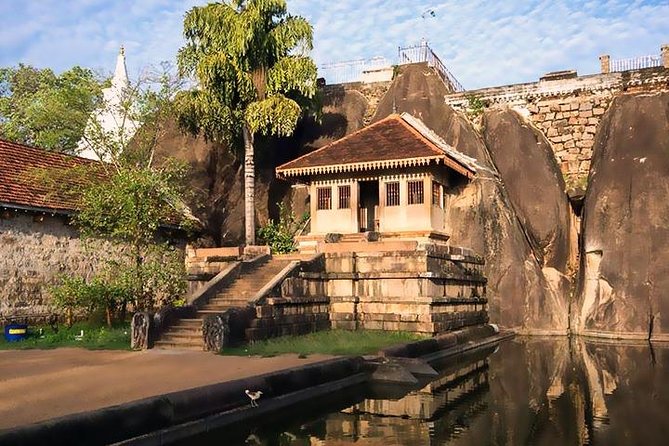
- Starting at Isurumuniya: carvings, ponds, and a calmer start
- Ranmasu Uyana and Mirisaveti: the sacred nature of place, then the relic story
- Sri Maha Boodhi and Ruwanwelisaya: the two big “wow” anchors
- Thuparamaya and Lankarama: bell shapes and the puzzle of stonework
- Moonstone (Sandakada pahana) and guardstones: the art you’ll walk right past
- Abhayagiri’s ruins and Mahamevnāwa’s Samadhi statue: when the scale comes through
- Kuttam Pokuna (Twin Baths): the best kind of ancient surprise
- Jetavanaramaya: the big stupa moment that makes the whole day click
- Practical comfort tips: heat, walking, and keeping your feet happy
- Who should book this tour?
- Should you book the Anuradhapura 14 Ancient City Sites Tuk Tuk Tour?
- FAQ
- How long is the Anuradhapura 14 Ancient City Sites Tuk Tuk Tour?
- Is pickup and drop-off included?
- How much does the tour cost?
- Is this tour private?
- What’s included in the price?
- Are the entry tickets included?
- Do I get an audio guide at every stop?
- What happens if the weather is poor?
- What is the cancellation policy?
- Are service animals allowed?
Key highlights you’ll feel from the moment you start
- Private auto-rickshaw with pickup and drop-off from your hotel or railway station
- Audio guide for every stop so you’re not just staring at stones
- 14 main landmarks in 4–6 hours, built for Anuradhapura’s wide spacing
- Major stupas and temple sites: Sri Maha Boodhi, Ruwanwelisaya, Jetavanaramaya
- Comfort extras included: bottled water and parking fees
- Plan for UNESCO entry fees: $30 per person for 8 sites
How this Anuradhapura tuk-tuk plan saves you from wasted hours
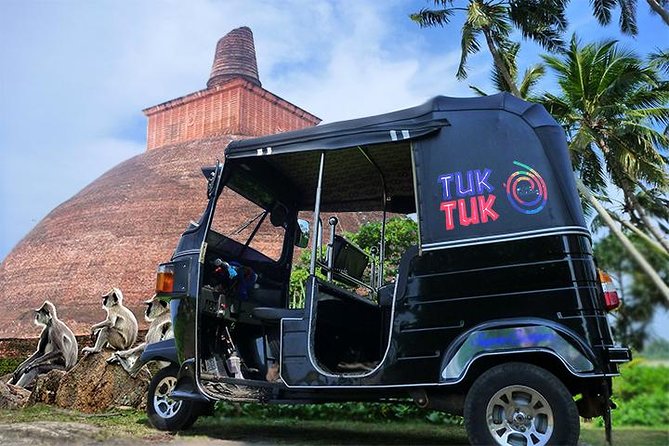
Anuradhapura is the kind of place where “just walk between sights” is mostly wishful thinking. Distances add up, and the heat makes even short transfers feel long. This is why I like the private auto-rickshaw format: you get direct transport between the highlights, then enough time at each stop to actually look.
The best part is that you’re not relying on quick chats, hand signals, or pay-what-you-feel negotiations. You’re picked up, dropped off, and driven through a route designed for a half-day. The tour’s time window—about 4 to 6 hours—is long enough to feel like you did something real, but short enough to avoid the “we’re done before we started” mood.
You also get a digital audio guide for the sites. That matters because a lot of Anuradhapura’s most impressive features are symbolic and architectural, not just scenic. With the audio running as you go, you spend your brainpower on understanding what you’re seeing—not trying to figure it out later.
You can also read our reviews of more tours and experiences in Anuradhapura.

Price and value: $46.40 per group plus UNESCO entry tickets
The tour price is $46.40 per group (up to 3 people). That base fee covers the private transport experience, the digital audio guide for all sites, bottled water, and parking fees. If you’re sharing with other people, the per-person math gets friendlier fast.
Then comes the part you should plan for: entry tickets for the 8 UNESCO World Heritage sites are not included. The fee listed is $30.00 per person. So your total cost depends on how many people are in your group.
A quick way to think about value:
- If you’re traveling as a fuller group, the $46.40 splits nicely and you’re mostly paying for the organization and driving.
- If you’re traveling solo or as a smaller group, the base tour cost per person rises, and the UNESCO fee becomes the bigger piece of your total.
Either way, I think the value holds if your priority is efficiency and good context. You’re getting a structured route through 14 key stops in a half-day—plus audio explanations—rather than piecing together a day on your own.
Starting at Isurumuniya: carvings, ponds, and a calmer start
Most tours in Anuradhapura start with big monuments. This one begins at Isurumuniya Temple, near Tissa Wewa. That’s a smart way to ease into the day, because the temple is known for its carved features—specifically four carvings of special interest.
What I’d focus on here:
- Isurumuniya Lovers: the name alone hints that this isn’t only about architecture.
- Elephant Pond: a reminder that water features are part of the sacred design.
- The Royal Family: a carved clue to the story side of the site.
You’ll have about 20 minutes at this stop. It’s enough time to look slowly, not just snap photos and move on. Admission isn’t included here, so factor that into your UNESCO ticket planning.
Ranmasu Uyana and Mirisaveti: the sacred nature of place, then the relic story
Next comes Ranmasu Uyana, a park associated with the ancient Magul Uyana. The details that stand out are its setting: it sits close to Isurumuni Vihara and Tissawewa, and it’s described as covering about 40 acres. That scale helps you understand why Anuradhapura doesn’t work as a simple walking city.
You’ll get about 40 minutes here, which is longer than many stops. That longer window makes sense if you want to connect the dots between the carvings-and-temple feel of Isurumuniya and the bigger sacred-city layout.
After that, you’ll visit Mirisaveti Stupa for around 10 minutes. This stupa has a clear historical hook: it was built by King Dutugamunu after defeating King Elara. The site is also tied to a moment of devotion—Buddha relics were placed in the sceptre. If you like monuments with a story attached (and not just a silhouette), this is worth your attention.
Sri Maha Boodhi and Ruwanwelisaya: the two big “wow” anchors
Then the tour moves into the kinds of sights that define Anuradhapura for many people.
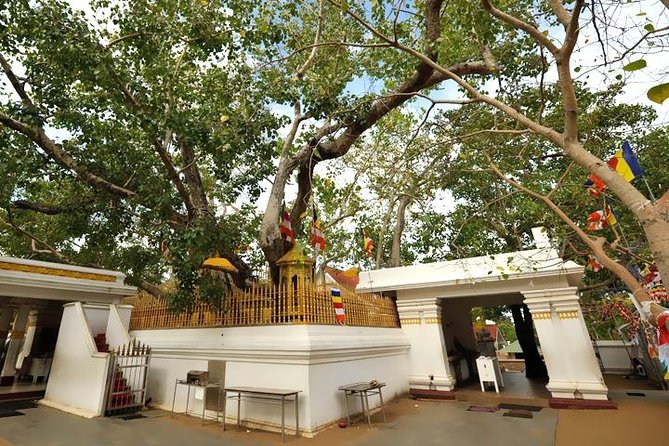
At Sri Maha Boodhi Temple, the headline is the 2,300-year-old bo-tree (Ficus religiosa)—the oldest tree known to have been planted by a human rather than by natural seeding. This stop is about 20 minutes. The value here isn’t only that it’s old; it’s that it’s sacred by reputation and grounded by the specific age detail. You’ll feel why people come back again and again.
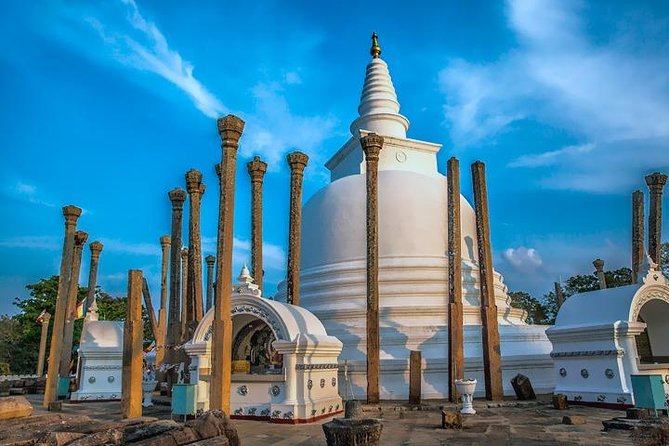
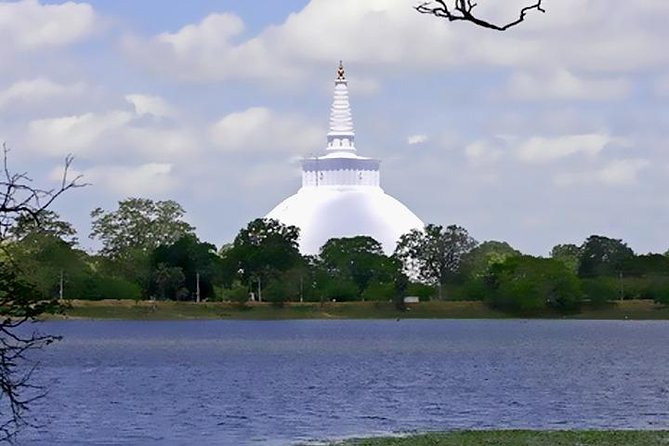
Next: Ruwanwelisaya, a hemispherical stupa considered sacred to Buddhists worldwide. It’s described as containing relics and was built by King Dutugemunu around 140 B.C. Expect about 20 minutes here.
If you’re wondering what makes these stops more than just “another stupa,” it’s the combination of scale and meaning. Audio guidance helps connect the form (stupa architecture) to the reason it’s revered. When you understand what you’re looking at, even short time windows feel purposeful.
Thuparamaya and Lankarama: bell shapes and the puzzle of stonework
From the major monuments, you shift to smaller, more detail-focused sights.
Dagoba of Thuparama (Thuparamaya dagoba) is a bell-shaped dagoba, and the description includes a history of destruction and restoration. It says it was destroyed from time to time, then was completely destroyed and later restored during the reign of King Agbo II. You’ll have about 10 minutes. That short visit works because the main point is architectural shape plus the resilience story.
Then there’s Lankarama Sthupa (about 10 minutes). It was built by King Valagamba at an ancient place called Galhebakada. One interesting detail here is that “nothing is known about the ancient form” and the current form is later. That uncertainty can actually make the stop feel more honest: you’re seeing a surviving layer of the site, not a perfectly preserved museum.
If you enjoy architectural clues and small contrasts between sites, these shorter stops add variety. You don’t get stuck in only one type of monument.
Moonstone (Sandakada pahana) and guardstones: the art you’ll walk right past
Some of Anuradhapura’s most striking details are easy to miss when you’re focused on the main monument. That’s why I like including Moonstone or Sandakada pahana.
The moonstones are semi-circular stone slabs with consistent carving patterns. The middle features a half lotus, surrounded by several concentric bands. The audio context helps you look past the “pretty carving” and notice the design logic.
You’ll likely spend about 10 minutes here.
Right after, you’ll visit Rathna Prasadaya & Guardstone (පොහොය ගෙය සහ මුරගල) for about 10 minutes. The highlight isn’t the name—it’s the transformation of the guardstones. They supported heavy stone balustrades. Over time, they began to be carved with symbols representing prosperity and protection.
This is one of those stops where you’ll get more out of slowing down. Even if you only spend 10 minutes, paying attention to the carvings makes the day feel richer because you’re seeing both the big sacred structures and the careful decorative work that supports them.
Abhayagiri’s ruins and Mahamevnāwa’s Samadhi statue: when the scale comes through
Now you enter the ruin-zone feeling, which can be surprisingly moving because you’re seeing how massive the original monastic center once was.
First is the Main Refectory of Abayagiri Monastery (about 20 minutes). It’s described as a ruined building within Abhayagiriya’s monastic premises, known as an alms-hall where daily al… (the detail is cut off in the description, so you’ll want to rely on the audio for the full idea). Even without the extra sentence, the function matters: it tells you this was a working religious hub, not only a monument display.
Then comes Abhayagiri Dagaba (about 30 minutes). The description emphasizes scale and artistry: it was historically a great monastic center and royal capital, and the monasteries rose to many stories with roofs described as gilt bronze or glazed tiles. The dagaba is also noted as being north of the city. That “north of the city” detail helps you orient yourself on the route.
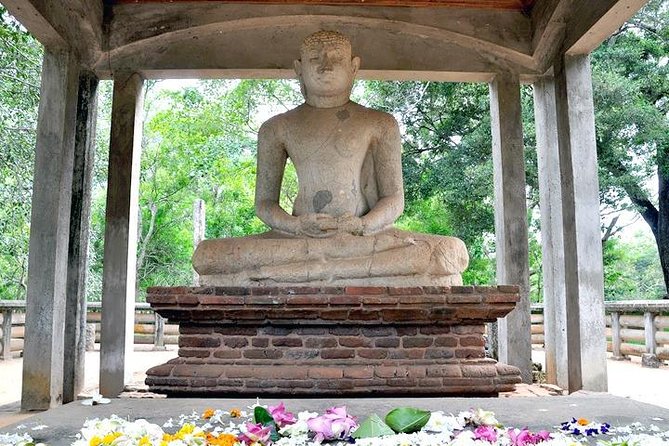
After Abhayagiri, you’ll stop at the Samadhi Statue at Mahamevnāwa Park for around 10 minutes. The key detail is that the Buddha is depicted in the Dhyana Mudra, the meditation posture associated with enlightenment. This is a change of pace: less about relic mounds and more about representing the meditative teaching in form.
Kuttam Pokuna (Twin Baths): the best kind of ancient surprise
If you’re expecting only stupas and temples, Twin Baths (Kuttam Pokuna) will likely be the pleasant surprise.
This stop is about 20 minutes, and the description calls it one of the best specimens of bathing tanks or pools in ancient Sri Lanka. It’s a pair of pools, built by the Sinhalese in the ancient kingdom of Anuradhapura. There’s something very human about that: bathing tanks remind you that sacred city life included everyday routines, water management, and public care.
Audio guidance helps you connect the site to why water structures were placed in a religious context. Even if you don’t love water features normally, this one can shift how you think about the city as a lived space, not only a gallery.
Jetavanaramaya: the big stupa moment that makes the whole day click
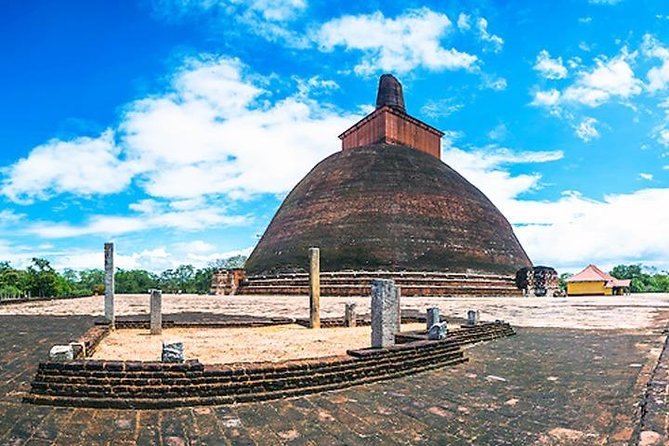
The final “big statement” stop is Jethawanaramaya (about 20 minutes). It’s a stupa and Buddhist reliquary monument located in the ruins of Jetavana monastery, within the world heritage city of Anuradhapura. The description gives you the magnitude: 122 meters (400 feet), and it’s described as the world’s tallest stupa.
Even if you’ve seen other tall monuments elsewhere, this is the one that tends to stick because the number is so extreme. The audio guide should help you picture what you’re looking at in context—because ruins need that extra framing to land emotionally.
When the day ends here, it makes the earlier stops feel connected. Sri Maha Boodhi, Ruwanwelisaya, and the smaller carved details all stop being random dot-to-dot monuments and start reading like parts of a single sacred system.
Practical comfort tips: heat, walking, and keeping your feet happy
This tour is built for coverage, so you’ll be on your feet through temple areas, pathways, and ancient surfaces. A very practical tip from firsthand experience: wear socks. In searing heat, bare feet on hot sand and tiles can hurt if you’re not used to it.
A few other comfort checks that follow logically from the setting:
- Bring a hat or something for sun protection. You’ll be outside for much of the half-day.
- Use lightweight clothing you can move in easily.
- Start the day with water on board. Bottled water is included, but it’s still a hot-country route.
Also keep in mind the tour requires good weather. If it’s canceled due to poor weather, you’ll be offered a different date or a full refund.
Who should book this tour?
I’d book this if:
- You want to hit 14 major sites in about 4–6 hours without planning a vehicle on your own.
- You like monuments but also want the audio guide explanations so the stones have meaning.
- You’re traveling as a small group (up to 3), since the base tour price works out best when split.
I might skip it if:
- You prefer a slow, wandering pace where you spend lots of time away from a structured route.
- You want fully guided explanations in your own language from a live person (this experience uses a digital audio guide, not a custom guide with conversation).
Should you book the Anuradhapura 14 Ancient City Sites Tuk Tuk Tour?
If your goal is a well-paced, organized Anuradhapura highlight day, I think this is an easy yes. The combo of private transport + audio guide + pickup/drop-off solves the biggest friction points: distance, logistics, and interpretation.
Two decision-makers for me:
- Are you ready to add the $30 per person UNESCO entry fees to your budget? If yes, the tour feels efficient.
- Can you handle short stretches of walking in hot conditions? If you bring socks and stay comfortable, you’ll enjoy the route more than you might expect.
If both answers are yes, this is a solid way to see a lot of Anuradhapura’s most important sites in one half-day.
FAQ
How long is the Anuradhapura 14 Ancient City Sites Tuk Tuk Tour?
It runs about 4 to 6 hours, depending on timing and conditions on the ground.
Is pickup and drop-off included?
Yes. Pickup is offered, and you can get front-door pickup and drop-off from your hotel or railway station.
How much does the tour cost?
The price is $46.40 per group, up to 3 people.
Is this tour private?
Yes. It’s a private tour/activity, and only your group participates.
What’s included in the price?
The tour includes a digital audio guide for all sites, bottled water, and parking fees.
Are the entry tickets included?
No. Entry tickets for the 8 UNESCO World Heritage sites are not included and cost $30.00 per person.
Do I get an audio guide at every stop?
Yes. There is a digital audio guide included for all the sites on the route.
What happens if the weather is poor?
The tour requires good weather. If it’s canceled due to poor weather, you’ll be offered a different date or a full refund.
What is the cancellation policy?
Cancellation is free. You can cancel up to 24 hours in advance for a full refund; within 24 hours, the amount paid is not refunded.
Are service animals allowed?
Yes. Service animals are allowed on this tour.