REVIEW · ANURADHAPURA
Anuradhapura Private Ancient City Day Tour
Book on GetYourGuide →Operated by Navin Lanka Tours · Bookable on GetYourGuide
Anuradhapura feels like time travel with shoes on. This private day tour in Sri Lanka’s North Central Province links the city’s living worship sites with major ruins, with an English-speaking guide and tuk-tuk transport built for real sightseeing time. I love the way Navin explains what you’re looking at, not just where it is, and you’ll get an easy, private pace that keeps moving without turning it into a sprint.
I also like the structure: a focused route that hits the big names—Sri Maha Bodhi, Ruwanwelisaya, and the Abhayagiri area—plus smaller stops like moonstone and guard stones that you’d likely miss on your own. One possible drawback: entrance tickets aren’t included, so your final day cost can jump depending on what you pay at the gates.
In This Review
- Key Points You’ll Be Glad You Noted
- Anuradhapura in Five Hours: How This Tour Makes the Big Sights Work
- Navin’s Storytelling and the Comfort of a Private Route
- Sri Maha Bodhi: The Sacred Starting Point That Changes How You See Everything
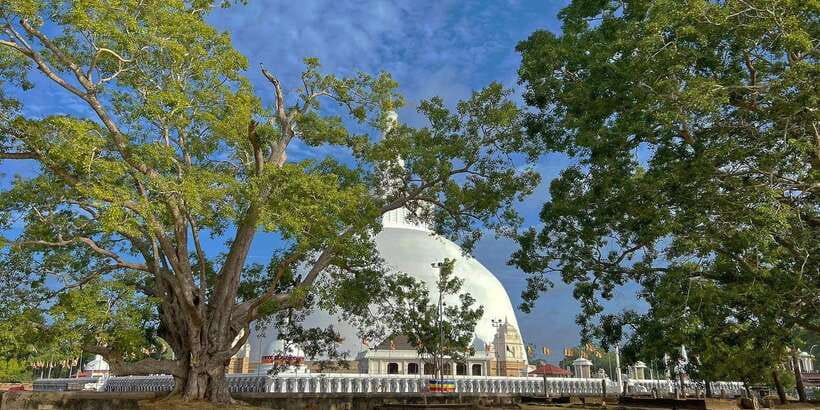
- Ruwanwelisaya and Jethawanaramaya Stupas: Big Scale, Big Meaning
- Kuttam Pokuna and Moonstones: The Stops That Reward Curious Eyes
- Samadhi Buddha Statue and Muragala Guard Stone: Small Stops With a Strong Payoff
- Abhayagiri Vihara Complex: Where Monastery Life Feels Real
- Thuparama Seya: A Strong Closing Note to Finish the Day’s Story
- Price and Entrance Fees: What You’re Really Paying For
- Timing, Heat, and What to Bring (So the Sun Doesn’t Win)
- Who This Tour Suits Best (and Who Might Want a Different Plan)
- Should You Book Navin Lanka Tours’ Anuradhapura Day Tour?
- FAQ
- How long is the Anuradhapura private day tour?
- Is this a private tour or a group tour?
- What language is the tour guide in?
- Does the tour include transport?
- Where is pickup and when should I be ready?
- Is there a tuk-tuk lesson included?
- Are entrance tickets included?
- What should I bring?
- Are hats allowed?
- Is the tour accessible and what about cancellation?
Key Points You’ll Be Glad You Noted
- Private guide + English clarity: Expect story-driven explanations tied to what you see on the ground.
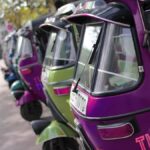
- Tuk-tuk lesson included: You’ll learn the basics so getting around feels less intimidating.
- Active worship plus archaeology: You’ll see places people still visit, alongside major ancient remains.
- A tight route with many stops: It’s efficient, but plan for short photo windows and brief site time.
- Water bottles and light comfort stops: The tour keeps you from running on fumes in hot weather.
Anuradhapura in Five Hours: How This Tour Makes the Big Sights Work

Anuradhapura is one of those places where you can easily get “temple fatigue” fast—lots of buildings, lots of names, and not always enough context. This tour is designed to prevent that problem. You get a private guide, transport by tuk-tuk, and an order of stops that groups the sites logically so your brain can actually connect the dots.
The best part is that the day isn’t only about famous stupas from a distance. You also visit areas where Buddhist practice is part of daily life, so the ruins don’t feel frozen. The guide’s English storytelling helps you understand the symbolism behind what you see—why certain shapes matter, what the places are called, and how the sites relate to each other.
It’s also a good fit if you’re on a tight schedule. The tour runs about 5 hours, but it’s packed with the key highlights plus several shorter “you’ll be glad you stopped” points.
You can also read our reviews of more tours and experiences in Anuradhapura.


Navin’s Storytelling and the Comfort of a Private Route
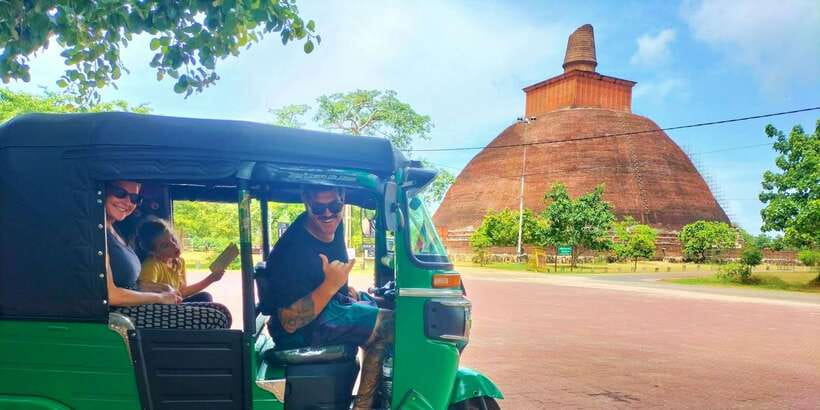
This is a private tour, which matters more than you’d think in Anuradhapura. With one dedicated guide, you can ask questions on the spot—about Buddhism, ancient Sinhala culture, or what the buildings were meant to do. Reviews consistently mention that Navin’s English is clear and his explanations come with personality and good humor, so you’re not stuck reading plaques like a homework assignment.
You’ll also have support beyond guiding. The tour includes an audio guide in English, which is great if you’re the type who likes to look, listen, and then look again without losing the thread. And since you’re in a private setup, you can pause for photos or slow down when something catches your eye.
Transport is included, and the tuk-tuk setup keeps walking to a manageable level. That’s especially helpful in midday heat when you start wishing all stones came with shade.
Sri Maha Bodhi: The Sacred Starting Point That Changes How You See Everything
Jaya Sri Maha Bodhi is the kind of stop that instantly resets the day. Even before you get to the big stupas, you’ll feel the atmosphere of a living sacred site. This is not an empty ruin; it’s a place people come to with intention.
What you’ll love here is the context. A good guide doesn’t just say “this is important.” He explains why it’s important, and what the site represents in Buddhist tradition. With an English-speaking guide, you can get past the basics quickly—so the visit feels meaningful instead of just scenic.
Time is short—about 25 minutes for this stop—so you’ll want to come ready to absorb. Wear comfortable shoes, bring sun protection, and don’t rush your first look. Even if you’re an “I’ll take a quick photo and go” person, spend a few quiet minutes here. It makes the rest of the day click.
Ruwanwelisaya and Jethawanaramaya Stupas: Big Scale, Big Meaning
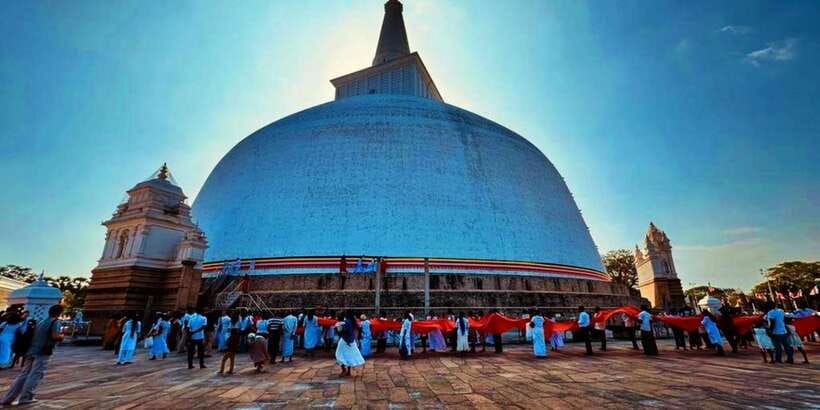
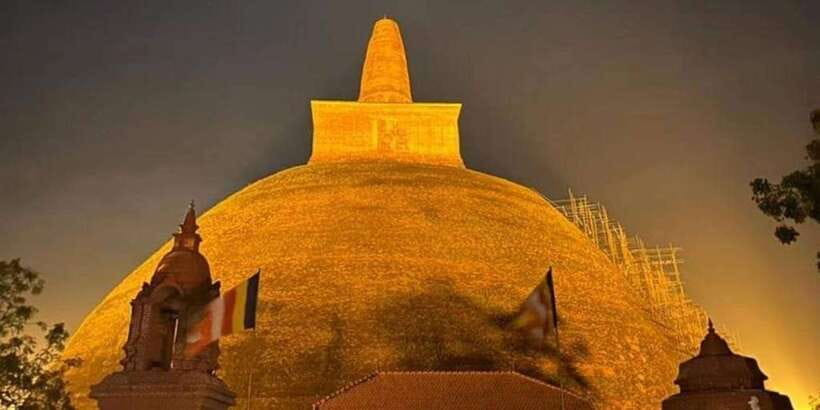
Next come the headline stupas: Ruwanwelisaya (Ruwanweli Maha Seya) and Jethawanaramaya. These are the sites where Anuradhapura’s ambition shows. You see mass, form, and sacred architecture all working together.
These stops are short but focused (again, around 25 minutes each), so the value is in understanding what you’re seeing quickly:
- Why stupas were built the way they were
- What their presence signals in Buddhist culture
- How the sites connect to the broader story of the city
Ruwanwelisaya is one of the more recognizable names, and Jethawanaramaya is the kind of place where scale hits you even if you’ve seen other stupas. With a guide explaining the background, you’ll notice more details than you expected—shape, layout, and the way people move around the sacred space.
One practical note: because these are open and iconic, they can get hot and bright. Plan your photo moments for when you can stand without squinting like you’re trying to read a magic spell.
Kuttam Pokuna and Moonstones: The Stops That Reward Curious Eyes
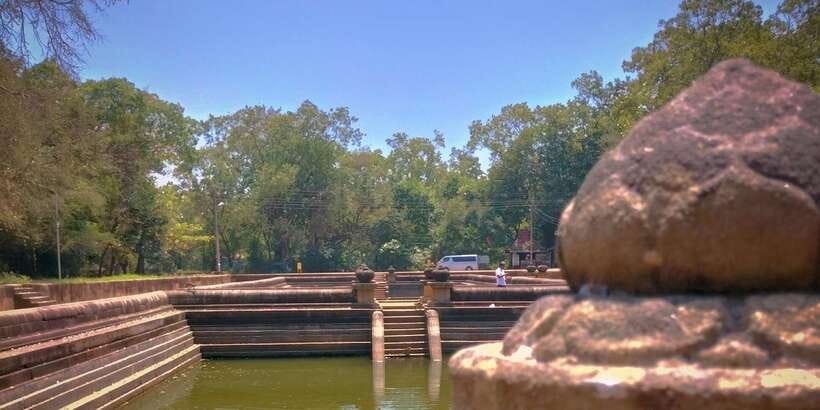
Not every stop is a giant stupa. This tour also includes smaller, detail-rich sites like Kuttam pokuna and Anuradhapura Moonstone. These are the moments where you feel how much craft went into ancient design.
Kuttam Pokuna (stone pond area) is a great reminder that this city wasn’t only spiritual—it was also organized, planned, and practical. Even when your time at each stop is brief, a good guide makes the details legible instead of just “another old structure.”
Then there’s the moonstone. Moonstones are one of those things that look like decoration until someone explains their symbolism and why they appear at key entrances. This is exactly the sort of stop where a private guide is worth it. Without context, it’s easy to miss what you’re looking at.
Expect about 25 minutes at each of these points. Bring curiosity, not expectations of a full museum-style experience.
Samadhi Buddha Statue and Muragala Guard Stone: Small Stops With a Strong Payoff
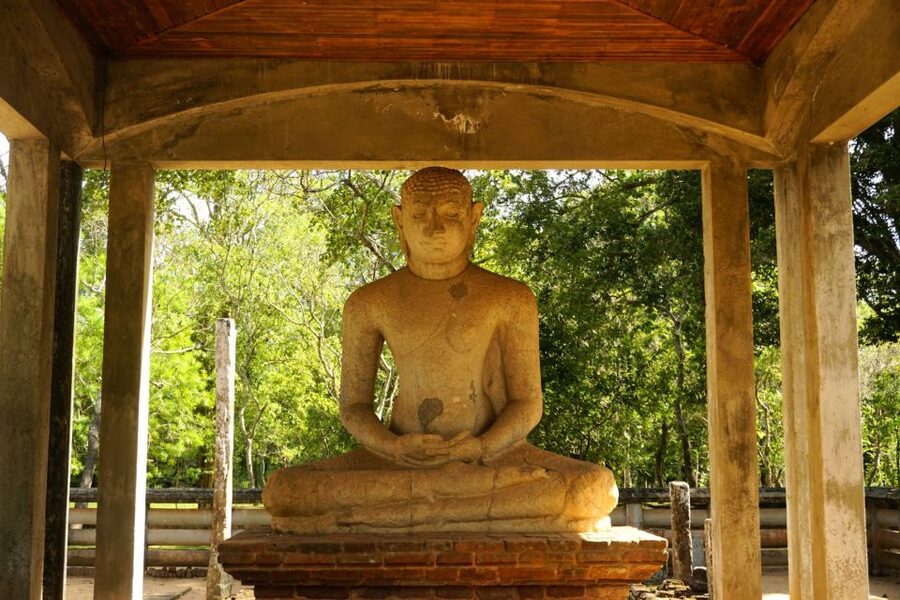
Two more “short but memorable” stops come near the middle: the Samadhi Buddha Statue and Muragala (Guard Stone).
A statue stop can sound quick and generic on paper. But in a city like Anuradhapura, religious figures and protective stone motifs help you connect the spiritual landscape to the architecture. Muragala guard stones, in particular, are the kind of detail you might overlook without a guide pointing out what makes them significant.
If you like photographing textures and patterns, these are good opportunities. If you prefer wide shots, you’ll still come away with at least a couple images that tell a story instead of just showing ruins.
Abhayagiri Vihara Complex: Where Monastery Life Feels Real
The tour then shifts into one of the most interesting areas: Abhayagiri Vihara. This is where you start to feel monastery life as something physical—space, structures, and the rhythms of sacred grounds.
You’ll visit multiple related points, including:
- Abhayagiri Vihara
- Main Refectory of Abayagiri Monastery (අභයගිරි ප්රධාන දාන ශාලාව)
- Elephant Pond
- Plus the route continues through the surrounding highlights
What makes this section work is that it’s not only about buildings. The guide’s explanations tie these places together, helping you understand how Buddhist communities used and moved through the grounds. It turns “ruins” into “a working spiritual environment.”
Elephant Pond is a particularly nice break in tone because it offers a different visual mood than the stupas. It also gives your brain a moment to rest between heavy architecture stops.
Time here is still limited per stop, roughly 25 minutes, so the trick is to focus on what the guide calls out. If you chase every detail at once, you’ll end up seeing nothing clearly.
Thuparama Seya: A Strong Closing Note to Finish the Day’s Story
The tour wraps up with Thuparama Seya. This is a satisfying last stop because it brings you back to another major sacred structure, with enough presence to make the end feel complete rather than rushed.
If you’ve been listening to the guide’s explanations throughout the day, Thuparama will land better than it would without context. You’ll be able to compare how different stupas and sacred sites express Buddhism in their own architectural language.
This stop is also around 25 minutes, giving you a final chance for photos and a last look before your route ends back in Anuradhapura.
Price and Entrance Fees: What You’re Really Paying For
The tour price is $30 per person for a 5-hour private experience with transport and an English-speaking guide. That’s a fair rate for what you get: not just “someone to show up,” but a structured way to handle time, navigation, and explanations.
But here’s the key money point: tour entrance tickets aren’t included. Depending on current gate pricing, the total cost can be noticeably higher once you pay for site entry. One recent pricing note shared in the process is that foreigner entrance for the ancient city area can be around US$30 per person. If that’s close to your travel dates, your day could easily become a two-fee situation.
So how do you decide if it’s worth it?
- If you’re the type who likes understanding what you’re seeing and wants to avoid wasting time figuring things out, the guide-led value is real.
- If you only want photos and don’t care about context, you might feel the cost more strongly.
- If you’re short on time in Anuradhapura, this kind of guided route is often the best use of your hours.
Timing, Heat, and What to Bring (So the Sun Doesn’t Win)
This tour takes place in daylight, and you’ll be outdoors. Heat can get serious, even if you’re not planning to “tour hard.” The tour itself signals this clearly: bring sun cream, wear comfortable shoes, and keep your hat rules in mind.
A couple practical reminders from the tour details:
- No hats allowed
- Bring passport
- Wear shoes you can walk in for multiple short site stops
You’ll also have water bottles included. That’s not glamorous, but it matters. In Anuradhapura, hydration is part of the experience.
If you’re sensitive to sun, plan your pace and ask your guide for small pauses. The private nature of the tour means you can usually adjust without making it a big production.
Who This Tour Suits Best (and Who Might Want a Different Plan)
This is a great match for:
- History and Buddhism lovers who want names explained and symbols translated into plain language
- People who want to see both active worship areas and major archaeology without doing separate research
- Anyone who prefers a private group pace instead of joining a larger crowd
You might want a different plan if:
- You expect a slow, long museum-style day. This is short-stop sightseeing.
- You’re very budget-driven and don’t want to pay entrance fees on top of the tour price.
Also, the tour isn’t suitable for people over 95 years.
Should You Book Navin Lanka Tours’ Anuradhapura Day Tour?
I’d book it if you want your Anuradhapura day to feel organized and meaningful, not like a scavenger hunt through sacred sites. The standout strength is the guide work: Navin’s English and story-based approach make the route make sense. Add the included tuk-tuk transport and the quick lesson, and you get a day that feels efficient without feeling lifeless.
Before you hit confirm, do two things:
1) Budget for entrance tickets, since that’s extra.
2) Pack for the sun: comfortable shoes and sun cream, and remember hats aren’t allowed.
If that fits your style, this is one of the most practical ways to get real understanding out of a short Anuradhapura visit.
FAQ
How long is the Anuradhapura private day tour?
It’s listed as a 5-hour tour.
Is this a private tour or a group tour?
It’s a private group tour, meaning you’ll have a dedicated guide for your group.
What language is the tour guide in?
The live tour guide is English, and the audio guide is also English.
Does the tour include transport?
Yes. It includes private transport.
Where is pickup and when should I be ready?
Pickup is included, and you should wait in the hotel lobby 10 minutes before the scheduled pickup time.
Is there a tuk-tuk lesson included?
Yes, a tuk tuk lesson is included.
Are entrance tickets included?
No. Tourist entrance tickets are not included.
What should I bring?
Bring your passport and comfortable shoes.
Are hats allowed?
No. Hats are not allowed on this tour.
Is the tour accessible and what about cancellation?
The tour is listed as wheelchair accessible. Cancellation is free up to 24 hours in advance for a full refund.