REVIEW · ATHENS
From Athens: Ancient Olympia Full-Day Guided Tour
Book on GetYourGuide →Operated by SIGHTS OF ATHENS-GRAY LINE · Bookable on GetYourGuide
Olympia turns myth into real stone. From Athens, this full-day trip brings you to the birthplace of the Olympic Games and the Temple of Hera, where the Flame is still a living symbol.
You’ll also see the original stadium, so the scale of ancient sport hits you fast, not just in photos.
My favorite part is the on-site time: you get hours at the ruins, then a breather in the nearby village. The main drawback is the length of the day: you’re in transit for most of it, so bring snacks you can grab quickly and plan for tired legs.
If you like structure (set pickup, set stops) but still want some freedom, this tour fits well—especially with the audio and VR tools in many languages and the express security check.
In This Review
- Key points to know before you go
- Ancient Olympia is more than a ruin stop
- The Athens-to-Peloponnese ride, plus the Corinth Canal break
- Temple of Hera and the Flame tradition you can actually see
- Temple of Zeus, Pelopion, and why this site feels huge
- The original stadium and Bouleuterion: sport and judgment together
- On-site time: pace yourself and use the tools
- Olympia village break: shops, alleys, and a real lunch window
- Guided commentary, express entry, and the reality of who you get
- Price and value: $129 is fair if you price it correctly
- Who this trip suits best (and who should think twice)
- Should you book this Ancient Olympia full-day tour from Athens?
Key points to know before you go
- Temple of Hera and the Olympic Flame: you’ll stand where the Flame is ignited for each Games, tied to the sanctuary’s ongoing tradition.
- Temple of Zeus and the famous statue story: you’ll learn about the gold-and-ivory Zeus that helped make this site legendary.
- Original stadium + Bouleuterion: sport and decision-making were side by side, and the ruins show that clearly.
- Corinth Canal photo stop: a scenic break on the way helps break up the long bus ride.
- Audio + VR in 10 languages: tech support for history, even on a rainy day or when your brain is running on bus energy.
Ancient Olympia is more than a ruin stop
Ancient Olympia is one of those places where the big ideas from class suddenly become physical. You’re not just looking at columns; you’re walking through a sanctuary where athletic competition, religion, and power all overlapped.
I like that this tour doesn’t treat Olympia like a quick photo mission. With several hours at the archaeological site, you can actually connect the dots—Temple of Hera, Temple of Zeus, the stadium, and the Bouleuterion—without feeling rushed.
And because there’s audio commentary in 10 languages plus a VR option, you get multiple ways to understand what you’re seeing. That’s a real help if you’re not a classic-myth superfan, or if your group has different comfort levels with history.
You can also read our reviews of more tours and experiences in Athens.
The Athens-to-Peloponnese ride, plus the Corinth Canal break
You start in Athens (the tour begins at Hondos Center) and then settle in on an air-conditioned bus. The day is long—this is the kind of trip where the clock matters—so I’d treat the bus as part of the experience, not a punishment.
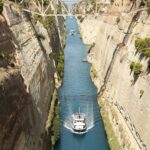
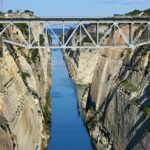
Halfway through the outward trip, you get a 30-minute Corinth Canal photo stop. It’s short, but it breaks the drive into something you can anticipate. If you’re prone to motion sickness, that kind of stop helps you reset.
On the return, you’ll head back around mid/late afternoon and arrive back in Athens at the same convenient meeting area. Expect mostly highway time, so wear layers and keep water and small snacks handy, since drinks and lunch aren’t included.
Temple of Hera and the Flame tradition you can actually see
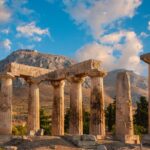
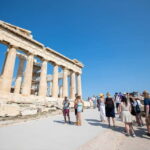
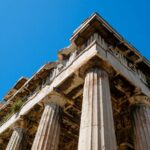
The heart of Olympia’s symbolism is the Temple of Hera. This tour focuses on the sanctuary spaces in the right order, and Hera’s temple is where you get the connection between ancient ritual and the modern Olympic Flame.
Standing there, the history feels less abstract. You’re in a place that’s not only about what the Greeks built—it’s about how an idea has survived. The tour’s explanation ties that Flame tradition to the sanctuary, so it doesn’t become a random fact you forget five minutes later.
Practical tip: the ruins involve walking and uneven ground. Wear comfortable shoes that handle stone paths and short climbs without drama. If it’s cold or rainy, dress for weather—winter days here can feel sharper than you expect.
Temple of Zeus, Pelopion, and why this site feels huge
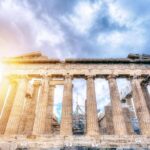
Next comes the Temple of Zeus, along with the Pelopion area. The tour highlights the connection to one of the ancient world’s most famous statue stories: the gold-and-ivory Zeus.
Even if the original statue is long gone, the setting tells you why it mattered. The scale of the sanctuary, the way the spaces relate, and the sheer presence of Zeus’s temple site help you understand how this wasn’t just local worship—it was major prestige.
This is also where you’ll start to notice how Olympia was designed for meaning. Temples weren’t placed randomly; they formed an experience. As you move between Hera’s sacred space and Zeus’s grand temple area, the tour gives you the context to see the sanctuary as a system, not separate landmarks.
The original stadium and Bouleuterion: sport and judgment together
The stadium is the moment when the Olympics stop being a concept and start being a place. You’re walking into an arena where ancient athletes competed for glory, and you can feel the “built for competition” logic in the design.
Right after that, you’ll visit the Bouleuterion, the council house where Olympic judges gathered. I like this pairing because it shows the full ecosystem of ancient games: athletes performed, and officials decided. The architecture supports that idea, and the tour commentary gives it clarity.
If you’re hoping for more than sightseeing—if you want to understand how the system worked—this part of the day is strong. You’ll come away with a better sense of how the games were organized, not just how they looked.

On-site time: pace yourself and use the tools
The archaeological site visit is about 3 hours. That’s enough time to see the main monuments, take breaks, and still feel like you had a day rather than a stopover.
One thing I’d plan for: you’ll likely be moving between areas inside the sanctuary while the VR/audio tools are available. If you use them, don’t feel like you have to “finish” everything. Let the best parts of the ruins lead. If you’re the type who learns by looking first and reading later, you can do that too.
A practical advantage: at least some departures include time that feels less rigid once you’re on site. That freedom helps if you want to linger at Zeus’s temple area or slow down around the stadium seats and lines of sight. It’s the difference between arriving at Olympia and actually spending time with it.
Also, weather matters. Even when conditions are rainy, the day can still work well because you have structured stops and supported narration. Bring a light rain layer so a wet day doesn’t turn into discomfort.
Olympia village break: shops, alleys, and a real lunch window
After the ruins, you move to the modern village of Olympia, next to the site. You’ll have about 1.5 hours of free time, which is ideal if you want a traditional Greek lunch on your schedule.
Lunch and drinks aren’t included, so this is your chance to eat well without feeling trapped in a tour-bus routine. The village also gives you a softer contrast after stone and history—time for an easy stroll, quick shopping, and local goods if that’s your thing.
Tip: use the free time for essentials too. If you’ve been outdoors all morning, this is when you can recharge, hydrate, and reset before the long ride back.
Guided commentary, express entry, and the reality of who you get
This tour includes an English-speaking escort and driver, plus commentary in 10 different languages. There’s also an audio guide and a VR application in 10 languages, which means you’re not limited to one teaching style.
That said, one important consideration showed up in feedback: there can be departures where you don’t get a full live guide experience, and you may hear less information beyond what the driver provides. If history talk is a big reason you’re booking, I’d confirm what’s included for your specific departure before you go.
The good news is that the audio and VR options reduce the risk. Even if you end up with less spoken interpretation in the moment, you’re still supported while walking the sanctuary.
Another helpful detail: the tour mentions an express security check, which can save you time compared to standard entry lines. In a long day, even small time wins are worth it.
Price and value: $129 is fair if you price it correctly
At $129 per person for a full day, you’re paying for more than admission. The tour includes round-trip transportation, air-conditioned bus service, entry tickets for the sites, fuel/tolls/taxes, and the audio/VR tools.
So the value question is simple: if you were to do this by yourself, you’d still need transport both ways and you’d still pay entrance fees for the main monuments. The bus plus tickets bundled together can be a clean deal for a first trip.
That said, balance matters. If what you want most is a strong live guide with ongoing interpretation, the experience can feel overpriced if you end up with minimal guidance on your departure. One review specifically flagged that mismatch.
My take: the tour is best value when you’re okay with structured sight time and supported storytelling (audio/VR), and you’re using the bus to avoid the hassle of logistics.
Who this trip suits best (and who should think twice)
This is a strong choice for:
- First-time visitors who want the main Olympia highlights in one day
- People who prefer clear structure over planning a long day on your own
- Anyone who likes modern tools like VR/audio to make ruins easier to understand
This may be less ideal for:
- People who want maximum flexibility to wander for longer than the set time blocks
- Anyone sensitive to long travel days (about 13 hours total)
- Anyone who expects the trip to feel like a private tutorial; at times, you may rely more on audio/VR than constant live guidance
There’s also an age note: it’s listed as not suitable for people over 95 years. And pets aren’t allowed.
Should you book this Ancient Olympia full-day tour from Athens?
I’d book it if you want the main hits—Temple of Hera, Temple of Zeus, the original stadium, and the Bouleuterion—with bus comfort and entry tickets handled for you. The audio and VR tools are a real benefit for making the ruins make sense, and the Corinth Canal stop is a nice break on the way.
I wouldn’t book it if you’re easily worn out by all-day transit, or if you’re specifically chasing a very talky, hands-on guided experience. In that case, it’s worth double-checking that your departure includes the level of live guidance you expect.
If you do go, pack for a long day: sturdy shoes, layers, and a snack plan. Then use the site hours to slow down where you care most—Zeus’s temple scale, Hera’s Flame symbolism, and the stadium lines where ancient athletes trained for glory.