REVIEW · ANURADHAPURA
Anuradhapura: Tuk Tuk Tour – Ancient City with Audio Guide
Book on GetYourGuide →Operated by Anuradhapura Ancient City Tuk Tuk Tour · Bookable on GetYourGuide
Tuk tuk time in Anuradhapura, done right. You get hotel pickup for an easy start and an English audio guide app that keeps the ruins from feeling like random piles of stone. The one watch-out: the pace is flexible, but with lots of stops in 5 hours, you may want to manage your time at each site so you don’t run out of daylight (and entry tickets aren’t included).
This is a private, small-group ride through a UNESCO-packed area—built for people who want the sites without the hassle of planning each turn. I especially like that you’re not locked into a strict script: you can customize the order and timing. Just note that audio depth can feel uneven depending on what you’re hoping to learn, and driver English may vary.
In This Review
- Why This Anuradhapura Tuk Tuk Tour Feels Different Than a Bus
- Key Stops and What They’re Really Like (5 Hours, 14+ Sites)
- Starting From Pickup: Settle In Before the Ruins Start Talking
- Isurumuniya Rajamaha Viharaya: Early Vibes, Strong Details
- Ranmasu Uyana (Royal Park): The Break in the Middle of the Monuments
- Lankaramaya: Quick Stop, Good Use of Time
- Jaya Sri Maha Bodhi: The World’s Old Tree in the Spotlight
- Ruwanweli Maha Seya: Stupa Scale You Feel in Your Chest
- Thuparama Seya: Smaller Than the Big Ones, Still Meaningful
- Mirisavetiya Stupa and the Anuradhapura Moonstone: Two Quick Culture Anchors
- Jethawanaramaya: A Heavy-Hitter for Stupa Lovers
- Twin Ponds (කුට්ටම් පොකුණ): Not Just Pretty Water
- Abhayagiri Vihara: A Longer Chapter (30 Minutes)
- Samadhi Buddha Statue and the Main Refectory: Detail and Daily Life
- Rathna Prasadaya (මුරගල): The Closing Strong Finish
- The Audio Guide App: Helpful Context, With One Caveat
- Price and Value: Why $30 Per Group Can Actually Make Sense
- Practical Comfort: What to Bring, What to Skip
- Safety and Driver Quality: Quietly Reassuring Details
- Who This Tour Fits Best
- Should You Book This Anuradhapura Tuk Tuk Tour?
- FAQ
- How many people is the tour for?
- How long is the Anuradhapura tuk tuk tour?
- Is hotel pickup and drop-off included?
- Is the audio guide included, and what language is it in?
- Are entry tickets for heritage sites included in the price?
- What should I bring for the tour?
Why This Anuradhapura Tuk Tuk Tour Feels Different Than a Bus
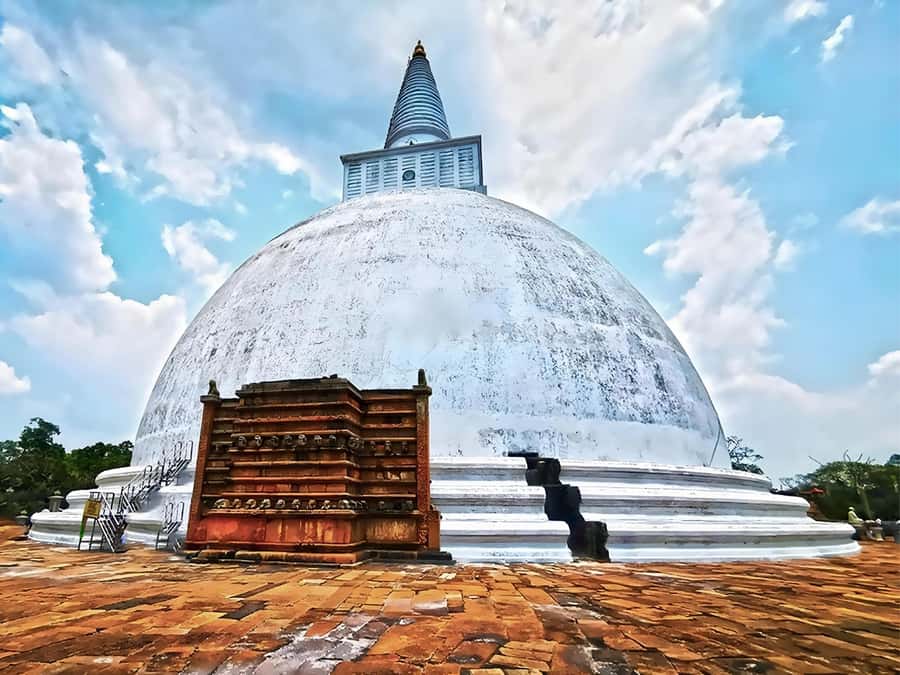
Anuradhapura is big. The ancient core has temples, stupas, ponds, and memorial-style monuments spread out enough that a tuk tuk makes practical sense. You cover a lot while staying flexible, which is a smart way to see this city when you only have half a day.
The tour is set up as a private group (up to 3) in an auto rickshaw. That matters more than you’d think: small groups move at your pace, not the loudest person’s pace. And because you’re not fighting crowds, you can actually stop for a few extra minutes when a view, a carving, or a layout catches your eye.
Key Stops and What They’re Really Like (5 Hours, 14+ Sites)
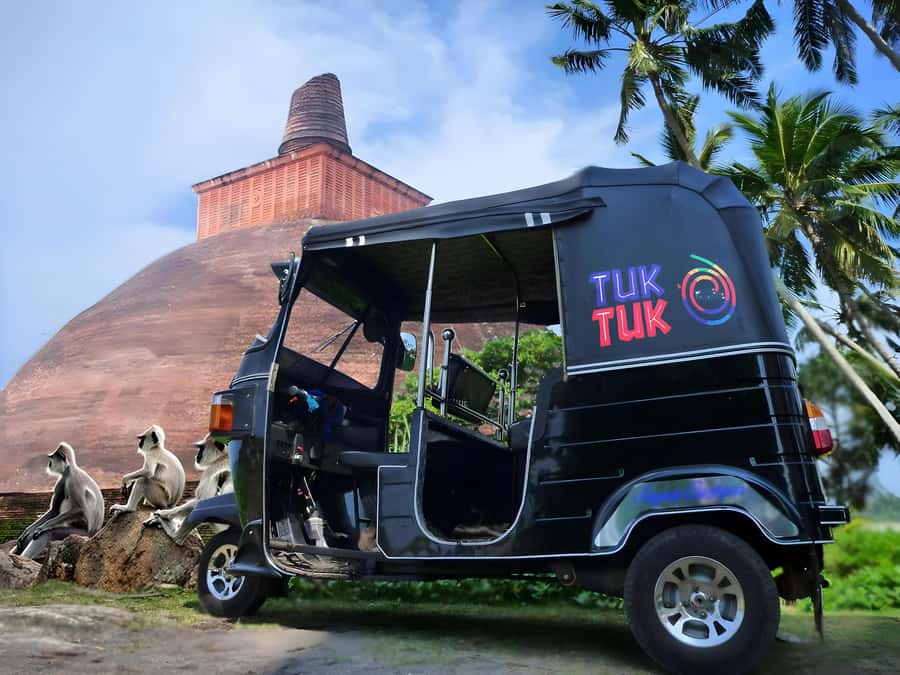
Private tuk tuk routing with audio guidance. The audio guide app is designed to explain 14+ sites, so you get context while you’re riding—not only after you arrive.
UNESCO-focused ancient city circuit. You’ll hit major monuments within the ancient city area, including UNESCO World Heritage sites and key landmarks many people come to see.
Comfort matters in the heat. You’ll be moving between sites in short bursts, which can feel easier than walking your way across the ruins.
Flexibility you can feel. You can customize the route to match your interests and linger where you want.
Safety and support built in. The provider mentions a 24-hour ambulance service for emergencies, and tuk tuk drivers with over ten years of experience.
Now let’s walk through what you’ll see, in the order you’re likely to visit.
You can also read our reviews of more tours and experiences in Anuradhapura.


Starting From Pickup: Settle In Before the Ruins Start Talking
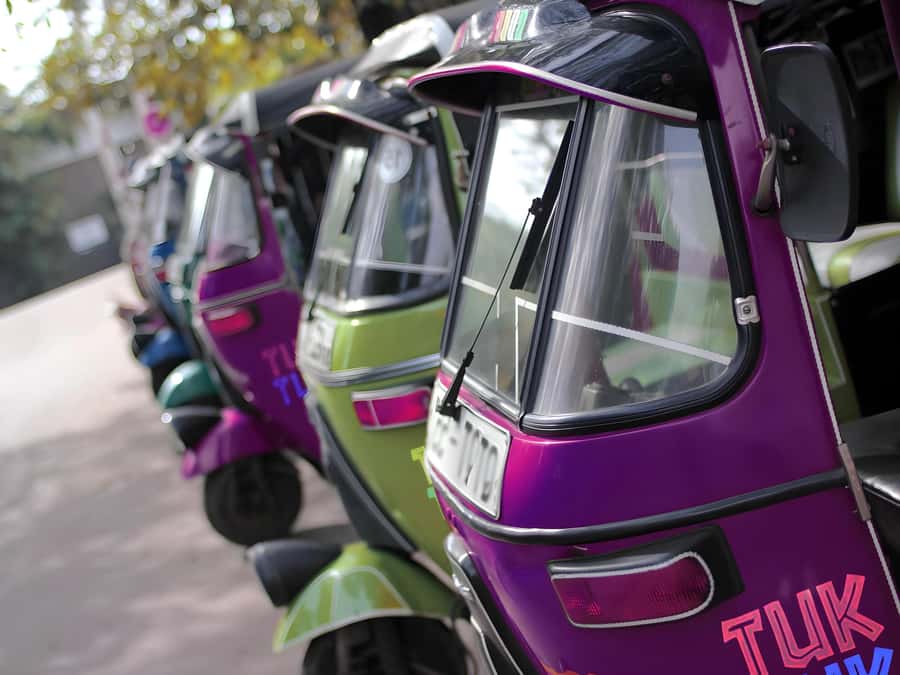
You start with pickup from Anuradhapura (and the tour includes hotel pickup and drop-off). The plan is simple: you get in the tuk tuk, you ride for about 30 minutes to begin the circuit, and then you start stacking temple and stupa stops back-to-back.
A practical tip: wear shoes that can handle uneven stone and a little dust. You’ll be on foot at each site, and some paths can be slippery after rain. Bring a hat and umbrella if the weather is sunny or sudden—this is Sri Lanka, not a lab experiment.
Isurumuniya Rajamaha Viharaya: Early Vibes, Strong Details
Your first major stop is Isurumuniya Rajamaha Viharaya, with about 20 minutes here. This is the kind of place where you can get a quick win: you’re not just passing through, you’re stepping into a religious complex that helps anchor the rest of the day.
What I like about starting here is momentum. After your ride, you’re ready to focus right away. Give yourself enough time to notice the layout before rushing to the next stop.
Ranmasu Uyana (Royal Park): The Break in the Middle of the Monuments
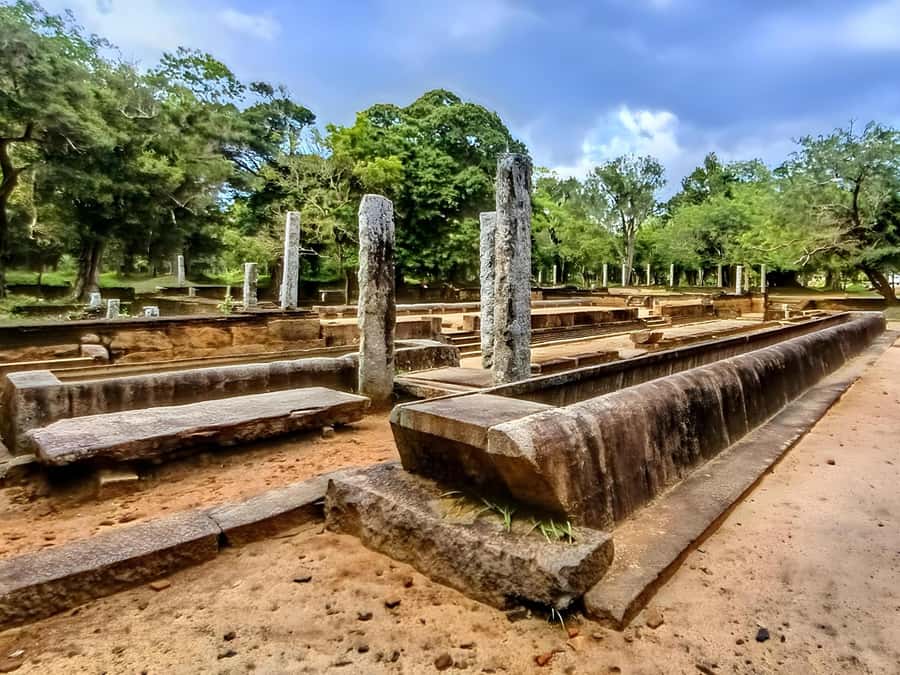
Next up is Ranmasu Uyana (Royal Park) for about 40 minutes. This stop has a different feel than the temple-and-stupa rhythm—more open space, more time to breathe, and a calmer moment in the overall loop.
If you like photos, this is often where you’ll get them without feeling like you’re crowding a doorway. It’s also a good chance to reset for the next wave of monuments.
Lankaramaya: Quick Stop, Good Use of Time

Lankaramaya is a shorter visit, around 10 minutes. That doesn’t mean it’s insignificant—it just means it’s perfect as a connector stop in a tight half-day schedule.
In a tour packed like this, short visits can be smart. You get exposure and orientation without burning your entire 5-hour window.
Jaya Sri Maha Bodhi: The World’s Old Tree in the Spotlight
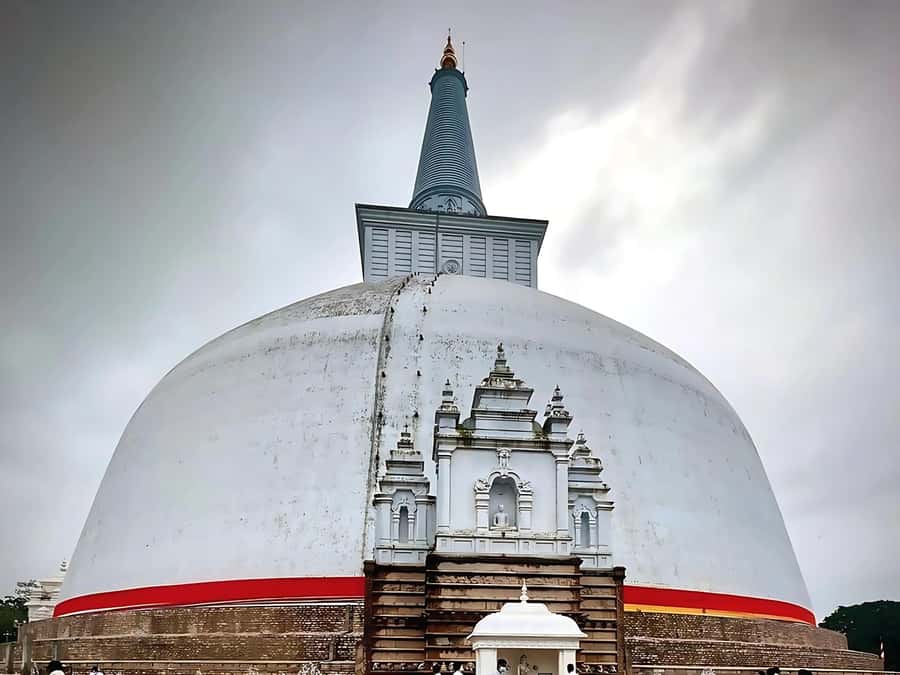
Then you’ll head to Jaya Sri Maha Bodhi for about 20 minutes. This is the famous one people talk about: the site connected to the world’s oldest tree reference in the tour highlights.
Here’s the thing: when a place has major cultural weight, you don’t need to overthink it. Slow down a little. Look around, take in the atmosphere, and read what you can through the audio guide so you’re not just staring at the trunk and wondering what you’re missing.
Ruwanweli Maha Seya: Stupa Scale You Feel in Your Chest

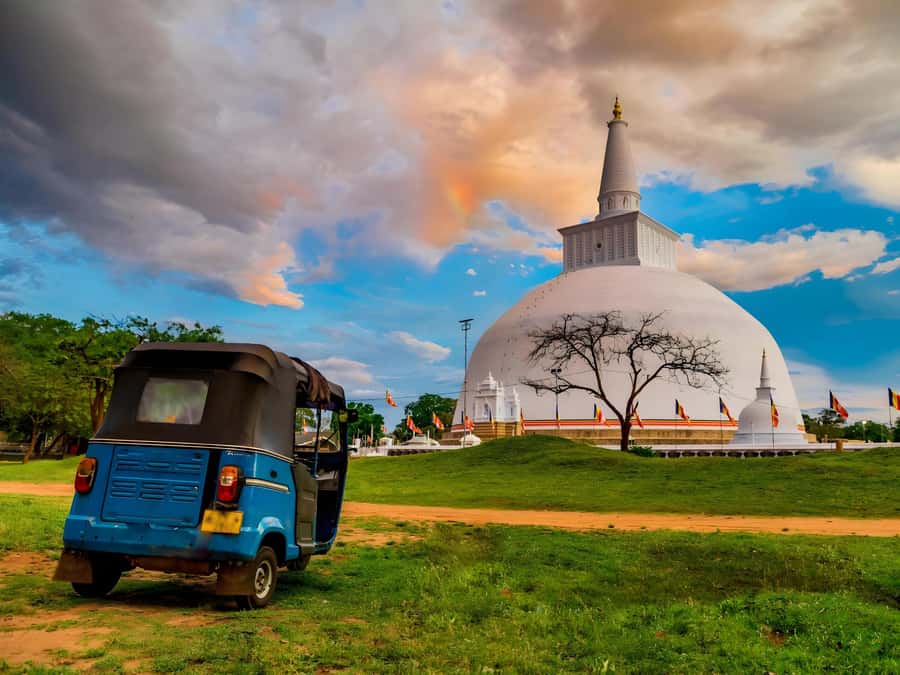
Your next stop is Ruwanweli Maha Seya (about 20 minutes). Stupas can look similar until you stand in front of them and realize the scale and craft are the story.
This is a good spot to follow the audio guide closely, because the meanings and architectural intent are usually what turn a “big structure” into an “aha.”
Thuparama Seya: Smaller Than the Big Ones, Still Meaningful
Thuparama Seya is another shorter stop at around 10 minutes. Don’t treat it like a filler. In a circuit like this, those brief stops help you build a mental map of the area—where things sit, how the complex is arranged, and how different monuments play different roles.
If you’re the type who likes variety, these smaller moments keep the day from becoming one long stupa stare.
Mirisavetiya Stupa and the Anuradhapura Moonstone: Two Quick Culture Anchors
You’ll visit Mirisavetiya Stupa (about 10 minutes) and then Anuradhapura Moonstone (about 10 minutes). The stupa gives you the monumental feel. The moonstone gives you the detail feel.
Moonstones (decorative stone slabs at entrances) are the kind of thing you’ll miss if you rush. When time is limited, you have to be intentional: take 2–3 minutes to look closely, then let the audio guide explain what you’re seeing.
Jethawanaramaya: A Heavy-Hitter for Stupa Lovers
Next is Jethawanaramaya for about 10 minutes. Even in a short visit, this is typically the kind of stop that gives you that unmistakable “so this is why people remember this city” moment.
If you want maximum value, stand back first to understand the shape, then move in for details. That simple two-step improves your experience a lot.
Twin Ponds (කුට්ටම් පොකුණ): Not Just Pretty Water
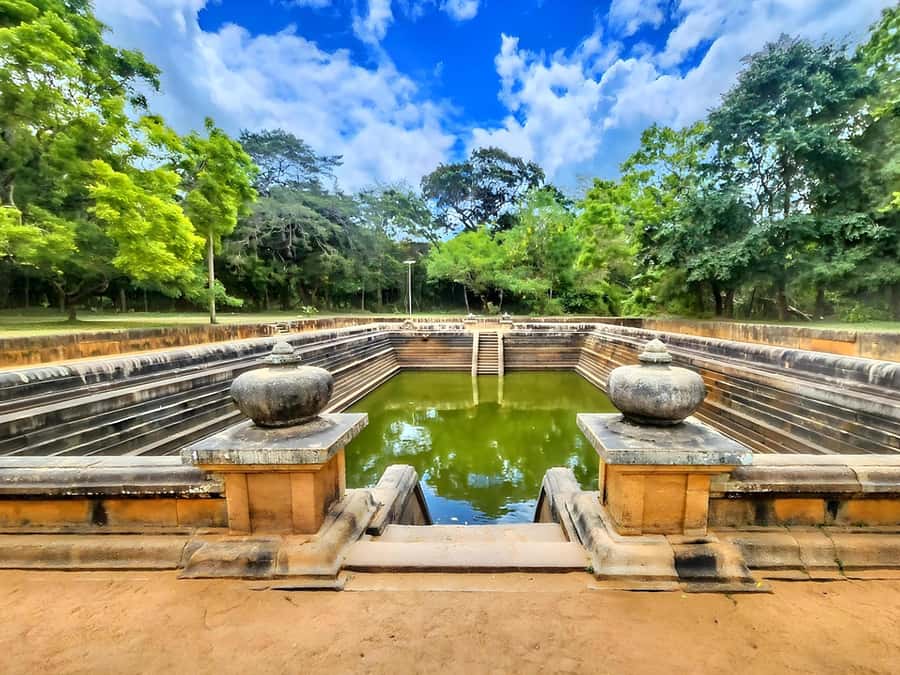
Now you’ll reach Twin ponds (කුට්ටම් පොකුණ) for about 10 minutes. Ponds in ancient complexes often tie into practical, ritual, and everyday life. This is where the audio guide can help connect the visual to the meaning.
Don’t expect a long lesson here—this is a quick stop—but it’s one of the best places to use your curiosity. Look for symmetry, layout, and how the ponds relate to surrounding structures.
Abhayagiri Vihara: A Longer Chapter (30 Minutes)
Then comes Abhayagiri Vihara for about 30 minutes. This is one of the bigger chunks of time on the route, and that tells you something: it’s meant to be more than a passing glance.
When you arrive, try to pick a direction and walk the area in your head. Think: where would ceremonies happen, where would people gather, and how would visitors move through the site? Even with a short visit, that mental exercise makes the place stick.
Samadhi Buddha Statue and the Main Refectory: Detail and Daily Life
After Abhayagiri, you’ll see Samadhi Buddha Statue (about 10 minutes) and then Main Refectory of Abayagiri Monastery (about 15 minutes).
This pairing is interesting because it flips the focus. One stop centers on spiritual iconography. The other points toward how communities lived—refectories are tied to daily routines, food, and gathering.
If your brain likes connections, this part of the tour is a good sign that you’re seeing more than monuments.
Rathna Prasadaya (මුරගල): The Closing Strong Finish
Your final longer stop is Rathna Prasadaya | මුරගල for about 40 minutes. That’s a generous ending in a 5-hour schedule, which means you’ll have room to slow down.
If you’ve been rushing earlier (it happens), this is a good chance to correct course. Use the time to revisit what grabbed your attention—stairways, carvings, or the way the buildings sit within their space.
After that, you hop back into the tuk tuk for about 30 minutes and return to Anuradhapura.
The Audio Guide App: Helpful Context, With One Caveat
The audio guide is included and runs in English, sent via a link to your WhatsApp number after booking. You’ll use it on-site while you move between locations, and it’s designed to cover 14+ sites with historical facts, cultural insights, and anecdotes.
Here’s the balance: audio guides are great when you want a steady thread without hiring a separate live guide. But they can’t perfectly match your exact interests. One practical consideration from experience: the audio can feel less detailed than you’d want at certain stops. If you’re hoping for deep temple theology or very specific historical arguments, you might supplement with a quick read at a site sign or a guidebook.
Still, for first-timers, this app approach is smart. It keeps you informed during the tuk tuk ride and reduces that awkward moment of standing in front of something important and guessing.
Price and Value: Why $30 Per Group Can Actually Make Sense
The stated price is $30 per group for up to 3 people, for a 5-hour private tuk tuk tour. Entry tickets are not included, but parking fees and bottled water (1 per guest) are.
So where’s the value?
- You’re paying for convenience, not just transport. Hotel pickup and drop-off means you don’t burn time figuring out logistics.
- You’re paying for time-efficiency. In half a day, you cover a lot of major monuments spread across the ancient city area.
- You’re paying for private pacing. Small-group freedom can be worth it if you hate standing in long lines or being dragged along.
The main cost surprise risk is entry fees. Since heritage site and museum tickets aren’t included, check what you plan to enter so you can budget without stress.
Practical Comfort: What to Bring, What to Skip
You’ll get the best experience if you plan for walking and sun. Bring:
- Comfortable shoes
- Hat and umbrella
- Comfortable clothes and socks
- Internet access (for the audio guide link)
Not allowed items include drones, smoking in the vehicle, alcohol/drugs, and ripped or costume-style clothing. The tour also lists limits for people with back problems, wheelchair users, people over 95, and over 140 kg. That’s worth taking seriously because you’ll be using a vehicle and stepping on uneven surfaces.
Safety and Driver Quality: Quietly Reassuring Details
The provider states tuk tuk drivers have over ten years of experience with tuk tuks and the highways they travel on. They also mention a 24-hour ambulance service in emergencies.
That doesn’t mean you’ll need it—but it helps you feel taken care of. In a country where roads and heat can both be challenging, driver experience and emergency planning are real parts of “tour quality,” even if they don’t show up in your photos.
Who This Tour Fits Best
This is a great fit if:
- You want a half-day overview of Anuradhapura’s biggest monuments
- You like self-guided context through an audio app
- You prefer private, small-group pacing over crowd schedules
- You’re comfortable managing short visits across many stops
It may be less ideal if you:
- Need wheelchair access or have mobility or back limitations
- Want one site at a time with lots of deep discussion (this schedule moves)
- Expect a live, highly fluent English-speaking guide at each stop (audio is provided; driver English can vary)
Should You Book This Anuradhapura Tuk Tuk Tour?
If you’re short on time and want maximum “I get it now” value from Anuradhapura, I’d book it. The private tuk tuk, hotel pickup, and audio guide combo is a practical way to see 14+ sites without turning your day into a logistics project. The itinerary also balances major monuments with detail-oriented stops like the Moonstone and the ponds, which helps the city feel more like a place people used, not just a museum of stones.
Just go in with the right expectations: plan for entry fees on top of the tour price, wear good shoes, and decide in advance how long you want to linger at your top 2–3 sites. If you do that, this tour becomes a smart, fun half-day circuit instead of a rushed checklist.
FAQ
How many people is the tour for?
It’s a private group for up to 3 people per group.
How long is the Anuradhapura tuk tuk tour?
The tour duration is 5 hours.
Is hotel pickup and drop-off included?
Yes. Hotel pickup and drop-off are included, and you can also choose another pickup/drop-off location.
Is the audio guide included, and what language is it in?
Yes, the audio guide is included and it’s in English.
Are entry tickets for heritage sites included in the price?
No. Entry tickets for Heritage Sites and museums are not included.
What should I bring for the tour?
Bring comfortable shoes, a hat, an umbrella, comfortable clothes, socks, and internet access.