REVIEW · CHENNAI
Chennai: Marina Beach Heritage Walk
Book on GetYourGuide →Operated by 5 Senses Tours · Bookable on GetYourGuide
Chennai comes into focus on the promenade. This Marina Beach Heritage Walk strings together three great themes in one tidy loop: the rituals of Parthsarathy Temple and the big ideas of Swamy Vivekananda for the West. One possible drawback: it’s not a long, sand-only beach hike, so if you’re craving hours on the shoreline, you may feel the emphasis is more cultural than purely beach time.
You start at 4 PM at Chennai Marina Lighthouse, climb up when it’s open, then move through maritime sights and city stories before ending around 7 PM by the temple entrance.
In This Review
- Key highlights to know before you go
- Marina Lighthouse at 4 PM: the view that sets the tone
- A seafront story told by statues and city change
- Vivekananda House: the philosophy behind his famous speech
- Parthsarathy Temple rituals and the carvings you’ll actually notice
- Guide style and pacing: what makes the walk feel worth it
- Price and value: is $49 a fair deal?
- Practical tips for your Marina Beach Heritage Walk
- Should you book this Marina Beach Heritage Walk?
- FAQ
- Where does the Marina Beach Heritage Walk start?
- What time does the tour begin and end?
- How long is the tour?
- Is it a beach walk the whole time?
- Is there a lighthouse climb?
- Is Vivekananda House included every day?
- What language is the guide?
- What’s included in the price?
- Is the tour suitable for people with mobility impairments?
Key highlights to know before you go
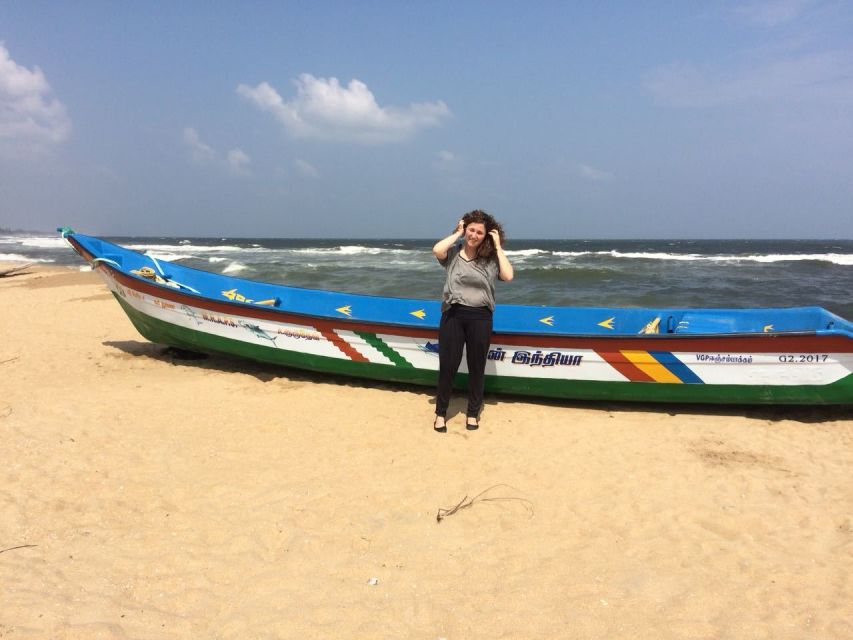
- A Marina Lighthouse climb for quick orientation (not possible on Mondays)
- Chennai’s evolution told through seafront statues and guide narration
- Vivekananda House and his philosophy for Western audiences
- Parthsarathy Temple walkthrough with rituals, Vishnu-related carvings, and Chola/Vijayanagara era shrines
- Ministry-recognised operator (Five Senses Tours) focused on local guides and local products
- English-speaking live guide with private group option
Marina Lighthouse at 4 PM: the view that sets the tone

The tour begins at 4:00 PM outside Chennai Marina Lighthouse, on Marina Beach Road in Mylapore. Plan to arrive a few minutes early so you’re not rushed when you meet your guide and get oriented. This start time matters. Late afternoon light is usually kinder for walking and photos, and it helps you avoid the harshest heat.
First stop is the lighthouse itself. When it’s open, you climb up for a panoramic view over the beach and the city, then head back down to explore the nearby Maritime Museum area. That “up high, then back to street level” rhythm is smart, because it makes the rest of the heritage walk easier to understand. You’re not just moving from one place to another—you’re building a mental map of how Chennai spreads along the coast.
Two practical notes you should know upfront:
- The lighthouse is closed on Mondays, so you won’t be able to climb it.
- If the lighthouse climb is off the table, the tour’s emphasis shifts more toward what’s accessible around the seafront.
Also, remember this is a walking tour. Comfortable shoes are non-negotiable, especially around temple areas where you’ll spend time moving slowly and looking closely.
You can also read our reviews of more tours and experiences in Chennai.

A seafront story told by statues and city change
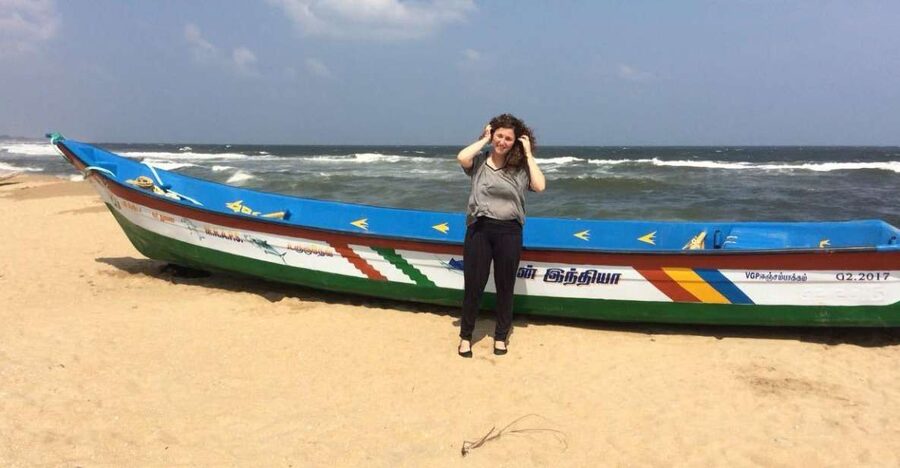
After the lighthouse and museum stop, the walk continues along the seafront. This part is more than sightseeing. Your guide explains how Chennai grew—from a smaller fishing village to a thriving metropolis—using the statues and landmarks you pass as visual chapters.
I like this approach because it keeps the story grounded. Instead of learning history as a list of dates, you connect it to objects you can actually see on the route. You’ll hear how the city’s identity has shifted over time, but also how certain cultural threads persist along the coast.
Here’s the one thing to calibrate: Marina Beach is right there, but the tour isn’t a long, “walk in the sand” experience for the whole 3 hours. The route mixes beach-side walking with cultural stops. That’s great if your priority is understanding the city. If your priority is extended beach time, go in with realistic expectations.
Vivekananda House: the philosophy behind his famous speech
Next comes Vivekananda House, a landmark connected to Swamy Vivekananda. This stop is the bridge between local heritage and the global impact of Indian philosophy. You’ll hear about his landmark speech about Indian philosophy to the West, and how his thinking traveled beyond India’s borders.
One of the most meaningful themes you’ll likely hear is his early understanding that religious leadership also has to respond to basic human needs—food and other necessities for hungry millions. That’s not just a historical tidbit. It reframes philosophy as something with real-world responsibility, which gives this stop more weight than a typical “big name” visit.
A scheduling detail that changes the experience: Vivekananda House is closed on Mondays. On those days, you won’t visit it and you’ll spend more time on sites at the beach. If Vivekananda House is a top reason you’re booking, avoid Monday.
Parthsarathy Temple rituals and the carvings you’ll actually notice
Your final major stop is ancient Parthsarathy Temple. This is where the tour’s cultural depth turns from story to lived tradition.
You’ll do a guided walk inside the temple and its surrounding areas, with a focus on rituals and how worship is carried out. You’ll also learn what you’re looking at—incarnations of Vishnu and shrines connected to the rule of Cholas and Vijayanagara Kings. If you’ve ever looked at Indian temple architecture and thought, I know I’m seeing something important but I don’t know what, this is the kind of guided stop that can fix that fast.
The highlight for many people is the craftsmanship. Expect intricately carved pillars and detailed elements throughout the space. This is also a great time to slow down and focus. You’ll get the most out of it if you’re willing to look up, not just ahead.
The tour ends at 7:00 PM outside the temple. That timing is useful: you get a temple experience without it dragging on late into the night, and you still have time for dinner plans afterward.
Dress and respect basics: since this is an active temple, dress modestly and follow any on-site guidance from your guide and temple staff. You don’t need special gear—you just need to be ready to behave like you’re entering a place of worship.
Guide style and pacing: what makes the walk feel worth it
A heritage walk stands or falls on the guide. The best versions are part storyteller, part city translator. In this tour format, you get exactly that: a live English guide walking you from lighthouse viewpoint to philosophy stop to a ritual temple visit.
From what people have shared, guides such as Hareesh bring the city alive with street-level details—mixing history with street art, and even adding practical moments like a fish-market stop and coffee. Another guide, Kannan, has been praised for friendly, clear information and for helping travelers think through getting back to their hotel. You might not get the same exact side moments every time, but the overall pattern—history plus real street context—comes through.
Pacing is also thoughtful. The total duration is 3 hours, and the flow is structured: lighthouse and maritime sights, then seafront city stories, then Vivekananda House, then Parthsarathy Temple. That keeps the tour from feeling like a frantic checklist. It also means you’re not spending half the day stuck in transit.
If you’re someone who likes to ask questions, this is a good fit. One reason is simple: the stops are close enough that you can keep up, and the guide has enough variety to answer different interests—temples, philosophy, city growth, and everyday life along the coast.
Two cautions:
- The tour isn’t suitable for people with mobility impairments.
- On Mondays, key sites (lighthouse climb and Vivekananda House) are closed, so the experience shifts.

Price and value: is $49 a fair deal?
At $49 per person for about 3 hours, this tour sits in the “worth it if you like guided context” category. The value isn’t just that you’re paying for a walk. You’re paying for:
- a guide (live, in English)
- entrance fees
- light refreshments
That package matters, because temples and heritage sites often add small costs and logistics that are annoying to sort out on your own. Here, those pieces are handled for you, and you’re left with the fun part—learning and looking.
What’s not included is also important for budgeting: hotel pickup and drop-off aren’t included (though pickup is optional at the hotel lobby). If you’re already near Marina Beach or comfortable getting yourself to the meeting point, the price feels more straightforward. If you need transport from far away, factor that into your total cost.
The “value” question then becomes personal. If you want a guided explanation of rituals, architecture, and philosophy with minimal planning, $49 can be a good deal. If you mainly want lounging on the beach and minimal structure, you might decide it’s more tour than you need.
Practical tips for your Marina Beach Heritage Walk
Here are the small choices that make the day smoother:
- Wear shoes you can walk in for 3 hours. There’s lighthouse area movement and temple walking.
- Bring a light layer and water. You’re outside for much of the route, and the heat can build later in the afternoon.
- Check whether it’s Monday. On Mondays, the lighthouse and Vivekananda House won’t be visited, and the schedule shifts more toward beach-side sites.
- Plan your return. The tour ends at 7:00 PM outside Parthsarathy Temple, so decide ahead where you’ll eat or how you’ll get back.
- If beach time is your top priority, ask yourself what you mean. You’ll be on the seafront and you’ll see Marina Beach atmosphere, but this is a heritage-and-stories route, not a long sand-only stroll.
One more thing: the meeting point is very specific—outside Chennai Marina Lighthouse, Marina Beach Road, Marina Beach, Mylapore. The closer you are to that exact location when you arrive, the less time you’ll spend hunting and the more time you’ll spend starting.
Should you book this Marina Beach Heritage Walk?
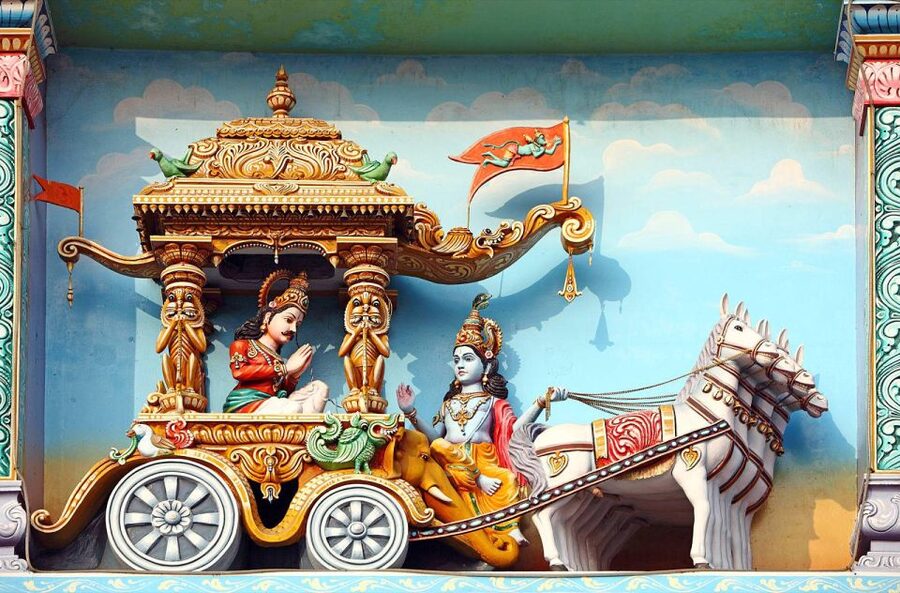
Book it if you want a focused introduction to Chennai through three anchors: seafront city change, Swamy Vivekananda’s ideas and influence, and Parthsarathy Temple rituals plus architecture. The guided format helps you understand what you’re seeing instead of just collecting photos.
Skip or reconsider if:
- you need a long, uninterrupted beach walk on sand (this tour is more structured than that),
- you rely on mobility support (it’s not suitable for mobility impairments),
- or you’re traveling on a Monday and Vivekananda House and the lighthouse climb are central to your plans.
If your idea of a great afternoon is a mix of view, story, and temple details, this is a smart use of 3 hours in Chennai—especially for first-time visitors who want a meaningful slice of the city without complicated planning.
FAQ
Where does the Marina Beach Heritage Walk start?
The tour starts outside Chennai Marina Lighthouse on Marina Beach Road, Marina Beach, Mylapore, Chennai, Tamil Nadu 600004.
What time does the tour begin and end?
It starts at 4:00 PM and ends at 7:00 PM.
How long is the tour?
The duration is 3 hours.
Is it a beach walk the whole time?
Not exactly. You’ll walk along the seafront and enjoy the Marina Beach atmosphere, but the itinerary also includes museum time, Vivekananda House, and a guided visit inside Parthsarathy Temple.
Is there a lighthouse climb?
Yes, the tour includes climbing the lighthouse for a view when the lighthouse is open. The lighthouse is closed on Mondays.
Is Vivekananda House included every day?
No. Vivekananda House is closed on Mondays, so you won’t visit it then, and you’ll spend more time on beach sites instead.
What language is the guide?
The live tour guide is English.
What’s included in the price?
The price includes the guide, entrance fees, and light refreshments.
Is the tour suitable for people with mobility impairments?
No, it is not suitable for people with mobility impairments.