REVIEW · AGRA
Delhi/Agra: Taj Mahal Mughal & Heritage in Mulitple Ways
Book on GetYourGuide →Operated by India Tour Solution - ITS · Bookable on GetYourGuide
Taj Mahal hits hardest near sunset. I love the skip-the-line separate entrance and the way a live guide (Ali, Saeed, and Cherry have led groups) makes each monument make sense, fast. One heads-up: the Taj Mahal is closed every Friday, so plan your day accordingly.
This experience is a smart mix of iconic sights and Mughal-era details—Taj Mahal up close, then Agra Fort, Baby Taj (I’timad-ud-Daulah), and optional add-ons like Fatehpur Sikri or Sikandra Tombs. I also like the comfort angle: bottled water, light refreshments, and private air-conditioned transport mean you’re not cooking in traffic before you even reach the gates.
The main thing to keep in mind is that this is a monument-heavy day. You’ll move at a steady pace, do security checks, and spend plenty of time looking up—so build in comfortable shoes and a calm mindset.
In This Review
- Quick Take: What Makes This Tour Work
- Getting From Delhi or Agra: Private Car, Train, and Real Pickup Points
- The Taj Mahal at Your Pace: Separate Entrance and the Friday Closure
- Sunset Over the Taj: Why the Fort and Timing Matter
- Baby Taj (I’timad-ud-Daulah): The Mughal Detail Stop You’ll Probably Love More
- Fatehpur Sikri and Sikandra Tombs: Mughal Power Beyond the Taj
- Lunch, Water, and What You Actually Get for $10
- Your Guide Matters: English Support and the Names Behind the Day
- Practical Tips That Make the Day Easier (Not Harder)
- Should You Book This Taj Mahal and Mughal Heritage Tour?
- FAQ
- How long is the tour?
- Where do you pick me up if I’m in Delhi or nearby?
- Do I need to wait in the regular Taj Mahal line?
- Is the Taj Mahal open every day?
- What changes if I select the 3 AM pickup time?
- Is lunch included?
- What vehicle do I ride in?
- What languages are guides available in?
- Can I cancel, and do I need to pay immediately?
Quick Take: What Makes This Tour Work

- Skip-the-line entry saves serious time at the Taj Mahal.
- Sunset or sunrise options can be built into your pickup choice.
- Private air-conditioned transport matches your group size (sedan, SUV, or mini van).
- Mughal stops aren’t just photo ops: Baby Taj and Agra Fort add real context.
- Guides with strong practical instincts help with timing and vantage points for photos.
Getting From Delhi or Agra: Private Car, Train, and Real Pickup Points
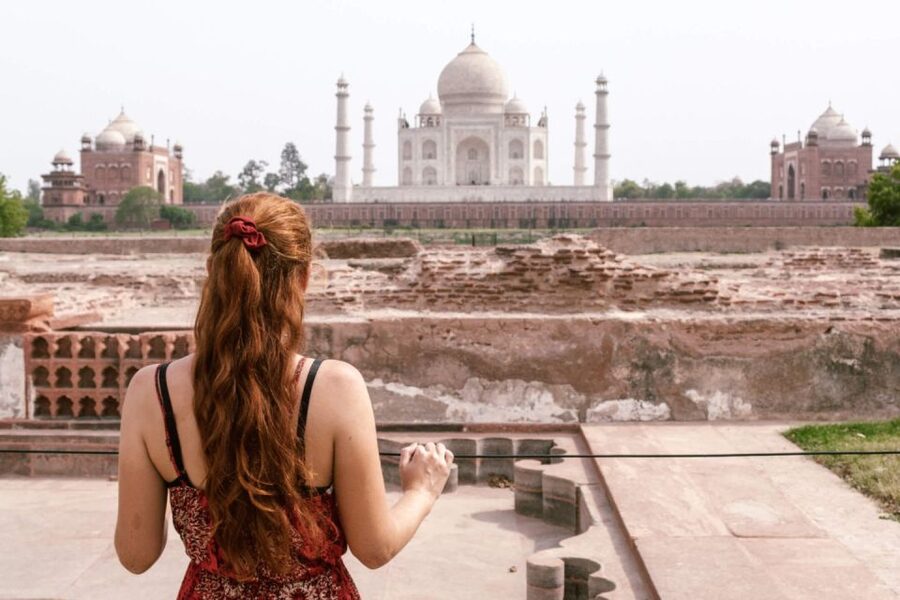
You can start from either Delhi or Agra, which already helps if you’re juggling other plans. The tour offers private air-conditioned transport, and some options use a car or train depending on what you choose.
Pickup can be simple in the city: meet your driver at your accommodation (Delhi, Noida, or Gurgaon) or at the Delhi Airport. If you’re landing at Delhi Airport, the driver is at Exit Gate No. 4 in Terminal 3, holding your name on a paging board. It’s the kind of detail that prevents that last-minute scramble with your bags.
Group size affects the vehicle too. For 1 to 2 people, you’ll ride in a sedan; for 3 to 5, it’s an SUV; and for 6 to 12, a 12-seater mini van. That matters because it changes comfort and how smoothly the day runs.
If you want the least-stress version of a Taj Mahal day, private transport is a big deal. You’re not coordinating with strangers, and you’re less likely to lose time to “where are we meeting?” chaos.
You can also read our reviews of more tours and experiences in Agra.



The Taj Mahal at Your Pace: Separate Entrance and the Friday Closure
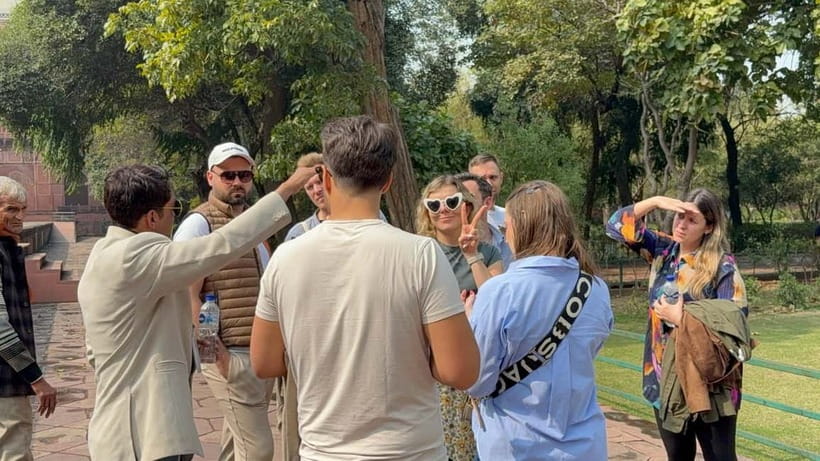
The center of gravity is the Taj Mahal, and this tour’s biggest time-saver is the separate entrance that helps you avoid the slowest parts of the queue. Once you’re inside, your guide helps you focus on what to notice—angles, symmetry, and the little visual cues that make the place feel engineered, not just beautiful.
Timing options make a big difference here. If you choose the 3 AM pickup time, your schedule flips into a sunrise Taj Mahal experience. Sunrise is cooler, the light is softer, and the monument often feels more dramatic because there’s less visual noise around you.
And yes, there’s one non-negotiable scheduling reality: the Taj Mahal is closed every Friday. If you’re traveling around that day, don’t gamble—adjust your plan or pick a day when it’s open.
Sunset Over the Taj: Why the Fort and Timing Matter
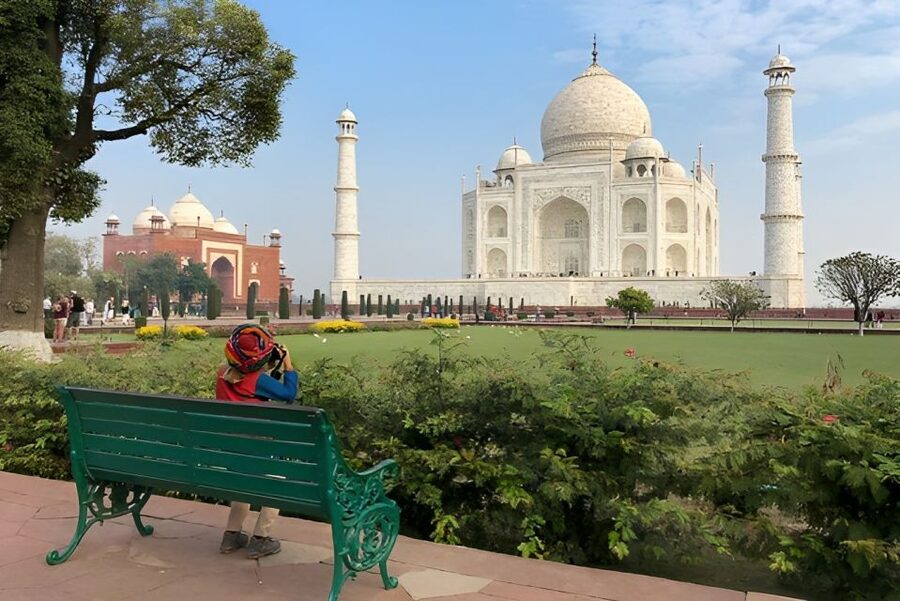
One of the highlights is the chance to capture sunset views over the Taj Mahal. That’s not just for Instagram. Sunset light changes how the white marble reads—shadows deepen, reflections shift, and details look sharper instead of washed out.
After you see the Taj, you’ll also have time for Agra Fort, a historic complex that adds contrast. The Taj is about perfection and romance; Agra Fort is about power and administration. Seeing both in one trip helps you understand how the Mughal story wasn’t only about monuments—it was also about control, defense, and court life.
Sunset planning is also where a good guide earns their pay. The people who lead this tour tend to know where to stand and when to move so you’re not wandering around chasing the light at the last minute.
If photography is important to you, this is the part where your time management matters most. Arrive with your camera ready, listen to what your guide recommends, and then follow the plan.
Baby Taj (I’timad-ud-Daulah): The Mughal Detail Stop You’ll Probably Love More

Baby Taj—officially I’timad-ud-Daulah—is a favorite add-on for a reason. It’s still stunning marble work, but the vibe is different: more intimate scale, calmer surroundings, and a chance to slow down just enough to notice the architecture.
This stop is valuable because it fills the gap between the mega-icon Taj Mahal and the other historical sites. You get Mughal craftsmanship in a form that feels more human-sized, and it helps you learn how those artistic choices work across generations.
If you tend to rush through monuments, this is the one that can reset your pace. You’ll spend time looking at pattern, structure, and symmetry instead of only aiming for the biggest skyline view.
Fatehpur Sikri and Sikandra Tombs: Mughal Power Beyond the Taj
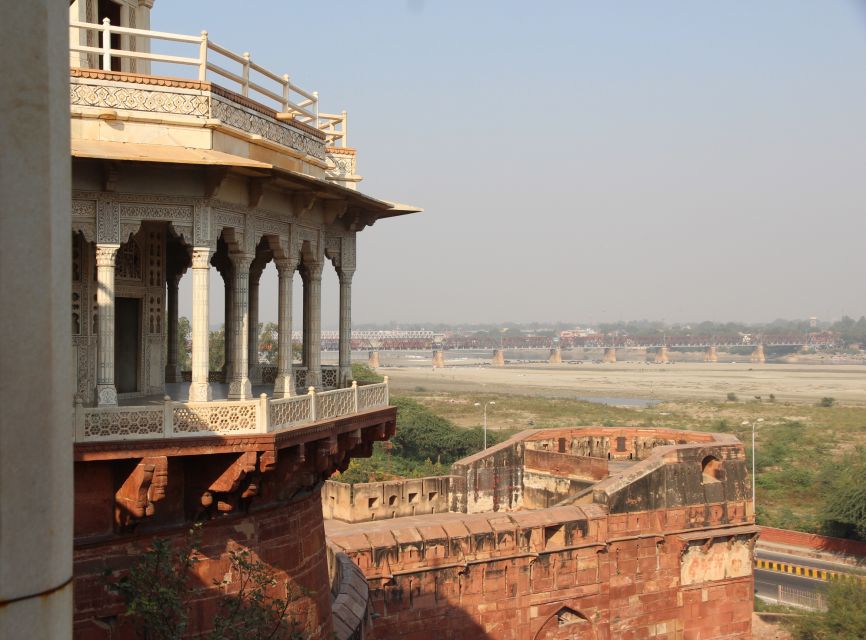
This tour isn’t limited to Agra. Depending on your option, you can also experience Fatehpur Sikri and Sikandra Tombs (including Akbar’s Tomb at Sikandra).
Fatehpur Sikri is special because it feels like an imperial stage set—big planning, grand ambition, and a sense that rulers tried to design a whole world, not just a building. The tour description also mentions an optional elephant ride at Fatehpur Sikri if that’s part of your selected experience.
Sikandra adds another layer: it’s tied to Akbar’s legacy, and it helps connect the themes you’re seeing across the day. Instead of only seeing later artistic beauty, you also get the story of how Mughal authority expressed itself through architecture.
Both sites are worth it when you have time, because they prevent the trip from becoming a one-monument checklist. You leave with a more complete sense of what “Mughal heritage” actually means on the ground.


Lunch, Water, and What You Actually Get for $10

Let’s talk value. The price listed is $10 per person, and even if your exact inclusions depend on the option you select, the package covers a lot of the expensive friction points.
Included elements can include:
- Hotel pickup and drop-off (Delhi or Agra)
- Professional English-speaking guide
- Bottled water and light refreshments
- Entrance fees depending on your chosen option
- A buffet lunch at a 5-star hotel depending on your option
- Mineral water bottles and all taxes
What’s not included is equally important: personal expenses and any optional activities (like additional attractions or extra paid entries). Meals are included only when the specific option lists them.
This is where the tour feels like good value instead of just cheap marketing. You’re paying for transportation, a guide, and key access. The Taj Mahal isn’t only expensive because of the ticket—it’s expensive because of time and coordination. This setup helps you reduce both.
Also, the guide and private driver are described as fully vaccinated, which is reassuring from a basic safety and care perspective.
Your Guide Matters: English Support and the Names Behind the Day

A big part of why this experience works is the live tour guide. The program offers English and also multiple other languages: English, French, German, Hindi, Japanese, Russian, Spanish.
From actual guide experiences associated with this style of tour, you might see names like Ali, Saeed, and Cherry showing up as the person at the front. Drivers mentioned include Mehar and Om, and those names came up in a way that suggests the team focuses on making the ride comfortable, not just moving you from gate to gate.
What you want from your guide is practical interpretation:
- where to look first
- what to notice as you walk
- how long to spend without feeling rushed
- how to get photographs without losing the sense of the place
When a guide handles those points well, the day feels smoother and more meaningful.
Practical Tips That Make the Day Easier (Not Harder)

Plan for a walking-focused day. Bring passport or ID, comfortable shoes, and sunscreen. Water and light refreshments are included, but you’ll still appreciate having your own basics ready, especially if you’re sensitive to sun.
Dress rules matter. Shorts are not allowed, so plan clothing accordingly. If you’re traveling in warmer months, choose breathable long pants or a long skirt and keep a light layer for early morning or air-conditioned car time.
Security is part of the Taj experience, so arrive mentally ready to slow down for checks. The skip-the-line entrance helps, but it doesn’t remove the need for screening.
Wheelchair accessibility is listed, so if mobility is a concern, you can consider it. One more note: the tour is listed as not suitable for pregnant women, so it’s best to pick another option if that applies.
Should You Book This Taj Mahal and Mughal Heritage Tour?

Book it if you want a private, guided Taj Mahal day that also goes beyond the obvious and gives you Mughal context. The separate entrance saves time, the sunset or sunrise options let you chase better light, and the combination of Taj Mahal, Agra Fort, Baby Taj, and optional Fatehpur Sikri/Sikandra makes the day feel complete without turning it into a nonstop sprint.
Skip or rethink it if you can’t handle steady monument walking, or if your schedule falls on a Friday when the Taj Mahal is closed. Also, if you don’t like planned structure at all, a guided format may feel a bit “on rails,” even though it’s private.
For most people—especially first-timers to Agra—this is a strong value way to see the big names and still come away understanding what you saw.
FAQ
How long is the tour?
The duration is listed as 4 hours to 1 day, and starting times vary based on availability.
Where do you pick me up if I’m in Delhi or nearby?
Pickup is available from your hotel in Delhi, Noida, or Gurgaon, or you can meet the driver at Delhi Airport (Exit Gate No. 4, Terminal 3) where they hold your name on a paging board.
Do I need to wait in the regular Taj Mahal line?
No. This tour includes skip-the-line access through a separate entrance.
Is the Taj Mahal open every day?
No. The Taj Mahal is closed every Friday.
What changes if I select the 3 AM pickup time?
Selecting 3 AM pickup turns the plan into a Taj Mahal sunrise tour, with your Taj Mahal visit at sunrise.
Is lunch included?
Lunch may be included as a buffet at a 5-star hotel, depending on the option you select.
What vehicle do I ride in?
Vehicle size depends on group size: sedan for 1 to 2 people, SUV for 3 to 5 people, and a 12-seater mini van for 6 to 12 people.
What languages are guides available in?
The live tour guide can be in English, French, German, Hindi, Japanese, Russian, or Spanish.
Can I cancel, and do I need to pay immediately?
Yes. It offers free cancellation up to 24 hours in advance for a full refund, and there is a reserve now & pay later option so you can book without paying today.