REVIEW · MARRAKECH
Marrakech Monuments & Heritage
Book on Viator →Operated by Az-eddine Ben jouhra · Bookable on Viator
Marrakech hits different once you walk it. This small-group heritage route ties together Bahia Palace and Koutoubia Mosque with easy navigation and solid cultural context. You also get a guided pass through the souks around Souk Semmarine, with haggling help and stops that make the medina feel less confusing.
My favorite part is how the timing keeps you moving without rushing the big sights. The main thing to think about is that some parts of the experience include shopping stops, and one review also raised a language expectation issue—so I recommend you double-check language at booking and set your shopping comfort level early.
In This Review
- Key highlights if you want the best bang for your time
- Starting point at Café Koutoubia: the easiest launchpad in the medina
- Bahia Palace in 45 minutes: Moroccan architecture you can spot fast
- Saadian Tombs: the story behind a “protected” entrance
- Koutoubia Mosque: what you’ll see (and how to handle expectations)
- Souk Semmarine, Medersa ben Youssef, and herbal shops: shopping with a map
- Guide style matters: Ben, Az-eddine, and how to get what you came for
- Price and value: what $46.46 gets you in real terms
- Timing and walking reality: 3.5 hours can feel fast
- Who this tour suits best (and who should consider another option)
- Practical tips to get smoother photos and better shopping outcomes
- Should you book this Marrakech Monuments & Heritage tour?
- FAQ
- How long is the Marrakech Monuments & Heritage tour?
- Where does the tour start?
- Is this tour admission-free for all sites?
- What’s included in the tour price?
- Does the tour use a mobile ticket?
- What group size should I expect?
- Is the tour suitable for most people?
Key highlights if you want the best bang for your time
- Small group (max 18) keeps the guide’s attention practical, not generic.
- Bahia Palace + Saadian Tombs cover two very different sides of Marrakech’s story in one morning/afternoon block.
- Koutoubia Mosque is free here, so you save on one major stop.
- Souk Semmarine orientation helps you understand where you are and what to ask for while you shop.
- Guide-led cultural context includes Moroccan and Amazigh culture, not just dates.
- Mobile ticket means less hassle once you arrive.
Starting point at Café Koutoubia: the easiest launchpad in the medina
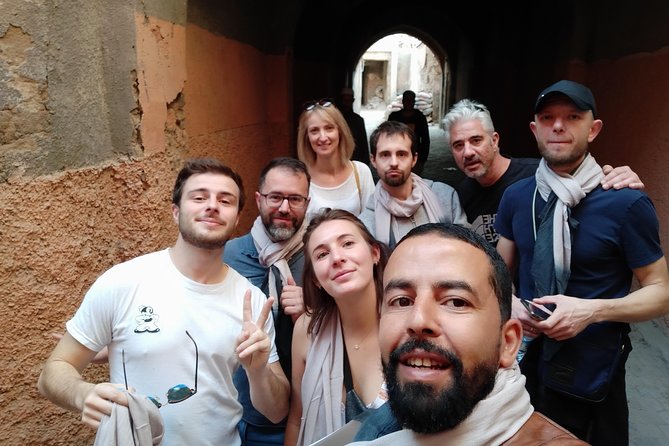
You meet at Café Koutoubia (the address listed is J2G4+2WQ). I like this kind of meeting spot because it’s a recognizable anchor in an area where streets can change names fast.
From there, you’re set up for a classic Marrakech loop: monuments first, then the old medina streets and markets. The total time is about 3 hours 30 minutes, which is long enough to see the big names but short enough that you’re not stuck walking all day.
You’ll also be walking with a small group (up to 18 people). That matters in Marrakech because the streets narrow, shops crowd the sidewalks, and it’s easy to lose the rhythm if your tour feels too large. Here, you’re more likely to stay together and actually hear what the guide is pointing out.
You can also read our reviews of more tours and experiences in Marrakech.


Bahia Palace in 45 minutes: Moroccan architecture you can spot fast
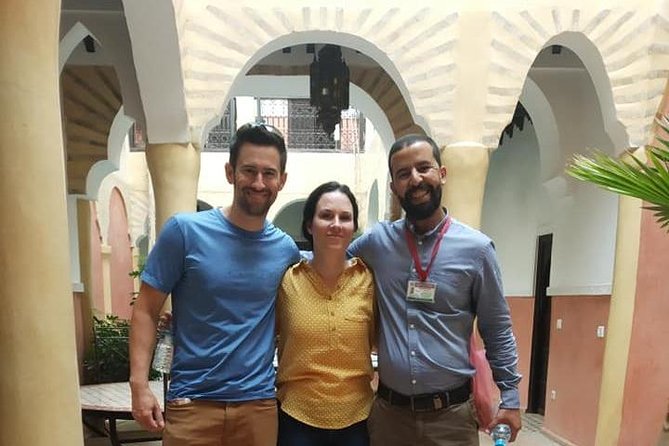
Bahia Palace (palace of the beautiful/brilliant) is described as a nineteenth-century palace spread over about eight hectares. Even in a limited visit, it’s one of those places where the design choices teach you how the building was meant to feel: private, decorative, and carefully organized.
In your time there (around 45 minutes), you’ll want to focus on patterns and materials—things that help you read the space without needing a long lecture. Look for ornamental detailing, the way corridors and courtyards are arranged, and how the palace’s scale works when you’re actually inside it.
Admission isn’t included in the price, so do budget for it. That’s not a deal-breaker—just don’t assume everything is rolled into the $46.46. The upside is that Bahia Palace is one of the strongest visual payoffs on this route, so spending your entry fee on it usually feels worth it.
Saadian Tombs: the story behind a “protected” entrance
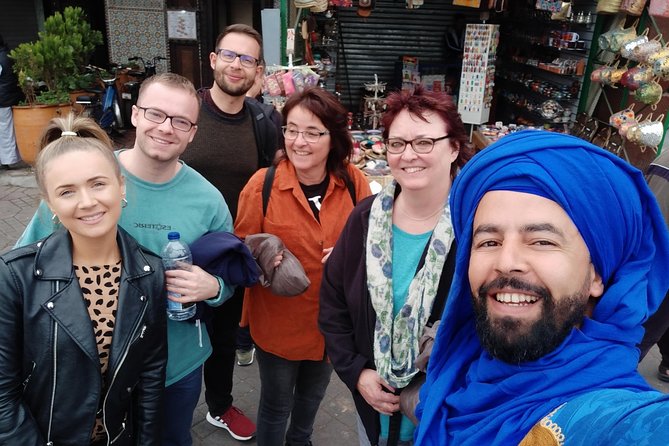
The Saadian Tombs connect you to the Saadian dynasty, tied to Marrakech’s golden age (1524 to 1659). What makes this stop stand out is the political backstory: in the early 1700s, Sultan Moulay Ismail ordered the destruction of remaining traces of that dynasty. The one exception was the burials—he had the entrance to the necropolis completed instead.
You’ll spend about 30 minutes here, which is a good length for tombs. You can take in the setting, understand the reason the site survived, and keep moving without feeling like you’re “waiting through” a stop.
Admission also isn’t included, so again: plan for entry fees beyond the base tour price. Still, Saadian Tombs are a smart pairing with Bahia Palace because they shift the mood—from palace grandeur to dynastic memory—and they anchor you to the centuries that shaped the medina.
Practical note: tomb sites can feel cooler than street-level heat, but they’re still part of a walking day. Bring water and expect you’ll want a quick reset between stops.
Koutoubia Mosque: what you’ll see (and how to handle expectations)
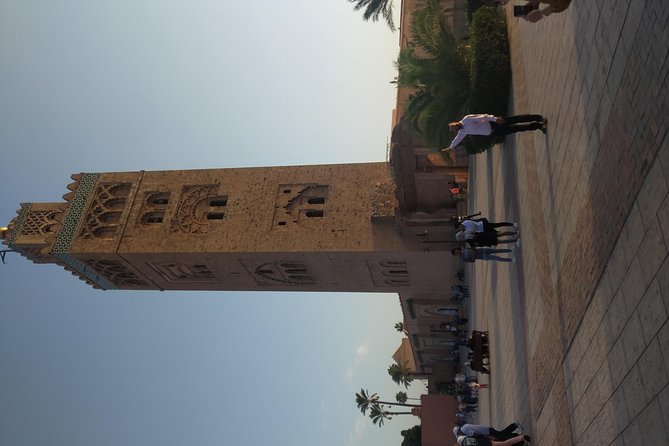
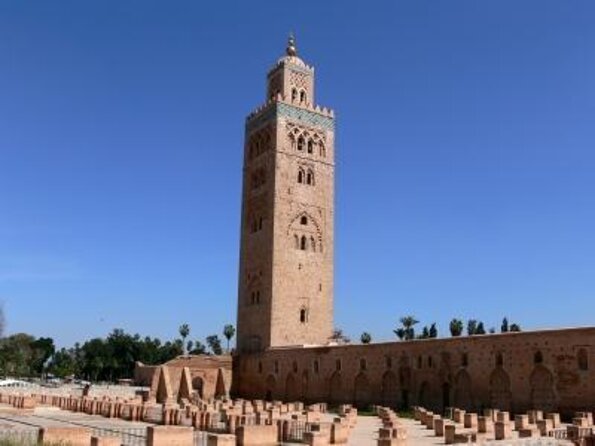
Koutoubia Mosque is the largest mosque in Marrakesh. You might see it listed under different names (Kutubiyya, Jami’ al-Kutubiyah, and more), but you’re looking for the same landmark: the tall minaret that’s one of the city’s most recognizable silhouettes.
This stop is 45 minutes, and admission is listed as free. I like that this tour includes a free major sight—one less ticket to think about once you arrive.
That said, a mosque visit is different from a palace. You may see the exterior and learn about the site, but you should expect that access rules can vary (for example, what areas you can enter). If you’re not sure what you’ll be able to do inside, your guide can help you interpret what you’re seeing on the spot.
Also, dress and respectful behavior matter here as they do across Morocco. If you’re planning photos, shoot with the minaret in mind—angles around the area help you capture the scale better than trying to force every frame from one spot.
Souk Semmarine, Medersa ben Youssef, and herbal shops: shopping with a map
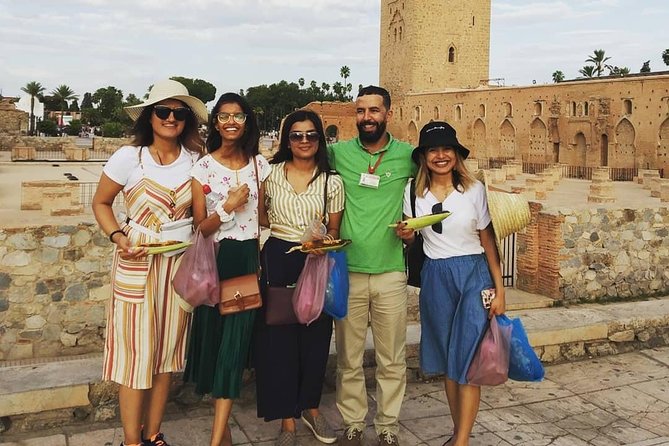
After the monuments, you shift into the market maze of Souk Semmarine. This is where the guide’s job becomes less about facts and more about helping you move with confidence.
In this part of the route, you’ll spend about 1 hour moving through lanes of stalls and workshops, looking at artisan crafts and souvenirs. The tour description specifically notes haggling tips from your guide, which I find genuinely useful because the medina can make pricing feel like a guessing game—especially if you’re tired or distracted.
You also get a stop to admire Medersa ben Youssef, described as one of old Marrakech’s most exquisite buildings. Even if you can’t linger as long as you might want, seeing it from inside the flow of the souks helps you place it in the real city, not just as a photo online.
Another notable stop is a herbalist shop. You’ll likely get a look at local herbal remedies, oils, and other concoctions. This is less about buying and more about understanding a side of Marrakech that’s not always obvious from monuments alone.
Then you reach Jemaa El Fna square as part of the day’s atmosphere—vendors, musicians, acrobats, and street artists. I’m not going to promise you’ll catch every single performance detail, but you should expect the square to feel like the cultural engine room of the medina.

Guide style matters: Ben, Az-eddine, and how to get what you came for
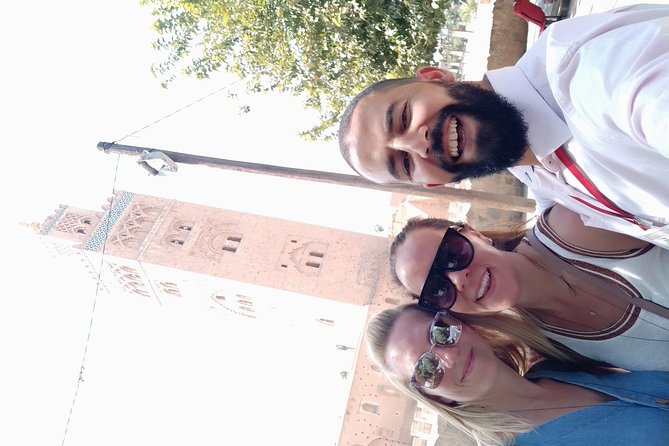
The guide named in one review is Ben, and that same feedback highlights Moroccan and Amazigh culture as part of what you learn. That’s important: a heritage walk should explain not just what a place is, but how people understood it—especially in a city where layers of identity show up in architecture and street life.
The experience provider listed is Az-eddine Ben jouhra. With guides like this, you’ll often get the best value when you ask simple questions:
- What should I notice first here?
- What’s a common misunderstanding about this place?
- If I want to buy one thing, what makes sense?
One negative review complained about a language mismatch (Spanish requested, English delivered) and also said the visit felt too purchase-oriented. That doesn’t mean it’s the norm, but it does mean you should protect your own experience. If language matters to you, confirm the language you’ll receive at booking. And if you don’t like shopping pressure, say it early—your guide can keep you moving while you focus on learning and photos.
Price and value: what $46.46 gets you in real terms
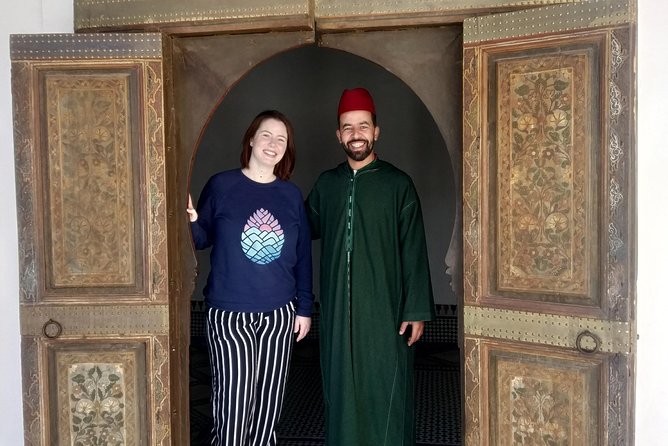
At $46.46 per person, you’re paying for a structured 3.5-hour walk with a guide through major sights and the souk area. Admission fees are not included, except Koutoubia Mosque, which is free in this listing.
So how do you judge value? For me, it comes down to two things:
1) You’re not wasting time figuring out the order and how to connect the stops.
2) The biggest visual payoff sites—Bahia Palace and Saadian Tombs—are included as featured stops, even though you’ll handle their individual entry tickets.
Also, this tour includes masks for protection against COV19. That’s a small detail, but it reduces one thing you might have to scramble for on arrival.
If you prefer doing monuments at your own pace without ticket lines and navigation help, a self-guided day might be cheaper. But if you want a guided framework—plus souk orientation and haggling tips—the price starts to feel fair.
Timing and walking reality: 3.5 hours can feel fast
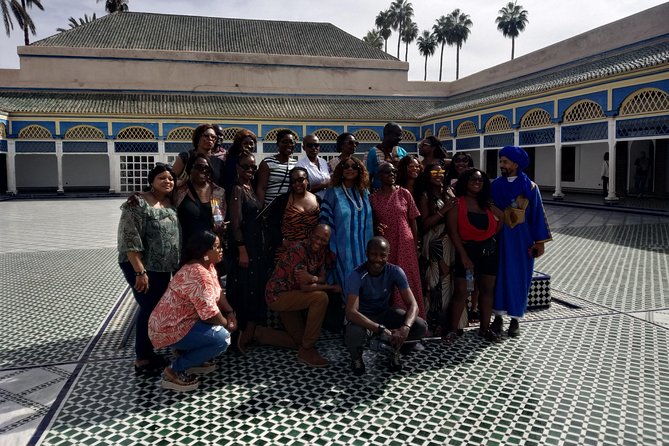
This tour runs about 3 hours 30 minutes, and that includes multiple stops. In a medina, time passes quickly because you’re constantly turning corners, dealing with crowds, and transitioning between different types of spaces (palace courtyards to tomb areas to street markets).
Plan for a pace that’s active but not sprinting. You’ll get about 45 minutes at Bahia, 30 minutes at Saadian Tombs, 45 minutes at Koutoubia, and about 1 hour for the souk and square portion.
You’ll likely want:
- comfortable shoes (the medina is not a smooth sidewalk stroll)
- water
- a light layer (some interior spaces can feel cooler)
If you’re traveling with limited mobility, the listing says most travelers can participate, but you should still consider the real-world walking of a medina day.
Who this tour suits best (and who should consider another option)
This is a great fit if you want a focused sampler of Marrakech’s key heritage points without spending your whole day on logistics. It’s also ideal for first-time visitors who don’t yet know how to read the medina or feel comfortable negotiating in souks.
It’s especially good for people who like context—architecture, dynasties, and cultural explanation—because the tour is structured around major sites and a guided route through markets, not just random street wandering.
I’d consider another option if:
- you need long museum-style time at fewer sites
- you hate shopping-related stops entirely
- language matching is critical for your enjoyment and you can’t risk an unexpected shift
Practical tips to get smoother photos and better shopping outcomes
A couple of small moves can make this day much easier:
1) Set your shopping rule early. If you want souvenirs, decide what you’ll buy before you enter the densest lanes. If you don’t, tell your guide you’re window-shopping so you don’t feel pulled into every pitch.
2) Use the guide for quality, not just price. For crafts and herbs, the right question is usually about what the item is and how it’s used, not just the discount.
3) Photo pacing. Courtyards and monument exteriors are your best photo moments, while souks are better for quick shots and enjoying the street scene. Try not to spend half your stop fumbling for the perfect angle—you’ll miss the next highlight.
4) Dress respectfully for Koutoubia. This is a mosque site, so be prepared and follow guidance from your guide on what’s appropriate as you move through the area.
Should you book this Marrakech Monuments & Heritage tour?
If you want a guided, time-efficient day that hits major landmarks and still leaves room for souk life, I think this is a strong booking. The small group size, the inclusion of Koutoubia Mosque (free here), and the fact that you’re getting orientation plus cultural explanations are the core reasons it feels like good value.
Book it if you’re comfortable walking for a few hours, you’ll appreciate monuments plus markets, and you want a guide to help you connect the dots between architecture and street culture. Skip or reconsider if you’re worried about shopping pressure or if language matching is a must-have for you—then send a quick message at booking to confirm the language you’ll receive.
If you plan to do only one organized heritage walk in Marrakech, this is a practical choice that doesn’t leave you stuck wondering where to go next.
FAQ
How long is the Marrakech Monuments & Heritage tour?
The tour is about 3 hours 30 minutes.
Where does the tour start?
It starts at Café Koutoubia (listed as Café Koutoubia J2G4+2WQ), Marrakech.
Is this tour admission-free for all sites?
No. Bahia Palace and the Saadian Tombs have admission tickets that are not included. Koutoubia Mosque is listed as free.
What’s included in the tour price?
The included item listed is masks for protection against COV19.
Does the tour use a mobile ticket?
Yes, the tour features a mobile ticket.
What group size should I expect?
The tour has a maximum of 18 travelers.
Is the tour suitable for most people?
The listing says most travelers can participate, and it’s noted as near public transportation. It also requires good weather.