REVIEW · CORINTH
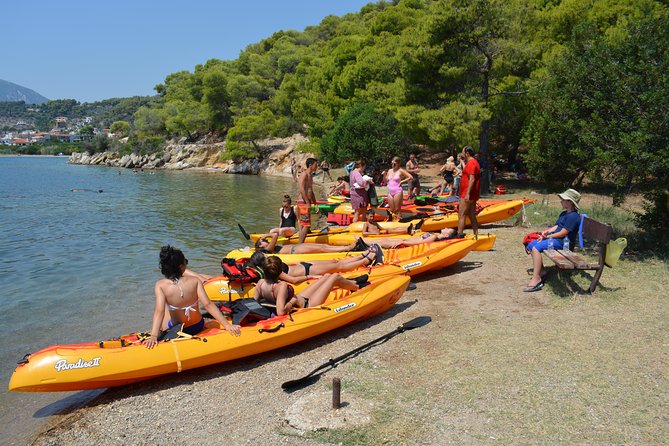
Epidavros sea kayak at the Ancient sunken city tour, small ancient theater
Book on Viator →Operated by Tribal Kayak · Bookable on Viator
Kayak past ancient ruins felt unreal. You paddle out from Epidaurus, snorkel above Argolida’s Lost Atlantis, then slow down on land for the Little Theatre of Epidaurus and a scenic meal.
I love the mix of water time and archaeological time, and I especially like that you’re not rushed through either part.
One thing to plan for: the kayak can feel a bit of a workout, and if you’re new to snorkeling you may want a quick refresher before you head in.
In This Review
- Key Highlights You’ll Actually Feel
- From Epidaurus Beach to the Sunken City: The Idea That Works
- Paddle Route: Yialasi Beach, Methana Volcano, and “Lost Atlantis” Energy
- Snorkeling Over Underwater Ruins in ~2 Meters of Water
- A quick reality check before you put your face in
- The Ancient Breakwater, Amphorae, and the “You Can See It” Effect
- Photos underwater: plan to slow down
- Leaving the Water: The Walk to the Little Theatre of Epidaurus
- Construction facts that make it worth your time
- Athina EcoFarm: The Meal That Ties the Day Together
- Price and What $96.75 Buys You in Real Terms
- Who This Tour Fits Best (And Who Should Think Twice)
- Should You Book This Epidaurus Sea Kayak and Theatre Combo?
- FAQ
- Do I need to arrange my own tickets?
- Where does the tour start?
- What’s the duration?
- How much does it cost?
- Is the tour guided in English?
- What’s the group size?
- Do you go snorkeling?
- What other sights are included besides the sunken city?
- Is a meal included?
- What happens if weather is bad?
- Are service animals allowed?
Key Highlights You’ll Actually Feel
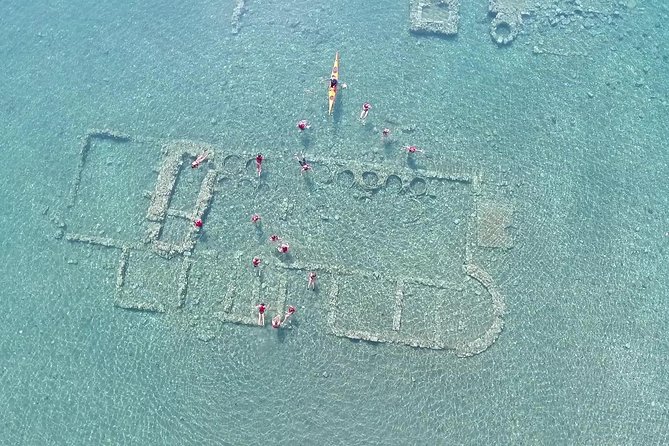
- Sunken city snorkeling in just ~2 meters of water, with masks provided for underwater ruins viewing.
- A real pairing of sites: paddle to the remains, then walk to a restored small theatre tied to Dionysus.
- Small group size (max 10), which makes it easier to get help with paddling and gear.
- Guides who teach as they go, including patient setup and lots of local context along the shoreline.
- Athina EcoFarm meal using local organic products grown using older methods.
- Genealogy of the day’s view: Methana Volcano shows up in the background while you paddle westward.
From Epidaurus Beach to the Sunken City: The Idea That Works
Epidaurus is known for its sanctuary and cultural weight, but this tour flips your perspective. Instead of looking at history from a path or a ticket booth, you experience it from the water—paddling, then getting horizontal and close to the ruins. It’s a strong formula because your brain processes the place in two ways: movement first, then stillness in the water.
I like that the day doesn’t just say history; it gives you hands-on time. You’ll spend a chunk of your 4 hours on the sea, with masks for swimming and snorkeling over submerged remains. Then you switch gears to archaeology on land at the Little Theatre of Epidaurus, and you end with food that connects place to palate.
You can also read our reviews of more tours and experiences in Corinth.
Paddle Route: Yialasi Beach, Methana Volcano, and “Lost Atlantis” Energy
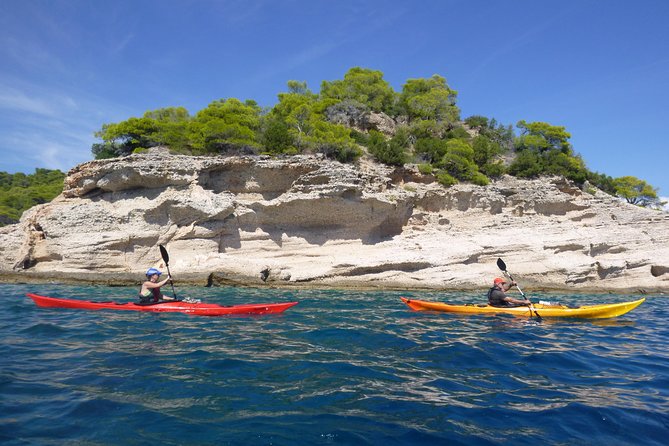
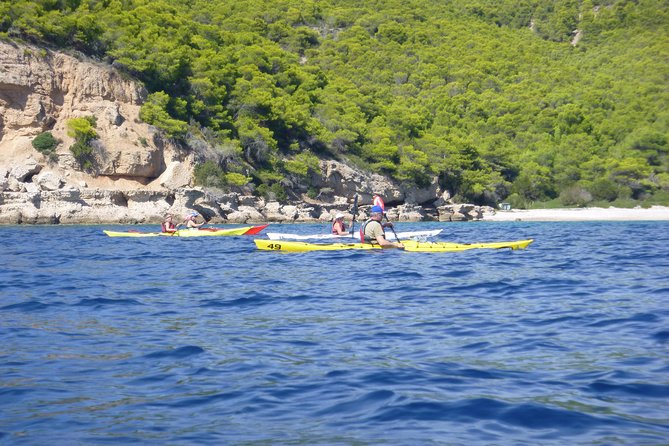
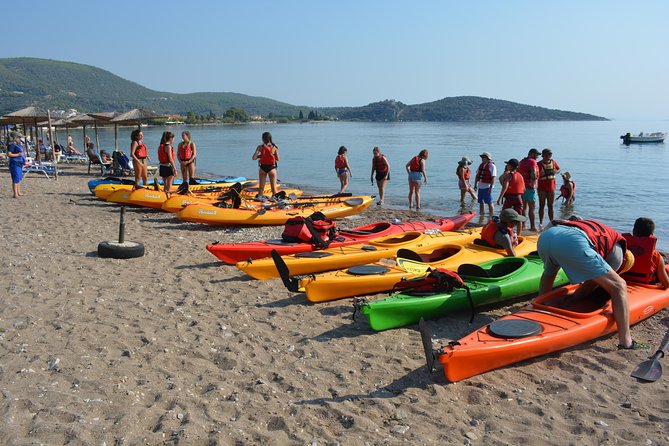
Your morning starts at Yialasi Beach near the center of Epidaurus, a short walk from town. The pickup option from the small port of Epidaurus helps if you’re not already close by, and it keeps the start smooth. Once you’re geared up, the group paddles westward toward the sunken city known locally as Argolida’s Lost Atlantis.
There’s a practical reason this route feels good: it stays close enough to Epidaurus that you’re not fighting the open sea for hours. You get time to settle into the rhythm of paddling, and you also get a memorable visual layer—the view of the imposing Volcano of Methana. Even if you’re not a volcano person, it gives the coast a sense of scale, and it makes the paddle feel like more than just transit.
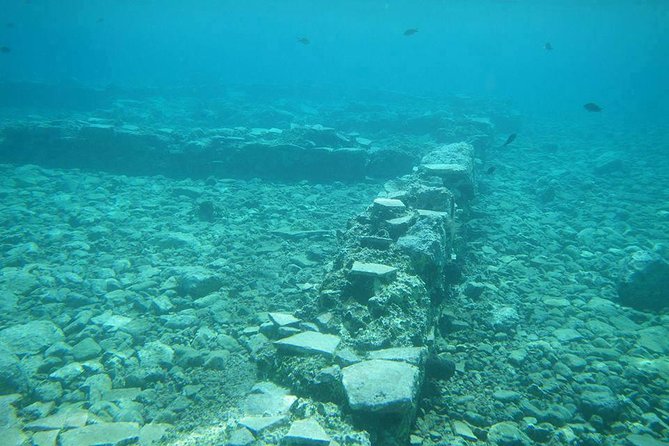
You’ll also get historical framing while you’re moving. The sunken city is described as dating back to around 500 BC, and you’ll spot different categories of remains: walls and foundations, amphorae of huge dimensions, and paved sections sitting meters below sea level.
Snorkeling Over Underwater Ruins in ~2 Meters of Water
This is the main event, and it’s not subtle. Once you reach the seabed, you’re handed masks so you can swim and snorkel around the ancient structures. The standout detail here is the shallow depth of roughly two meters, which matters a lot for most people.
Shallow water changes everything. It’s easier to control your breathing, easier to keep your eyes on what you’re seeing, and easier to take photos without feeling like you’re battling the ocean. You also get to watch colorful fish move through the scene, and that combination—ruins + wildlife—tends to stick in your memory.
Some days may be special with wildlife. In the feedback for this outing, people describe surprising moments like swimming with turtles. That’s not something you can guarantee, but it’s a good reminder that you’re not just looking at stone; you’re also in a living coastal ecosystem.
A quick reality check before you put your face in
If you’re prone to getting water in your snorkel or you’ve never used one before, take the first few minutes to ask the guide for a simple start. One of the most helpful upgrades you can give yourself is confidence: once you’re comfortable clearing the snorkel and keeping your position, the underwater ruins stop feeling stressful and start feeling magical.
The Ancient Breakwater, Amphorae, and the “You Can See It” Effect
On paper, sunken ruins sound dramatic. In practice, what you want is a way to actually see them clearly, and this tour is built for visibility. Because parts of the ancient breakwater still sit near the surface, you can spot linear edges and shapes instead of staring into vague darkness.
You’ll likely notice how the site is arranged: sunken walls and foundations in some places, amphorae that look comically large up close, and paved sections you can line up with your viewpoint as you swim. That’s where the tour’s structure pays off: you go far enough to reach the submerged area, but not so far that you lose time to fatigue.
Photos underwater: plan to slow down
If you’re planning to photograph, your best results come from staying still for a second instead of rushing past. The ruins are spread across areas of the seabed, and a calm pace makes it easier to line up the view of stone and fish.
Leaving the Water: The Walk to the Little Theatre of Epidaurus
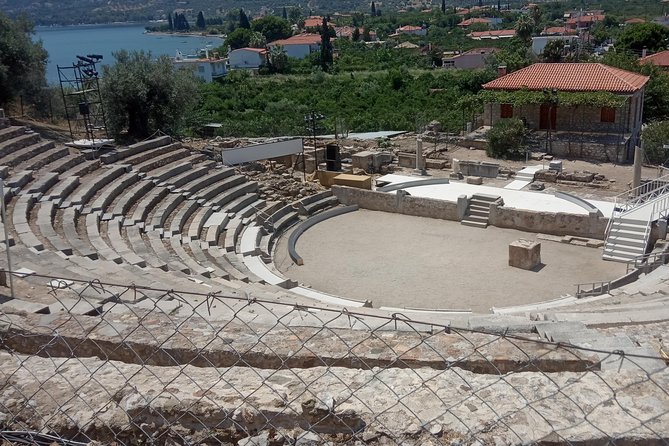
After the sea portion, you transition to land for the Little Theatre of Epidaurus. This stop is not an afterthought—it’s a big part of why the day feels rounded. Even the walk matters, because you’re given context about the area and the way locals read their environment: trees, soil, and the small details that explain why this landscape has long been valued.
The theatre sits in an area called Nisi, near the port of Palea Epidaurus. It used to serve the needs of a smaller city-state, so it’s not colossal like some famous amphitheatres. That scale is a plus. You get the sense of theatre as a community ritual rather than a modern monument.
Construction facts that make it worth your time
Here’s what you’re seeing and why it’s special:
- Construction began in the 4th century BC, originally for the small city-state.
- It had 9 tiers and 18 rows of seats, with room for about 2,000 spectators.
- Some seats have inscriptions connected to the god Dionysus.
- In Roman times, it was reformed—changing the orchestra into a semi-circular shape and reordering seats.
- It’s believed the theatre functioned for only about seven centuries, since Pausanias visited in the mid-2nd century BC and didn’t mention it.
The theatre was discovered in the early 1970s under olive trees, and restoration work continues. Today, it hosts performances during the summer Greek Festival, with music, dance, and theatre shows, including modern or ancient Greek performances.
When a site is this specific—and still actively restored—it’s easier to feel the human work behind archaeology. You’re not just looking at ruins; you’re watching how they’re being brought back to life.
Athina EcoFarm: The Meal That Ties the Day Together
After the theatre, the tour shifts again, this time to gastronomy at Athina EcoFarm. This is where the day stops being only about seeing and starts being about tasting something tied to the region.
You’ll relax and enjoy a meal made with local organic products grown in the area using methods described as ancient. The value here isn’t just the meal itself—it’s the way it connects food to place and heritage. If you like your travel experiences to have a through-line, this is it: sea, ruins, theatre, then food rooted in the same culture.
It’s also the kind of stop that helps you recover. By the time you’re eating, you’ve paddled, walked, and spent time in the water. A proper sit-down meal is a smart ending to a physically active morning.
Price and What $96.75 Buys You in Real Terms
At $96.75 per person for about 4 hours, the value makes sense if you care about experiences that combine multiple activities without transportation chaos.
You’re paying for:
- Sea kayaking with a guided route and small-group structure
- Masks for snorkeling and time in the water at an archaeological site
- On-land cultural time at the Little Theatre of Epidaurus
- A scenic meal at Athina EcoFarm made from local organic products
The small-group limit (max 10) is a big part of the economics. Fewer people means more time for gear setup, better supervision, and less “wait-and-watch” time for you. That matters when the experience includes water safety and snorkeling comfort.
Also, with English offered and pickup available from the small port of Epidaurus, you’re less likely to lose time figuring out how to get there.
Who This Tour Fits Best (And Who Should Think Twice)
This outing fits best if you enjoy mixing physical activity with learning, and if you’re okay with a day that has both moving and standing still.
You’ll likely love it if:
- you want history you can touch (or at least see clearly) from the water
- you’re curious about Epidaurus beyond the main sanctuary area
- you like guided storytelling paired with actual time on-site
- you want a meal that feels like part of the experience, not a random stop
You should think twice if:
- you’re not comfortable with paddling effort, even at a moderate level
- you don’t want to put your face near snorkel gear unless you get a clear intro
- you’re extremely weather-sensitive, because this experience requires good weather
And for families or mixed groups, the tour structure can work well because it’s designed as an active day with guide support, and service animals are allowed.
Should You Book This Epidaurus Sea Kayak and Theatre Combo?
If your ideal day in Greece includes one or two unforgettable “wow” moments, plus a thoughtful cultural stop and a real meal, this is an easy yes. The sunken city snorkeling is the hook, the Little Theatre gives you grounded context on land, and the Athina EcoFarm meal makes the day feel complete.
I’d book it if you’re the type of traveler who likes experiences with variety: water views, underwater ruins, and theatre history in one 4-hour package. If you’re worried about paddling or snorkeling comfort, you can still make it work—just show up ready to ask for a quick snorkel and safety walkthrough before you start.
FAQ
Do I need to arrange my own tickets?
You’ll have a mobile ticket for the experience, and you’ll receive confirmation at booking time.
Where does the tour start?
It starts in Epidavros, with the option of pickup from the small port of Epidavros.
What’s the duration?
The tour runs for about 4 hours (approx.).
How much does it cost?
The price is $96.75 per person.
Is the tour guided in English?
Yes, English is offered.
What’s the group size?
The tour has a maximum of 10 travelers.
Do you go snorkeling?
Yes. The experience includes snorkeling and swimming over underwater ruins, with masks provided.
What other sights are included besides the sunken city?
You also visit the Little Theatre of Epidaurus.
Is a meal included?
Yes. You’ll stop at Athina EcoFarm for a meal made with local organic products.
What happens if weather is bad?
This experience requires good weather. If it’s canceled due to poor weather, you’ll be offered a different date or a full refund.
Are service animals allowed?
Yes, service animals are allowed.