REVIEW · ROME
Ancient Rome Half-Day Segway Tour
Book on GetYourGuide →Operated by Rolling Rome Segway & Golf-Cart · Bookable on GetYourGuide
Roman ruins, but with wheels under your feet.
This Ancient Rome Half-Day Segway Tour turns a classic list of sights into something you move through—and you get clear, friendly instruction from guides like Nico (and other English-speaking guides, depending on the date). I like that the commentary stays easy to follow and you learn the why behind what you’re seeing, not just dates.
Two things I really appreciate: first, the Segway training session is built in, so first-timers can get comfortable fast without feeling rushed. Second, the route is packed with major imperial landmarks—the Colosseum is part of the ride, not a distant “maybe later” stop.
One possible drawback: you’re riding around a real city with real street changes. On dates like Holy Week, you may see some closures and a slightly adjusted plan as the guide pivots to keep the tour smooth.
In This Review
- Key highlights to look for
- Entering Imperial Rome from Piazza del Gesù
- Segway training: fast confidence, real safety focus
- The 7 Hills route: Palatine first, big-picture Rome second
- Circus Maximus to Aventine: gliding between famous landmarks
- Santa Maria in Cosmedin and the Mouth of Truth
- Capitoline Hill and Michelangelo’s Renaissance remix
- Imperial Forum by Segway: following the footsteps of emperors
- The Colosseum: the tour’s big payoff moment
- Eco-friendly glide: why the vehicle choice matters here
- English live guiding: stories that actually land
- Price and value: is $100 worth it?
- Weather, shade, and street changes you can’t control
- Who this Segway tour is best for
- Should you book Ancient Rome on a Segway?
- FAQ
- Where does the tour start?
- How long is the Ancient Rome Half-Day Segway Tour?
- What’s included in the tour price?
- Is the tour guided in English?
- How big is the group?
- What are some of the main stops?
- Can I cancel or pay later?
Key highlights to look for
- Small group (up to 8) means more personal attention and less waiting around.
- Training is included so you can focus on the sights instead of fighting the vehicle.
- Palatine Hill viewpoints give you a big-picture view as you hear the Romulus and Remus legend.
- A mix of famous and fun stops like Santa Maria in Cosmedin and the Mouth of Truth.
- Michelangelo’s Capitoline redesign adds an art-and-architecture layer to the ancient stops.
- Imperial Rome driving + Colosseum time keeps the half-day pace efficient.
Entering Imperial Rome from Piazza del Gesù
The tour starts at Piazza del Gesù, 47—a practical place to meet if you’re already planning your day around the historic center. Once you check in, the schedule moves quickly from “what is a Segway” to “ok, I can steer this.”
This is a half-day format, about 3 to 3.5 hours, so it’s designed for momentum. You’re not meant to linger in one single site like you might on a full-day ticket and slow stroll. Instead, you’ll cover multiple hills and monuments while your guide strings the story together.
The vibe is modern gear applied to ancient streets. That contrast is half the fun: you’re gliding where emperors walked, then pausing to listen as your guide connects the dots.
You can also read our reviews of more tours and experiences in Rome.

Segway training: fast confidence, real safety focus
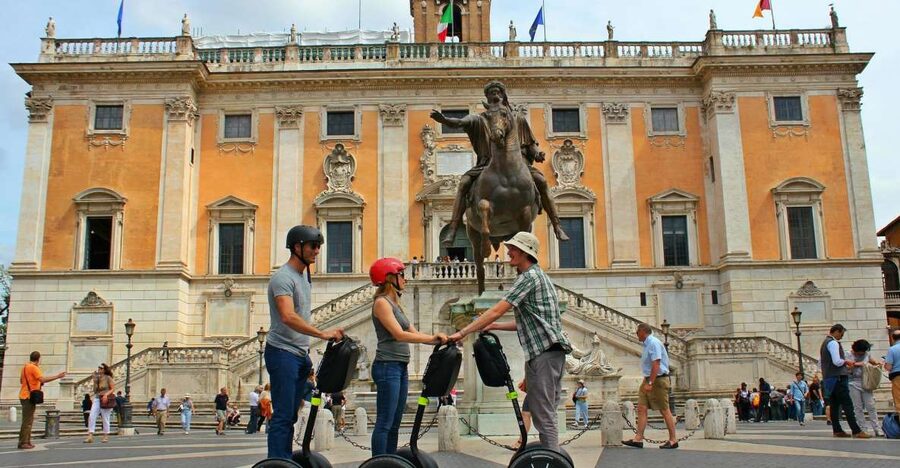
Before you head out into the Rome traffic swirl (it can feel intense even when you’re not moving), you get a training session. The key detail here is that the instruction is part of the experience, not an optional “good luck” add-on.
You can also expect patient support—guides such as Nico are specifically praised for being careful and professional during learning. That matters a lot, because if you’re new to self-balancing vehicles, the hardest part is usually getting comfortable with the controls, not understanding Roman history.
What you’ll likely feel by the time the tour gets rolling: you stop worrying about your feet and start noticing the city. That’s when the ride becomes the point. The tour is described as an easy-to-use setup, and that lines up with the way people highlight the guides’ patience during first-time moments.
The 7 Hills route: Palatine first, big-picture Rome second
Your Segway route centers on the 7 Hills of Rome and the story of Rome as an imperial power. The best thing about starting with the hill viewpoints is that they reset your perspective fast. Flat streets can hide the scale of the city. From a hill, everything clicks.
From Palatine Hill, you’ll get sweeping views over Rome while your guide explains the legend of Romulus and Remus. That legend doesn’t just get told like a bedtime story—it becomes a way to understand why this area mattered so much. Palatine is where Rome’s “origin story” and its “imperial reality” overlap.
This is also where you’ll appreciate the Segway aspect most. You’re moving from point to point without burning time, and the stops feel intentional instead of rushed.
Circus Maximus to Aventine: gliding between famous landmarks
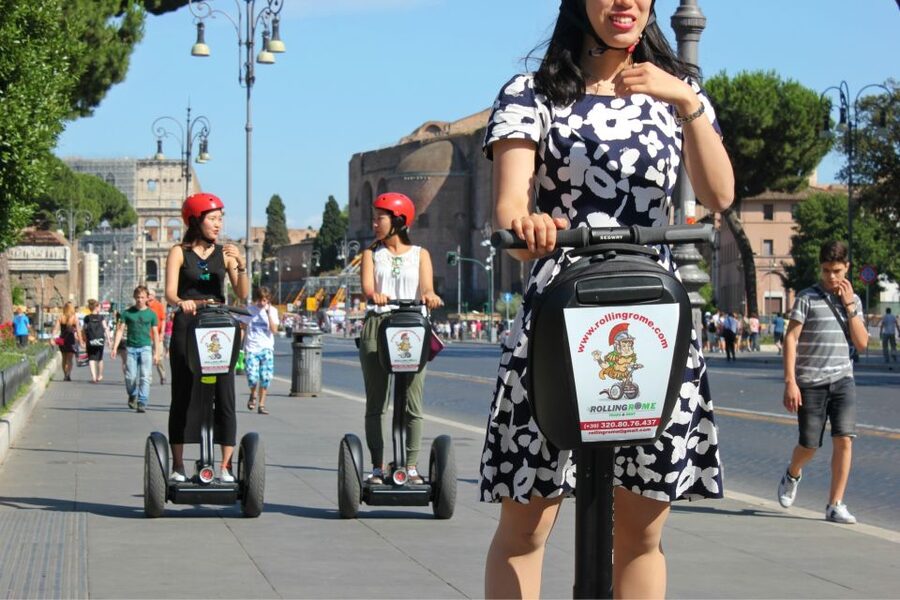
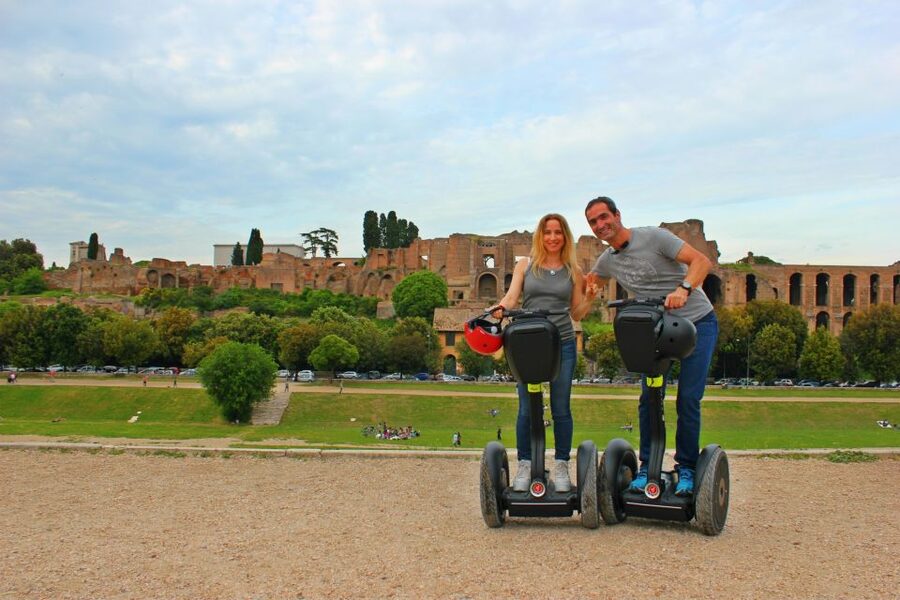
After Palatine, you’ll pass by the Circus Maximus on your way toward Aventine Hill. The Circus Maximus is one of those Roman sites that feels huge even when you’re only looking at remnants. When you glide past it, the scale hits differently than it does when you’re standing still with a guidebook.
The itinerary continues toward the Orange Grove area. That stop might sound small compared to the Colosseum, but it matters because it breaks up the heavyweights with a quieter stretch of views and atmosphere. It’s the kind of moment where you catch your breath, then get back into the bigger historical picture.
A practical win here: your guide doesn’t just point at places. The route is built so you get a sequence—origin, empire, spectacle—so you’re not collecting random stops.
Santa Maria in Cosmedin and the Mouth of Truth
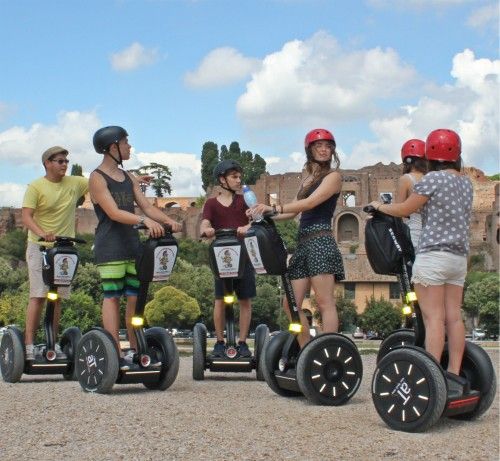
One of the most memorable parts of the tour is the visit connected to Santa Maria in Cosmedin. This is where the tour shifts from big monuments to a site with stories that feel oddly human.
You’ll also learn about the remains of San Valentino—the martyr linked to Valentine’s Day traditions—and the famous marble mask called the Mouth of Truth. The mask’s reputation as an ancient lie-detector is part of the appeal, but the real value is how the guide ties it into the larger setting around the church.
This is a great stop if you like Rome that isn’t only about emperors and crowds. It’s part legend, part religious heritage, part popular curiosity—yet it still fits the tour’s overall theme of how Rome layers meaning over time.



Capitoline Hill and Michelangelo’s Renaissance remix
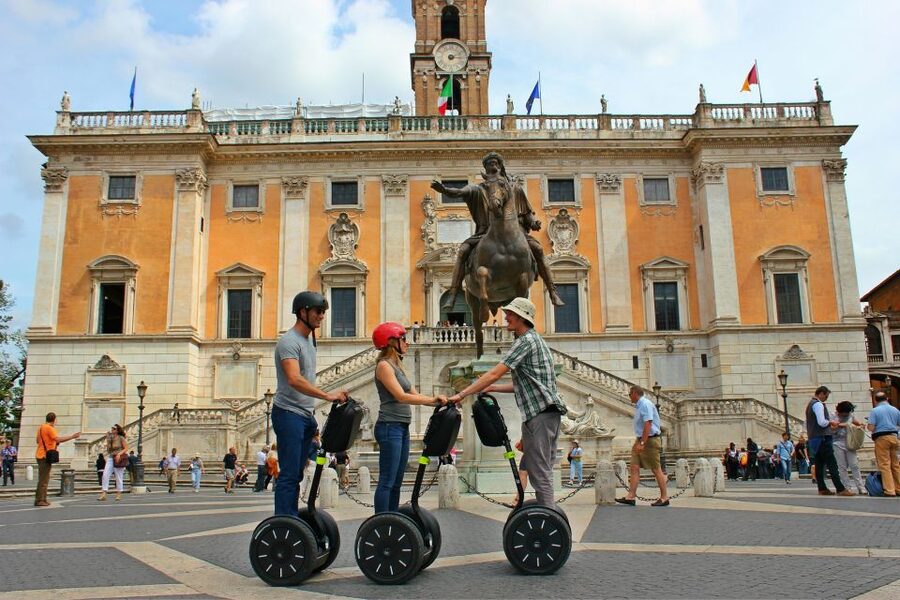
Next comes Capitoline Hill, one of the most important hills for imperial-era Rome. The tour doesn’t treat it like an automatic photo stop. Your guide explains what makes it central—then adds the Renaissance twist.
That twist is Michelangelo’s redesign of the Capitoline area. Even if you’re not a formal art-history fan, this is useful because it shows Rome isn’t stuck in the ancient past. It gets rebuilt, reshaped, and reinterpreted again and again.
I like this segment because it prevents “Roman history” from becoming a single straight line. You’re looking at ancient power, then at how later leaders and artists wrapped new meaning around those same spaces.
If you enjoy the intersection of art, architecture, and politics, Capitoline is where the tour feels most complete.
Imperial Forum by Segway: following the footsteps of emperors
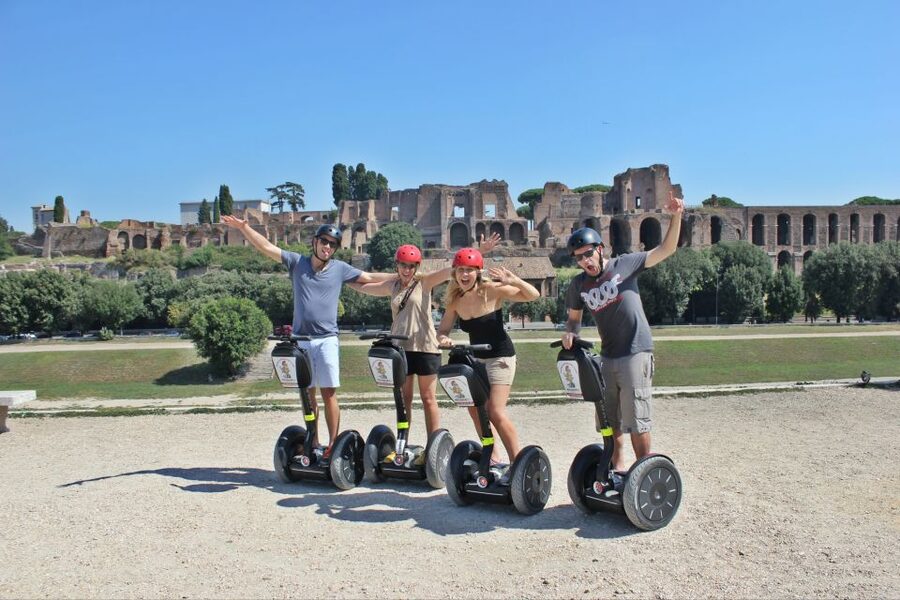
After Capitoline Hill, you’ll drive through the Imperial Forum, following in the footsteps of Roman emperors. Even when you’re just passing through by vehicle, the Forum area is powerful because it’s tied to government, law, and public life—basically the engine room of the empire.
This segment works well with the Segway format because you can keep moving while still getting guided context. You’re not only seeing stones. You’re getting the sense of what these spaces were for.
Then you’re directed toward one of the biggest moments of the ride: the Colosseum.
The Colosseum: the tour’s big payoff moment
The Colosseum is highlighted as a major stop, and for good reason. This is the sight that turns the idea of ancient Rome into something real and immediate.
What makes it valuable on a half-day Segway tour is the pacing: you don’t spend all your time traveling to one landmark and then leave with only that one stop done. Instead, you approach the Colosseum having already learned the setting—hills, forums, church sites, and Renaissance reshaping.
That context can make the Colosseum feel less like a postcard and more like part of a living urban story. You understand where you are in the sequence of Roman power, and you can connect what you saw earlier to what you’re looking at now.
Eco-friendly glide: why the vehicle choice matters here
The tour is positioned as an eco-friendly, futuristic mode of transport. Practically, that matters because it changes how you experience the city. You can cover more ground in less time than on foot, which is a big deal when you’re trying to hit major sights in a single afternoon.
It also keeps the focus where it should be: the guide’s narration and the visual sweep of Rome from hilltop angles. With Segway travel, you’re not constantly checking your bearings or waiting for slow walking groups to catch up. You’re moving, listening, and absorbing.
And because it’s a small group limited to 8 participants, your ride doesn’t feel like a mass shuffle. The tour style supports attention to detail.
English live guiding: stories that actually land
The guide is live and runs in English, and the strongest praise points are consistent: guides are described as professional, caring, patient with first-time riders, and genuinely good at explaining things in a way that sticks.
I’d especially trust this tour if you want the history served with clarity. One guide, Nico, gets repeated praise for commentary that’s easy to understand and informative. Another guide, Julio, is also singled out for being passionate and full of architecture and history stories.
That blend matters. Rome can be overwhelming if it’s just dates and names. Here, the narration ties locations to stories you can remember: the Romulus and Remus legend, the lie-detector myth around the Mouth of Truth, and the Renaissance makeover on Capitoline Hill.
Price and value: is $100 worth it?
At $100 per person for about 3 hours, you’re paying for three things at once: guided storytelling, included training, and efficient coverage of multiple major areas.
If you tried to do this by yourself, you’d likely spend more time moving between hills, and you’d miss the connection between sites unless you’re reading carefully as you go. Paying for a guide doesn’t automatically make Rome “easy,” but it can make your time feel far more intentional.
The small group cap also nudges the value in your favor. With fewer riders, the guide can handle slow learners, manage the pace, and keep the tour from turning into a long line of people who can’t hear.
My take: this is solid value if you want a structured, story-led introduction and you’re comfortable being on a moving vehicle for much of the tour. It’s less of a bargain if your priority is slow, museum-style wandering.
Weather, shade, and street changes you can’t control
Rome weather can change quickly, and the tour seems aware of that. One standout detail from the experience: a guide found shade when it was needed. That’s a small thing, but it makes a difference over a few hours.
Also keep in mind the city can change on special dates. There’s at least one clear example where closures during Holy Week meant the guides pivoted to keep the tour working. The takeaway: don’t expect every route detail to look identical on every calendar day. The goal is the tour working smoothly with the sights in the plan.
Who this Segway tour is best for
This tour fits well if you:
- Want to see multiple Imperial Rome sights in one afternoon
- Like your history explained in a clear, story-forward way
- Are new to Segways and appreciate patient coaching
- Prefer guided structure over solo navigation in crowded streets
You might be less thrilled if you hate vehicles, prefer long stops at one location, or need lots of time to study architecture slowly at eye level. The tour is built for movement and guided context, not museum deep-time.
Should you book Ancient Rome on a Segway?
I’d book it if you’re aiming for an efficient, fun introduction to Roman power centers—from hilltop views to the Colosseum—without spending your whole day crisscrossing the city.
What pushes me toward recommending it: the combination of included training, a guide who handles first-timers calmly, and a route that covers both headline sights and memorable extras like Santa Maria in Cosmedin and the Mouth of Truth. At up to 8 people and with English live guiding, it has the feel of a small, well-run outing rather than a production line.
If you’re choosing between a Segway tour and a purely walking plan, pick this when you want momentum and narration together. Pick walking when you want slow, quiet, independent exploration.
FAQ
Where does the tour start?
The tours start at Piazza del Gesù, 47.
How long is the Ancient Rome Half-Day Segway Tour?
The duration is listed as 3 hours (with the tour described as around 3.5 hours in the overview).
What’s included in the tour price?
It includes a guide, a Segway training session, and the Segway tour.
Is the tour guided in English?
Yes. The live tour guide is available in English.
How big is the group?
It’s limited to a small group of up to 8 participants.
What are some of the main stops?
Key highlights include Palatine Hill, Circus Maximus, Aventine Hill and the Orange Grove, Santa Maria in Cosmedin (with the Mouth of Truth), Capitoline Hill (redesigned by Michelangelo), the Imperial Forum, and the Colosseum.
Can I cancel or pay later?
There is free cancellation up to 24 hours in advance for a full refund, and there’s also an option to reserve now and pay later.