REVIEW · ATHENS
Athens: Ancient Agora E-Ticket and Audio Tour
Book on GetYourGuide →Operated by Clio Muse Tours · Bookable on GetYourGuide
The Agora is where Athens argued with itself. This self-guided Ancient Agora visit pairs a fast-track e-ticket with an offline audio tour on your phone, so you can follow the story of Athenian democracy at your own pace. My one main caution: the experience depends on a compatible smartphone and downloaded audio, since there’s no internet access once you’re inside the archaeological site.
I like that you’re not stuck reading from a map app while you’re walking. The tour uses an offline interactive map, and the route connects the big names and big ideas across the Agora area, from the Museum of the Ancient Agora to Mars Hill, the Pnyx, and the Prison of Socrates, ending near the Theatre of Dionysus by the Acropolis.
In This Review
- Key highlights that matter on the ground
- Ancient Agora on Your Terms: e-Ticket Plus Offline Audio
- Getting In Smoothly With the Validating Machines and Your Separate Email
- Solon to Pericles: What the Audio Tour Sets Up Before You Walk
- Museum of the Ancient Agora: Air-Conditioned Learning and the Upper-Level View Tip
- Mars Hill to the Pnyx: Views That Explain Why Speeches Worked
- Philopappos Hill and the Prison of Socrates: Turning a Name Into a Place
- Ending by the Theatre of Dionysus: A Natural Link to the Acropolis
- Price, Timing, and Footwear: Is $30 Good Value?
- Smartphone Reality Check: Compatibility, No-Internet Rules, and Audio Glitches
- Who This Tour Suits Best (and Who Should Rethink It)
- Should You Book the Ancient Agora E-Ticket and Audio Tour?
- FAQ
- Do I need an internet connection during the visit?
- What’s included with the Ancient Agora e-ticket?
- How long should I plan for this experience?
- Which languages are available for the audio guide?
- What equipment do I need to bring?
- Is the audio tour wheelchair accessible?
Key highlights that matter on the ground

- Offline audio + offline map means you can keep moving without roaming charges or hunting for signal
- Start with the pre-walk setup so Solon, the Bouleuterion, and the laws of everyday Athens make sense as you see the stones
- Museum time counts with stops that include the Museum of the Ancient Agora and a tip for using the upper level for a different view
- Pnyx + Rock of Ares viewpoints tie the political story to the actual hills and sight lines
- Philopappos Hill and the Prison of Socrates turn a name you’ve heard into a place you can locate
- Finish near the Theatre of Dionysus so your last minutes naturally connect to the Acropolis area
Ancient Agora on Your Terms: e-Ticket Plus Offline Audio
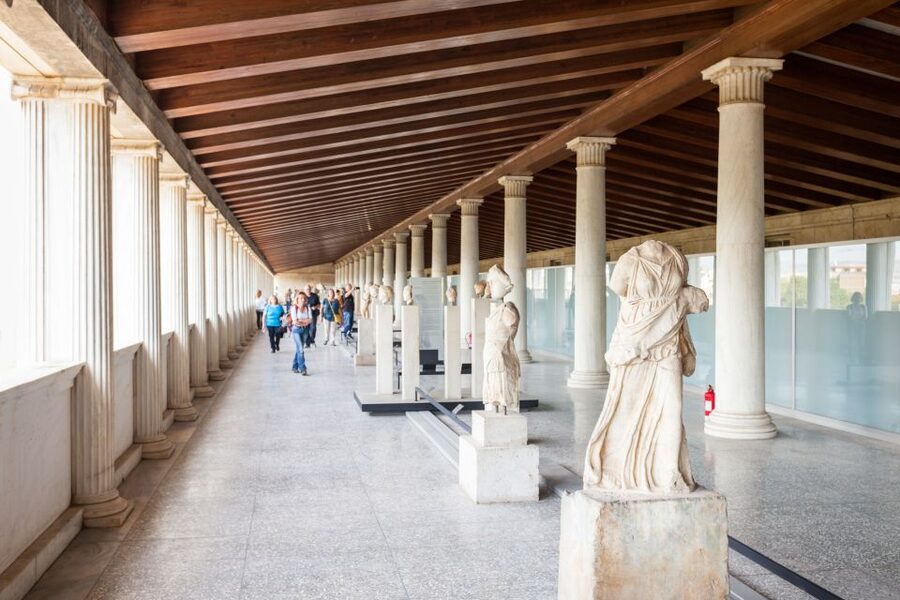
If Athens feels like a lot of statues and sightseeing checklists, the Ancient Agora is a smarter angle. This area was the day-to-day stage for political life, courts, speeches, and arguments—exactly the kind of setting that makes democracy feel real instead of abstract.
What you get here is simple: you enter with your pre-booked e-ticket, then follow a self-guided audio tour on your Android or iOS phone. The audio is designed to walk you through the evolution of Athenian democracy, starting with the legal reforms that helped create an early civic society and then linking those ideas to places you can actually stand in.
The best part is that the story doesn’t just tell you what happened. It points you to where it happened and when to look around—so the site stays active, even when you’re walking alone. For many people, that beats rushing through a guidebook explanation between photos.
You can also read our reviews of more tours and experiences in Athens.



Getting In Smoothly With the Validating Machines and Your Separate Email

This experience lives and dies on one practical thing: your e-ticket. After you book, you receive a separate email from the local partner with your e-ticket and instructions for the audio tour (check your spam folder too).
At the entrance, you use the validating machines, and your ticket must be either printed or downloaded on your phone. One important detail: GetYourGuide vouchers aren’t accepted at the entrance—so don’t rely on anything that isn’t the actual e-ticket you got by email.
Timing-wise, plan for a little buffer even though the entry is described as fast. It’s a site with instructions, and you’ll move quicker if you arrive with your phone charged and headphones ready. Also note the rules: luggage or large bags aren’t allowed, so travel light.
Finally, a heads-up that can affect your decision: the activity is non-refundable, so confirm your phone compatibility and download ability before you go.
Solon to Pericles: What the Audio Tour Sets Up Before You Walk
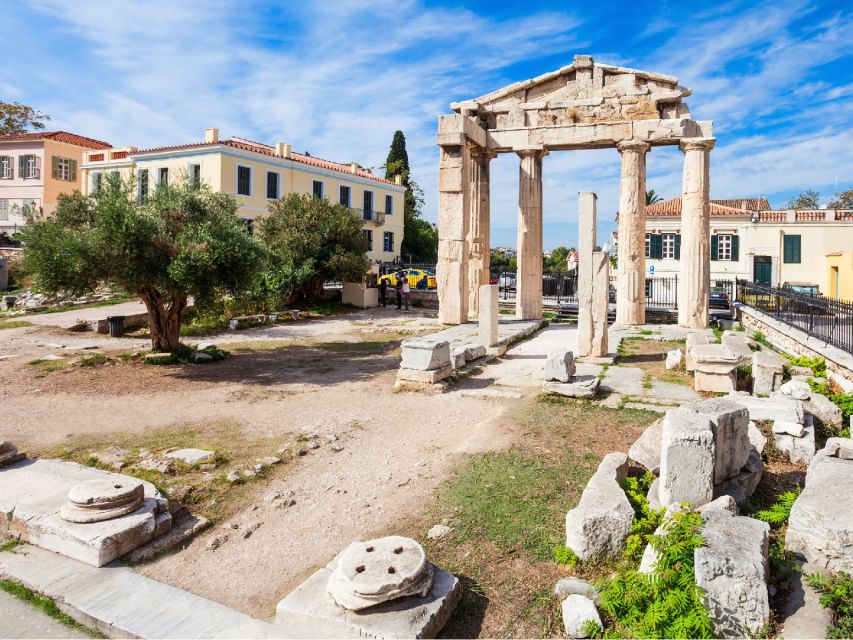
The audio tour starts by giving you the political timeline before you hit the stones. That matters here because the Agora can feel scattered unless you understand the sequence: reforms first, institutions next, and then public debate.
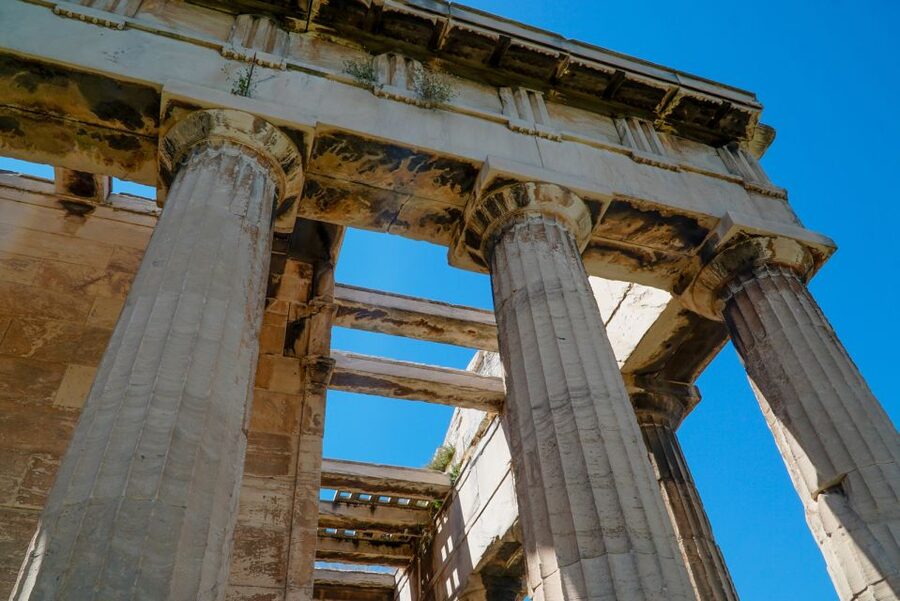
You begin near the foot of the hill where the Temple of Hephaestus still stands. From there, the audio focuses on Solon, whose legal reforms are presented as a foundation for early civil society. If you’ve ever wondered how democracy in Athens wasn’t just one invention but a slow process, this is where it starts to click.
Then you move uphill toward the Tholos area, where the audio points you to the ruined Bouleuterion—the place where 500 Athenians met daily to draft laws and proposals for the popular assembly. The tour’s job is to make those numbers and roles feel connected to what you’re seeing, not like random facts you’ll forget in an hour.
As you continue, the audio brings in named figures such as Aristides the Just and Pericles through anecdotal storytelling. That’s one of the reasons the route feels less like a museum pass and more like a guided story told by place.
Museum of the Ancient Agora: Air-Conditioned Learning and the Upper-Level View Tip

The Museum of the Ancient Agora isn’t just a stop between outdoor ruins. It’s where you can slow down and read the site with your hands and eyes, because museum exhibits translate fragments and ruins into understandable context.
If you’re sensitive to heat, you’ll probably love the museum break. One review specifically recommended the 2nd floor, noting it offers a different perspective—an elevated way to see the Panathenaic Way from above. That’s the kind of detail that can get skipped if you treat the museum like a quick bathroom-and-back stop.
Inside, the audio tour’s framing helps you notice how Athens defended democracy. The materials focus on methods used by Athenians to protect the system from outside or harmful influence—at times with a harsh edge. That tone can surprise people who expect democracy to be portrayed only as idealistic speeches.
It’s also a good place to reset your expectations for the rest of the walk. Once you’ve seen the museum context, the later viewpoints—Mars Hill, the Pnyx, and beyond—feel like scenes in the same play, not separate landmarks.
Mars Hill to the Pnyx: Views That Explain Why Speeches Worked
Athenian politics wasn’t happening in a vacuum. It was tied to hills, sight lines, and space for public gathering. This is where the Rock of Ares and the Pnyx enter the story.
From the Pnyx area, the audio nudges you to look for postcard-style views of the Acropolis. That’s not just for photos. Standing where people spoke helps you understand why the location mattered for persuasion and attention—people weren’t just listening to arguments; they were looking at the same civic center everyone shared.
The tour connects the political storyline to these outdoor spaces, so when you reach Mars Hill and the nearby areas, you’re already prepared for the role these places played in the broader civic system. The audio aims to keep the “why” attached to each stop instead of turning the walk into a list.
One practical note: outdoor paths can run parallel, and signage isn’t always as intuitive as you’d hope. You’ll feel better if you rely on the offline map and don’t assume the audio directions are the only wayfinding tool. If you’re navigating while also taking photos, slow down once you see a fork and confirm where you are before you move on.






Philopappos Hill and the Prison of Socrates: Turning a Name Into a Place

If Socrates is the name you came for, this is the payoff. The route later ascends on Philopappos Hill, where the audio points you to the Prison of Socrates and frames what it meant for a philosopher in Athens.
The key value here is spatial understanding. Instead of hearing about Socrates as a famous story, you place the story in a physical setting and get insights into his life and death as you move through the area. That shift makes the topic feel less like distant history and more like something tied to a specific civic context.
Also, the audio is built to keep moving. You won’t just stop and read a plaque. The audio continues to connect the political ideas behind the story to what you’re walking through, which is great if you like narrative pacing.
One drawback you should plan around: some people find the audio content more academic than expected. If you prefer simple, plain explanations, don’t feel pressured to sprint through the stops. Take your time, and when you feel lost, use the map rather than pushing ahead.
Ending by the Theatre of Dionysus: A Natural Link to the Acropolis

The tour ends near the Acropolis archaeological area, in front of the Theatre of Dionysus. This is a smart closing move because it sets you up to continue your Athens day without turning it into a whole new transit plan.
The audio highlights that this is the oldest theatre of the world and identifies it as the actual place where the tragedies of Aeschylus, Sophocles, and Euripides were staged. That gives you a cultural bridge: democracy wasn’t only laws and assemblies. It also lived in performance, debate, and public storytelling.
When you finish here, you’re also in a good spot for the big next step. If you’re planning to see the Acropolis area, ending near Dionysus helps keep the flow logical rather than forcing you to backtrack.
And because your tour ends right where the Acropolis action is, you can choose what to do next based on energy. If you have time and daylight, you’ll likely want to continue. If you’re done, you still end at a meaningful, central viewpoint.
Price, Timing, and Footwear: Is $30 Good Value?
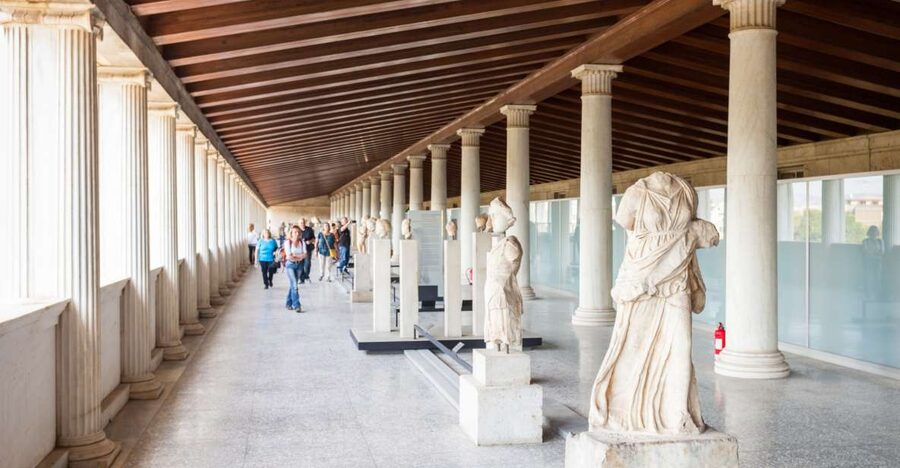
At about $30 per person with a 90 minutes to 2 hours duration, this is priced for independent value: you’re paying for skip-the-line entry via an e-ticket plus a structured audio experience that covers multiple major stops.
The value gets stronger if you like pacing yourself. With a live guide, you’d usually pay more and you’d follow a group. Here, you can slow down in the museum, linger at viewpoints, and move on when you’re ready.
When to go matters just as much. One tip from a past visitor: do it early in the morning or later in the afternoon so you aren’t walking in harsh heat at the slowest points of the route. The route includes outdoor hills and viewpoints, so that advice is practical.
Comfort-wise, wear comfortable shoes. The Ancient Agora ruins include uneven ground and slopes, especially as the route climbs toward the areas tied to the Pnyx and the Philopappos hill. If your shoes are only okay, the walk can feel longer than the stated time.
Also budget for what’s not included: bring headphones and make sure your smartphone is charged before you start. The experience is set up for offline use, but it still needs a powered device.
Smartphone Reality Check: Compatibility, No-Internet Rules, and Audio Glitches
The whole plan is built around offline use, which is great—until your phone isn’t ready.
Before you go, download the audio tour and the e-ticket content to your smartphone so you can use it offline. In the archaeological site, there’s no internet access, so don’t count on data to reload anything if your download fails.
Compatibility is another real-world factor. The audio tour isn’t compatible with Windows phones, and it also lists older Apple devices as unsupported (iPhone 5/5C or older, iPod Touch 5th generation or older, iPad 4th generation or older, and iPad Mini 1st generation).
One technical tip from a visitor: the audio recording seems to stop if you zoom while taking a photo. That’s not catastrophic, but it can break your flow. If photos are important to you, keep zoom changes brief, or pause for a moment after you take the picture to let the audio resume.
Navigation can also take a bit of patience. Some paths can feel confusing, and the audio’s directions may not label every fork perfectly. The best fix is simple: use the offline interactive map, and don’t be afraid to slow down and confirm your location.
Who This Tour Suits Best (and Who Should Rethink It)
This Ancient Agora e-ticket plus audio tour is a strong match for you if you want:
- Independence over group pacing
- A story-driven walk that links key figures and institutions to specific sites
- A plan that works without roaming internet because you’re relying on offline content
It’s also a good option if you prefer the Agora to the Acropolis for meaning. The audio tour focuses on political evolution and civic life, not just big views and columns.
But it’s not a fit for everyone. It’s not suitable for wheelchair users, and some points of interest aren’t wheelchair accessible. Also, if you don’t have headphones or a compatible phone model, you may lose a lot of the experience.
If you’re someone who wants very clear step-by-step navigation at every fork, you might feel more comfortable with a live guide. The route is self-guided, and while the map helps, the walking directions can be imperfect.
Should You Book the Ancient Agora E-Ticket and Audio Tour?
Book it if you want Athens in a more human key—laws, assemblies, and the people behind the ideas—while still having the freedom to linger in the museum and pause for views. At $30 for entry plus an offline audio plan, it’s a practical value if you’re the kind of traveler who likes to learn as you walk.
Skip it (or at least reconsider) if any of these are true: you’re relying on a phone model that the audio doesn’t support, you know you’ll struggle with offline downloads, you don’t have headphones, or you need full wheelchair accessibility. Also, if you prefer super simple explanations, be ready to slow down and use the map when the content feels more academic.
If you do book, download everything before you arrive, carry charged power, and give yourself time to use the museum—especially that upper-level view suggestion—so your walk ends with more understanding, not just more photos.
FAQ
Do I need an internet connection during the visit?
No. The tour includes offline content, and there’s no internet access in the archaeological site. Download the e-ticket and audio tour before you go.
What’s included with the Ancient Agora e-ticket?
You get an adult e-ticket for the Ancient Agora plus a self-guided audio tour on your smartphone (Android & iOS), including offline content and an offline interactive map.
How long should I plan for this experience?
Plan for about 90 minutes to 2 hours, depending on the pacing and starting time availability.
Which languages are available for the audio guide?
The audio tour is available in English, Italian, Greek, German, Spanish, and French.
What equipment do I need to bring?
Bring a charged smartphone and comfortable shoes. Headphones are also needed since they are not included.
Is the audio tour wheelchair accessible?
This activity is not suitable for wheelchair users, and some points of interest are not wheelchair accessible.