REVIEW · PLOVDIV
From Plovdiv: Sofia – A Story of an Ancient State Day Tour
Book on GetYourGuide →Operated by Bultrips · Bookable on GetYourGuide
Sofia comes at you in layers. In one long day, I love how Boyana church puts medieval art center stage, and how the route through central Sofia ties Roman, Byzantine, and Communist eras into one clear story. One consideration: food and drinks aren’t included, so you’ll want to plan for a snack or lunch stop on your own.
You’ll start with a 09:00 pickup from your hotel in Plovdiv, then spend most of the day in Sofia with a mix of walking and museum time. The pace is full-on (comfortable shoes help a lot), but the small group size means you’re not stuck in a crowd when you want to ask questions or look closely at details like fresco faces and church architecture.
In This Review
- Key highlights and what they mean in real life
- A 9-hour Sofia timeline from Plovdiv
- Getting your bearings in central Sofia: Serdica to Alexander Nevski
- Sofia History Museum and the monarchy-era story you may miss
- Communist-era architecture: palaces, parliament, and admin blocks
- The National History Museum: 13,000 years in one big stop
- Boyana Church UNESCO: frescoes and the exact way to look
- Park The Bells: a softer end to the hard stuff
- How much walking is it, and what should you bring?
- Is the $104 price a good deal for this day tour?
- Who this tour suits best
- Should you book the Plovdiv to Sofia day tour?
- FAQ
- What time does the tour pick me up in Plovdiv?
- How long is the day tour?
- How far is the drive from Plovdiv to Sofia?
- Is the tour a small group?
- Is there an English-speaking guide?
- Are entrance fees included?
- Is food included?
- What UNESCO site will we visit?
- What should I bring?
- Is free cancellation available?
Key highlights and what they mean in real life
- UNESCO Boyana church: Frescoes from the 13th century make the building more than a pretty stop.
- Roman Serdica remains: You’ll see Sofia’s ancient roots without needing to guess where to go.
- Communist-era monuments: Big architecture, specific locations, and context so it doesn’t feel random.
- National History Museum collections: 13,000 years of material in one place, including medieval weapons, armor, and icons.
- Park The Bells: A human, slightly moving counterpoint to all the heavy architecture.
- Small group up to 8: Easier conversation with your English-speaking guide, not just camera herding.
A 9-hour Sofia timeline from Plovdiv
This tour is built for people who want Sofia’s “greatest hits,” but also want the why behind them. You leave Plovdiv at 09:00, and the drive is about two hours—on a modern highway that follows an ancient corridor that once connected the Silk Road and Rome. That matters because it frames Sofia as a crossroads city, not just a single-era destination.
Once you reach Sofia, the day becomes a tight sequence of short-to-medium walks and indoor stops. You’ll get around roughly three hours of walking through the historical center, then museum time, and then two major “outside-the-core” stops. The whole thing is timed so you’re not rushing through ten places without meaning.
If you’re the type who likes asking questions, this is a strong match. Some guides (for example, Ivo or Theodore) are known for English that’s easy to follow and for being open to conversation, including helping with photos. That turns “I saw it” into “I understand what I saw,” which is the whole point of a guided day like this.
You can also read our reviews of more tours and experiences in Plovdiv.
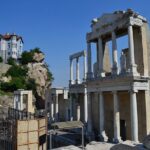
Getting your bearings in central Sofia: Serdica to Alexander Nevski
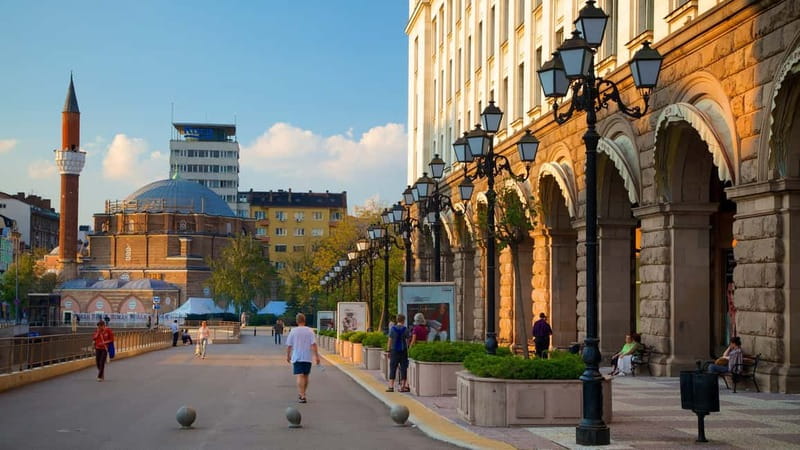
Central Sofia is where the city starts to feel like a time machine. Your route mixes key monuments with the Roman layer of the city, including remains of Serdica. You don’t just stand near ruins—you move through the neighborhood story, including stops tied to early Christian and Byzantine-era presence.
A core cluster is the Roman ruins, St. Sofia church, and the rotunda of St. George. Even if you’re not a stone-and-mortar expert, the layout helps you understand how religious architecture grew out of older urban fabric. My practical advice: when you arrive at these sites, don’t rush to the next photo. Spend a minute looking for what feels different—materials, shapes, and the way additions seem to stack over time.
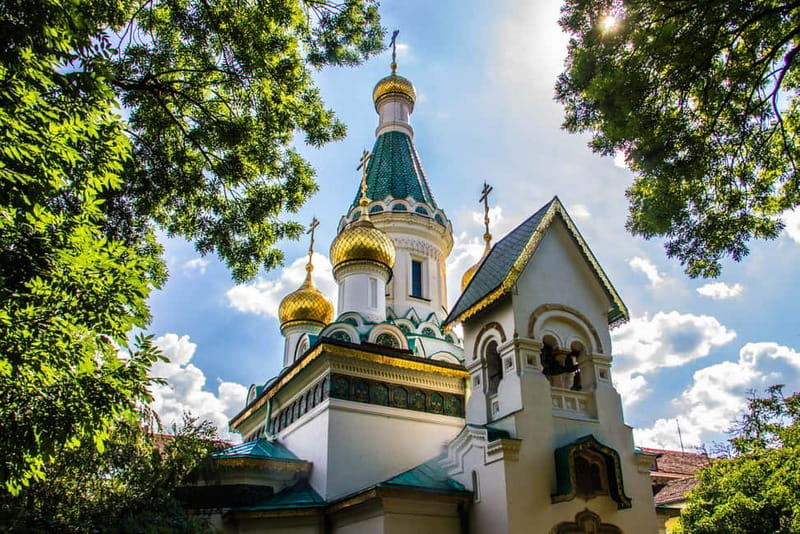
Then the tour pivots to Sofia’s modern symbol and power points. Alexander Nevsky Cathedral is the obvious stop, but it works best in context: you’ll see it after the Roman and early church stops, so it doesn’t feel like it comes out of nowhere. After that, you’ll also visit sites such as the monarchy palace area, Sofia University’s main building, and the parliament.
You’ll also encounter a piece of art from the late 19th century, plus a mix of official buildings connected to different political periods. That’s a subtle win for first-timers: you get a sense of where power sat at different times, instead of memorizing facts from a brochure.
One small drawback of a center-walk day is crowding. You’re moving with a group for much of it, so if you prefer a slow, solo pace, you’ll want to manage expectations. Still, the small group (up to 8 people) helps a lot.
Sofia History Museum and the monarchy-era story you may miss
The walking tour leads into museum time at the Sofia History Museum. This stop focuses on the 20th-century monarchy period—specifically the era when Sofia became the center of the country. That angle is useful because many visitors only think in terms of medieval churches or Orthodox art. Here, the guide connects the monarchy period to the city’s role and identity.
Museums can be risky on a day tour: they can turn into “quick look, next stop.” But this one is positioned as a bridge. After centuries of older layers outside, the museum helps you understand how modern Sofia solidified its national importance in more recent history.
If you like a clear storyline, this timing makes sense. You see the physical buildings in the center, then you step inside for the explanation of what changed and why, especially around state identity. It also helps you appreciate why later periods of governance left such visible marks.
Communist-era architecture: palaces, parliament, and admin blocks
Sofia’s Communist period is not just a footnote. It shows up in the built environment, and this tour points you to the spots where the ideology became architecture. You’ll visit the Communist administrative center, and you’ll also see how Communist-era monumental style sits near older civic buildings.
This is where having a guide who can connect dots really helps. The tour doesn’t treat Communist architecture as just a set of big shapes. Instead, you get context on how power wanted to look: grand, formal, and designed to project control.
A practical way to enjoy these stops: keep a simple mental checklist as you move.
- Look for symmetry and scale.
- Notice how public space is shaped.
- Ask what kind of message the building sends.
That kind of quick habit makes the monuments less abstract, even if you’re not into politics. And if you’re traveling as a couple or small group, the architecture stops also give you something easy to discuss over dinner afterward.
One more thoughtful element: you get a blend of political and cultural sites rather than a single-theme day. That keeps the experience from turning into a heavy slog. You still get to see major landmarks, but with a clearer timeline behind them.
The National History Museum: 13,000 years in one big stop
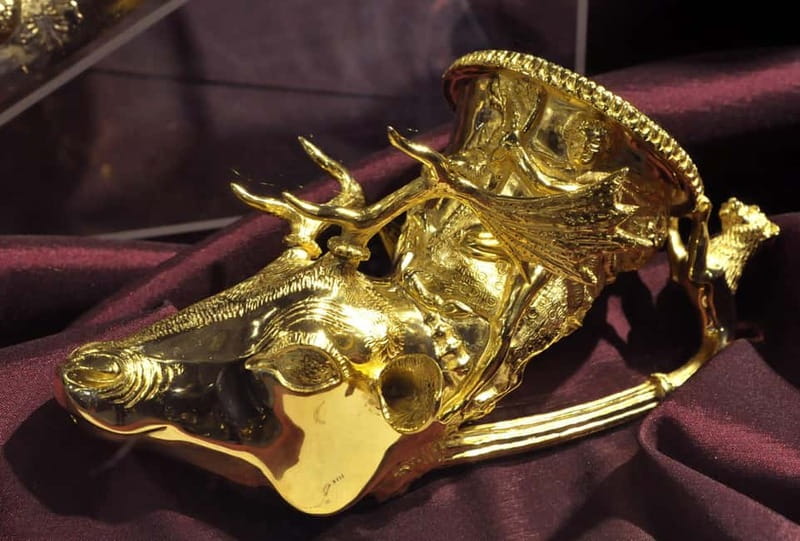
After the center, the tour heads to Sofia’s outskirts for the main Communist residence area—now home to the National History Museum. This is the kind of museum stop that can either overwhelm you or satisfy you, depending on how you approach it.
The collections here span about 13,000 years, from the earliest civilizations in the region to the Ottoman Empire and modern-day Bulgaria. That’s a lot, but the tour frames it so it’s not just a random warehouse of artifacts. You’re guided to the themes that connect the region’s long timeline.
One highlight is the museum’s medieval section. You’ll be able to see artifacts from the Bulgarian Middle Ages such as weapons, armor, and religious icons. This matters because it’s not only “church art.” It’s the whole cultural package: defense, belief, and status all in one visual language.
There is a balance to aim for here. Don’t try to read every label. Instead, focus on what the objects show you: how styles change, what motifs repeat, and how religious icons communicate rank and identity. If you’re the kind of visitor who likes to zoom in on details—metalwork, icon faces, armor shapes—you’ll get more out of this stop than if you just skim.
Boyana Church UNESCO: frescoes and the exact way to look
The last major cultural anchor before heading back is Boyana church, a UNESCO site and widely treated as one of the finest medieval Balkan painting examples. The church was built in the late 10th century, but what people travel for is the set of frescoes from the 13th century.
Here’s how to make this stop work for you. Don’t just admire the walls. Look for three things:
- Scenes from saints’ lives (story in paint).
- Portraits of Bulgarian nobles and church dignitaries (who had their place in the images).
- The architectural structure that frames the painting.
The tour also explains why the church looks like it does. You’ll see a blend of Byzantine and Bulgarian styles, which helps you connect form with meaning. Inside, the space is divided into three parts: the nave, the apse semi-dome, and the narthex (entrance area). Each has different visual focus, including columns and ribbed ceiling in the nave, and fresco-heavy decoration in the apse and narthex.
Practical note: churches like this reward quiet attention, not speed. With your guide, you’ll likely be guided to the right spots, but you’ll still want a slow moment. If you’re even slightly interested in how art communicates status, faith, and history, this is the moment that makes the whole day click.
Park The Bells: a softer end to the hard stuff
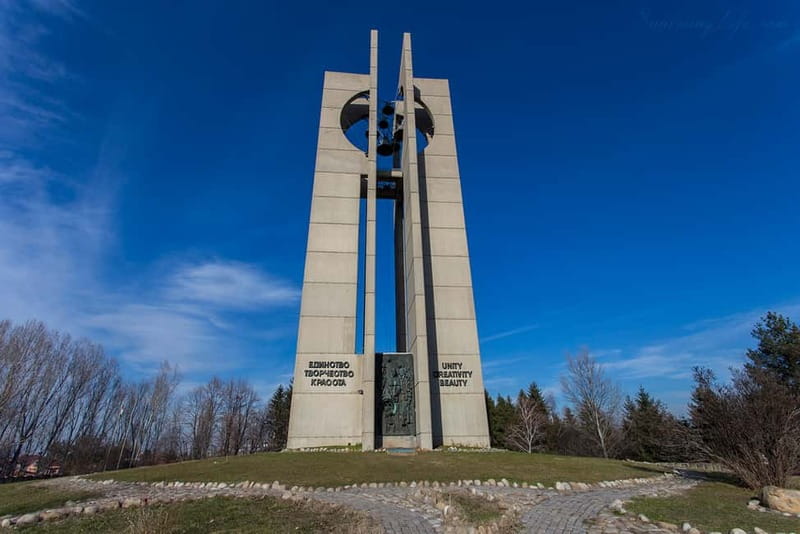
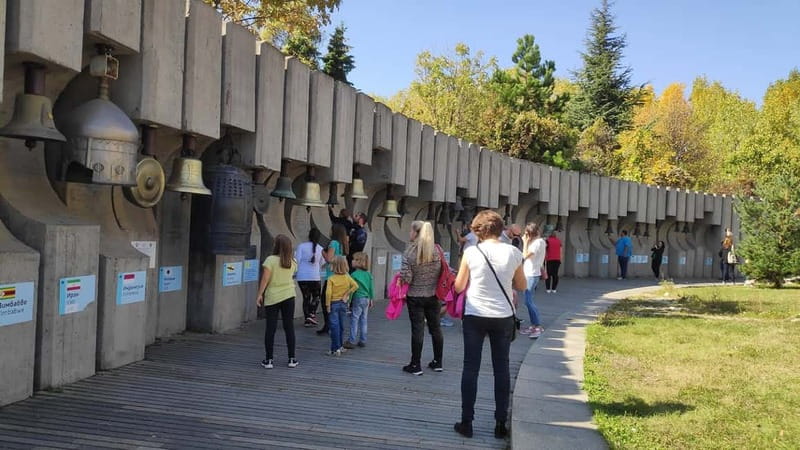
Before you head back to Plovdiv, the tour stops at park The Bells. It’s a Communist-era monument that feels different from the big administrative buildings you saw earlier. Built in 1979 by the daughter of the last Communist leader of Bulgaria, it grew from an initiative called The flag of peace.
The concept is simple and human: children from both sides of the Iron Curtain met and made bells, and those bells were presented in the park. This is the kind of ending that gives your brain a chance to decompress. It also makes the political history feel personal, not just theoretical.
If you’re the kind of traveler who prefers your history with emotion attached, you’ll like this. If you prefer only the top museums and cathedrals, you might still enjoy it for the contrast. Either way, it’s a memorable close to a long day.
How much walking is it, and what should you bring?
This is a day with movement, not a sit-and-watch tour. You should plan for about three hours of walking in the center of Sofia plus short transitions between stops. You’ll also spend time inside churches and museums, which can mean standing for periods while you look at objects and architecture.
So bring comfortable shoes. That’s not marketing fluff—it’s the difference between enjoying Boyana church details and feeling your feet complain through the fresco faces.
Other practical tips that fit this exact style of day:
- Wear layers if you tend to get cold indoors. Churches and museums can feel cooler than the street.
- If you want lots of photos, have your camera charged before you leave Plovdiv. The schedule is packed.
- Since food isn’t included, plan for a snack. Even a small break helps you stay focused through the longer museum stretch.
Is the $104 price a good deal for this day tour?
At $104 per person for a 9-hour day, the value comes from what’s included and how much ground it covers. You’re getting hotel pickup and drop-off in Plovdiv, transport in a modern vehicle, an English live guide, and entrance fees. That’s not trivial. Entrance tickets and guided time add up fast if you DIY.
The tour also bundles a lot of different “types” of stops: outdoor monuments, Roman and church architecture, two major museum experiences, and a UNESCO site. For many people, the real cost isn’t only money—it’s time spent figuring out routes and sequencing. Here, the sequencing is part of the product.
What’s not included is food and drinks. That’s the main financial trade-off. If you budget an extra lunch/snack amount, the total often becomes very reasonable compared to paying for a private guide or multiple separate ticketed visits.
The small group also helps justify the price. Up to 8 people means you’re more likely to get explanations that match what you actually care about, instead of just hearing a rushed standard speech.
Who this tour suits best
I’d book this if you want a guided overview that still points you to specifics. It’s ideal for first-time visitors to Sofia who also like history and art—and who don’t mind a full day.
It’s also a good choice for couples and friends because the day naturally gives you conversation starters: Roman remains versus Communist architecture, monarchy-era state building, and medieval fresco portraiture. If you’re traveling solo, the tour can still work, but you may find yourself the only participant at times.
That leads to one honest consideration. One group experience showed that sometimes you might end up with a guide nearly on your schedule alone. If you’re hoping to meet fellow travelers for the day, that’s not guaranteed. The flip side is a solo-friendly experience with more one-on-one time.
And if you’re the type who chats easily, this tour is geared toward that. Guides like Ivo or Theodore have been described as friendly, helpful, and able to keep the story flowing—plus, even when groups ask for tweaks, it can sometimes happen within the plan.
Should you book the Plovdiv to Sofia day tour?
Yes, if you want Sofia in one organized day with a guide who can connect Roman ruins, medieval art, monarchy-era identity, and Communist architecture into a story you can actually remember.
Book it especially if Boyana church is on your list and you’d rather have context than just stand in front of frescoes. I’d skip it if you want a slow, free-form trip or if you hate long walking days.
If you like structure, good explanations, and a UNESCO stop that doesn’t feel rushed, this tour is strong value for the time and tickets you’re getting.
FAQ
What time does the tour pick me up in Plovdiv?
Pickup starts at 09:00 from your hotel or address in Plovdiv.
How long is the day tour?
The duration is 9 hours.
How far is the drive from Plovdiv to Sofia?
It’s about 2 hours of driving on a modern highway.
Is the tour a small group?
Yes. It’s limited to a small group of up to 8 participants.
Is there an English-speaking guide?
Yes. The live tour guide is English.
Are entrance fees included?
Yes. Entrance fees are included in the tour price.
Is food included?
No. Food and drinks are not included.
What UNESCO site will we visit?
You’ll visit Boyana church, a UNESCO site.
What should I bring?
Bring comfortable shoes.
Is free cancellation available?
Yes. You can cancel up to 24 hours in advance for a full refund.