REVIEW · SEOUL
Deoksugung & Jeongdong-gil: A Walk in Korea’s Rich Heritage
Book on Viator →Operated by S.A. Tour · Bookable on Viator
Palaces and city noise share the same route. This Deoksugung & Jeongdong-gil walk stitches together late 19th–early 20th century Seoul with stop-and-look moments across Deoksugung and Jeongdong-gil—then finishes near the Cheonggyecheon Stream.
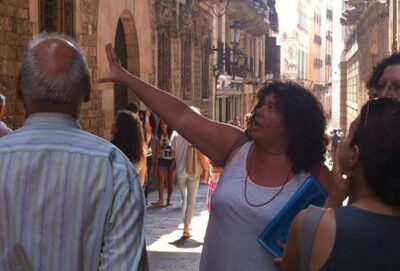
I like the way the story stays concrete: you move from Joseon-era palace grounds to the Korean Empire period, including Jungmyeongjeon Hall and Emperor Gojong’s temporary residence. I also really value the English guide approach—guides like Sam make the context easier to see on the ground, not just read later.
One caution: this is an outdoor walk built around several sites, and it runs best in good weather, so plan for uneven sidewalks and a bit of pacing.
In This Review
- Key points you’ll care about
- A 3-hour Seoul palace-and-street walk you can do on day one
- Deoksugung Palace: Joseon-era power right in central Seoul
- Gyeonghuigung Palace: another royal residence, a different feel
- Appenzeller Noble Memorial Museum: education, missions, and a link to Pai Chai University
- Jeongdong Theater: a cultural performance stop that also serves as your break
- Jungmyeongjeon Hall: 1899 imperial library and Emperor Gojong’s temporary chapter
- Gwanghwamun Square and the finish near Cheonggyecheon Stream
- Price and value: why $48 feels fair for this route
- Timing, weather, and walking comfort (the stuff that actually affects your day)
- Who this walk suits best (and who might want a different plan)
- Should you book Deoksugung & Jeongdong-gil?
- FAQ
- How long is the Deoksugung & Jeongdong-gil experience?
- Where does the tour start and end?
- What time does the tour begin?
- What is the price per person?
- Is an English guide included?
- Are admission fees included for the stops?
- Is lunch included?
- Where is there time to get coffee and use the restroom?
- How many people are in the group?
- What happens if the weather is poor?
Key points you’ll care about
- Small group size (max 15) helps you ask questions without feeling rushed.
- Most stops are free to enter, so your $48 mainly pays for the guided route and interpretation.
- Joseon to Korean Empire timeline shows up at multiple stops, not just in one museum.
- A practical pause at Jeongdong Theater for coffee/drinks and restroom access.
- Start at Deoksugung Palace and end near Cheonggyecheon Stream, giving you an easy Seoul “orientation line.”
A 3-hour Seoul palace-and-street walk you can do on day one
At about 3 hours, this is a smart length if you want history without committing to a whole day. The pacing is built around short, timed stops: think “see the key details, learn why they matter, then walk again.”
You’ll go with a professional English tour guide, and the small group cap (15 people) matters more than it sounds. When your guide is Sam—praised as fun and informative—you get clearer explanations while you’re still standing in the right spot, not three stops later.
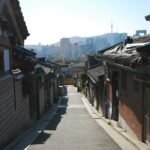
The route also does something I like: it connects old and newer Seoul in a way that feels real. You’re not only in palace gates and museum halls; you’re also moving through streets that show how the city has kept changing.
You can also read our reviews of more tours and experiences in Seoul.
Deoksugung Palace: Joseon-era power right in central Seoul
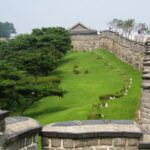
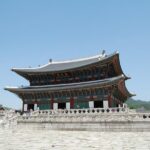
Deoksugung Palace (also called Gyeongun-gung) is a big reason this walk works. It’s located in the heart of Seoul, so you don’t need extra transit to feel like you’ve stepped into a different era. Built during the Joseon Dynasty, it served as a royal residence—meaning this place wasn’t just decorative.
In your roughly 20-minute stop, focus on the idea, not just the photos. When a palace is functioning as a residence, it shapes the whole layout: where officials move, where ceremonies happen, how visitors would experience authority. Your guide’s job is to point out those connections, so you know what you’re looking at instead of guessing.
Admission is listed as free for this stop, which helps you spend your money on the guided learning rather than entry fees. If you’re the type who likes to understand the “why” behind architecture, Deoksugung gives you a strong starting anchor for the rest of the route.
Gyeonghuigung Palace: another royal residence, a different feel
Next is Gyeonghuigung Palace (also known as Gyeonghui Palace), in the Jongno-gu district. It was built in 1623 during the Joseon Dynasty as a residence for a royal family figure—so again, you’re looking at palace design with life and governance in mind.
This stop is shorter—around 20 minutes—so it’s not the time to try to read every sign. Instead, use it to compare. The value here is how two palace sites in the same larger neighborhood can feel like different chapters while still belonging to the same overall dynasty story.
One practical tip: since it’s free admission, you can relax. Your guide will help you notice what’s relevant to the theme of late-19th to early-20th century transitions—things you’ll carry forward into the next stops.
Appenzeller Noble Memorial Museum: education, missions, and a link to Pai Chai University
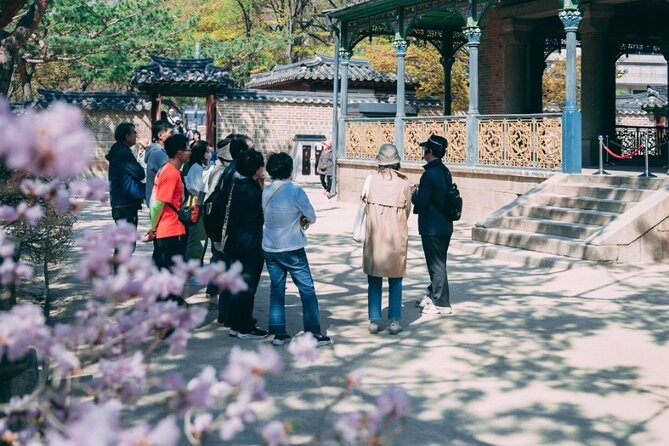
The Appenzeller Noble Memorial Museum gives this walk a different flavor than palaces alone. It’s connected to the former home of Baekjae Hakdang, a missionary school that later expanded into a university known as Pai Chai University in Daejeon.
In about 10 minutes, don’t expect a long museum marathon. Treat it like a history waypoint: your guide’s explanations help connect Korea’s learning institutions with outside influences and how those relationships evolved. Museums like this work best when you ask one question: what changed, and what stayed?
Since the museum is also listed with free admission, it’s a good use of time. You’ll likely leave with at least one new thread to pull later—especially if you’re the kind of visitor who likes to see how schools, religion, and politics overlap in real life.
Jeongdong Theater: a cultural performance stop that also serves as your break
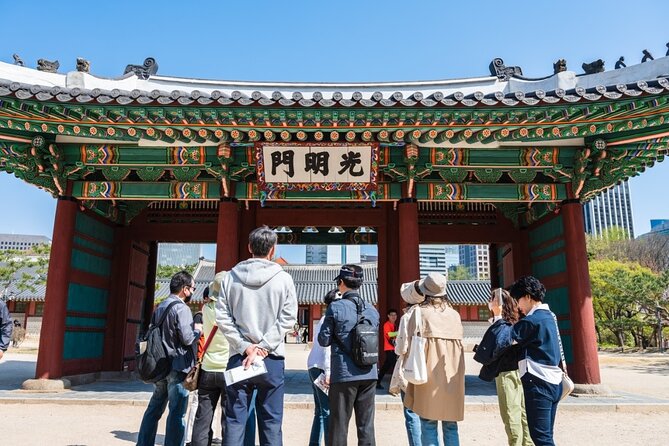
Jeongdong Theater is where the tour becomes more usable day-to-day. The venue features concerts, plays, and musicals that incorporate elements of traditional Korean culture. Even if you’re not attending a performance that day, the stop still matters because it shows how traditional elements keep living inside modern public arts.
You’ll spend about 25 minutes here, and the itinerary is explicit: it’s a break for coffee or other drinks and to use the restroom. That part sounds small until you’re halfway through a walk and everything starts to feel longer than it should.
I recommend using this stop to reset your pace. Step outside, take a breath, then go back into “history mode” for Jungmyeongjeon Hall. It makes the rest of the walk feel smoother.


Jungmyeongjeon Hall: 1899 imperial library and Emperor Gojong’s temporary chapter
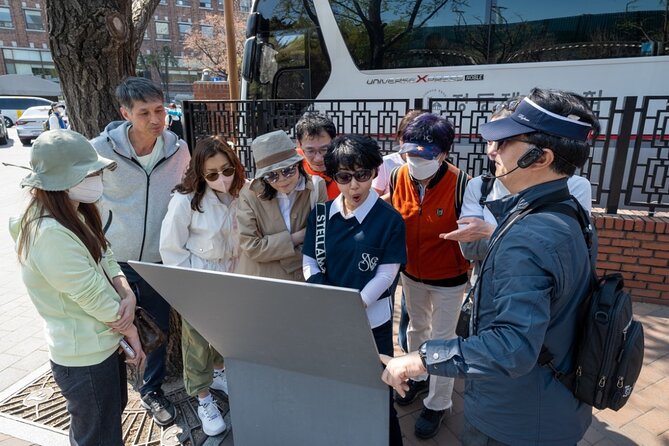
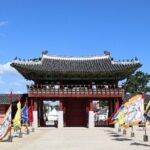
Jungmyeongjeon Hall is one of the most important stops on the route. It was built in 1899 as the imperial library of the Korean Empire. Then, after Deoksugung Palace caught fire in 1904, the place became the temporary residence of Emperor Gojong.
That sequence is powerful. A building that was meant for learning and state knowledge becomes part of royal living because history forced a change. This is the kind of detail that helps you understand late-19th to early-20th century Seoul as a period of transition, not just dates in a book.
You’ll have about 15 minutes here, and for that amount of time, your best move is to listen for the story chain: library purpose → fire aftermath → temporary residence. When those links click, the architecture stops being abstract.
Also, admission is listed as free here, which makes this stop feel like a real value moment inside a guided experience.
Gwanghwamun Square and the finish near Cheonggyecheon Stream
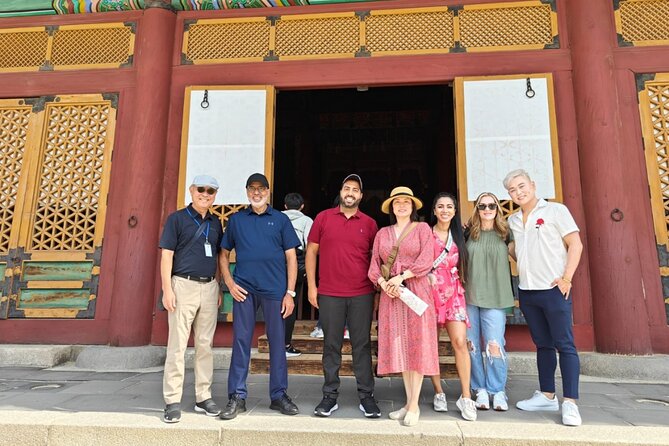
The final major stop is Gwanghwamun Square, built in 2009. It’s a large public square in central Seoul, and it features a big fountain plus a statue of King Sejong the Great. There are also additional features in the square, but the fountain and Sejong statue are the core anchors.
This is where the tour’s “old + new Seoul” theme shows up most clearly. You’re leaving palace and imperial buildings and landing in a modern civic space meant for gathering and public life. Even if you’re not planning to stay long after the tour, the square gives you an easy mental map of where you are in the city.
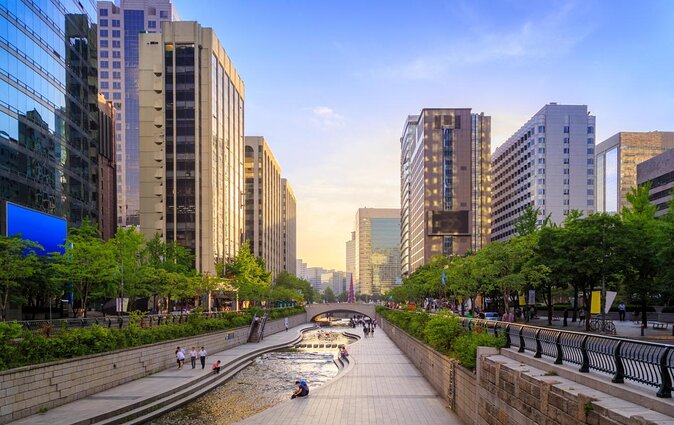
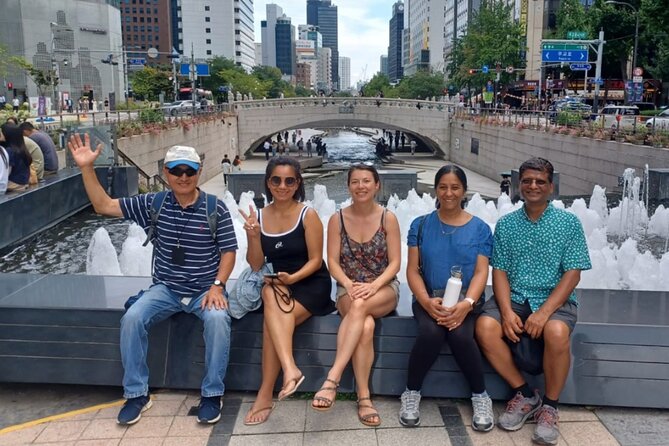
The tour then ends at the Cheonggyecheon Stream. That finish matters because the stream area is a natural place to keep exploring at your own pace after your guide has helped you get oriented.
Price and value: why $48 feels fair for this route
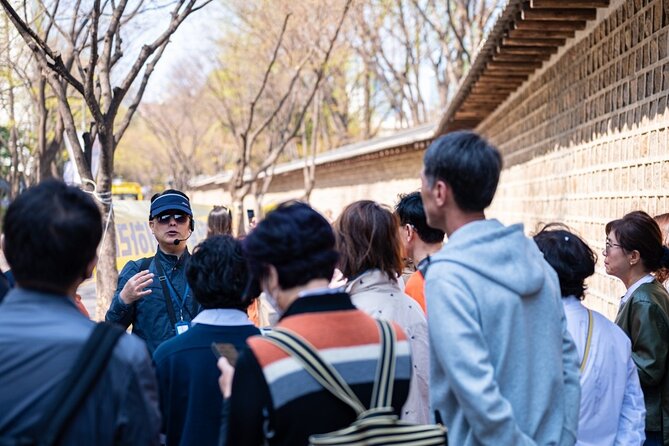
At $48 per person for about 3 hours, you’re paying for more than “time with a guide.” You’re paying for the structure: short stops that are easy to follow, plus an English explanation at each key site.
Here’s what makes it feel like good value:
- Free admission is listed at the stops along the route, so you’re not paying entry fees on top of the tour price.
- You get a professionally guided narrative across several sites in one morning, which often costs more if you try to DIY with scattered explanations.
- The guide time is concentrated. You’re not waiting in line or wandering without a plan.
And the mobile ticket detail helps too. Less paperwork, more walking.
If you already know Seoul well, you might feel this is “just a walk.” But if you want a guided framework for how these sites connect across a turbulent era, the $48 is working hard for you.
Timing, weather, and walking comfort (the stuff that actually affects your day)
The tour starts at 9:30 am at Deoksugung Palace (99 Sejong-daero, Jung District) and runs a few hours. A morning start is a practical choice in Seoul because palaces and outdoor squares are easier when your feet aren’t already exhausted.
Also, the experience is clear that it requires good weather. That doesn’t just affect whether it happens—it affects how much you enjoy the pace. Bring water, wear shoes you trust for uneven pavement, and expect you’ll do more walking than you’d do in a museum-only plan.
One more practical point: it’s near public transportation, so if you want to extend your day after the tour, you shouldn’t be stuck relying on taxis or complicated transfers.
Who this walk suits best (and who might want a different plan)
This is a great fit if:
- You want a first-timer introduction to Seoul’s history without taking on a full-day itinerary.
- You enjoy walking with an English guide who explains context while you’re at the site.
- You like a route that mixes palaces, a museum, a performance venue, and modern civic space in one thread.
It may be less ideal if:
- You dislike outdoor walking or long mornings.
- You want a deep, single-site museum experience rather than a sequence of short stops.
- You’re only interested in one era (because this route moves across late Joseon and the Korean Empire period).
Should you book Deoksugung & Jeongdong-gil?
If you’re looking for a smart, guided way to orient yourself in central Seoul while learning how the city’s power centers changed, I think this is worth booking. The route makes sense: you start at Deoksugung, add Gyeonghuigung, connect education through the Appenzeller Noble Memorial Museum, take a real break at Jeongdong Theater, and then hit Jungmyeongjeon Hall’s Emperor Gojong chapter before finishing at Gwanghwamun Square and near Cheonggyecheon.
The biggest reason to choose it is simplicity: one morning, organized, with an English guide—and free entry listed at the key stops. If Sam is your guide, you’ll likely get exactly what people hope for in a history walk: clear explanations, a friendly pace, and a Seoul you can picture after you leave.
FAQ
How long is the Deoksugung & Jeongdong-gil experience?
It lasts about 3 hours (approximately).
Where does the tour start and end?
It starts at Deoksugung Palace, 99 Sejong-daero, Jung District, Seoul, South Korea, and it ends at Cheonggyecheon in Jongno District, Seoul, South Korea.
What time does the tour begin?
The start time is 9:30 am.
What is the price per person?
The price is $48.00 per person.
Is an English guide included?
Yes. A professional English tour guide is included.
Are admission fees included for the stops?
The stops listed in the itinerary show admission ticket free for each site.
Is lunch included?
No, lunch is not included.
Where is there time to get coffee and use the restroom?
There is a stop at Jeongdong Theater where you can get coffee or other drinks and use the restroom.
How many people are in the group?
The tour has a maximum of 15 people.
What happens if the weather is poor?
The experience requires good weather. If it’s canceled due to poor weather, you’ll be offered a different date or a full refund.