REVIEW · FLAGSTAFF
Grand Canyon + Ancient Ruins + Volcano Full Day Christian Tour
Book on Viator →Operated by Canyon Ministries Christian Tours · Bookable on Viator
Sunset views, then stories from Genesis. This Christian-led Grand Canyon + volcano day links South Rim overlooks with a biblical creation and Flood perspective on how the canyon formed. I also like how the route stacks geology, Native American sites, and volcanic scenery into one long, satisfying day—just know it can feel like a faith-first tour, and it runs for about 10 hours.
Guides with names like Eddy, Dana, Luke, and Bryce have a reputation for balancing science talk with Scripture, keeping the pace friendly, and answering lots of questions with patience and humor. You’ll go with a small group (up to 12), and the tour includes park entry for the big three sites plus practical extras like bottled water and binoculars—so you’re not scrambling for gear. My only heads-up: some stops are short but the day is still long, so plan on sitting most of the time and doing only light walking.
In This Review
- Key things you’ll notice on this tour
- From Flagstaff at 8:00 a.m. to an all-day canyon-and-volcano loop
- San Francisco Volcanic Field views before you ever reach the Grand Canyon
- South Rim first views from Yavapai Point (plus wildlife odds)
- Two hours at the South Rim: rock layers and the Genesis-to-canyon conversation
- Grandview Point for the distant river scene and Wild West history
- Desert View lunch break with Market and Deli options
- Descending into Navajo Nation: 3,000 feet of dramatic views
- Wupatki National Monument: ancient Pueblo ruins and migration stories
- Sunset Crater Volcano National Monument: the optional loop trail and lava features
- What’s included (and why it’s worth more than it looks)
- Price and value: is $189 a fair deal for Grand Canyon + Wupatki + Sunset Crater?
- Who should book this tour (and who should think twice)
- Should you book the Grand Canyon + volcano Christian day trip?
- FAQ
- How long is the tour?
- What time does the tour start and where?
- Does the price include Grand Canyon and the other park entries?
- Which parks are included in the day?
- Is pickup available?
- What lunch options do I have?
- Is the volcano trail walk required?
- What’s the maximum group size?
- What’s included besides park entry?
- What if the weather is bad?
Key things you’ll notice on this tour
- Small group pacing: up to 12 people, with frequent viewpoint stops and breaks.
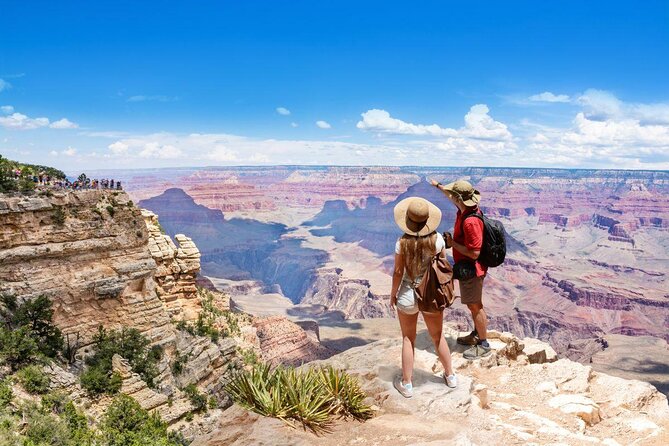
- South Rim focus: a full run of classic overlooks plus time at Desert View for lunch.
- Faith-and-science discussion: Genesis-based talk tied to rock layers and canyon formation.
- Wupatki + Navajo Nation scenery: ancient ruins followed by big views as you drop from the plateau.
- Optional volcano walk: a loop trail at Sunset Crater that you can shorten or skip parts.
- Included convenience gear: bottled water, umbrellas, binoculars, and blankets.
From Flagstaff at 8:00 a.m. to an all-day canyon-and-volcano loop
This is a “leave early, come home late” kind of day. You start at the DoubleTree by Hilton Flagstaff at 8:00 a.m., and you’re typically back around 6:00 p.m., after hitting the South Rim, Wupatki National Monument, and Sunset Crater Volcano National Monument.
The drive is part of the experience here, not just a transfer. As you roll out of Flagstaff you’ll pass through the San Francisco Volcanic Field area—think cinder cones and big “Arizona sky” views—with the Humphreys Peak region visible in the distance. If your group likes narration, this tour is set up for that; the guide uses the scenery as the jumping-off point for explanations.
You’ll also benefit from a small-group rhythm. With a maximum of 12 people, you tend to get easier timing for restroom stops and questions, and it’s simpler for the guide to keep track of who needs what. The tour includes bottled water, and they provide umbrellas and blankets, which is a real help when weather flips fast in northern Arizona.
You can also read our reviews of more tours and experiences in Flagstaff.
San Francisco Volcanic Field views before you ever reach the Grand Canyon
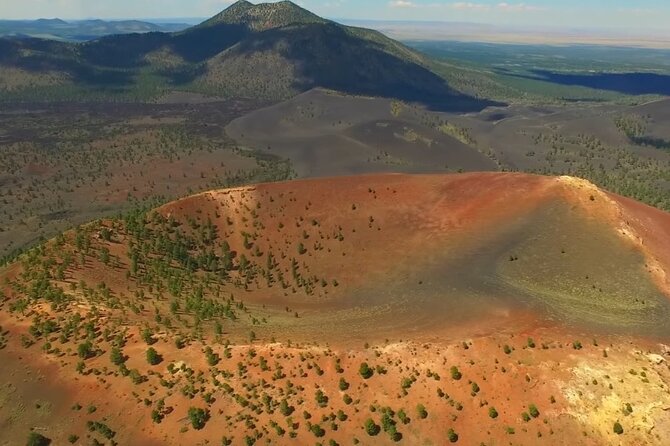
Before the canyon steals the show, you get a taste of the volcanic country around Flagstaff. The route cuts through terrain marked by cinder cones, and on clear days the San Francisco Peaks/Humphreys Peak area can show up capped with snow much of the year. It’s a nice way to set the mental stage: today isn’t only about carving and erosion, it’s also about fire and lava.
This matters because the day keeps returning to “how the land got here.” Even if you’re focused mainly on the Grand Canyon, the volcanic stops make the geology talk land better. You’ll also feel the “big altitude difference” theme later when the drive drops down toward Navajo Nation areas—so the early volcanic scenery acts like an appetizer.
Practical tip: start the day with layers. You’ll be in the car a lot, but you’ll also stop for viewpoints and take in open-air vistas, and that can mean cooler breezes. Blankets are included, which takes some pressure off your packing.
South Rim first views from Yavapai Point (plus wildlife odds)
Once you arrive at Grand Canyon National Park on the South Rim, the tour doesn’t waste time. You get a restroom break near Yavapai Point and then move into your first real canyon views—this is where the scale hits.
From this area you’ll be able to pick out famous features such as the Bright Angel Trail, Phantom Ranch, and the Kaibab Suspension Bridge, plus a look down toward the Colorado River far below. Even with brief stop time here, it’s enough to help you “read” the canyon: you start noticing the way layers stack and how the walls step away.
There’s also a wildlife chance. You may spot elk during park driving. I like this setup because it turns the drive through the rim roads into more than a bus ride—you’re actually scanning for movement along the edges.
Two hours at the South Rim: rock layers and the Genesis-to-canyon conversation
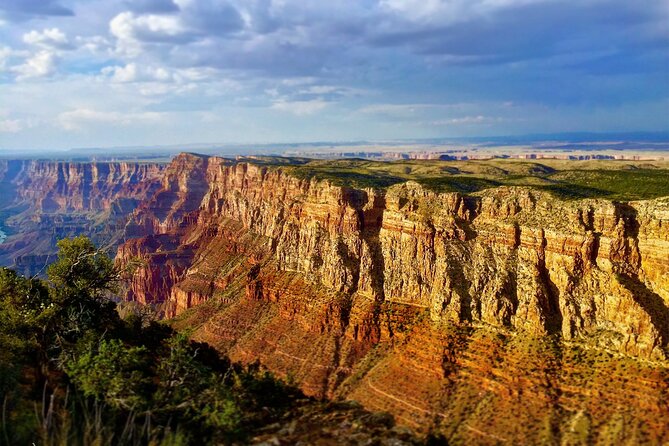
This part is the heart of the “Christian tour” concept. You’ll spend about two hours exploring the South Rim and Desert View Drive with stops at key overlooks. While you’re taking in the view, the guide connects canyon features to a biblical interpretation, including biblical creation and the global Flood from Genesis.
What I like about this approach is that it’s not only “tell a story.” The guide links the discussion to what you can see: rock layers in the canyon and how the tour’s formation model points to a lot of water moving in a short time associated with massive lake spillover on the Colorado Plateau. You’re essentially getting a guided argument paired with a view—so you’re not left wondering what the faith-based lens is actually based on.
If you like your travel with a clear worldview attached, this is engaging. If you prefer only standard secular geology explanations, you should go in expecting this to be faith-forward. Either way, you’ll leave with a stronger mental map of the canyon, because the guide keeps pointing out visible features and relating them to the story being told.
Grandview Point for the distant river scene and Wild West history
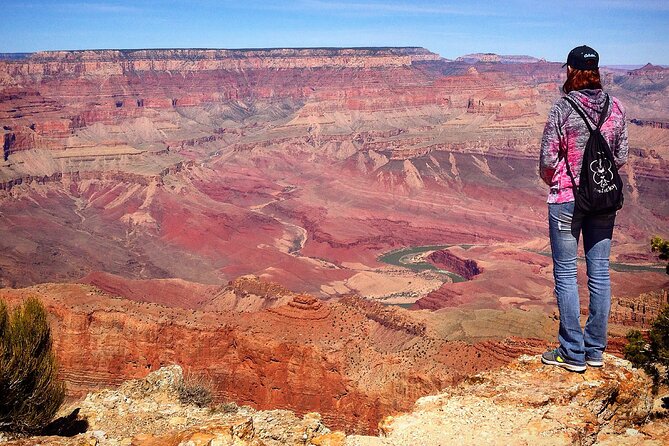
Next comes Grandview Point, with a viewpoint that looks out toward the Colorado River and Tanner Rapid. This is a good contrast to the earlier “wide canyon views,” because you get a different angle and a better sense of where the river energy would have mattered.
While you’re there, the guide also threads in Wild West history—especially copper mining—and adds river-trip stories. I like this because it gives context for why the canyon region fascinated people beyond scenery. Even if you’re not a history person, these moments help the geography feel inhabited and human-scale.
This stop is shorter, so don’t expect a long hike or lots of strolling. But it’s a strong “photograph moment” stop, especially if your group likes getting variety in viewpoints without walking all day.
Desert View lunch break with Market and Deli options
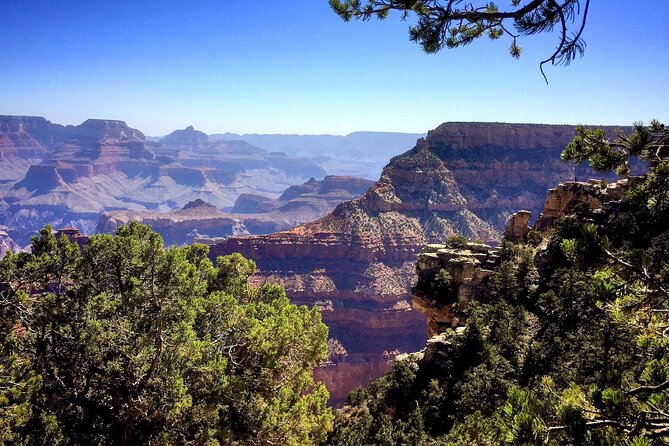
At Desert View, you get your scheduled lunch break around 45 minutes. There’s a Market and Deli on site, with options for hot food, salads, and sandwiches. If you’d rather pack, you can bring a lunch too, but there’s a caution: there may not be room for large coolers on the vehicle.
This is one of those practical things that makes or breaks a long day. You’re not stuck hungry in the back of the minivan. And because lunch happens mid-route, you can manage energy before the day shifts from the rim to the Navajo Nation and then up toward the ancient ruins.
My advice: if you’re packing, go light. Bring snacks for the car, but keep your lunch compact so you’re not negotiating space during loading.
Descending into Navajo Nation: 3,000 feet of dramatic views
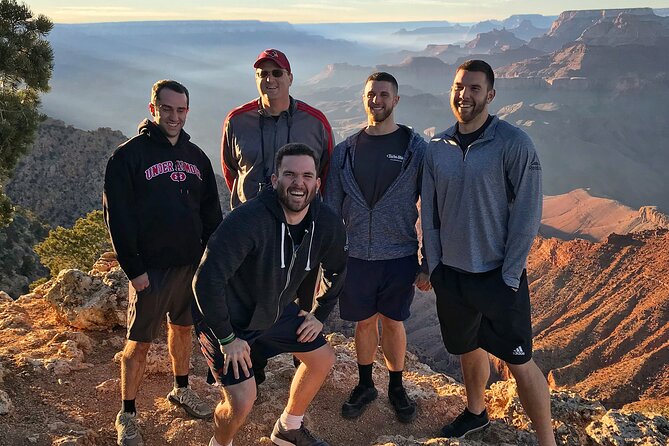
After the rim, you shift gears. The drive drops about 3,000 feet from the Kaibab Plateau as you head into Navajo Nation lands. The views emphasize the “in-between” spaces of Arizona—open air, distance lines, and the way rivers cut through ridges.
You’ll pass by scenery connected to the Little Colorado River Gorge and might also see the Painted Desert in the distance. The tour frames this as part of the day’s wild-west wonderment, but even without the story, it’s visually worth it. It’s the kind of stop where your camera roll gets more texture than just canyon photos.
This portion runs about 30 minutes, so again, keep expectations realistic. You’re there for views and a short perspective shift, then you’re back on the road.
Wupatki National Monument: ancient Pueblo ruins and migration stories
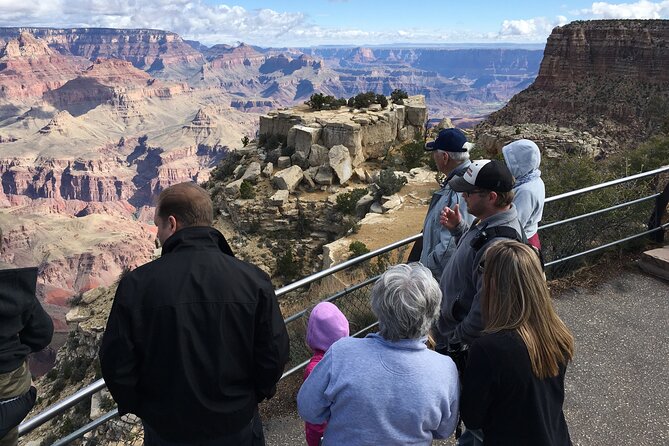
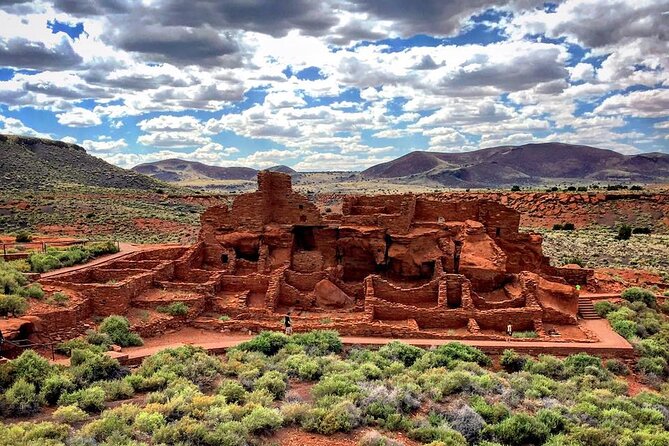
The day’s most “ancient ruins” moment is Wupatki National Monument. You’ll explore Native American Indian ruins close to 1,000 years old in a high-desert setting with grasses and red rocks.
The guide also connects this stop to big time. You’ll hear about the Ice Age and how people groups migrated around the world. Then the story narrows to the local area with the Sinagua Ancestral Puebloans, sometimes referred to as Anasazi, who once lived here.
One of the more interesting details is the connection to the Hopi Mesas in the distance, described as where these ancient people (Hisatsinom) moved to. This turns the drive-and-view day into something more like “place-based learning,” because you’re not only looking at ruins—you’re learning where people later went and why.
Wildlife odds continue too. You may see pronghorn antelope, coyotes, or birds of prey depending on what the land is doing that day. Even if you don’t spot animals, the ruins themselves are the payoff, and the timing (right in the middle of the day) keeps it from feeling rushed.
Sunset Crater Volcano National Monument: the optional loop trail and lava features
Then comes the volcano stop: Sunset Crater Volcano National Monument. The drive from Wupatki climbs around 2,000 feet, shifting from desert rocks and grasses up toward ponderosa pines. That change alone is a mini experience—different air, different feel, and a new set of views.
At Sunset Crater, you’re going to the area’s most recent eruption in the region. The tour includes time for a loop trail that gets you closer to the volcanic rocks and key features. The trail is optional, with additional viewpoints or shorter routes for people who don’t want to do the full walk.
On this walk, the guide highlights things like lava tubes, caves, and spatter cone “hornitos.” I love this style of explanation because it’s tied to what’s right there in front of you. It’s not abstract geology—it’s visible evidence.
If you’re thinking about comfort: wear shoes that work on uneven ground. Even a short loop can be rocky, and you’ll want steady footing for the best views.
What’s included (and why it’s worth more than it looks)
A lot of tours say they provide “water,” then hand you one bottle and call it done. This one is more practical than that. You get bottled water, plus umbrellas and binoculars, and even blankets for cooler moments.
Here’s how that helps your day:
- Binoculars matter on the rim and in open desert—elk, birds of prey, and distant details are easier to spot.
- Umbrellas are smart because weather around Flagstaff and the rim can change quickly.
- Blankets are a quiet comfort upgrade during viewpoint time and on cooler drives.
- Entry fees are included for the three parks, so you avoid last-minute ticket math.
When the day is already long, these small inclusions reduce stress. You can focus on the view, not logistics.
Price and value: is $189 a fair deal for Grand Canyon + Wupatki + Sunset Crater?
At $189 per person, this isn’t a cheap “hop-on bus” add-on. But for what you’re getting, it can feel fair—especially if you want guided interpretation rather than DIY planning.
You’re paying for:
- Transport from Flagstaff with pickup at the DoubleTree
- A full day clocking in at about 10 hours
- Entry fees for three separate protected sites (Grand Canyon National Park, Wupatki National Monument, and Sunset Crater Volcano National Monument)
- Guide-led stops with explanation built into the driving and viewpoint time
- Included extras: water, umbrellas, binoculars, blankets
It also has some “supply and demand” signals. It’s commonly booked about 80 days in advance, and it caps at 12 travelers. That usually means the operator keeps things small and organized, which tends to make a long day more manageable.
Where the value might not fit as well: if you already know the canyon well and only want standard sightseeing, you may find a self-guided route cheaper. But if you want the canyon story told from a biblical perspective and you don’t want to organize three separate sites, the bundled cost is the point.
Who should book this tour (and who should think twice)
This tour is a strong fit if you’re traveling with a church group, you’re a family who wants a guided structure, or you simply like hearing big worldview conversations connected to what you can see outdoors.
I also think it works well for multi-age groups. Guides have handled a wide range—from very young kids to older adults—by keeping the stops timed, helping people with needs, and building in breaks for food and rest.
It may not fit as well if:
- You want only neutral, secular interpretation of geology and history
- You dislike long days with lots of time sitting in the vehicle
- You want a lot of hiking (the walking is mostly light, and the volcano loop is optional)
In terms of language and participation, it’s English, and it notes that most people can participate.
Should you book the Grand Canyon + volcano Christian day trip?
Book it if you want a guided, faith-forward day that still respects the outdoors: canyon overlooks plus real stops at Wupatki ruins and Sunset Crater. The small-group size, included park entry fees, and practical gear make the day feel smoother than many “single-park” tours.
Hold off if your top priority is maximum independence or if you only want mainstream geology explanations without the biblical framing. You’ll still see the places, but the tour is clearly built around connecting the view to Genesis-based interpretation.
If you fall in the “I want meaning with my scenery” camp, this one is worth your time.
FAQ
How long is the tour?
It runs about 10 hours (approx.).
What time does the tour start and where?
It starts at 8:00 a.m. at the DoubleTree by Hilton Hotel Flagstaff, 1175 West Route 66. It also ends at the same hotel.
Does the price include Grand Canyon and the other park entries?
Yes. Entry fees are included for all three parks.
Which parks are included in the day?
Grand Canyon National Park, Wupatki National Monument, and Sunset Crater Volcano National Monument.
Is pickup available?
Pickup is offered, and the tour starts and ends at the DoubleTree by Hilton Hotel in Flagstaff.
What lunch options do I have?
Lunch break is at Desert View, where you can buy food at the Market and Deli. You can also bring your own lunch, but large coolers may not fit on the vehicle.
Is the volcano trail walk required?
No. The loop trail at Sunset Crater is optional, and there are shorter routes or extra viewpoints if you don’t want to do the full walk.
What’s the maximum group size?
The tour has a maximum of 12 travelers.
What’s included besides park entry?
The tour includes bottled water, umbrellas, binoculars, blankets, and entry fees to the parks.
What if the weather is bad?
This experience requires good weather. If it’s canceled due to poor weather, you’ll be offered a different date or a full refund. Free cancellation is available up to 24 hours in advance for a full refund.