REVIEW · BUDAPEST
Budapest Jewish Heritage: Synagogues, Shoes, Secrets & Flódni
Book on Viator →Operated by Fungarian · Bookable on Viator
Budapest remembers in carved stone. This private, expert-led Jewish heritage walk threads the Jewish Quarter, WWII sites, and the Shoes on the Danube memorial, then ends with flódni. You’ll hear the stories that link everyday community life to what followed in 1944, with Jewish Quarter landmarks placed in time and context as you walk.
I love that you’re guided by a genuine Jewish guide and a historian-style approach, so the stops feel connected instead of random. Guides like Gabriella, Miklós, Kata, and Edith are mentioned in past tours for being warm and good at answering questions, including personal angles when appropriate. I also like the mix of big-and-visual places with smaller prayer spaces, including the Great Synagogue and quieter side-street synagogues that many one-off tours skip.
One caution: entrance tickets are not included for most synagogue interiors, so plan for extra costs if you want to go inside everything. The Shoes memorial and the ghetto wall area are different, and some parts are free, but you’ll still want a budget buffer for synagogue entry.
In This Review
- Key things that make this tour worth your time
- Walking the Jewish Quarter route from Herzl Square to Dohány Street
- The Great Synagogue at Dohány Street: architecture and why it mattered
- Rumbach Street Synagogue and Otto Wagner’s distinctive style
- Kazinczy Street Orthodox Synagogue: bright colors and Art Nouveau touches
- Carl Lutz Memorial and the “saved tens of thousands” rescue story
- Shoes on the Danube Bank: when remembrance is forced to look real
- The surviving ghetto wall and the secrets the city still holds
- Flódni at the end: finishing with a pastry you can taste
- Price and tickets: what your $102.95 covers (and what it doesn’t)
- Guide style is the whole difference on this kind of tour
- Who should book this Budapest Jewish Heritage tour
- Should you book Budapest Jewish Heritage: Synagogues, Shoes, Secrets & Flódni?
- FAQ
- Is this tour private?
- Does it offer hotel pickup?
- What language is the tour in?
- How long is the experience?
- Is flódni included?
- Do I need tickets for the synagogues?
- Where does the tour start and end?
- Is the tour suitable for most travelers, and are service animals allowed?
- What’s the cancellation window for a full refund?
Key things that make this tour worth your time
- A private format: only your group, so you can ask questions without feeling rushed or lost in the crowd.
- Three synagogue stops with real differences: you’re not just checking off buildings; you’re seeing how Hungarian Jewish life split into branches and styles.
- Ruthless history, handled with care: from Carl Lutz’s rescue story to the Shoes memorial, the tone stays human.
- You finish with flódni: a food stop that’s about culture and tradition, not a quick photo.
- Historic ghetto remnants you can still find: a small surviving section of wall helps you picture what the city hid—and what it didn’t.
- Hotel pickup is offered: helpful if you’re juggling timing, especially on a tight Budapest schedule.
Walking the Jewish Quarter route from Herzl Square to Dohány Street
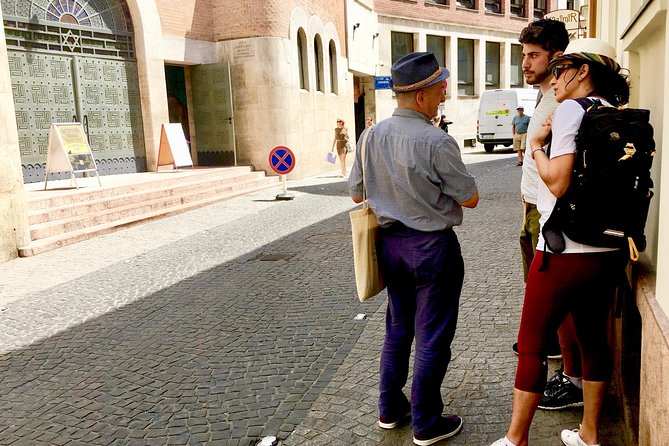
The tour starts near Herzl Square and the Great Synagogue area, then moves through the Jewish Quarter on foot. The pacing is built for storytelling: you’re not sprinting between points, and each stop is tied to what came before and after.
You’ll spend your time in the parts of Budapest where the community’s physical footprint is still visible, even though so much was erased or changed. Even when the neighborhood looks modern today, the guide’s job is to help you read the streets like a timeline—who lived here, what faith groups looked like, and how the war changed everything.
If you’re the type who likes history that stays specific (names, dates, and what a building was used for), this route fits you. If you want only shock-and-spectacle Holocaust stops, you’ll probably find the focus broader than that, with lessons about community life and Hungarian context.
You can also read our reviews of more tours and experiences in Budapest.

The Great Synagogue at Dohány Street: architecture and why it mattered
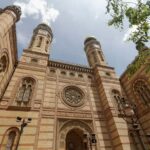
The centerpiece stop is the Great or Central Synagogue (Nagy Zsinagóga) on Dohány Street. This is the largest synagogue in Europe, with seating for about 3,000 people, and it served as a center of Neolog Judaism.
What you’ll notice first is that it’s not a modest building. This is a public statement: a huge place for a community that, at its height, was deeply woven into Budapest civic life. The guide’s explanation of the architecture is paired with WWII-era context—what happened to Hungarian Jewry and how the fate of the community unfolded.
Past guests highlight the tour as a place where the history doesn’t stay abstract. You’re also told that you’ll learn about internationally famous personages who were Hungarian Jews—an anchor that helps you understand the community wasn’t distant or unknown.
Practical tip: even if you’ve seen photos of the Great Synagogue, plan a little patience at the entry point. When the group stacks up, it can take longer than you’d expect, especially if you also want time to read details inside.
Rumbach Street Synagogue and Otto Wagner’s distinctive style
After the Great Synagogue, the tour continues to the Rumbach Street Synagogue. This one is Moorish in look and, historically, it was built in 1872 by Otto Wagner for a moderate Conservative community.
The interesting thing here is that you’re not getting just another big room with the same vibe. The Rumbach interior details are described as glowing again after a long-overdue facelift, which matters because synagogues are meant for both worship and atmosphere. Light, decorative patterns, and design choices tell you what that community valued—comfort, seriousness, and identity.
You’ll also hear how this synagogue differs from others in the area. That comparison is the point. Budapest’s Jewish heritage isn’t a single story told through one building; it’s multiple communities with distinct tastes, politics, and ways of practicing.
Practical tip: interiors can be dim, and details can be hard to photograph. You’ll get more out of the visit if you look with the guide’s directions rather than relying on your phone camera.
Kazinczy Street Orthodox Synagogue: bright colors and Art Nouveau touches
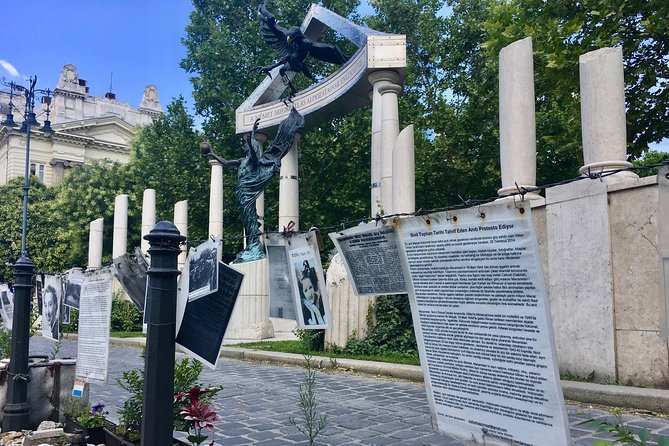
The tour then heads to Budapest’s Orthodox synagogue on Kazinczy Street. Built in 1913, it was designed as something modern for its time, with late Art Nouveau touches and bright color throughout.
If you like stained glass, pay attention here. The ceiling stained-glass windows were designed by Miksa Róth. That name may not ring a bell today, but it becomes easier to remember when you see how strongly the design is tied to the overall look.
This stop adds contrast. Neolog and Conservative synagogues are often discussed as if they’re all the same visually; they’re not. Orthodox spaces can feel different in tone and in how they handle decoration, light, and layout—so the guide’s framing helps you see those differences as meaningful, not just cosmetic.
Carl Lutz Memorial and the “saved tens of thousands” rescue story
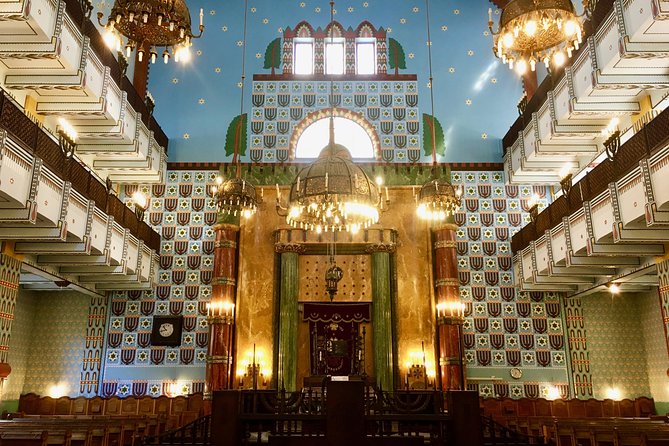
One of the quieter stops is the Carl Lutz Memorial. Carl Lutz was a Swiss diplomat who helped save tens of thousands of Jews in Budapest from persecution and deportation.
In a tour like this, you often swing between buildings, then back to tragedy. This stop is different because it’s about rescue and moral action, anchored in a specific place in the former ghetto area. It gives you a fuller picture of what happened around the Jewish community in Budapest—not only oppression, but also how some individuals used their access to help.
This is also a good moment to slow down and absorb. The memorial setting is brief on time, but the story is strong, and it helps balance the heavier stops that come next.


Shoes on the Danube Bank: when remembrance is forced to look real
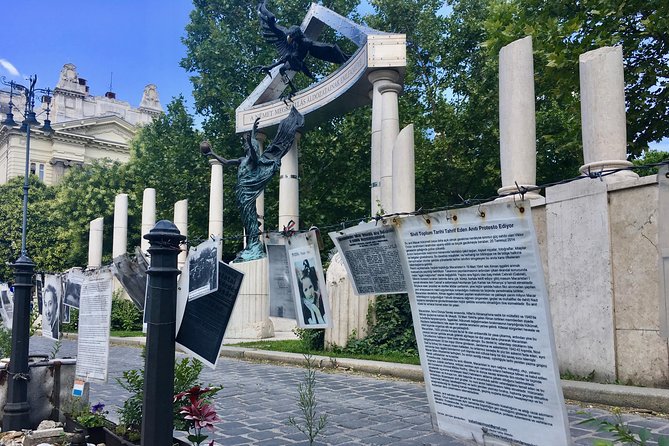
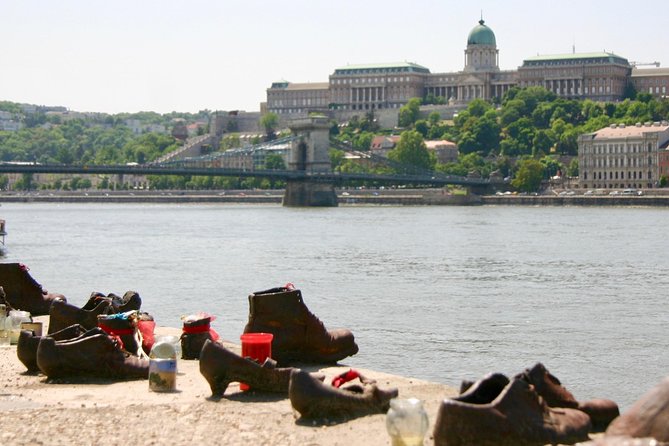
You’ll make your way to the Shoes on the Danube Bank memorial. The sculpture was unveiled on April 16, 2005, and it commemorates Jewish victims murdered here during WWII.
The basic image is brutally direct: victims were forced to remove their shoes before being shot at the riverbank, and their bodies were carried away by the Danube. The memorial shows shoes left behind, turning a simple object into a symbol of loss and remembrance.
This stop is included with the tour admission at that site, which is a small practical win. It also tends to land emotionally, even for people who think they’re prepared. One good way to handle it: don’t race past the details. Let the guide’s framing give you a “first read,” then look again on your own for a few seconds before moving on.
The surviving ghetto wall and the secrets the city still holds
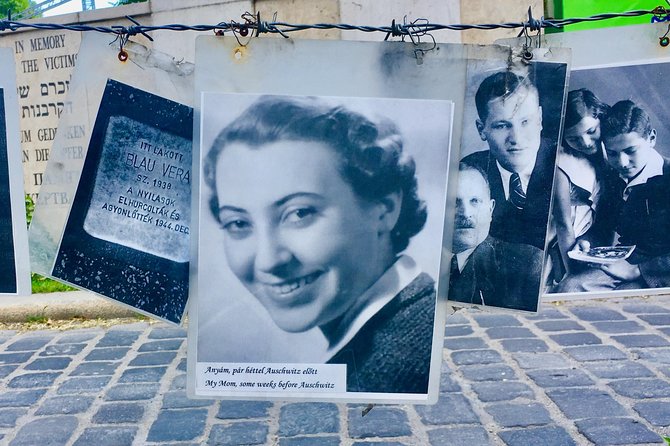
Next is a walk-through of Budapest’s Jewish Quarter themes tied to the WWII ghetto. Toward the end of the war, Jews were herded into a ghetto area, and even today a small section of the ghetto wall still stands in the heart of Budapest.
The guide’s explanation focuses on the secrets of the ghetto: what life could look like inside, how people survived day-to-day, and what the eventual fate was. You don’t have to understand every detail to get the point. The physical reminder helps you connect the stories to real walls, real streets, and real movement restrictions.
This is one reason I think the tour works well for both history buffs and first-timers. You’re shown how the past can be legible in a living city.
Flódni at the end: finishing with a pastry you can taste
The tour ends back around the Dohány Street area with a bite of history: flódni, a traditional Jewish pastry.
This final stop matters because it changes the tour’s emotional temperature. After synagogues and memorials, you get something warm and specific, tied to heritage. It’s also practical: you’re not rushing into dinner with only a head full of dates.
The tour includes flódni as a snack, and the stop is about 20 minutes. If you’re sensitive to long periods of heavy content, this food finish can make the whole experience feel more complete, not just grim.
Price and tickets: what your $102.95 covers (and what it doesn’t)
At $102.95 per person for about 2 hours and 45 minutes, the value comes from the guide labor and the structured route across multiple sites. The tour includes historian guidance, hotel pickup (if you select that option), and a mobile ticket.
The big budget point is entrances. Entrance tickets are not included for synagogues, so you should expect to pay extra if you want to enter each synagogue interior. By contrast, the Carl Lutz Memorial is free, and the ghetto wall discussion is free as well. The Shoes memorial is included with an admission ticket.
My advice for planning: treat the $102.95 as the professional guided walkthrough cost, then add a realistic extra amount for synagogue entry fees. If you hate surprises, check what you’re paying for at the door, and decide in advance whether you want full access inside all synagogues.
Guide style is the whole difference on this kind of tour
Jewish heritage tours can go two ways: either they feel like a checklist, or they feel like a conversation shaped by place. This one is designed for the second option.
Past guests have praised guides like Gabriella, Miklós, Kata, and Edith for being both knowledgeable and personally meaningful in how they answer questions. You’ll also hear that some guides ask a first question about why you want the tour, then shape the story around your interest—non-Jewish visitors have specifically noted that the guide framed Hungarian Jewish life as distinct, not a carbon copy of other European stories.
That personal approach is why the itinerary feels coherent. You don’t just hear about buildings; you hear how those buildings fit into identity, community organization, and wartime change.
If you want a scripted experience with zero discussion time, a private format might feel too interactive. If you like asking questions like a curious student, this is a strong fit.
Who should book this Budapest Jewish Heritage tour
This works especially well if you:
- Want multiple synagogue styles in one walk, not just one main stop.
- Like WWII context that explains how Hungarian Jewish life changed over time, not just one frozen moment.
- Prefer a private guide who can adjust pace and answer questions.
- Want an end-of-tour cultural stop with flódni, included in the price.
It may feel less perfect if:
- You’re only seeking the most intense Holocaust defense or resistance stories with lots of minute incident details. This tour’s emphasis is broader: Hungarian Jewish heritage and the historical frame around what happened.
For most first-time visitors to Budapest’s Jewish Quarter, this is a well-balanced way to see the area with meaning, not just architecture.
Should you book Budapest Jewish Heritage: Synagogues, Shoes, Secrets & Flódni?
Yes, if you want a route that combines major landmarks with smaller, identity-filled spaces and a guide who can explain the differences clearly. The private format makes it easier to keep up and ask follow-ups, and the flódni finish gives you something real to take home beyond photos.
Book it especially if you’re planning a short stay and want high signal per hour: Great Synagogue, Rumbach, an Orthodox synagogue, Carl Lutz, Shoes on the Danube, ghetto wall remnants, and then flódni in under three hours. Just do two things first: budget for synagogue entrance fees, and bring your curiosity. This tour rewards attention.
FAQ
Is this tour private?
Yes. It’s listed as a private tour/activity, so only your group participates.
Does it offer hotel pickup?
Yes. Hotel pickup is included, and pickup is offered.
What language is the tour in?
The tour is offered in English.
How long is the experience?
It runs about 2 hours and 45 minutes (approx.).
Is flódni included?
Yes. The tour ends with an authentic Jewish dessert, flódni, included as part of the experience.
Do I need tickets for the synagogues?
Entrance tickets are not included. The tour includes admission for the Shoes on the Danube Bank stop, while other stops like the Carl Lutz Memorial and the ghetto wall area are free.
Where does the tour start and end?
The meeting point is Budapest, Dohány u. 1, 1074 Hungary. The tour ends back at the meeting point.
Is the tour suitable for most travelers, and are service animals allowed?
The info says most travelers can participate, and service animals are allowed. It’s also near public transportation.
What’s the cancellation window for a full refund?
You can cancel up to 24 hours in advance for a full refund. If you cancel less than 24 hours before the start time, the amount paid isn’t refunded.