REVIEW · JAIPUR
Heritage Culture and History Walking Tour in Jaipur
Book on Viator →Operated by RICH walk ( heritage, culture, history walk ) · Bookable on Viator
Jaipur clicks into place when you walk it. This heritage culture walk links astronomy, palaces, temple life, and everyday bazaar streets in just over two hours, and guides like Aditya make the stories feel practical, not textbook. I especially like the stop-by-stop pacing and how you’re guided through what you’re seeing (from instruments at Jantar Mantar to aarti at Govind Devji Temple). One heads-up: several major sites charge entry on the spot, so you’ll want to budget for admission fees and keep some cash handy.
The route starts at Jantar Mantar and finishes at Isarlat Sargasooli (a historic viewing tower). You get a water bottle and a written guide in English and Spanish, and your group stays private, meaning only your party joins you.
In This Review
- Key reasons this walk works so well
- A 2-hour 25-minute walk that stitches Jaipur together
- Meeting at Jantar Mantar and starting with real science on stone
- City Palace of Jaipur: where architecture meets royal stories
- Govind Devji Temple: aarti and a quieter kind of sightseeing
- Mandir Shri Ram Chandra Ji and Mandir Shree Laxminarayan ji
- Mandir Shri Ram Chandra Ji
- Mandir Shree Laxminarayan ji
- Hawa Mahal from the street: wind, light, and the famous facade
- Chandi Ki Taksal, Johri Bazar, and Katla Purohit Ji Ka: market culture without the pressure
- Chandi Ki Taksal
- Johri Bazar
- Katla Purohit Ji Ka
- Isarlat Sargasooli: the 18th-century tower views that end the loop
- Price and tickets: how the $20 value really works
- What you should expect from the guide style
- Who this tour is best for
- Should you book this Jaipur heritage walk?
- FAQ
- How long is the Heritage Culture and History Walking Tour in Jaipur?
- Where does the tour start?
- Where does the tour end?
- What is the price of the tour?
- Is this tour private or group?
- What’s included in the price?
- Do I need to pay entrance fees during the tour?
- Are the temples included with free admission?
- Do you go inside Hawa Mahal?
- Is there free cancellation?
Key reasons this walk works so well

- Jantar Mantar first: astronomy tied directly to the vision of Raja Sawai Jai Singh II
- Temple moments you can actually witness: Govind Devji Temple includes the aarti ceremony
- Architecture with context: City Palace and multiple temples are explained in simple, memorable terms
- Markets without pressure: you get the feel of Chandi Ki Taksal, Johri Bazar, and Katla Purohit Ji Ka
- A photo finish: Isarlat Sargasooli gives panoramic views from a historic 18th-century tower
A 2-hour 25-minute walk that stitches Jaipur together
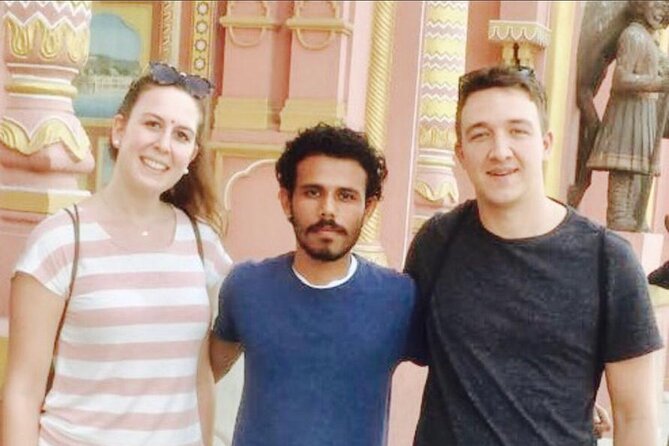
This isn’t a rushed sprint across famous spots. It’s built like a guided story with real transitions: science at Jantar Mantar, royal power at City Palace, devotional rhythm at temple stops, then the lived-in trade routes of Jaipur’s bazaars.
I like the format because you don’t need to be a history buff to enjoy it. You get a clear reason for each stop, and the guide adjusts the pace and focus based on what you care about—something I saw repeatedly in how guests described the guides. If you like asking questions, this kind of tour is friendly to that.
Do note the biggest trade-off: you’re mostly looking from the outside at certain landmarks. For example, Hawa Mahal is admired from the street, not entered. If you’re hoping for a full inside visit at every stop, plan your expectations accordingly.
You can also read our reviews of more tours and experiences in Jaipur.



Meeting at Jantar Mantar and starting with real science on stone

Your tour begins at Jantar Mantar, at Malve Nagar, J.D.A. Market area (with the specific meeting point listed near there). After you meet your guide at the ticket counter, you’re walked through why the site matters.
Jantar Mantar is tied to Raja Sawai Jai Singh II and his vision for astronomy. You’ll see remarkable astronomical instruments and learn how they were intended to help people measure and understand the sky. The key here is that the guide doesn’t just point—there’s context for what you’re looking at and why it belongs in a walk about heritage, not only science.
One practical detail: the Jantar Mantar entry fee is 200 INR and is not included. This is common for Jaipur sights, but on a short tour it matters. If you arrive late, you can easily lose the start of the explanation—so give yourself a few extra minutes before the meeting time.
City Palace of Jaipur: where architecture meets royal stories
Next comes the City Palace of Jaipur, a complex that’s both stunning and complicated. You’ll spend about 20 minutes there, walking through the parts your guide highlights while explaining the royal family and the architectural design behind the place.
This stop is valuable because it ties the city’s power to what you can see. When you hear the story while standing in front of the palace elements, it stops being a pretty backdrop and becomes a clue to how Jaipur was built, governed, and displayed.
The City Palace entry is 1000 INR and is not included. That’s the steepest add-on on the tour, so if you’re trying to keep the total cost down, this is the one you should understand up front. Still, the palace is the scale where Jaipur feels truly royal.
Govind Devji Temple: aarti and a quieter kind of sightseeing

After the palace, the walk shifts from courtly architecture to religious daily life at Govind Devji Temple. This stop is about 20 minutes, and the standout experience is the aarti ceremony, plus the serene atmosphere you’re encouraged to notice once you’re inside.
What I like about including aarti on a walking tour is that it changes your pace. You’re not just collecting facts—you’re watching a ritual with meaning. It also helps you understand why temples are more than photo spots in India. They’re active spaces.
One caution: this stop is marked as admission not included, but no entry amount is listed in your tour details. So keep a small buffer in your budget and be ready for any ticket check at the entrance.
Mandir Shri Ram Chandra Ji and Mandir Shree Laxminarayan ji

From here, the tour becomes a thoughtful sequence of temple visits.






Mandir Shri Ram Chandra Ji
You’ll visit Mandir Shri Ram Chandra Ji for about 20 minutes. This one is a dedicated space for Lord Rama, and the tour gives you time to settle into the atmosphere and appreciate the architecture and spiritual significance.
The good part: it’s free for admission (as marked). On a tour where several major sites charge, these free temple stops help your total cost make sense.
Mandir Shree Laxminarayan ji
Then you’ll move to Mandir Shree Laxminarayan Ji, also about 25 minutes. This temple honors Lord Vishnu and Goddess Laxmi. Expect a calmer, reflective moment where you can compare different forms of Hindu devotion without it turning into a checklist.
Again, admission is marked free. That makes these two temple stops a strong value play if you’re budgeting, and they add variety beyond Jaipur’s “big ticket” landmarks.
Hawa Mahal from the street: wind, light, and the famous facade
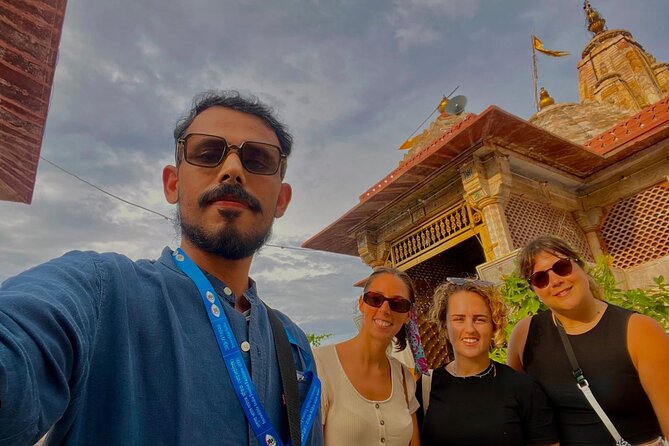
After the temples, you’ll walk by Hawa Mahal—the Palace of Wind. You get around 15 minutes at this stop, and the plan is simple: you won’t go inside. You’ll admire the facade and learn the history and architectural design behind it.
This is where you should decide what you want from your day. If you want interior rooms and a deep museum-style experience, this tour won’t be that. But if you want the building’s story and a good outside look without spending your entire time inside a paid attraction, it’s a smart fit for a short itinerary.
Hawa Mahal has an entry fee listed as 200 INR and not included, even though the tour states you won’t be going inside. That can be confusing—so I’d treat it as a sign that tickets may be required depending on what areas are accessible during your visit. It’s worth confirming with your guide at the start so you don’t get surprised later.
Chandi Ki Taksal, Johri Bazar, and Katla Purohit Ji Ka: market culture without the pressure

Now the tour turns toward everyday Jaipur.
Chandi Ki Taksal
You’ll stroll through Chandi Ki Taksal, described as a local bazaar existing since the 17th century. The tour doesn’t push buying. You’re welcome to explore, but the goal is to experience the street rhythm and craft culture with guidance.
I like this approach because it keeps you out of tourist-shopping mode. You still see the stalls and understand the kinds of goods that shaped the neighborhood over centuries.
Johri Bazar
Next is Johri Bazar, known for jewelry and handicrafts. You’ll get time to soak in the atmosphere and browse colorful shops.
Katla Purohit Ji Ka
Finally, you’ll walk narrow streets of Katla Purohit Ji Ka, an historic market area. Again, the emphasis is on atmosphere and character, not on spending.
Here’s the practical part: bazaars can turn into sensory overload if you’re trying to shop hard and keep up with a group. Since this tour is private, that helps. You can slow down for your own pace while staying on track with what your guide is pointing out.
Isarlat Sargasooli: the 18th-century tower views that end the loop

The last stop is Isarlat Sargasooli, a historic tower built in the 18th century. The tour includes about 10 minutes here, and it’s all about perspective—panoramic views of the city and a great place for photography.
This is where the whole route pays off. You’ve just moved from instruments to palaces to temples to market streets. From the tower, you can start to see how Jaipur’s parts relate to each other.
Isarlat Sargasooli has an entry fee listed as 200 INR and is not included. Like Jantar Mantar and City Palace, this is one of the paid sights where arriving on time matters, because the viewing time is short.
Your tour finishes in the Isarlat Sargasooli area near Gangori Bazaar / Aatish Market (with the specific map pin provided). It’s a nice end point because you’re not just dropped randomly—you end where you naturally want to pause and look.
Price and tickets: how the $20 value really works
The tour price is $20 for approximately 2 hours 25 minutes, and it includes a water bottle plus a written guide in English and Spanish. You also get a mobile ticket, and the experience is marked as private (only your group participates), which often improves pacing in busy areas.
The “watch-out” for cost is admissions. The details you provided list these not-included fees:
- Jantar Mantar: 200 INR
- City Palace: 1000 INR
- Hawa Mahal: 200 INR
- Isarlat Sargasooli: 200 INR
That totals 1,600 INR in entry fees for the listed paid stops (with the note that some temple and bazaar time isn’t tied to a listed ticket price, and some temples are explicitly free). Whether the math feels worth it depends on your priorities.
To me, the value comes from two things:
1) You get a guided explanation through multiple categories of heritage—science, royal architecture, devotion, and marketplace life—in one compact walk.
2) You’re not just watching; you’re being shown what to notice, with guides who can answer questions and tailor the experience.
If you’re the type who likes to read labels and figure things out on your own, you might choose cheaper self-guided options. But if you want context without adding extra day-long travel, this format is a good bargain.
What you should expect from the guide style
Based on the guide descriptions tied to this tour, you can expect an energetic, question-friendly approach. Several guides are mentioned by name (Aditya/Adi, Ankit, Richi/Rich Walk), and one recurring theme is that they explain history and religion through what you’re actually seeing.
One standout detail: at least one guide was described as a PhD student who could answer questions, and the guide asked what topics interested you so the walking stories could match your preferences. That’s a big deal on a short itinerary because it keeps the tour from feeling generic.
Also, you’ll likely appreciate the family-friendly angle if you’re traveling with kids. The tour is designed to make history and culture feel like stories you can follow, not just dates and diagrams.
Who this tour is best for
This is a great fit if you:
- Want a first-time Jaipur orientation that covers more than just one landmark
- Like mixing major sites with places that show daily life (bazaars and temple atmosphere)
- Prefer a structured walk over jumping between unrelated attractions
- Are okay with paying entry fees for a few big-name stops
It may be less ideal if you:
- Want to go inside Hawa Mahal (this tour states you won’t be entering)
- Need a fully museum-style visit at each major building
- Strongly dislike paying multiple site fees in one morning
Should you book this Jaipur heritage walk?
If you want a guided path through Jaipur that feels like understanding the city—not just checking boxes—this is an easy yes. The cost is reasonable for a two-hour-plus walk, and the final tower views give a satisfying close to the day.
Book it if you like temples, architecture explanations, and market culture, and if you’re comfortable with the idea that a few major sights have entrance fees. Skip it if your priority is only indoor, ticketed “deep visits” of every landmark, because some stops are designed to be seen from the outside.
If you do book, do one simple thing: come with your questions ready. This tour is built for answers, and the guide approach makes the difference.
FAQ
How long is the Heritage Culture and History Walking Tour in Jaipur?
It lasts about 2 hours 25 minutes.
Where does the tour start?
It starts at Jantar Mantar, in the Malve Nagar / J.D.A. Market area of Jaipur.
Where does the tour end?
It ends at Isarlat Sargasooli (also referred to as Sarkasuli) near Aatish Market and Gangori Bazaar, in the J.D.A. Market area.
What is the price of the tour?
The price is $20.
Is this tour private or group?
It’s private. Only your group participates.
What’s included in the price?
The tour includes a water bottle and an English and Spanish written guide.
Do I need to pay entrance fees during the tour?
Yes. Jantar Mantar (200 INR), City Palace (1000 INR), Hawa Mahal (200 INR), and Isarlat Sargasooli (200 INR) are listed as not included.
Are the temples included with free admission?
Mandir Shri Ram Chandra Ji and Mandir Shree Laxminarayan Ji are marked as free admission.
Do you go inside Hawa Mahal?
No. The tour states you will not go inside and you’ll only admire the facade.
Is there free cancellation?
Yes, free cancellation is available up to 24 hours in advance for a full refund.