REVIEW · JAIPUR
Jaipur@Twilight Guided Heritage City walk tour with Food Tasting
Book on Viator →Operated by Seagull Jaunt · Bookable on Viator
Twilight turns Jaipur into a living picture. This guided walk is a smart mix of heritage crafts and evening street scenes, with you drifting through key lanes while you learn how artisans shape marble, bangles, and even gold details—then you finish with a gentle museum stop under garden lights. I especially like the hands-on feel of seeing the statue-making process (sketch to painted marble) and the way the tour threads markets, jewelry, and food together without feeling rushed.
One thing to consider: this is outdoors and time is spent walking through crowded lanes at night, so if you’re sensitive to busy streets or prefer slower pacing, you’ll want to plan for that.
Key moments that make this tour worth your time
- Statue-making from sketch to final painting on marble, with you watching the craft unfold in real time
- Thakur Uday Singh Ji Haveli with miniature wall art and old-style lighting cues from the British era
- Maniharon ka rasta for bangle makers, including lac bangle-making and bridal jewelry focus
- Johri Bazaar to Achar Wali Gali for sweets first, then iconic pickles and their long-running shop tradition
- E-rickshaw transfer to Albert Hall Museum so you can enjoy the night views without adding extra walking
In This Review
- Twilight Jaipur: what changes when the sun goes down
- Start near Raj Mandir, end at Albert Hall: the flow of the route
- Khajane Walon Ka Rasta and Khejado Ka Rasta: watching marble take shape
- Tripolia Bazar and Thakur Uday Singh Ji Haveli: miniature art and old-world lighting
- Maniharon ka rasta and bridal lanes: lac bangles and jewelry you can spot from far away
- Johri Bazaar to Achar Wali Gali: sweets, pickles, and a 195-year shop story
- E-rickshaw to Albert Hall Museum: ending in a garden-light moment
- Food tasting in this walk: how it actually adds value
- Price and value: what $29.96 buys you in an evening
- Who should book this twilight craft-and-food walk
- A quick booking call: should you do Jaipur at Twilight?
- FAQ
- How long is the Jaipur twilight heritage walk with food tasting?
- Where does the tour start and where does it end?
- Is the tour guided?
- Do I get a food tasting on this tour?
- Which areas and stops does the tour include?
- Is admission included for all stops?
- Will I see jewelry and bangle making during the tour?
- How large is the group?
- Does the tour use a mobile ticket?
- What happens if weather is poor?
- Any tips for a smooth start?
Twilight Jaipur: what changes when the sun goes down
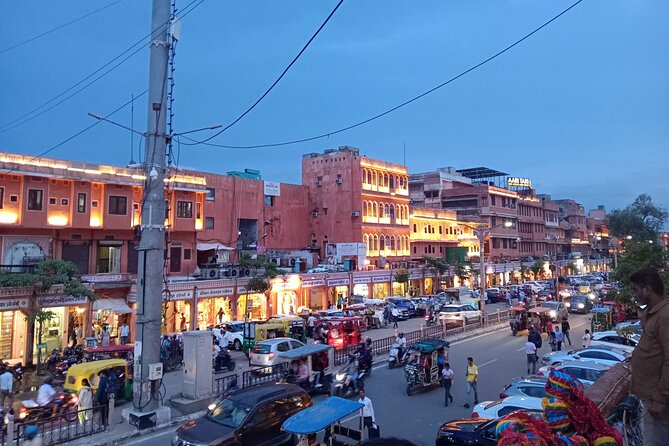
Jaipur at twilight has a different rhythm than daytime. The light softens, shopfronts look warmer, and you start noticing details you’d otherwise miss—small carvings, painted surfaces, and the shine that comes out on metal and marble. In this tour, that timing matters. You’re not just “seeing sights.” You’re walking while the city switches gears from daytime business to evening display.
You’ll feel it most in the market lanes. The streets are narrow and packed, but the evening glow makes the colors easier on your eyes, especially around the bangle lanes and bridal jewelry shops. And because the route is designed for a 2.5–3 hour evening window, you get a lot of variety without needing a full day commitment.
Start near Raj Mandir, end at Albert Hall: the flow of the route
The tour starts at Raj Mandir Cinema in Panch Batti and ends at Albert Hall Museum in Ram Niwas Garden. That end point is a big reason this works: after time among the markets, you get a calmer museum-garden setting with night lighting.
Expect a walking rhythm that’s active but manageable. You’ll spend the bulk of your time in key bazaars and craft lanes, then shift to a short e-rickshaw ride for the move to Albert Hall. The group size is small—up to 10 people—which helps you actually hear the guide while you’re in the crowd, not just bump along with everyone else.
Timing-wise, the tour is designed to stack several short stops. For example, one craft lane stop is about 35 minutes, then you’ll move through market highlights in 15–40 minute segments. That structure keeps the evening from dragging, but it also means comfortable shoes matter.
You can also read our reviews of more tours and experiences in Jaipur.



Khajane Walon Ka Rasta and Khejado Ka Rasta: watching marble take shape
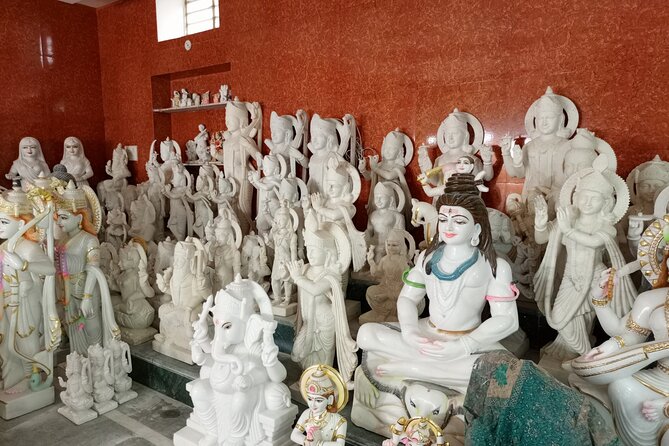
One of my favorite parts of this tour is the craft stop focused on statues and idol art. You’ll head toward Khajane Walon Ka Rasta and connect onward via Khejado Ka Rasta, a route known for statue-making artistry.
What makes this meaningful isn’t just seeing finished objects. You’re able to view the craft from sketch to final painting on marble statuary. That step-by-step view helps you understand how something that looks “ornamental” actually takes planning, material skill, and patience. It also gives you a way to look at similar pieces later in Jaipur: you start recognizing which parts are shaped, which parts are carved, and where the painting work brings the details to life.
This stop also connects to the tour’s emphasis on contrasting styles. You’ll get chances to observe how Indian and European art styles can show up differently in the same craft world, plus you’ll see examples of gold work on marble statues and artifacts. Even if you’re not shopping, that kind of visual education can make the city’s craft scene feel less mysterious.
Practical note: you’ll likely be standing and moving in and around workshop or craft areas. If you’re traveling with a hat or sunglasses, keep them handy—lighting can change fast between shop fronts and workshop corners.
Tripolia Bazar and Thakur Uday Singh Ji Haveli: miniature art and old-world lighting
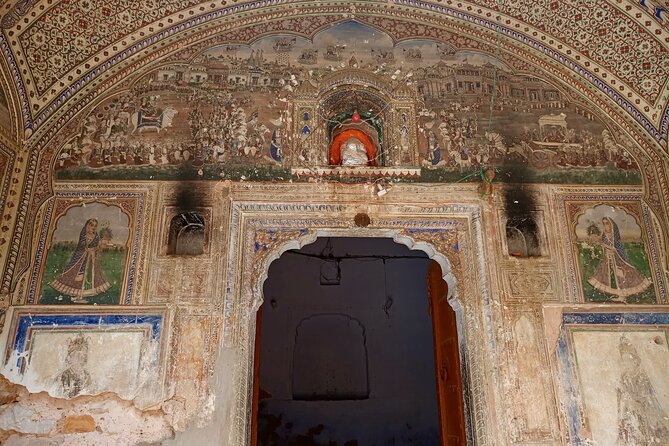
Next, you shift to Tripolia Bazar and visit Thakur Uday Singh Ji Haveli, an old mansion that’s easier to appreciate at night because you can actually see how it’s lit. This stop is about atmosphere and design.
Inside and around the haveli, you’ll look at miniature art wall paintings, which reward a slower look. You’ll also notice lighting details tied to the British-era gas lamps, plus you’ll spot other “time-capsule” touches such as a vintage car. The effect is like walking into a curated space—but it isn’t a museum replica. It’s an older private-style architectural setting that helps explain why Jaipur’s heritage still feels present, not just displayed.
One potential drawback here: since this is a haveli stop within a lively market zone, it can be a bit crowded depending on evening foot traffic. If you hate waiting for a clear view, keep your eyes open early during the stop so you can get your photos done quickly.
Maniharon ka rasta and bridal lanes: lac bangles and jewelry you can spot from far away
If Jaipur has a “signature” accessory lane, it’s the bangle market. This tour takes you into Maniharon ka rasta (linked with Tripolia Bazaar) where you’ll see the bangle-making culture and the bridal-focused side of jewelry shopping.
The street is known for colorful bangles and also for artificial jewelry that’s aimed at bridal wear. At twilight, this area tends to look extra vivid because of the way lights reflect off glassy surfaces and polished metals. The guide’s explanations help you see beyond the sparkle: you learn how bangles aren’t only decorative—they’re part of local customs and celebrations.
The tour also specifically highlights the lac bangle-making process, which gives you a useful background for what you’re seeing. Even if you don’t buy, you’ll understand why certain shapes and finishes show up again and again in the market.
This is also a great stop if you enjoy comparing craft approaches. You’re moving from marble-art style discussions earlier in the evening to jewelry-making now, which makes the whole “heritage craft” theme feel coherent. You’re basically watching different branches of the same artisan world.
Johri Bazaar to Achar Wali Gali: sweets, pickles, and a 195-year shop story
After the craft lanes, the tour adds a food beat. In the Johri Bazaar section, you’ll start with sweet dishes and then move toward Gopal Ji Ka Rasta and Achar Wali Gali.
This is where the evening turns personal, because food is the easiest way to understand a neighborhood. You’re sampling Indian flavors while you’re surrounded by the places where people actually shop day-to-day.
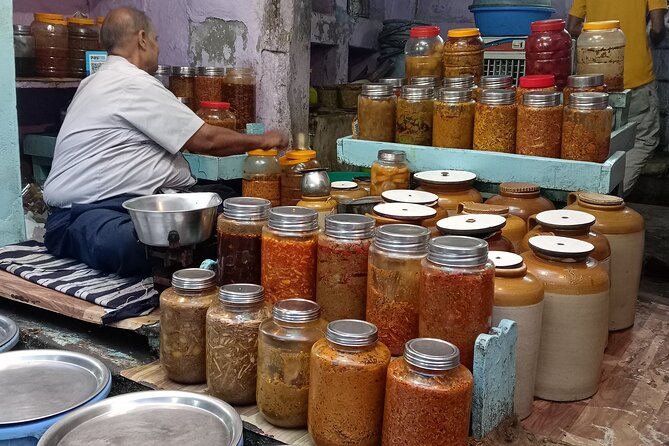
Then you get a very specific local story tied to pickles. The tour brings you to the Pickle Man of India, recognized on Discovery Channel, and you’ll visit a shop described as running for 195 years. That’s the kind of detail that makes it feel real: you’re not just eating something new—you’re eating something tied to a long-running local trade.
A practical tip: since this stop is both market-walking and tasting-based, pace yourself. You’ll want to leave enough room to enjoy the last stretch without feeling too full. If you have dietary limits, mention them early to your guide so you’re not stuck with choices that don’t fit.






E-rickshaw to Albert Hall Museum: ending in a garden-light moment
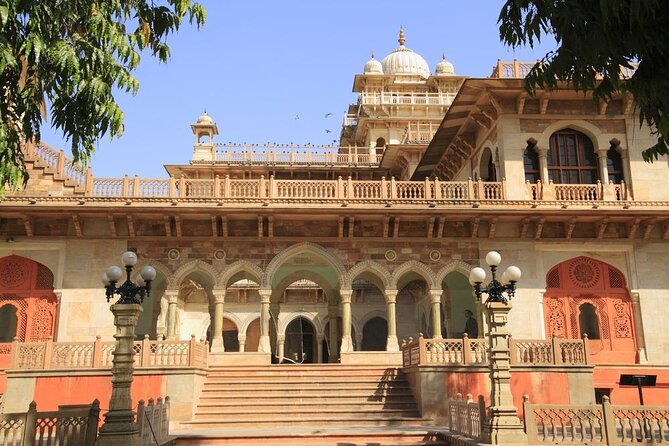
The finale moves by e-rickshaw to Albert Hall Museum in Ram Niwas Garden. This part matters because it balances the density of the bazaars. Instead of more narrow streets, you get a museum setting where you can slow down, look around, and connect the evening’s crafts to Jaipur’s larger cultural presentation.
Albert Hall Museum is one of the major landmarks in the area, and the garden setting makes the night feel less like you’re trapped in traffic of bodies. You’ll enjoy the night views of the market areas along the transfer, which is a nice bonus when you’re short on time.
Admission timing here is also worth knowing: the museum stop is not included in the tour price. That means you should decide in advance whether you want to pay for entry on your way in. If you’re museum-curious, it’s a natural closer. If you’re more street-experience focused, you can use the stop as a scenic end point and move on.
Food tasting in this walk: how it actually adds value
This tour doesn’t treat food as an afterthought. You get tasting during the walk, and the food connects directly to nearby lanes—first sweets in the Johri Bazaar area, then the pickle-shop story in Achar Wali Gali.
That connection is what makes the food component useful. You’re learning tastes that match what the market offers nearby, so it feels like you’re reading the city with your mouth. It’s also one of the reasons this tour feels better than a pure “photo walk.” Crafts are visual, but food tells you what the city values enough to turn into a daily ritual.
If you’re the type who likes to understand what you’re eating, you’ll probably enjoy this more than a generic snack stop. And if you just want to taste without overthinking it, the schedule gives you that, too.
Price and value: what $29.96 buys you in an evening
At $29.96 per person, this is priced like a short, guided experience rather than a full-day tour. For me, the value shows up in three places.
First, the tour is built around several high-impact stops that are admission free for the market and haveli segments. The only notable exception mentioned is that Albert Hall Museum admission is not included. If you plan to skip the museum entry fee, your evening stays simple and predictable.
Second, you’re paying for guidance through craft knowledge. Watching marble statue work from sketch to painting, understanding differences between Indian and European art styles, and learning the lac bangle-making process aren’t things you can reliably “figure out” on your own in a busy lane without local context.
Third, you get the small-group advantage. With a maximum of 10 travelers, you’re less likely to feel lost in the crowd and more likely to actually hear the story behind what you’re seeing. That’s hard to price, but you feel it.
Who should book this twilight craft-and-food walk
This tour is a strong match if you want Jaipur evening culture without committing to a long day. I’d especially recommend it if you’re into:
- Crafts and artisan processes (marble statue work, jewelry making, gold detailing)
- Market atmosphere with a guided plan
- A mix of heritage spaces and street lanes
- Someone who likes to end with a major landmark at night, rather than returning to your hotel right away
It may not be ideal if you want a slow, quiet sightseeing style. The route is built for active walking through crowded bazaars, and twilight is when those crowds pick up.
A quick booking call: should you do Jaipur at Twilight?
I think you should book this if your ideal Jaipur evening includes hands-on craft storytelling plus real food moments. The itinerary is short enough to fit most schedules, but varied enough to feel like more than “just markets.”
Before you go, wear shoes you can stand in for a while, and keep your expectations aligned with an outdoor street experience ending at a museum area. If you’re museum-light and mainly want the crafts and food, it still works—you’ll just decide whether Albert Hall entry is worth it for you.
If you want a tour that explains what you’re seeing while you’re actually moving through the city, this one is a solid choice.
FAQ
How long is the Jaipur twilight heritage walk with food tasting?
The tour runs about 2 hours 30 minutes to 3 hours.
Where does the tour start and where does it end?
It starts at Raj Mandir Cinema (C-16, Bhagwan Das Rd, Panch Batti, C Scheme, Ashok Nagar, Jaipur) and ends at Albert Hall Museum in Ram Niwas Garden.
Is the tour guided?
Yes, it’s a guided heritage city walk.
Do I get a food tasting on this tour?
Yes. You’ll enjoy authentic Indian flavors as part of the food tasting experience, including sweet dishes.
Which areas and stops does the tour include?
Key stops include Khajane Walon Ka Rasta and Khejado Ka Rasta, Tripolia Bazar (including Thakur Uday Singh Ji Haveli), Maniharon ka rasta, Johri Bazaar, Gopal Ji Ka Rasta, Achar Wali Gali, and Albert Hall Museum.
Is admission included for all stops?
Most stops have admission free listed, but Albert Hall Museum admission is not included.
Will I see jewelry and bangle making during the tour?
Yes. You’ll visit bangle market areas, see the lac bangle-making process, and explore bridal jewelry and attire collections.
How large is the group?
The tour has a maximum group size of 10 travelers.
Does the tour use a mobile ticket?
Yes, you’ll have a mobile ticket.
What happens if weather is poor?
The experience requires good weather. If it’s canceled due to poor weather, you’ll be offered a different date or a full refund.
Any tips for a smooth start?
You’ll meet at Raj Mandir Cinema area, and the tour is noted as near public transportation, which can help you arrive without stress.