REVIEW · DUBAI
Old Dubai Heritage Walking Tour – 3-Hour Cultural Experience
Book on Viator →Operated by Travtur Tourism L.L.C · Bookable on Viator
Old Dubai has a way of slowing you down. This 3-hour cultural walking tour mixes wind-tower streets, creek-side souks, and two of Dubai’s biggest shopping stops—plus an abra boat ride. I especially liked the pacing: short walks where you can actually look up, and a guide who helps you make sense of what you’re seeing. One thing to consider: it’s a “taste, not a marathon” style tour, so serious shoppers may want extra time in the Spice and Gold Souks after it ends.
You’ll start near Dubai Creek at Al Seef Heritage Hotel (9:00 am) and finish at the Dubai Gold Souk, so you end right where a lot of people want to be anyway. The best part is the human layer: in the guide feedback I saw, Mounir stood out for history context and for practical tips on spice and gold shopping. The tour runs with a maximum of 15 people, which keeps it friendly without turning into a crowd scene.
In This Review
- Key Things You’ll Notice Right Away
- Meeting at Al Seef (9:00 am) and What the 3 Hours Are For
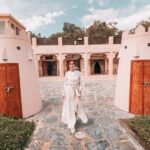
- Souk Al Seef: The Creek-Edge Start That Sets the Mood
- Walking Al Fahidi and Bastakiya: Wind-Tower Streets and Courtyard Calm
- Al Fahidi Fort and the Dubai Museum Area: Quick Landmark, Good Photo Payoff
- Meena Bazaar and Bur Dubai Abra Station: The Old-Creek Rhythm
- The Rooftop View Moment at Grand Souq Parking
- Old Baladiya Street: The First Municipality Stop (Watch for Closure Days)
- Spice Souk: Where Your Guide Pays Off Fast
- Gold Souk: A Gorgeous Finish With a Helpful Exit Plan
- Price and Value: What $47.20 Buys You in Real Terms
- Who This Tour Fits Best (and Who Might Want Something Different)
- Should You Book This Old Dubai Heritage Walking Tour?
- FAQ
- What time does the tour start, and how long is it?
- Where does the tour start and where does it end?
- What’s included in the price?
- Is pickup and drop-off included?
- Do I need tickets or pay admission for the stops?
- Is the abra boat ride included?
- Will the tour be in English?
Key Things You’ll Notice Right Away
- Small group size (max 15) keeps the guide focused on your questions, not just the schedule.
- Abra across Dubai Creek adds a real old-town feel instead of only “look-and-walk” sightseeing.
- Spice Souk + Gold Souk are built into the flow, with help on what to buy and how to handle shopping.
- Bastakiya/Al Fahidi area gives you that classic wind-tower street pattern and shaded courtyards vibe.
- Photo-focused stops (like Al Fahidi Fort) let you see the landmark without turning the tour into a museum sprint.
Meeting at Al Seef (9:00 am) and What the 3 Hours Are For
This tour is designed around one simple idea: Old Dubai is best when you’re walking at human speed. You meet at Al Seef Heritage Hotel Dubai, Curio Collection by Hilton near Dubai Creek, then you move through a sequence of heritage neighborhoods and markets over about 3 hours.
The structure matters. You’re not stuck in long bus rides between “interesting stops.” Instead, you get short segments where you can actually take in the street layout—narrow lanes, traditional architecture cues, and market rhythms—then you get a transport break when it makes sense. That’s why it works well even if your tolerance for “tour groups” is… limited.
Also, you end at the Dubai Gold Souk in Deira/Al Ras area. That’s a smart move for value: you’re not sent back to a hotel where you’ll just say you did the tour. You’re already near the next thing you might want to do.
You can also read our reviews of more tours and experiences in Dubai.
Souk Al Seef: The Creek-Edge Start That Sets the Mood
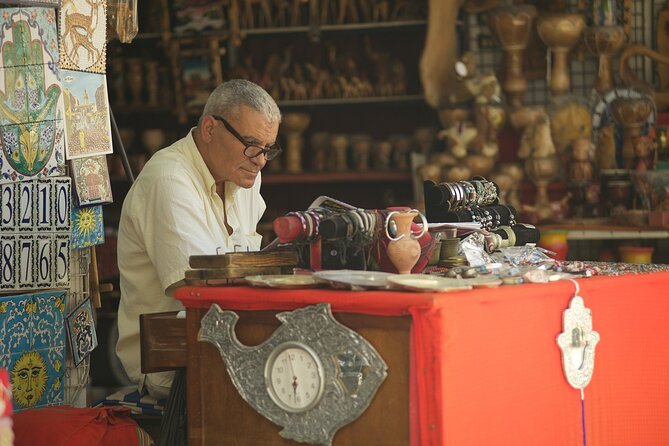
Your first stop is Souk Al Seef, by Dubai Creek. Arrive about 10 minutes early to meet your guide at the main entrance. From the start, the vibe is about heritage commerce: this is one of those places where you don’t just see buildings—you feel the old Dubai trading geometry in the street flow.
A big win here is timing. Starting at the creek-side market early in the day helps you avoid the worst heat and gives you better light for photos. It also sets you up for the later shopping stops with context, so the Spice and Gold Souks don’t feel random—they feel connected to how Dubai has long made and sold things.
Expect some light strolling and orientation. You’ll likely get quick framing on what you’re looking at—how the old bazaar style differs from Dubai’s modern malls and high-rises.
Walking Al Fahidi and Bastakiya: Wind-Tower Streets and Courtyard Calm
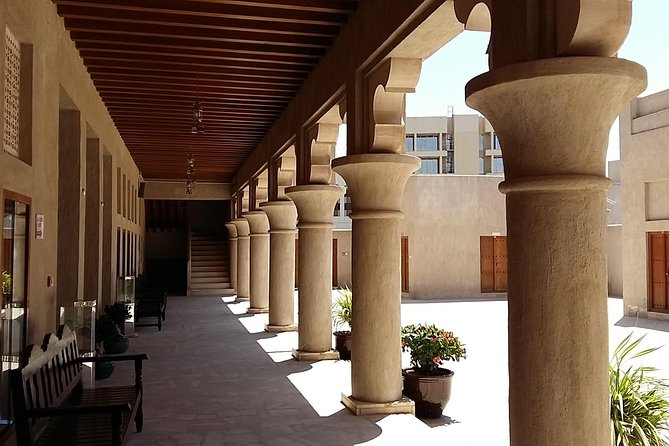
After Souk Al Seef, you shift to the historic Al Fahidi neighborhood (often connected in spirit to Bastakiya). This part is the architectural payoff. You’ll walk past traditional buildings with wind-tower styling, and you’ll see the kind of narrow lanes and inner courtyards that make the area feel cooler and quieter than the main roads.
This is where a strong guide matters. The best tours here don’t just point at pretty streets—they explain why these spaces were built the way they were. With the guide support, you can connect street patterns to climate logic and daily life rather than treating it like an open-air postcard.
You also get time to slow down. The tour includes opportunities to notice things like art galleries, cafés, and cultural centers along the way. In practice, it gives you options: you can take photos, browse a bit, or just use the time to wander without feeling like you’re lost.
Al Fahidi Fort and the Dubai Museum Area: Quick Landmark, Good Photo Payoff
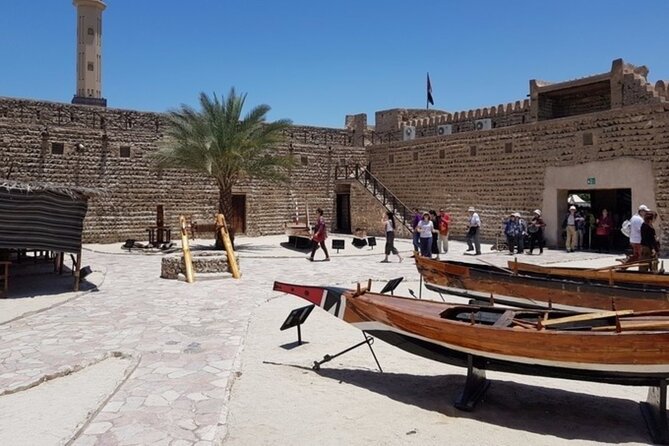
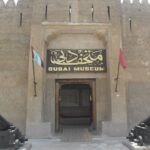
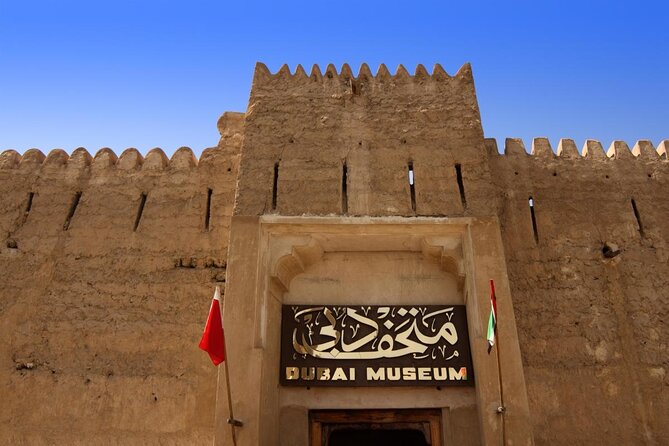
Next comes Al Fahidi Fort and the Dubai Museum area. This stop is more about presence than deep visiting time. The tour plans a short window so you can admire the fort’s traditional design and take photos from outside.
That’s not a flaw—it’s a design choice. Forts like this are iconic, but the surrounding time is better spent walking and shopping in the neighborhoods that make Old Dubai feel alive. If you’re the type who wants to go inside every historic building, you might add museum time on your own later. But as part of a 3-hour highlight tour, this works.
Meena Bazaar and Bur Dubai Abra Station: The Old-Creek Rhythm
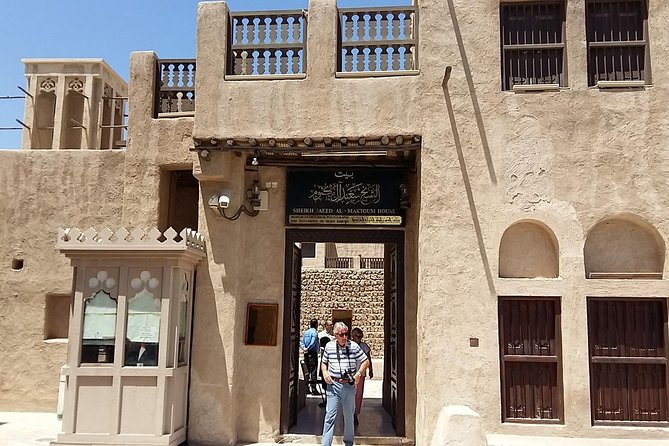
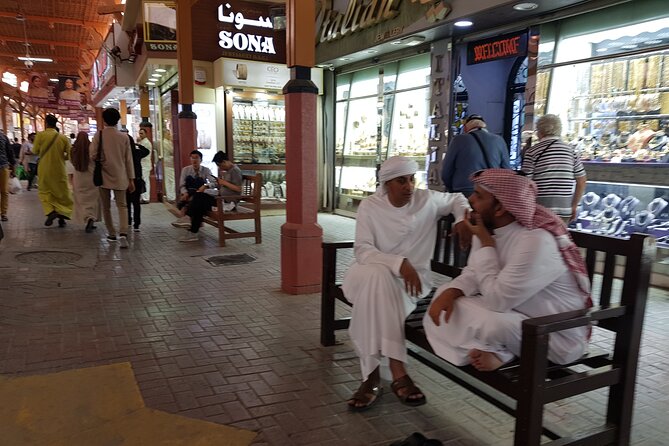
Then you move to Meena Bazaar in Bur Dubai. This stop is about motion and browsing: colorful shops, textile- and jewelry-type displays, and the kind of lane-style market that encourages you to turn corners and see what’s around the next bend.
One of the practical benefits of stopping here is that it breaks up your day. After the heritage streets, you get a more chaotic market feel that makes the entire experience feel less staged.
Right after that, you get the signature classic move: an abra (water taxi) crossing from Bur Dubai to Deira. It’s short—about 10 minutes—but it’s memorable because it changes your perspective of the city. You see the creek and the old-town skyline from the water instead of only from sidewalks.
If you’ve ever felt like Dubai is all high-end glass and highways, this is the antidote. A creek ride adds reality fast.



The Rooftop View Moment at Grand Souq Parking
One stop that surprised me as a “value add” is the rooftop viewpoint at Grand Souq parking, reportedly from the 7th floor. This is a quick 10-minute angle shift where you can see Dubai Creek and the old-town area from above.
It helps you do something most people miss on Old Dubai tours: map the street-level chaos to a bigger picture. After you’ve walked and browsed below, that rooftop view helps everything click.
This is also a good break if you’re dealing with heat. Even if it’s not cool up there, it’s often a quick reset compared with continuous walking.
Old Baladiya Street: The First Municipality Stop (Watch for Closure Days)
Then you head to Old Baladiya Street, associated with Dubai’s first municipality where early plans were made. You’ll also watch a short video about the city’s evolution.
There’s one important practical note: Old Baladiya is closed on Fridays and public holidays. So if you book for a Friday, expect the day’s order to feel slightly different, or you may get alternate use of time elsewhere.
This stop gives you a structured “why Dubai looks like this” story. It’s not just souks and photos. It adds the civic layer—the planning side of the city—not only commerce.
Spice Souk: Where Your Guide Pays Off Fast
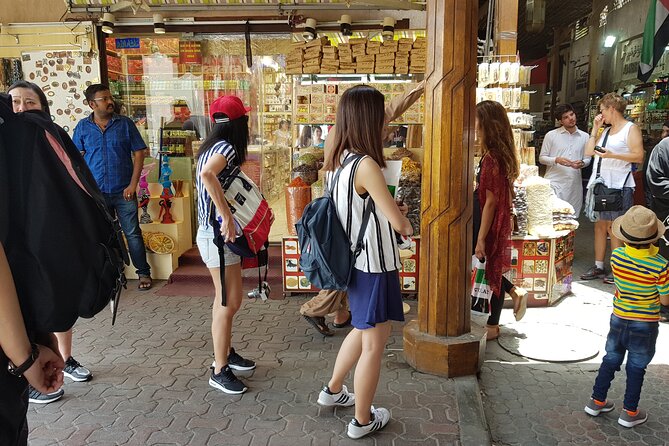
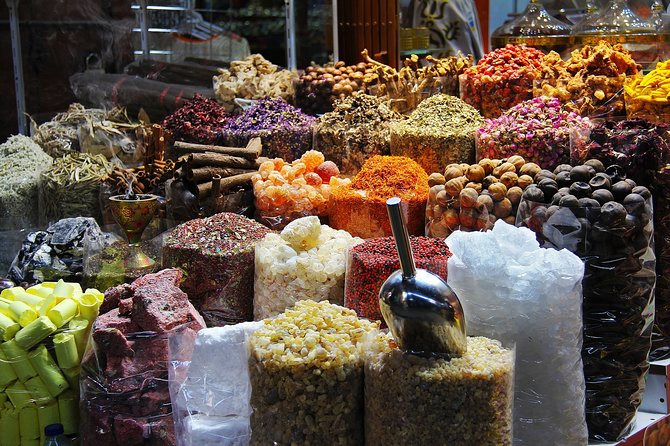
The Spice Souk is one of the tour’s strongest practical stops because it’s sensory and decision-heavy. You’ll spend about 25 minutes here, wandering lanes lined with stalls featuring spices, herbs, traditional remedies, teas, and incense.
Here’s where you get real value from a guide. The best help isn’t learning random facts; it’s understanding what you’re seeing and how to shop without confusion. One of the standout themes in the feedback I saw was that Mounir gave practical tips on shopping and bargaining. That matters because spice markets can be overwhelming: jars look similar, scents blur together, and prices can swing depending on how you ask.
If you want to buy, go in with a simple list:
- Pick 1–2 spices you’ll actually cook with.
- Decide whether you want whole spices or pre-blended mixes.
- Ask about how it’s packaged and whether it’s for cooking or fragrance.
Don’t feel pressured to buy in this first souk stop. Use the time to compare and then go with a decision when you’ve seen a few stalls.
Gold Souk: A Gorgeous Finish With a Helpful Exit Plan
Finally, you land at the Dubai Gold Souk for about 25 minutes. This is the glittering payoff. You’ll wander countless shops and displays of gold jewelry and precious stones, with the kind of visual overload that makes your camera work overtime.
A key value point: you’re not left to figure out the end of the tour on your own. The guide helps with directions and tips on how to return to your hotel or next destination after the tour ends at the Gold Souk.
That sounds small, but it’s big in Dubai. Deira/Al Ras can be a maze if you’re trying to navigate right after you’ve been focused on shopping. A good “how to get back” plan saves time and stress.
Price and Value: What $47.20 Buys You in Real Terms
At $47.20 per person, this is the kind of Old Dubai experience that feels fair because the inclusions are practical:
- a local professional licensed guide
- heritage neighborhoods and market time where a guide reduces confusion
- Spice and Gold Souks as planned stops
- an abra ride (not just a sightseeing photo)
- access to the major cultural areas listed (with stop notes showing free admission)
It’s also priced for people who want help without paying for a private full-day tour. With a max group size of 15, you get some social energy, but not so much chaos that you lose the context.
Where it might feel less perfect is if you’re the type who wants deep museum time or long shopping loops. This tour keeps moving. For dedicated bargain hunters or jewelry collectors, you’ll likely want extra time after it ends.
Who This Tour Fits Best (and Who Might Want Something Different)
This is a strong match for:
- first-time visitors who want Old Dubai orientation without getting lost
- solo travelers who like a plan but still want time to wander
- people who want market shopping help (especially for spices and gold)
- anyone who appreciates architecture details like wind-tower neighborhoods
It may not be the best fit if:
- you want a modern-city tour (this is about the old side)
- you want guaranteed inside museum time (some stops are exterior/photo or short windows)
- you’re booking on a Friday and really care about Old Baladiya Street specifically
One more seasonal thought: the tour notes language changes in July and August (English only then). If you prefer another language, plan for a different time of year.
Should You Book This Old Dubai Heritage Walking Tour?
If your goal is to experience Old Dubai in a focused, guided way—wind-tower streets, the creek crossing, and two of the biggest souk stops—this tour is a solid buy. The value isn’t just the sights; it’s the pacing and the guidance that helps you shop and move confidently.
Book it if you want a practical intro that ends in the right place (the Gold Souk) and if you like having a guide who can help with real questions, including how to handle shopping at the market stops.
Skip it (or add time elsewhere) if you’re after long museum hours or a slow wandering day with no structure.
FAQ
What time does the tour start, and how long is it?
The tour starts at 9:00 am and runs for about 3 hours.
Where does the tour start and where does it end?
It starts at Al Seef Heritage Hotel Dubai, Curio Collection by Hilton (near Dubai Creek – Al Seef). It ends at the Dubai Gold Souk.
What’s included in the price?
Included items are a local professional licensed tour guide, Al Fahidi Historical Neighborhood, walk through Meena Bazaar, water taxi (abra), and visits to the Spice and Gold Souks.
Is pickup and drop-off included?
No. Pick up and drop off are listed as not included. You’ll meet at the Al Seef Heritage Hotel area and finish at the Gold Souk.
Do I need tickets or pay admission for the stops?
The stop notes shown indicate free admission tickets for the listed locations.
Is the abra boat ride included?
Yes. The tour includes a traditional abra water taxi crossing from Bur Dubai to Deira.
Will the tour be in English?
During July and August, the tour is available in English only. For last-minute bookings, it’s also available in English only.