REVIEW · PARIS
Paris Medieval Heart: Walking Tour in Ancient Marais
Book on Viator →Operated by My Super Tour · Bookable on Viator
A walk like this makes the Marais feel three-dimensional. You’ll cover major Paris markers of faith, power, and art while also squeezing in quieter places most people miss. I love that the tour keeps a small group pace and that the guide ties each stop to what’s still visible on the street. I also like that many stops are marked free admission, so your money goes to storytelling, not tickets.
One thing to consider: the meeting point at 3bis Pl. de la Bastille can take a minute to spot. Plan to arrive early and double-check the exact storefront location on your map.
In This Review
- Quick hits before you go
- Paris Medieval Heart: why this Marais route works
- Starting at Bastille, ending by Pompidou: the flow of the walk
- Small-group guiding: what you’re really paying for
- Stop-by-stop in the Medieval Marais
- Stop 1: 21bis Rue des Tournelles and the oldest synagogue in Paris
- Stop 2: Place des Vosges, the oldest square in Paris
- Stop 3: Maison de Victor Hugo (Victor Hugo’s apartment)
- Stop 4: Cour et jardin de l’Hôtel de Sully and the hidden garden
- Stop 5: Paroisse Saint-Paul Saint-Louis and the Jesuit Baroque shift
- Stop 6: Rue des Rosiers and the gastronomic heart of the Jewish Quarter
- Stop 7: Jardin des Rosiers – Joseph-Migneret and traces of a medieval defensive wall
- Stop 8: Halles des Blancs Manteaux and the Templar fortress idea
- Stop 9: Rue des Francs Bourgeois and the factory of ashes
- Stop 10: Musee Picasso-Paris from the outside
- Stop 11: Musee des Archives Nationales and hidden gardens behind the facade
- Stop 12: Hotel de la Bretonnerie area and LGBT-focused cafés and boutiques
- Stop 13: Centre Pompidou and the postmodern art/library/cinema complex
- Price and value: what $51.66 buys you here
- Who should book this tour
- What to watch for on the day (and how to avoid a bad start)
- Should you book Paris Medieval Heart: Walking Tour in Ancient Marais?
- FAQ
- FAQ
- Where does the tour start and end?
- What time does the tour run and how long is it?
- What does the tour cost and what is included?
- Is the tour offered in English, and how big is the group?
- Are admissions included for the stops?
- Can I cancel for a full refund?
Quick hits before you go
- Up to 15 people: small-group energy that makes questions easy, even in a busy district
- One route, many eras: synagogue, Jesuit church, Templar fortress, and Pompidou all in one morning walk
- Free-entry stops are common: several major sights are listed as Admission Ticket Free
- Guides with visual tools: guides like Sacha and Lucie use illustrations and explain what you’re seeing
- You end at Pompidou: a clean finish point with an iconic contemporary-art backdrop
Paris Medieval Heart: why this Marais route works
The Marais can feel like two different cities stacked on top of each other. One layer is tidy squares, royal-era mansions, and famous addresses. The other layer is the older stuff: walls, courtyards, faith communities, and the small institutions that kept daily life running. This tour plays both sides and shows how they connect.
I like the structure because it’s not just “look at buildings.” You’re guided through places that explain why the street layout looks the way it does, and how religious and political power left physical traces. The route also makes practical sense: it starts in the 4th arrondissement near Bastille and finishes by Centre Pompidou, so you can keep exploring afterward without doubling back.
The best part is the pace. With a maximum of 15 travelers, it stays conversational. In the reviews, guides like Sacha and Lucie are praised for making history feel alive even when the weather wasn’t great. That matters in Paris walking tours: if you get stuck in a long crowd, the whole thing gets slower and less fun.
You can also read our reviews of more tours and experiences in Paris.



Starting at Bastille, ending by Pompidou: the flow of the walk

You’ll meet at 3bis Pl. de la Bastille (75004 Paris) at 10:00 am. Then you’ll walk across the Marais and finish at Centre Pompidou, Place Georges-Pompidou (75004 Paris)—right by the square in front of the museum.
This is a smart “linear” route. You don’t need to cram multiple transit rides into the day. If you’re doing other Marais sights afterward, you’ll likely save time because you’ll already be oriented. If you’re heading to galleries and cafés in the afternoon, Pompidou is a convenient launchpad.
And because it’s around 2 hours 30 minutes, it’s long enough to feel like you learned something real, but not so long that you’re cooked by the time you get to your next meal.
Small-group guiding: what you’re really paying for
The listed price is $51.66 per person, and the main value is the guide. You’re getting an experienced local guide (not a script read at volume), plus an English experience with a mobile ticket. Also, several stops are marked as free admission, which keeps costs predictable.
In the reviews, guides are praised for being prepared and for using materials to support explanations. One guide (Sacha) is noted for having a notebook of illustrations and pictures timed to the moment you’re looking at the place. That’s more useful than it sounds. When you can see a visual tied to the walls or street plan in front of you, the whole area sticks in your mind.
If you travel with teens or want a tour that doesn’t talk down, this setup tends to work well. One family mentioned their teenagers genuinely enjoyed it—usually a sign the guide kept things clear and engaging.
Stop-by-stop in the Medieval Marais
Below is the rhythm of what you’ll experience, and what each stop is doing for the bigger story.
Stop 1: 21bis Rue des Tournelles and the oldest synagogue in Paris
You begin at 21bis Rue des Tournelles, where you’ll discover the oldest synagogue in Paris. The tour notes admission is free, so this is one of those early moments that feels both historic and practical. It’s also a strong opening because it immediately anchors the Marais in Jewish life, not just French royal glamour.
Look closely at the street-level details and let the guide explain how this area evolved over time. Even if you’ve read about Jewish Quarter history before, seeing a still-standing landmark in context helps the facts feel real.
Stop 2: Place des Vosges, the oldest square in Paris
Next comes Place des Vosges, often described as Paris’s oldest square. Here, the guide focuses on stories and hidden moments tied to the architecture. The tour marks admission as not included—but that’s fine because this is a public square. You’re not paying for entry; you’re paying for interpretation.
This stop works as a reset for your eyes. After the synagogue, the open space gives you room to breathe and to spot how formal city planning differs from the older, more tightly packed streets around it.
Stop 3: Maison de Victor Hugo (Victor Hugo’s apartment)
Then you visit Maison de Victor Hugo, with time to see the apartment connected to the iconic writer. Admission is listed as free, which is a nice bonus in a city where some museum tickets can add up quickly.
Why it matters here: Victor Hugo isn’t a random celebrity stop. The guide uses this moment to show how cultural power sits alongside older religious and political layers. It’s also a gentle transition before the tour moves back toward courtyards and churches.
Stop 4: Cour et jardin de l’Hôtel de Sully and the hidden garden
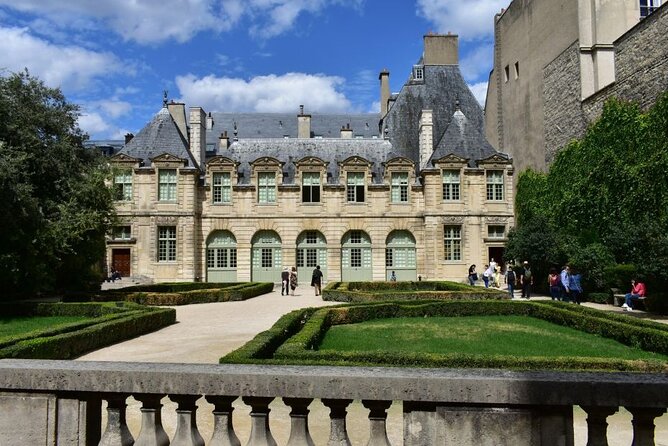
At Cour et jardin de l’Hôtel de Sully, you get a real courtyard-and-garden experience. The guide introduces it as a hidden garden linked to Sully, the finance minister of King Henry IV (1589–1610). Admission is listed as free.
Courtyards like this are where you understand why the Marais felt protected and private. They can also surprise you visually—Paris often looks open from a distance, but these spaces remind you that much of the city’s life happened behind walls.
Stop 5: Paroisse Saint-Paul Saint-Louis and the Jesuit Baroque shift
This stop is the Paroisse Saint-Paul Saint-Louis church. The tour frames it as an original church that broke away completely from Gothic style and adopted the new Baroque style associated with the Jesuits. Admission is listed as free.
This is one of those “spot the change” moments. As you look at the church, ask yourself what feels different from Gothic churches nearby—shape, ornament, and overall visual mood. The guide helps you connect style to the period’s thinking, not just name-dropping art history.
Stop 6: Rue des Rosiers and the gastronomic heart of the Jewish Quarter
Then the tour shifts from architecture to food streets: Rue des Rosiers, described as a hub of gastronomical delicatessen in the heart of the ancient Jewish Quarter. Admission is listed as free, and the visit is about giving you orientation.
This is where you learn where people actually linger. Even if you’re not stopping for a full meal right then, you’ll come away with the right streets for later. The guide also helps you avoid the “just follow the crowd” loop.
Stop 7: Jardin des Rosiers – Joseph-Migneret and traces of a medieval defensive wall
Next is Jardin des Rosiers – Joseph-Migneret, a quiet garden with traces of the Medieval defensive wall of Paris. Admission is free.
This is a perfect stop for your imagination. A garden might not sound medieval, but seeing wall traces in a small green pocket makes the city’s old defenses tangible. It’s the kind of moment that makes the word medieval stop feeling like a museum label.
Stop 8: Halles des Blancs Manteaux and the Templar fortress idea
At Halles des Blancs Manteaux, you’ll learn about a fortress used by the Templar Knights in the Middle Ages. Admission is listed as free.
Even if you know some Templar stories already, the value here is place-based explanation. You’re standing where the legend meets real stone and street-level memory. The guide’s job is to keep it grounded—what’s connected to the past, what’s interpretation, and what you can actually see.
Stop 9: Rue des Francs Bourgeois and the factory of ashes
On Rue des Francs Bourgeois, the guide shows you a unique institution: the factory of ashes, described as working until the middle of the 19th century. Admission is free.
This one is oddly fascinating because it’s not about kings and saints. It’s about infrastructure—the unglamorous systems that keep a city clean and functioning. If you like real-life history (not only famous names), this is a highlight.
Stop 10: Musee Picasso-Paris from the outside
The tour gives you a front-facing moment at Musee Picasso-Paris, dedicated to Pablo Picasso, described here as inventor of Cubism. Time is 10 minutes, and admission isn’t the focus because you’re stopping in front of the museum.
What I like about this stop is the contrast. You’ll just have moved through medieval and religious landmarks, then you’re reminded that Paris keeps inventing itself. It’s also a useful marker: you now know where to return if you want a museum visit later.
Stop 11: Musee des Archives Nationales and hidden gardens behind the facade
Next is Musee des Archives Nationales. From the front, you get the building identity, but the guide helps you reach the hidden gardens behind the sides/front where noble people once had luxury mansions.
Admission is listed as free. This stop is about seeing that archives aren’t only paperwork. They’re tied to old residences and private space. It’s another “look at the edge of the city” moment—how power and privacy lived side by side.
Stop 12: Hotel de la Bretonnerie area and LGBT-focused cafés and boutiques
At Hotel de la Bretonnerie, you’ll explore an area with trendy fashion stores, food shops, and cafés connected to the LGBT community. Time is 10 minutes, with admission free.
This is a practical, modern addition. A lot of Marais tours stop at “old stuff.” Here, you learn where the neighborhood’s current energy is. It helps you turn your walk into a plan for dinner and browsing afterward.
Stop 13: Centre Pompidou and the postmodern art/library/cinema complex
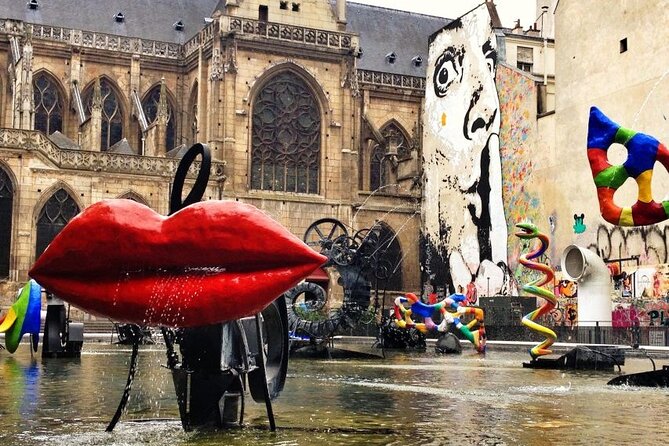
Finally, you get orientation at Centre Pompidou, created in the 1970s as a postmodern museum for contemporary art, plus a library and cinema. Admission isn’t listed for this stop, and the tour ends at the square in front.
This is a nice finishing move because Pompidou is easy to recognize and easy to build plans around. If you want a museum visit later, you’re already in the right place.
Price and value: what $51.66 buys you here
Let’s be honest: Paris tour pricing can get silly fast. Here, the value comes from three factors.
First, you’re paying for an experienced local guide who can connect what you see to why it matters. Second, the tour time—about 2.5 hours—is packed with meaningful stops instead of long “stand around and listen” stretches. Third, several locations are listed with Admission Ticket Free, which reduces the cost creep that can happen when a tour quietly relies on paid museum entrances.
Also, a small group (up to 15) makes the guide easier to engage with. You can ask real questions instead of whispering into a crowd’s noise.
If you want a Marais overview that doesn’t feel like a checklist, this is the kind of price-to-experience mix that usually feels fair.
Who should book this tour
This fits best if you want a guided walk that combines old Paris and current Paris in one smooth arc. It’s especially good if you:
- want the Marais story in English without wading through guidebooks all day
- like walking tours that include architectural style changes and street-level context
- want food-neighborhood orientation (Rue des Rosiers) but still want serious historical stops
- travel with older kids or teens who need a guide that keeps things clear and active
If you’re the type who loves asking questions, small-group format is a real perk. Some groups even end up with very small headcounts when demand is low, which makes the experience feel extra personal.
What to watch for on the day (and how to avoid a bad start)
The main practical risk isn’t the walking—it’s the meeting point. One review flagged that 3bis Pl. de la Bastille can be hard to find, with frustration from searching. So do this: arrive early, open your map, and make sure you’re looking for the correct exact address.
Also, bottled water isn’t included. Bring your own small bottle. Even if the tour is only 2.5 hours, summer heat or a damp day can drain you faster than you expect.
Finally, remember this is a walking tour through mixed streets and indoor/outdoor moments. Wear shoes you can move in and you’ll enjoy it more.
Should you book Paris Medieval Heart: Walking Tour in Ancient Marais?

If you want a guided Marais orientation that actually explains what you’re looking at—religious landmarks, medieval defensive traces, Jesuit-era style shifts, and then a modern ending at Pompidou—this is a strong pick. The guide quality shows up repeatedly in the feedback, especially for small-group pacing and smart explanations.
Book it if you’re willing to do a good amount of walking and you can get to the meeting point early. Skip it only if you hate finding exact addresses or you want a tour that includes paid museum entrances beyond what’s marked as free.
FAQ
FAQ
Where does the tour start and end?
It starts at 3bis Pl. de la Bastille, 75004 Paris, and ends at Place Georges-Pompidou, right in front of Centre Pompidou.
What time does the tour run and how long is it?
The start time is 10:00 am, and the duration is about 2 hours 30 minutes.
What does the tour cost and what is included?
The price is $51.66 per person. An experienced local guide is included, and you’ll receive a mobile ticket. Bottled water is not included.
Is the tour offered in English, and how big is the group?
Yes, it’s offered in English. The tour has a maximum of 15 travelers.
Are admissions included for the stops?
Many stops are listed with Admission Ticket Free, while Place des Vosges is marked as Admission Ticket Not Included. Other stops are described as visits that fit the tour time.
Can I cancel for a full refund?
Yes. You can cancel up to 24 hours in advance for a full refund. If you cancel less than 24 hours before the start time, the amount paid is not refunded.