REVIEW · PARIS
Paris Jewish Heritage: Le Marais & Montmartre Guided Walking Tour
Book on Viator →Operated by Walks In Europe · Bookable on Viator
Paris has layers. This tour ties them together. I love how it links everyday street life in Le Marais to the artistic strains of Montmartre with a real local guide. I also like that it stays small (up to 12), so you can ask questions and keep a comfortable pace. One watch-out: a few stops are exterior-only, so if you want lots of inside-rooms time, this may feel more like storytelling than site-hopping.
You start in the historic Jewish quarter and walk past names and places tied to centuries of Jewish presence, then you get a short public-transport ride to a very different neighborhood. Expect a mix of community life, immigration, and memory, and then a turn toward the creative scene that fed early modernism.
If you’re sensitive to heavy subject matter, plan to take the Holocaust Memorial segment seriously. The tour covers the occupation and resistance story through the lens of remembrance, even though you’ll only see the memorial from the outside.
In This Review
- Key things to know before you go
- Le Marais to Montmartre: one tour, two very different Jewish Parises
- Getting started at L’Elephant du Nil (and why early matters)
- Le Marais: medieval streets, modern shops, and a community that kept rebuilding
- Exterior-only sites: don’t plan on inside tours here
- Agoudas Hakehilos Synagogue: Art Nouveau from the sidewalk
- The Mémorial de la Shoah exterior segment: remembrance, explained with care
- The public transport jump to Montmartre (tickets included)
- Montmartre: where Jewish immigrant artists shaped modern art
- Sacré-Cœur steps finish at Square Louise-Michel: the view and the meaning
- Pace, group size, and guide styles: what to expect in real terms
- Value for $102.12: why it may be worth it (or not)
- Who should book this tour
- Should you book Paris Jewish Heritage: Le Marais & Montmartre?
- FAQ
- Are any synagogue interiors included?
- Do we enter the Holocaust Memorial (Mémorial de la Shoah)?
- How long is the tour?
- Is this a private tour or small group?
- What’s included in the price?
- Where does the tour start and end?
Key things to know before you go
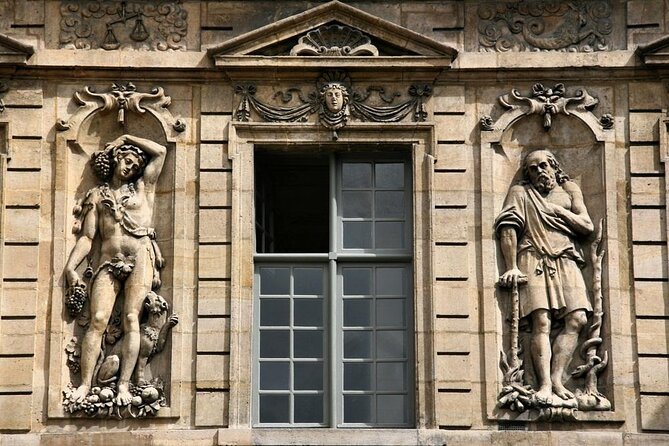
- Le Marais street storytelling: Rue des Rosiers, community landmarks, and the way neighborhoods rebuild
- Art Nouveau synagogue exterior: Agoudas Hakehilos, designed by Hector Guimard, viewed from outside
- Holocaust Memorial segment: Mémorial de la Shoah, shared from the exterior with context and care
- Public transport between districts: Tickets included, with a short transfer to keep energy up
- Montmartre’s Jewish artistic circle: Amedeo Modigliani, Max Jacob, and Marc Chagall appear in the narrative
- Small group experience: Designed for more interaction, not a fast group shuffle
Le Marais to Montmartre: one tour, two very different Jewish Parises
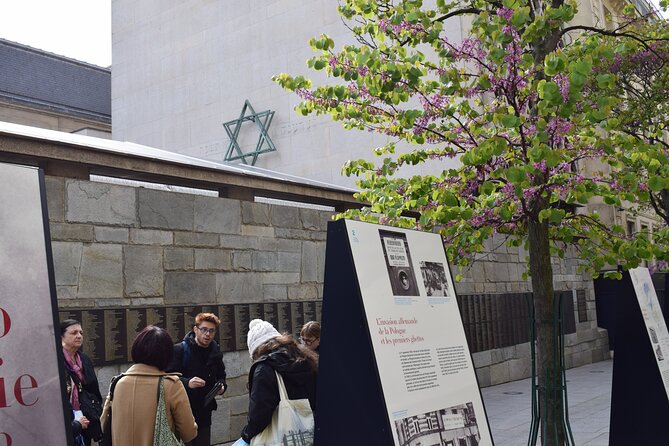
This walk is built around contrast, and that’s the point. In Le Marais, you’re dealing with community continuity—shops, religious life, schools, and the everyday rhythms that keep culture alive. Then the tour shifts up the hill to Montmartre, where Jewish immigrant artists and writers mixed ambition with experimentation, all under the pressure of rising antisemitism and political uncertainty across Europe.
If you like Paris when it feels human—street corners, neighborhoods, and lived-in history—this works. It’s not just monuments. It’s people and the institutions they built, plus what was lost and what survived. The guide’s job is to connect the dots so you don’t just see streets. You understand why they mattered.
You can also read our reviews of more tours and experiences in Paris.



Getting started at L’Elephant du Nil (and why early matters)
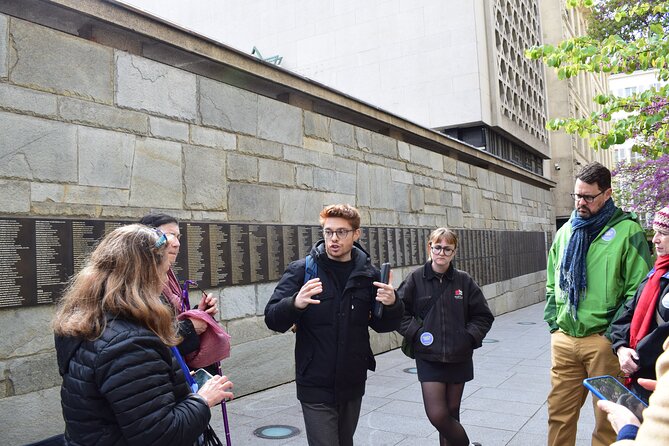
The meeting point is L’Elephant du Nil, at 125 Rue Saint-Antoine, in the 4th arrondissement. The tour starts at 2:30 pm, and you’ll want to arrive 5 to 10 minutes early so you don’t cut into the first segment. You can’t join after it begins, so treat that start time as real, not casual.
The first walking stretch is where you’ll get your bearings. A few people have said the start can feel slow if the guide doesn’t frame the road map quickly. That’s a fair consideration. The fix is simple: be ready to listen for the structure—where you’ll go, why it connects, and how the story evolves from stop to stop.
Le Marais: medieval streets, modern shops, and a community that kept rebuilding
In Le Marais, you’re walking through the kind of neighborhood where the present refuses to let the past go. The guide leads you through narrow streets tied to the medieval Jewish enclave and later waves of rebuilding after wartime destruction. You also hear how migration and identity shaped what institutions looked like and how community life evolved.
A key highlight here is Rue des Rosiers. This is historically the commercial and community center of Jewish life in the Marais. Today you’ll see bakeries, delis, and specialty shops lining the street, and the tour ties that storefront energy to the deeper story of continuity and change across the 20th century.
What I like for you: the guide doesn’t treat Rue des Rosiers like a food stop only. You get context for why these businesses clustered here and how the area kept re-forming even after major upheavals.
Exterior-only sites: don’t plan on inside tours here
One of the most important practical things: the tour does not include indoor synagogue visits. The focus is on guided street-level history and landmark exteriors. That also applies to the Holocaust Memorial segment.
That doesn’t make it useless—far from it. But it does mean you should calibrate expectations if you love interiors, guided museum rooms, or long time inside religious buildings.
Agoudas Hakehilos Synagogue: Art Nouveau from the sidewalk
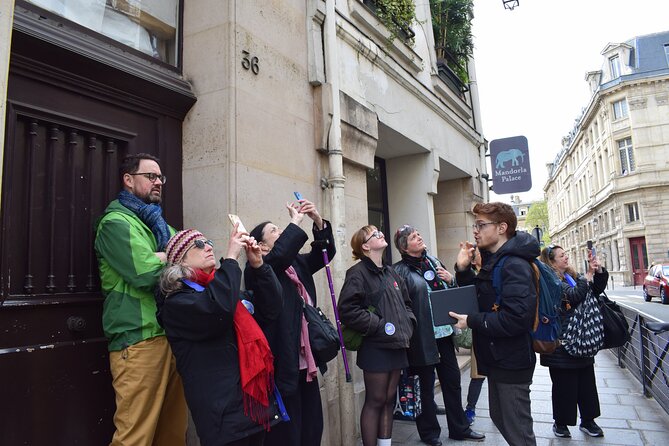
One stop is the exterior of Agoudas Hakehilos Synagogue, a rare example of Art Nouveau synagogue architecture by Hector Guimard. You won’t go inside, but you still get a lot out of the design and the historical timeline around it.
The tour explains how waves of Eastern European Jewish immigration reshaped this part of Paris in the late 1800s and early 1900s. In other words, the building isn’t treated as a standalone object. It’s presented as a marker of community organization—schools, cultural life, and institutions that took root.
If you’re the type who likes architecture only when it has a story, you’ll appreciate this stop. You’ll be looking at the facade with better questions in mind than just What style is this?
The Mémorial de la Shoah exterior segment: remembrance, explained with care
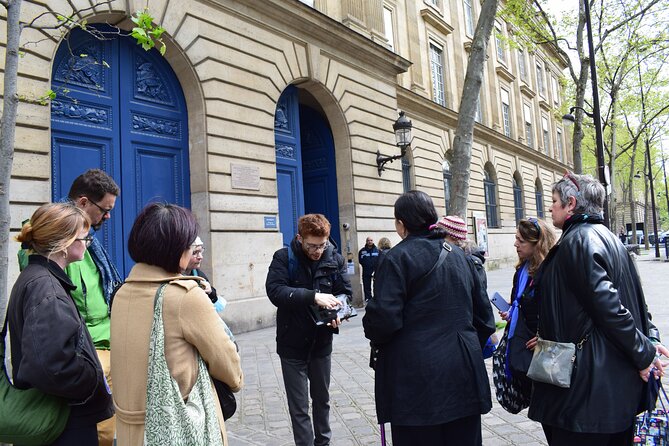
After walking deeper into the Marais, you’ll reach the Holocaust Memorial (Mémorial de la Shoah) from the exterior. The guide shares the historical context—occupation, resistance, and remembrance—and how those chapters continue to shape Jewish identity and memory in Paris.
This is the kind of topic where a guide’s tone matters. The good news: several guides on this tour have been praised for handling sensitive material tactfully and with real context, including strong storytelling from people such as Benjamin, Thomas, and Pierre Louis (P.L.). If you want a version of history that doesn’t rush or flatten the human stakes, that’s what you’re looking for.
Practical tip for you: wear a thick layer if it’s cold. Even a short exterior stop can feel long when the subject is heavy.
The public transport jump to Montmartre (tickets included)
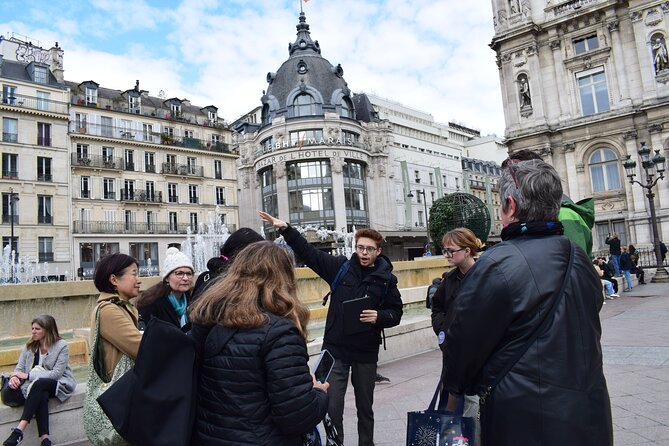
Once the Marais segment ends near Hôtel de Ville, you take a short public transfer to Montmartre. Public transport tickets are included, and the ride is meant to give your legs a break before you switch settings.
This transfer matters more than you might think. The itinerary spans two neighborhoods with very different vibes, and the way you get there affects how tired you feel. The tour is designed so you don’t lose time hunting for routes.
Montmartre: where Jewish immigrant artists shaped modern art
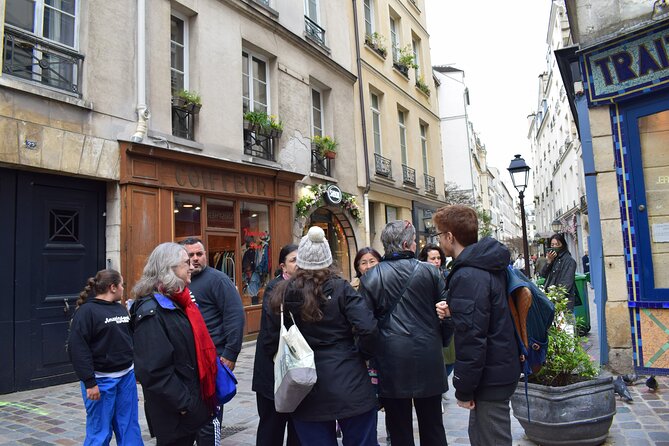
In Montmartre, the tone changes. You shift from communal tradition to creative reinvention. The guide explains how immigrant artists, writers, and musicians found a circle in cafés, studios, and literary circles—and how Jewish Paris contributed to early 20th-century modernism.
The names highlighted include:
- Amedeo Modigliani
- Max Jacob
- Marc Chagall
The contrast is part of the lesson. Le Marais is grounded in established communal life. Montmartre is about experimentation and ambition. And the guide doesn’t pretend the story is only beautiful. Rising nationalism and antisemitism across Europe add pressure, and the narrative acknowledges that many of these cultural figures would later face exile, persecution, or rupture during the Second World War.
If you like art history but hate when it becomes just a list of paintings and dates, this is more satisfying. You get people, places, and the social climate pushing from behind.
Sacré-Cœur steps finish at Square Louise-Michel: the view and the meaning
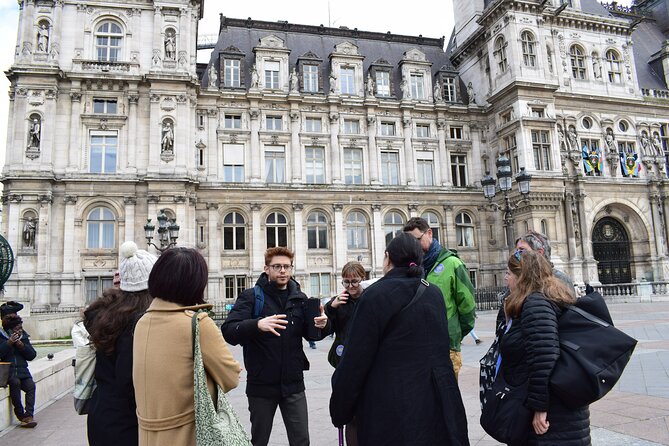
The tour ends at the steps of the Basilique du Sacré-Cœur de Montmartre, with an iconic view of Paris. Then it comes down to Square Louise-Michel, where the guide brings the story back to the layers you’re now able to see.
This final stretch is useful. When you’ve walked through memory sites and community landmarks, it helps to return to a city panorama and reframe what you thought Paris was. You don’t just see rooftops. You see how different chapters of Jewish life helped shape the city’s identity.
Pace, group size, and guide styles: what to expect in real terms
The tour is built for small group time, capped at 12 travelers. That’s why so many people praise the experience as more interactive. In practice, it usually means you don’t spend the whole time as a passive follower behind a moving line.
Some guides are repeatedly singled out for storytelling and Q&A. Names that show up with strong praise include Benjamin, Thomas, Adrian, Benoit, Boniet, and Pierre Louis (P.L.). I can’t promise who you’ll get, but it’s a good sign when multiple guides earn the same kind of feedback for depth and tact.
One more pace note: if you’re sensitive to long walks, you’ll want to plan for about 3 hours 30 minutes total. There’s also a short transfer, which helps break it up.
Value for $102.12: why it may be worth it (or not)
At $102.12 per person for about 3.5 hours, you’re paying for three things: a local guide who connects the story across two neighborhoods, the small-group format, and transport tickets that remove friction between districts.
You’re not paying for lots of paid-entry museum time. The synagogues and key monuments are treated as exteriors (no interior synagogue visits, and no entry to monuments & historical sites). So if your ideal tour is heavy on inside access and ticketed attractions, you’ll feel like you’re getting less physical site time.
If your ideal tour is context—why these streets look the way they do, why institutions are where they are, and how different waves of Jewish life shaped Paris—this cost can feel fair because the guide does the linking work for you.
Who should book this tour
You’ll likely enjoy it if:
- You want Jewish heritage in Paris taught through neighborhood walking, not just museum rooms
- You like the way architecture and streets can carry history, including the Guimard synagogue exterior
- You’re comfortable with a serious memorial stop and want it framed with context
- You value small-group interaction and a guide who can answer questions
You might skip or look for another option if:
- You want lots of indoor synagogue or monument entry
- You prefer a lighter, purely cultural walk with no Holocaust remembrance segment
- You’re mainly chasing food stops without the history that makes the street feel meaningful
Should you book Paris Jewish Heritage: Le Marais & Montmartre?
I think this is a strong pick if you want a story-driven Paris walk that connects Le Marais and Montmartre in a single afternoon. The small-group size, included transit, and the focus on landmark exteriors make it a practical way to see the neighborhood geography while getting real context.
Book it if you like learning on your feet and you’re okay with exterior-only stops. Skip it if your dream day is indoor monument entry and lots of time inside religious buildings.
If you do book, do one simple thing: come ready to follow the narrative arc. The best moments land when you understand how tradition, art, migration, and remembrance connect across the map.
FAQ
Are any synagogue interiors included?
No. The tour includes visits to landmark exteriors, and it specifically notes that interior visits of the synagogues are not included.
Do we enter the Holocaust Memorial (Mémorial de la Shoah)?
No. The Holocaust Memorial is seen from the exterior.
How long is the tour?
The duration is about 3 hours 30 minutes.
Is this a private tour or small group?
It’s a small-group experience, with a maximum of 12 travelers, designed for more interaction.
What’s included in the price?
The tour includes a guided walking tour of Le Marais and Montmartre, anecdotes and stories, expert local guides, small-group experience (up to 9 persons), and public transport tickets.
Where does the tour start and end?
It starts at L’Elephant du Nil, 125 Rue Saint-Antoine, 75004 Paris, and ends at Square Louise Michel, 6 Pl. Saint-Pierre, 75018 Paris.