Paris history walks right up to you. This 2-hour stroll through Le Marais connects street-level life with stories of faith, resistance, and renewal. You start with a baroque church built under Louis XIII, then you shift into the Jewish Quarter with Rue des Rosiers as your guide.
I especially love the way the tour moves from monumental architecture to the calmer Village Saint-Paul courtyards. You don’t just read about Paris; you see how people actually live and work in the small lanes and passages. I also like how the walk lands at Place des Vosges and then ends at Hôtel de Ville, tying beauty to a 1944 moment of Liberation.
One heads-up: this is a walking tour, and it is not designed for wheelchairs or people with mobility impairments. Also, since monument visits are exterior only, you’ll admire the buildings from the outside rather than going inside.
In This Review
- Key things you’ll notice on this walk
- Where you meet in Le Marais and how the route flows
- Saint-Paul-Saint-Louis: baroque faith with Louis XIII roots
- Village Saint-Paul: courtyards and small Paris moments
- Rue des Rosiers: Jewish Quarter life, food streets, and real landmarks
- Place des Vosges: mansions, nobles, artists, and classic symmetry
- Hôtel de Sully and Hôtel Carnavalet exteriors: architecture you can read
- Les Archives and Hôtel de Ville: ending with the 1944 Liberation moment
- Price and value: is $23 fair for a 2-hour walk?
- Who this tour suits best (and who might feel mismatched)
- Booking smart: languages, group size, and what to bring
- Should you book this Jewish Heritage walk in Le Marais?
- FAQ
- How long is the Paris Jewish Heritage & Hidden Gems of Le Marais tour?
- Where do I meet the guide?
- Is entrance to monuments included?
- What is the tour price?
- What languages are available?
- Is it suitable for wheelchair users or people with mobility impairments?
- Can I cancel for a full refund?
Key things you’ll notice on this walk
- Saint-Paul-Saint-Louis Church frames the whole story with its Louis XIII baroque setting
- Village Saint-Paul feels like Paris on quieter mode, with courtyards and artisan-shop lanes
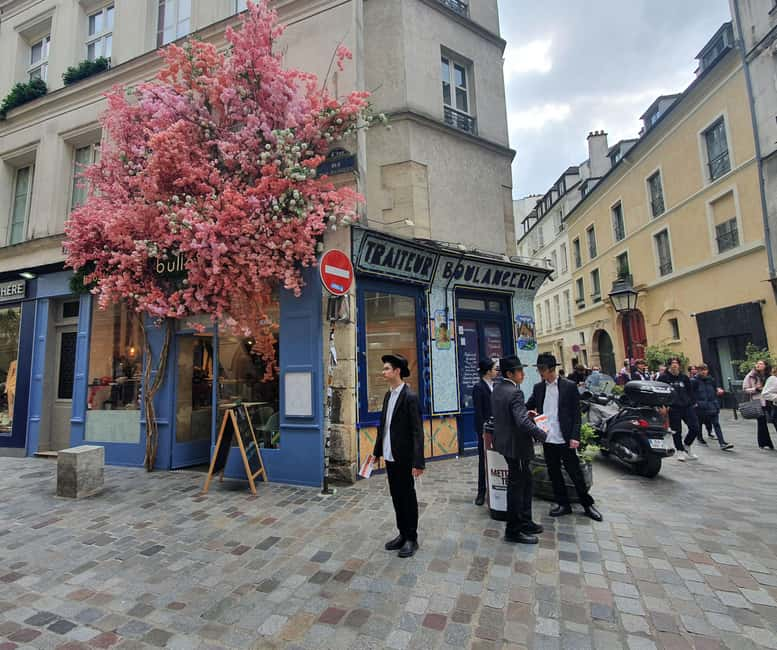
- Rue des Rosiers anchors Jewish heritage in everyday life, from bakeries to kosher delis
- Place des Vosges brings the “old Paris” mood fast, with mansions tied to nobles and artists
- Hôtel de Sully and Hôtel Carnavalet offer major architecture without museum tickets
- Hôtel de Ville gives the emotional finish, linked to the 1944 Liberation celebrations
Where you meet in Le Marais and how the route flows
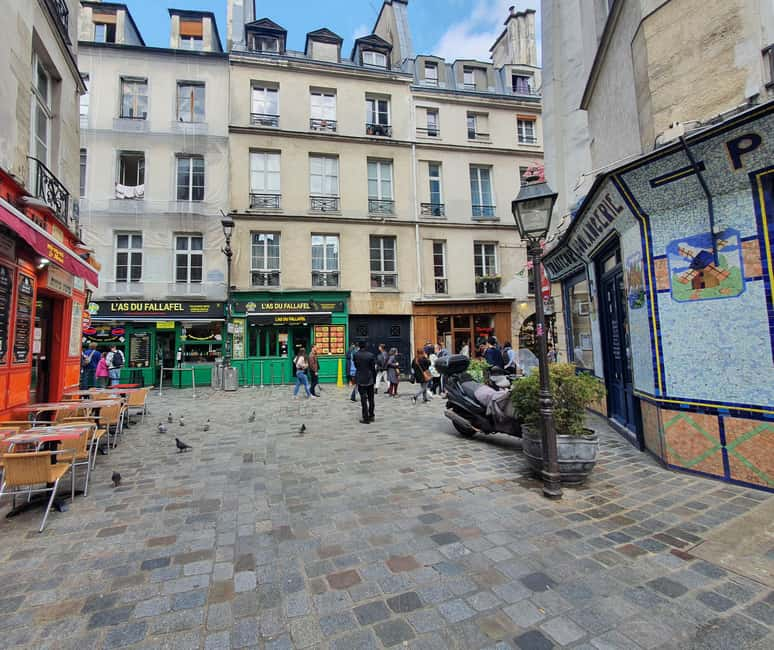
You meet your guide outside Trattoria Marguerite at Quai de Gesvres. From there, you’re set up for one of the best things about Le Marais: most stops are close enough that you don’t waste the whole tour on transit.
This walk is built like a chain. One stop gives you context, the next stop gives you texture. You begin at Saint-Paul-Saint-Louis, then you slide into the Village Saint-Paul maze of courtyards and shops, and from there you move toward the Jewish Quarter along Rue des Rosiers.
The pacing is ideal for people who want a strong overview without spending a full day on logistics. You’ll also be able to connect the dots between religion, community, and architecture, because the guide keeps the story moving in the same direction as the streets.
Tip: wear comfortable shoes. Le Marais can be charming, but it’s still a city district, so expect uneven pavement in places.
You can also read our reviews of more tours and experiences in Paris.

Saint-Paul-Saint-Louis: baroque faith with Louis XIII roots
Your tour starts at Saint-Paul-Saint-Louis Church, a baroque masterpiece built under Louis XIII. Even if baroque churches aren’t always your thing, this is a smart opener. The guide’s framing helps you see why Le Marais became a crossroads of faith and community over centuries.
From the outside, you get a sense of scale and intention right away. The tour then uses that momentum to explain how the district’s identity formed around neighborhoods where different communities met, worshipped, and survived through changing times.
What makes this stop work for your trip is the way it sets the tone before you hit the quieter side streets. You’re not just looking at a façade. You’re starting with a key anchor point for how the area held religion and daily life side by side.
If you’re the kind of visitor who likes understanding the “why” behind what you see, this first stop pays off quickly. You’ll likely notice details more than you would on a quick photo stop.
Village Saint-Paul: courtyards and small Paris moments
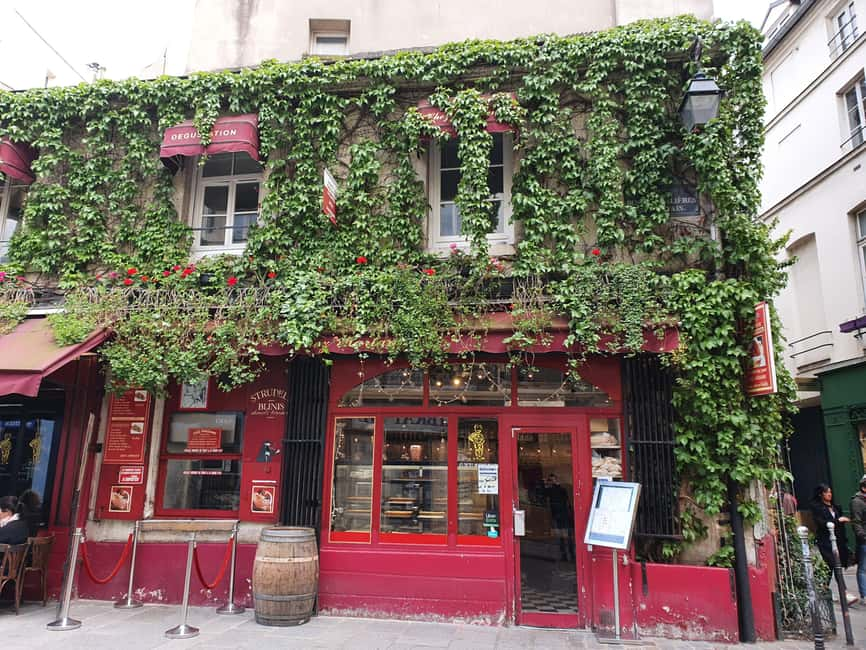
Next comes the Village Saint-Paul, described like a peaceful maze of courtyards and artisan shops. This is where the tour slows down just enough for you to feel the district’s human scale.
Courtyards in central Paris are some of the best places to catch that shift between famous landmarks and ordinary rhythms. Here, you get side passages, quiet corners, and the kind of lane atmosphere that makes Le Marais feel lived-in rather than staged.
The guide’s story links architecture to daily community life. That connection matters because it helps you understand why Jewish heritage isn’t just a museum topic in this neighborhood. It’s part of the way the streets were used, remembered, and rebuilt over time.
One practical note: since you’re moving through courtyards and narrow passages, don’t plan to rush your photos. You’ll want a beat to look up and around at the shape of the space.
If you love wandering but hate aimless wandering, this section is a good balance. You get structure, with plenty of small detours.
Rue des Rosiers: Jewish Quarter life, food streets, and real landmarks
When you reach Rue des Rosiers, the tour becomes very grounded. This street is known for bakeries, kosher delis, and historic synagogues, and the guide treats it as a living heritage area rather than just a sightseeing checklist.
This is one of the most emotionally powerful parts of the walk because you’re hearing stories of resilience and cultural rebirth. The point isn’t to make it heavy for the sake of drama. It’s to show how community life persisted, even through resistance and upheaval that shaped the neighborhood.
Rue des Rosiers also helps you experience the Jewish story through senses. You’re surrounded by everyday signals of culture, not just plaques. Even if you don’t stop for food, the streets themselves communicate continuity.
Possible drawback: because this is a famous corridor, you may notice crowds depending on the day and time. The tour timing helps, but you’ll still be in a central, high-traffic area.
If you’re looking for a Paris Jewish heritage experience that mixes history with contemporary neighborhood energy, this is the heart of the route.
Place des Vosges: mansions, nobles, artists, and classic symmetry
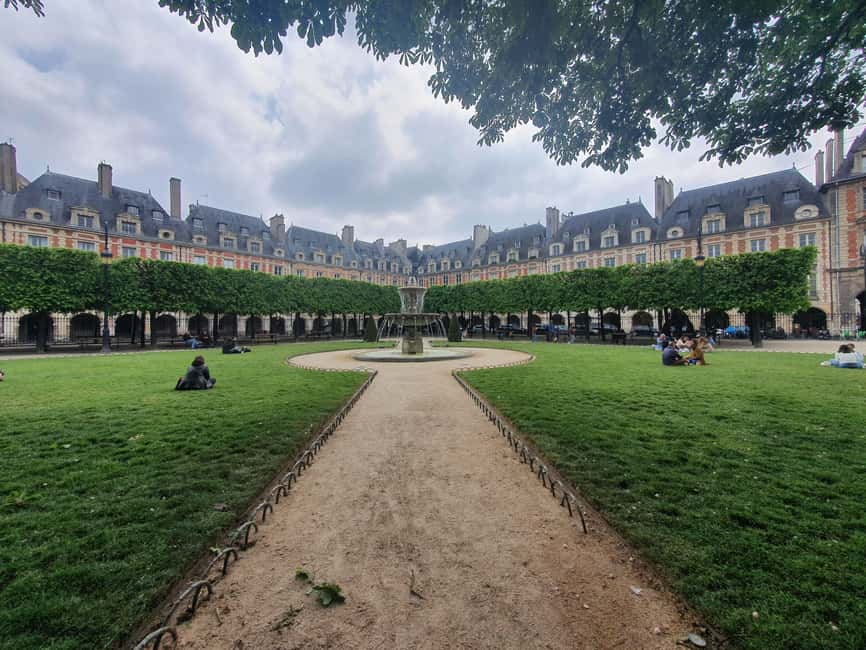
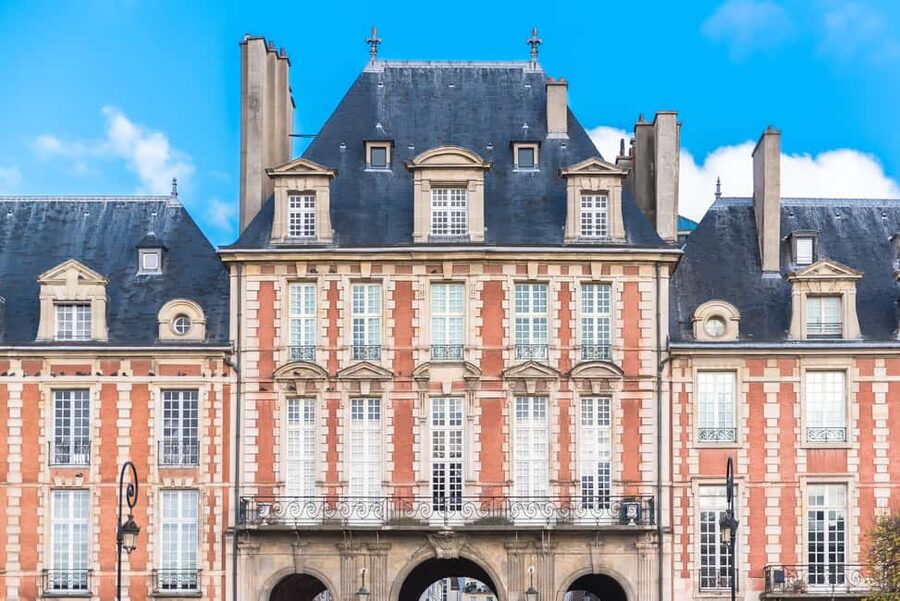
After the Jewish Quarter, the tour swings you into Place des Vosges, one of Paris’s oldest squares. The setting alone is worth the walk: you get elegant symmetry, the scale of an old royal-era space, and a sense of being in a different kind of time.
The guide adds layers here. The mansions around the square once housed nobles and artists, so the square becomes a story of who had access to power, creativity, and Paris’s cultural life.
What I like about this segment is how it changes the rhythm. Rue des Rosiers is intimate and street-level. Place des Vosges is open, formal, and visually crisp. That contrast helps your brain store the day in sections.
You also get a chance to look at architectural details without the pressure of moving immediately to the next stop. Use this moment to slow down and scan the façades, especially if you enjoy photography or architectural context.
If you want a classic Paris postcard view that still feels connected to the tour’s themes, this square does that work.





Hôtel de Sully and Hôtel Carnavalet exteriors: architecture you can read
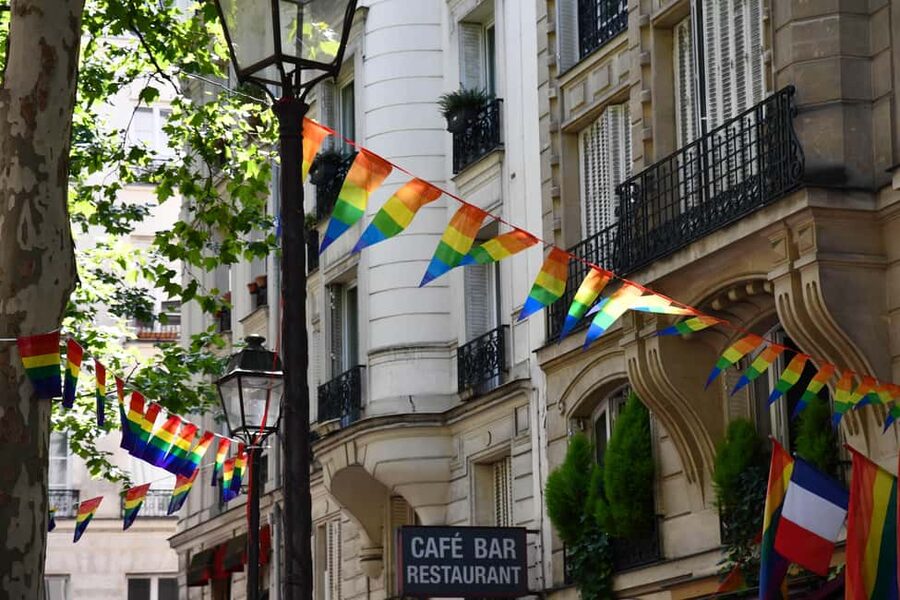
The tour then heads to Hôtel de Sully, a jewel of 17th-century architecture. You’re not going inside, since monument entry isn’t included, but the outside view still teaches you how Paris’s grand residences were designed to project status and order.
From there, you walk along Rue des Francs-Bourgeois, with Musée Carnavalet on the route. Again, this is exterior-focused, but it’s valuable if you like using the streets as a museum map. Carnavalet is tied to Paris’s history, and the guide uses its presence to keep the conversation about the city’s memory going.
These stops work well because they sit at the intersection of art and civic identity. You’re learning that Le Marais isn’t just about one community. It’s about how many layers of Paris life overlapped in a relatively compact area.
A practical tip: take a moment to look at doorways, windows, and transitions between street-facing façades and the quieter internal spaces you glimpse. Even without entering, you can often “read” the building logic.
If you’re short on time in Paris, the fact that these are exterior visits is a benefit, not a compromise. You still get the visual and historical context without burning hours on tickets.
Les Archives and Hôtel de Ville: ending with the 1944 Liberation moment
The last part of the walk brings you to Les Archives and then finishes at Hôtel de Ville. You don’t need extra imagination here, because Hôtel de Ville is one of those civic landmarks that automatically feels important.
The guide links the area to the Liberation of Paris in 1944, where celebrations took place. This ending matters because it turns the walk’s themes into something you can feel. You started with faith and community, you moved through resilience and daily life, and now you land on a public, city-wide turning point.
This is also a good moment to reflect without being forced into silence. You can stand there and absorb the atmosphere, then mentally connect it to what you heard earlier: endurance, rebuilding, and the idea that cultural identity changes shape but doesn’t disappear.
If you like tours that finish with meaning, this one succeeds. It’s not just a loop of sights. It’s a story arc that resolves in a major civic space.
Price and value: is $23 fair for a 2-hour walk?
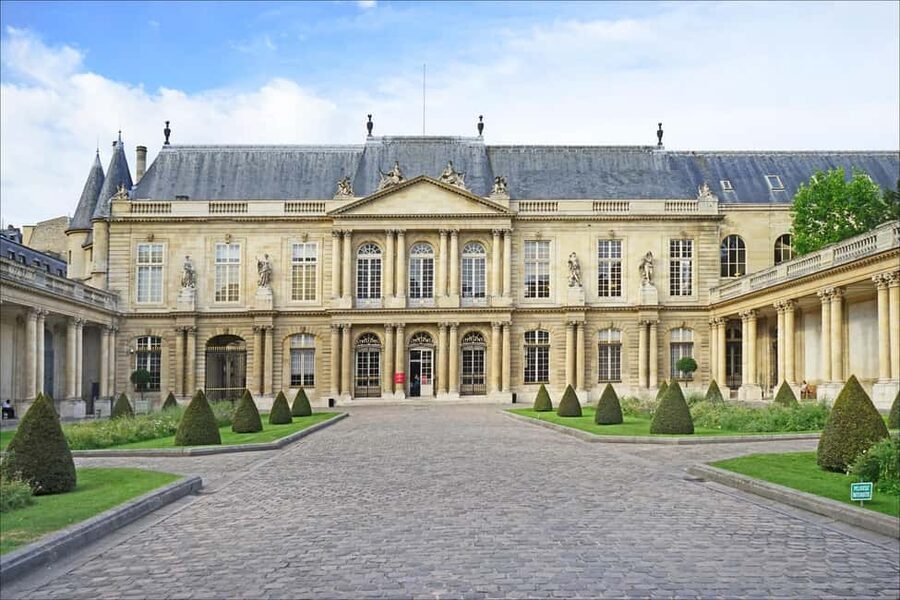
At $23 per person for a 2-hour walking tour, I think the value is solid, especially if you want more than a self-guided stroll. You’re paying for a qualified guide, not entry tickets, and the route is designed to pack multiple key areas into one compact time window.
You’re also not stuck with a generic “here’s what you see” commentary. The story focus on resistance, faith, and revival makes the walk feel like interpretation, not just navigation. That’s where guided time usually pays off.
What you should know is what you’re not getting: monument entry isn’t included, and there’s no hotel pickup. That means you need to show up ready to walk and plan to use your own transit to get to the meeting point.
Still, for $23, the combination of architectural anchors plus neighborhood heritage makes sense. It’s a good choice if Le Marais is high on your list and you want an organized way to understand it.
If you’re comparing options, treat this as a story-driven neighborhood orientation rather than a museum ticket day.
Who this tour suits best (and who might feel mismatched)
This is ideal for you if you want a focused walk through Le Marais with Jewish heritage at the center. It suits travelers who like context: why these streets matter, how communities shaped the neighborhood, and how Paris’s story changed over time.
It also fits well if you’re traveling with limited time. Two hours is long enough to cover major highlights, but short enough to keep your day flexible afterward.
You’ll like it even more if you enjoy architectural variety. The tour ranges from a baroque church to a classic square, plus 17th-century hôtel residences and neighborhood courtyards.
One mismatch to consider: it’s not suitable for people with mobility impairments or wheelchair users. The tour is walking-based, and the route includes courtyards and street sections that can be hard to navigate.
Also, if you need lots of indoor time at monuments, this plan may feel too exterior-focused. But if you’re happy to see buildings from the outside and then move on to the next story, it works nicely.
Booking smart: languages, group size, and what to bring
The tour runs with a live guide in multiple languages, including English, French, Italian, Russian, and Spanish, which is useful if you want a guide who can match your comfort level. Group size can be private or small groups, which often helps you ask questions and keep the pacing comfortable.
From what I’ve learned about the experience, the quality of the guide is a big part of what makes it feel worth it. In past group experiences, the guides have been described as friendly and exceptionally solid on local details, with one guide coming from Argentina and guiding in a way that mixed culture and history smoothly.
To get the best day, bring comfortable shoes and plan for walking. If the weather turns or access restrictions pop up, the itinerary may be modified on the day, so keep a flexible mindset.
If you like having an organized route but still want authentic street atmosphere, this kind of tour matches that sweet spot.
Should you book this Jewish Heritage walk in Le Marais?
If Le Marais is on your Paris hit list and you care about understanding how communities shaped the neighborhood, I’d book it. For $23 and two hours, you get a strong story arc: baroque church beginnings, courtyards and passages, Rue des Rosiers life, the elegance of Place des Vosges, then a meaningful civic ending at Hôtel de Ville.
It’s especially worth it if you want a guide-driven route that helps you see beyond postcard Paris. The tour’s emotional focus on resilience and revival makes the walk feel purposeful, not random.
Skip it only if you strongly need indoor monument entry or if mobility access is a concern. For everyone else, this is a practical way to get a memorable, grounded slice of Paris.
FAQ
How long is the Paris Jewish Heritage & Hidden Gems of Le Marais tour?
The tour lasts 2 hours.
Where do I meet the guide?
You meet in front of Trattoria Marguerite, outside.
Is entrance to monuments included?
No. Visits are exterior only, so monument entry tickets are not included.
What is the tour price?
It’s $23 per person.
What languages are available?
The live guide can speak English, French, Italian, Russian, and Spanish.
Is it suitable for wheelchair users or people with mobility impairments?
No. The tour is not suitable for people with mobility impairments or wheelchair users.
Can I cancel for a full refund?
Yes. You can cancel up to 24 hours in advance for a full refund.