REVIEW · PARIS
Paris: Khéops VR Experience – Explore Ancient Egypt
Book on GetYourGuide →Operated by Eclipso · Bookable on GetYourGuide
A pyramid, right here in Paris. This indoor Khéops VR experience uses 360° VR to help you explore the Giza Plateau and the Great Pyramid’s interior, all without leaving Ile-de-France. You start with historical context, then you’re placed at the foot of the monument as if time rewound 4,500 years.
I love the hyper-realistic 360° reconstruction: you can look around and get real spatial sense, not just watch a screen. I also like that you can move through areas that are normally restricted, including corridors and chambers inside the pyramid that most people never see.
The main thing to plan for: you may need to balance listening to the guide’s fairly detailed comments with looking closely at what’s happening around you.
In This Review
- Key things to know before you go
- Khéops VR in Paris: a weather-proof time machine
- From introduction to teleport: what the experience starts with
- Exploring Khufu’s pyramid in 360°: what you should actually watch for
- Sound, lighting, and smooth motion: the comfort choices that matter
- The value question: is it worth $37 compared to other Paris options?
- Who this works for best (and who should skip it)
- Timing in your Paris day: fitting 1 hour smoothly
- Accessibility and language: making sure you’re set up well
- What to do (and not do) once you’re in the headset
- Should you book Khéops VR Experience in Paris?
- FAQ
- How long is the Khéops VR Experience?
- Is the experience indoors?
- What is included with the ticket?
- Which languages are available?
- Is it wheelchair accessible?
- Is it suitable for children?
- Who should not take part?
- Can I cancel for a refund?
- Is there a reserve and pay later option?
Key things to know before you go
- Walk freely over a 360° Giza Plateau reconstruction set up like it’s been frozen in time.
- Step into hidden corridors and chambers that are normally off-limits to the public.
- Get historical context first, so the visuals make more sense as you move.
- Use cinematic sound, dynamic lighting, and smooth motion to stay comfortable and oriented.
- It’s quick and weather-proof, built for a 1-hour slot in your Paris day.
Khéops VR in Paris: a weather-proof time machine
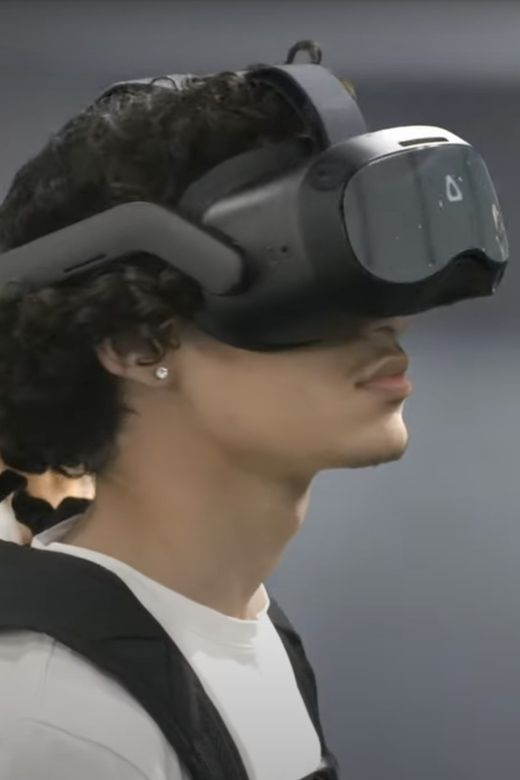
Paris already has plenty of museums, but Khéops VR gives you something different: a modern way to experience a single iconic place. For $37, you’re buying a focused session—45 minutes in the headset—with a guided setup that explains what you’re seeing before it becomes spectacle.
This is the kind of activity that works even on the days when the weather turns your plans upside down. Because it’s fully indoors, you can treat it like a reliable anchor stop rather than a “maybe we’ll fit it in” idea.
Also, this isn’t just floating in space with generic facts. The experience is built around a recreation of Khufu’s pyramid complex, with 360° views and a sense of scale that feels closer to being there than watching a video. That matters, because the Great Pyramid isn’t a small object—you need space to really understand it.
You can also read our reviews of more tours and experiences in Paris.



From introduction to teleport: what the experience starts with
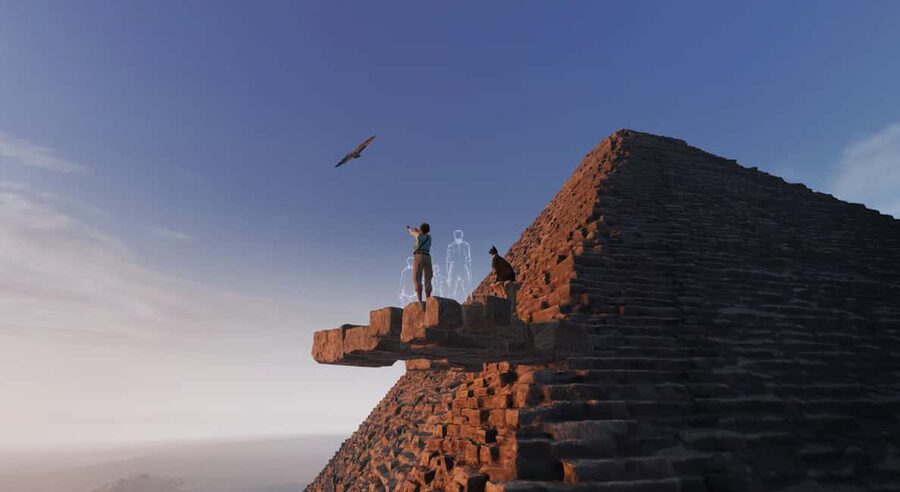
Before the headset experience, you get a short introduction to the archaeological context and the mysteries of Egyptian architecture. That early framing is genuinely useful. Without it, VR can feel like a cool special effect; with it, you start noticing details you’d otherwise miss.
Then the action begins. You’re equipped with the next-generation VR headset and transported to the foot of the pyramid. The site around you is rendered as a vivid 360° reconstruction of how it looked about 4,500 years ago. The key here is orientation: you don’t just turn your head and hope it makes sense. The experience guides your viewpoint so you understand where you are on the Giza Plateau.
Exploring Khufu’s pyramid in 360°: what you should actually watch for
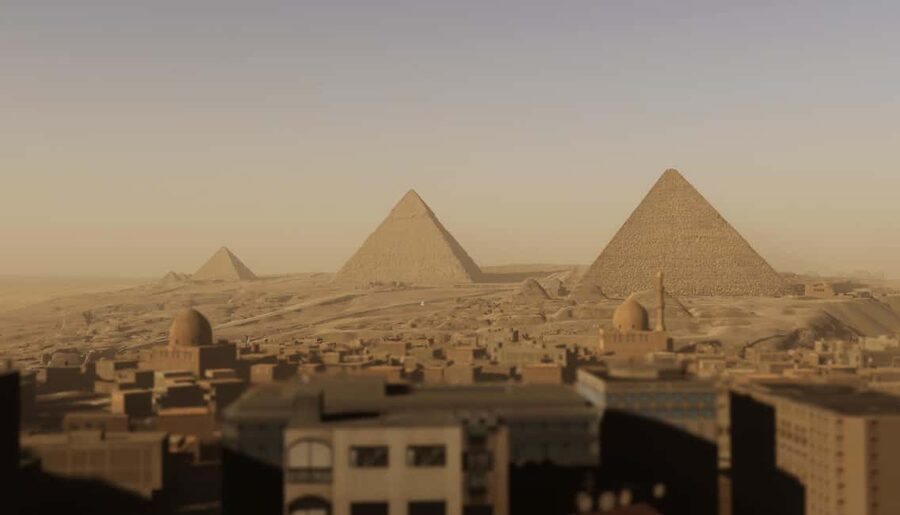
Once you’re there, you’re not stuck watching a single viewpoint. You can walk freely across the plateau, examine the monumental structure up close, and then move into interior spaces.
A few things I’d focus on while you’re in the headset:
- Scale cues. Look for how the pyramid dwarfs the environment around it. Even small details help sell size.
- Entry points and corridors. Notice the way movement works as you go from outside areas into interior passages.
- Chambers normally inaccessible. The big promise here is access—VR lets you step into corridors and chambers you typically can’t reach when visiting in person.
The experience uses hyper-realistic 360° visuals to make the environment feel physically present. That’s important because the Great Pyramid’s impact comes from mass and geometry, not just decoration.
If you’re a history lover, this format helps you learn spatially. You remember routes and relationships (outside-to-inside, entry-to-corridor, corridor-to-chamber) instead of only memorizing facts.
Sound, lighting, and smooth motion: the comfort choices that matter
The VR experience blends cinematic sound, dynamic lighting, and smooth motion. Those design choices aren’t just for drama—they affect how well you can stay focused and comfortable.
Here’s how to use that to your advantage:
- Keep your head turns deliberate. With 360° visuals, it’s easy to over-spin. Slow looks help you read the space.
- Let the sound guide you. Cinematic audio can reinforce direction and what’s happening around you, even when your body isn’t moving much.
- If you’re sensitive to motion, keep your movements steady and avoid frantic turning. Smooth motion is part of the design, but your comfort still depends on how you handle it.
One small real-world lesson from the experience itself: the guide’s commentary can be quite detailed. When you’re busy staring at something beautiful, you might miss a sentence or two. I’d treat the headset time like a show you watch with intent—if the guide is speaking, try to pause your curiosity for a moment rather than fighting for attention.
The value question: is it worth $37 compared to other Paris options?
At $37 per person, this sits in the “serious add-on” range—meaning it’s not a token activity, but it’s not an all-day commitment either. The best value comes if you want a single, concentrated experience that’s both educational and a little surprising.
A great way to think about value:
- You get 45 minutes in the VR headset, plus an intro that sets context.
- You get a fully indoors plan with weather-proof convenience.
- You get access to interior areas in a way most museum visits can’t reproduce (because you can’t walk inside the Great Pyramid in Paris).
If your days are packed, this is also the sort of stop that protects you from decision fatigue. Instead of chasing one more museum ticket, you choose one focused cultural experience and move on.
Who this works for best (and who should skip it)
This is designed for all audiences and is described as suitable for families and history lovers—but with clear health and age limits.
You’ll likely enjoy it if you:
- Want something original beyond standard sightseeing.
- Prefer short, guided learning over wandering alone.
- Like cinematic presentations that still feel grounded in context.
- Travel with kids old enough to handle headset time without getting impatient.
You should not do it if:
- You’re under 8 years old.
- You have heart problems.
- You have epilepsy.
That isn’t small-print fine print. In VR, safety rules like these exist for a reason, and you should respect them even if you feel curious.
Timing in your Paris day: fitting 1 hour smoothly
The total scheduled duration is 1 hour, with a 45-minute VR experience inside. That structure is helpful for planning. You can slot it between other sights, or use it as a weather backup when you don’t want to lose half your day.
It’s also a smart strategy for fatigue management. VR is attention-heavy, but it doesn’t last all afternoon. If you’ve already walked a lot, this can be a welcome change of pace—stand, settle, and explore in a controlled environment.
One practical tip: plan a little buffer time before and after. Even if the experience is only 1 hour, you’ll want a moment to get settled and then decompress before you head back into crowds.
Accessibility and language: making sure you’re set up well
The experience is wheelchair accessible. That’s a meaningful point, because VR activities can be tricky when they’re designed around standing only. Here, you have a clear accessibility note, which makes it easier to plan with confidence.
Language options are French and English, and a French/English host or greeter is available. If you’re pairing this with the rest of your Paris itinerary, this bilingual setup also helps you choose based on comfort level—especially if you’re traveling with someone who prefers one language over the other.
What to do (and not do) once you’re in the headset
You’ll get the most out of Khéops VR if you treat it like a guided walk rather than a tech demo.
A few simple strategies:
- Listen first, look second. The intro sets expectations and makes the visuals feel smarter.
- Move slowly. You can walk freely across the plateau, but fast head movement makes it harder to notice details.
- Don’t try to do everything at once. If you love architecture, give the pyramid interior your full attention when you get inside.
- If the guide is speaking and you’re transfixed, don’t panic. It’s normal to miss some commentary when you’re exploring. The visual experience is strong enough on its own.
If you’re traveling as a family, this is where expectations matter. Kids who like stories and visuals usually do great. Kids who get restless with structured guidance might find it harder—so consider age and patience, not just interest.
Should you book Khéops VR Experience in Paris?
If you want a short, weather-proof, indoor activity in Paris that takes you inside one of the world’s most famous monuments, I think this is a strong pick. The best reason to book is the combination of 360° freedom of movement and the chance to experience pyramid interior spaces that would be hard to replicate anywhere in Paris.
Book it if:
- You enjoy guided cultural experiences.
- You like architecture and historical explanations.
- You want a quick plan that still feels memorable.
Skip it if:
- You’re not comfortable with VR for health reasons (age under 8, heart problems, or epilepsy).
- You prefer self-guided wandering with long open-ended time.
FAQ
How long is the Khéops VR Experience?
The total duration is 1 hour, and the VR experience itself is 45 minutes.
Is the experience indoors?
Yes. It’s fully indoors and weather-proof.
What is included with the ticket?
You get the virtual reality experience with the headset.
Which languages are available?
The host/greeter and the experience are available in French and English.
Is it wheelchair accessible?
Yes, it’s listed as wheelchair accessible.
Is it suitable for children?
It is not suitable for children under 8 years old.
Who should not take part?
It is not suitable for people with heart problems or for people with epilepsy.
Can I cancel for a refund?
Yes. Free cancellation is available up to 24 hours in advance for a full refund.
Is there a reserve and pay later option?
Yes. You can reserve now and pay later.