REVIEW · ISTANBUL
Private Day-Tour of Ancient Battle Fields (Troy & Gallipoli)
Book on Viator →Operated by TRAVELIUM · Bookable on Viator
Two wars, one brutal strait. Troy plus Gallipoli in a single 12-hour outing turns history into something you can actually see, walk, and picture. You’ll start early on the Marmara Sea, cross to Troy by ferry, then return for the First World War battle ground on the Dardanelles.
I especially like two things about this tour. First, the Troy portion gives you real context for the stories tied to Homer, not just a quick stop at ruins. Second, the Gallipoli section focuses on the human side of WWI, with attention to both the Ottoman fighters and the ANZAC troops, plus the way locals remember the clash.
The main consideration is simple: it’s a long day and the big site admission fees are not included, so you’ll want to budget extra before you go.
In This Review
- Key highlights that make this day tour worth it
- Two great causes of pain, one efficient day
- From Istanbul to the Dardanelles: morning views and the ferry feel
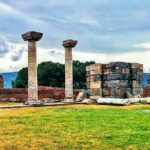
- Troy’s ancient city: walls, Athena’s temple, and the Odeon
- The reconstructed Trojan horse: why that stop works
- Behram and the Aristotle stop: a philosophical detour with a purpose
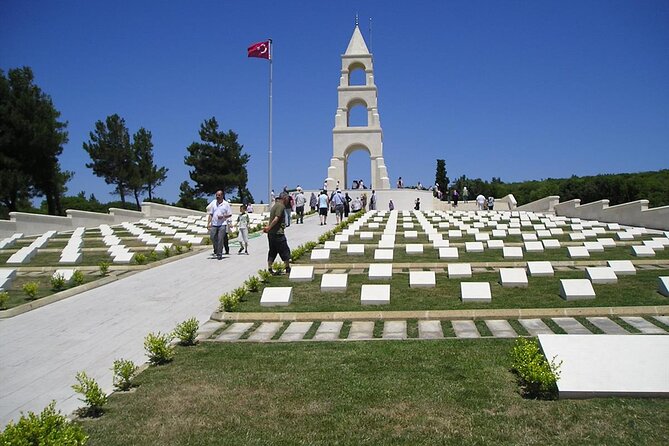
- Gallipoli’s WWI sites: Ottoman vs ANZAC, plus the cemeteries
- Anzac Cove beach time: a landing you can picture
- Small-group, private vehicle pace: what the 12 hours feels like
- Price and value: what $541.85 per person buys (and what it doesn’t)
- What to pack and how to time yourself
- Who this tour is best for
- Should you book this Troy & Gallipoli day tour?
- FAQ
- How long is the Troy and Gallipoli private day tour?
- What time does the tour start?
- Is hotel pickup and drop-off included?
- Are museum and archaeological site entrance fees included?
- Is this a private tour?
- What language is the tour guide?
- What do I need to show when I meet the guide?
Key highlights that make this day tour worth it
- Hotel pickup and drop-off so you spend less time hunting transport and more time on-site
- Small-group feel with a private-vehicle setup for a smoother schedule than you’d get on a bus tour
- Ferry crossing over the Dardanelles, which helps you understand the geography that shaped both legends and WWI
- Troy time with a guide focused on key structures like Athena’s temple and the preserved Odeon theater
- Gallipoli storytelling that includes perspectives from both sides, plus respectful cemetery visits
- Early start that helps you move through sites before the day crowds fully build
Two great causes of pain, one efficient day
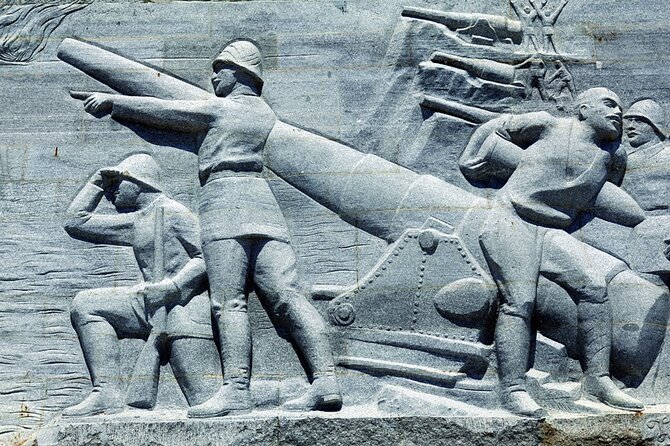
This is the kind of trip that works best if you like “big connections.” In one day, you go from Bronze Age legend to twentieth-century slaughter—all tied to the same tight geography along the Dardanelles. That stretch of water mattered for control, supply routes, and invasion plans. The result is that the day feels less like two random excursions and more like a single long story with time jumps.
You also get a practical advantage: the tour is built as a full day from Istanbul with pickup. That matters, because Troy and Gallipoli are far enough from the city that you don’t want to spend your limited time juggling buses, ferries, and transfers on your own.
The time on the ground is still not “slow travel.” It’s structured and active, with stops that are meant to give you big landmarks plus enough guided explanation to make them click.
You can also read our reviews of more tours and experiences in Istanbul.

From Istanbul to the Dardanelles: morning views and the ferry feel
The day begins early—around 6:30 am—with pickup from your hotel or port. You’ll get a confirmation message with your exact pickup time, and it’s smart to be waiting in the lobby about 15 minutes early. If you book close to departure, you’ll want to contact the operator right away to confirm your pickup.
The ride takes you along the European shore of the Marmara Sea. You’ll pass the kind of elegant summer villas you associate with a coastal lifestyle, and you’ll also get your first real glimpse of the Gallipoli region in the distance. It’s a nice way to build orientation before you hit historical sites.
Then comes one of the best “map-to-reality” moments: the ferry crossing of the Dardanelles to reach Troy. Even if you’ve read about the strait before, the crossing helps you understand why armies fought for access. This is also where the day’s rhythm becomes clear: you move early, cover distance efficiently, and then slow down once you’re on each side of the water.
Practical tip: the day starts early, so plan for breakfast near pickup time. Since meals and drinks aren’t included, you’ll want to have a plan for staying fueled until your lunch break or stop.
Troy’s ancient city: walls, Athena’s temple, and the Odeon
Once you’re at the Troy archaeological area, your guide brings the place into focus. Troy here isn’t treated like a quick photo stop. You move through the site with attention to major remains and the story logic behind them.
You can expect highlights like:
- City walls and key ruins that help you picture how the city controlled movement
- Athena’s temple area, built on a rocky outcrop, which matters because it gives you a command view over the surrounding region
- The Odeon, a preserved stone theater you can stand in and really imagine an audience
This is one of the reasons I like combining Troy with explanation. Even if you come with questions from Homer, the guide helps you connect the legend to what’s physically there.
Also, if the day is clear, you get a view from the Athena temple area that’s more than scenery. The information tied to the viewpoint includes a line of sight toward Lesbos, Pergamum, and Mount Ida, plus the Tuzla River nearby. Those names might be unfamiliar at first, but once you’re on the ground, they give you a geography lesson without turning into a lecture.
Reality check: Troy is an archaeological site, not a restored palace city. That’s not a flaw. It’s just a different expectation than you might have in the movies.
The reconstructed Trojan horse: why that stop works
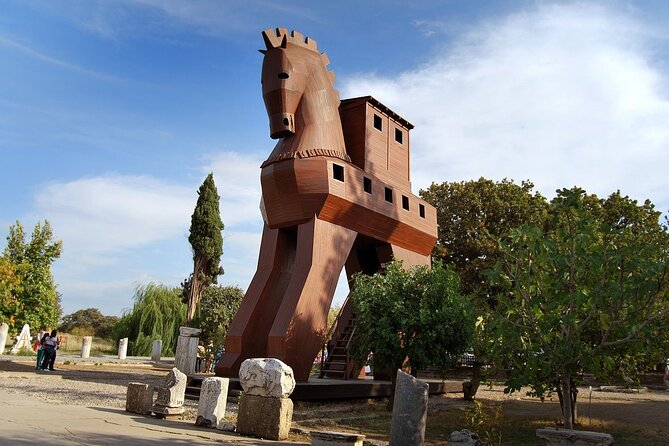
You’ll also get time with a reconstructed Trojan horse. This is the story everyone knows, but what makes the visit useful is how it’s used here: as a way to frame strategy and misdirection, not just a single famous image.
The horse story is a centerpiece of the Troy legend, tied to deception after a long siege. In practice on this tour, it helps you mentally switch gears from “ruins on a hill” to “a city under pressure, with consequences that ripple in the mind.”
Two practical notes:
- Expect this to be quick but memorable—more like a focal point than a long museum experience.
- If you’re interested in mythology, pair the horse with the guided context you hear around Troy’s major structures. The horse makes more sense when you’ve already gotten your bearings at the site.
Behram and the Aristotle stop: a philosophical detour with a purpose
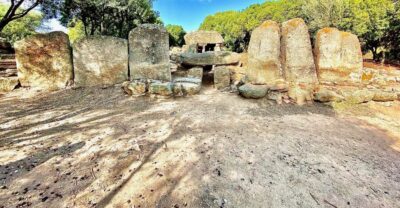
Between Troy and the Gallipoli portion, the tour includes an additional stop connected to the broader ancient-world story. The text here points to Assos and the philosopher Aristotle, including the idea that he opened an academy there with support from King Hermias, and that after events with the Persians and Hermias’s death, Aristotle fled and later tutored Philip II’s son.
You’ll also see a modern Aristotle statue at the town entrance. Even if that doesn’t replace what you’d find in a true museum, it gives you a visual bookmark for the shift from mythic Troy to the wider Greek intellectual world.
Is it essential? If your heart is fully set on Homer and WWI, it might feel like an extra chapter. If you like how the ancient Mediterranean connects—people, ideas, and politics moving across regions—this stop can add a nice texture to the day.


Gallipoli’s WWI sites: Ottoman vs ANZAC, plus the cemeteries
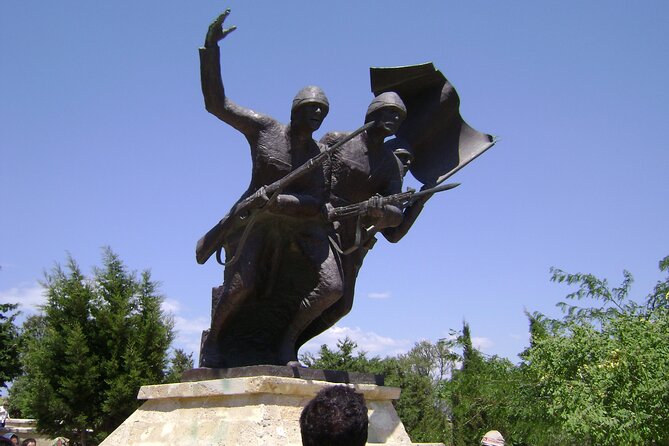
After you return to the European side, the tour turns sharply from legend to modern history. This is the part that many people remember longest, because the Gallipoli campaign wasn’t abstract. It was amphibious landings, brutal advances, and huge losses.
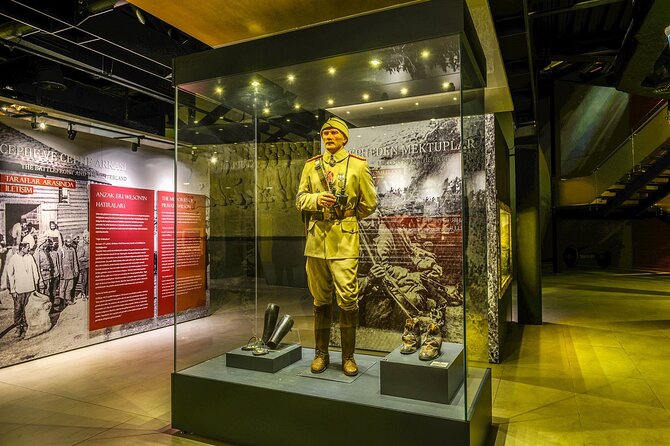
You’ll spend time at Gallipoli Battlefield areas tied to the larger Dardanelles campaign. The guidance centers on why the strait mattered and how fighting unfolded between Ottoman forces and the ANZAC troops (British Empire forces including Australian and New Zealand Army Corps units).
The emotional center of the Gallipoli half is the battlefield and cemetery visits. The tour doesn’t rush past them. It frames the fighting as something experienced by real people on both sides, and you’ll hear why some called the conflict a Gentleman’s War—a detail that helps you understand how observers tried to label the violence when they couldn’t neatly explain it.
One of the strongest pieces of feedback from past guests is how the guide’s war knowledge can make the day feel coherent. Names mentioned in guide reviews include Ali, Cenk, and Sevinc Kalik—each praised for different strengths, but all tied to clear explanations and respectful pacing.
Anzac Cove beach time: a landing you can picture
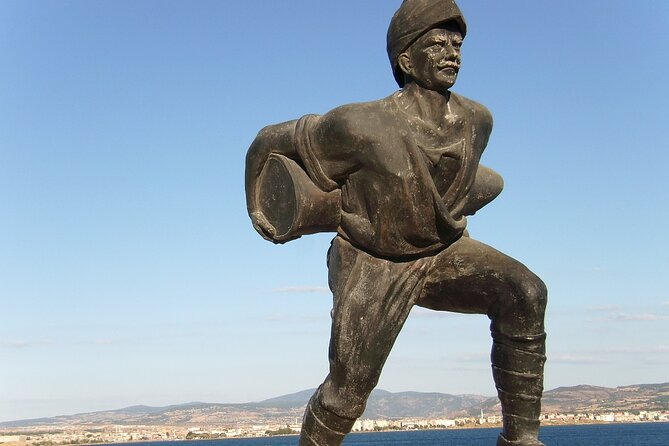
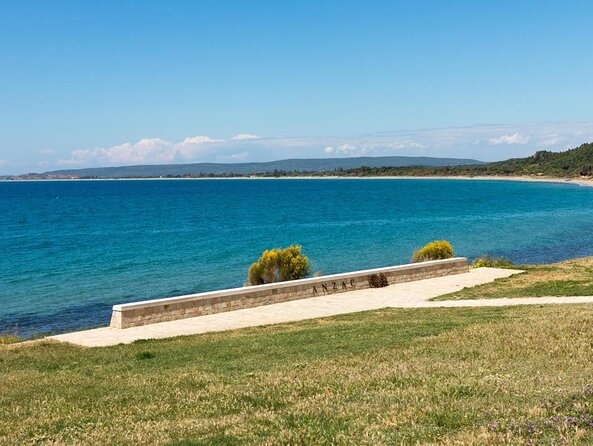
Next you’ll reach Anzak Bay Beach (often linked in English with Anzac Cove). This stop is tied to the landing on Sunday, 25 April 1915, also known as the landing at Gaba Tepe, and referred to by Turks as the Arıburnu Battle.
The key point you’ll hear is that the assault troops landed at night, mostly from ANZAC units, and the landings weren’t exactly where they planned to be. The confusion, the shifting objectives, and the resistance from Ottoman defenders all shaped what happened next.
This is a good stop if you like understanding battles in terms of terrain. Even without heavy narration, the beach and surrounding ground give you a physical sense of the invasion problem: moving from ship to shore under darkness, then trying to find direction once fighting begins.
If you’re the type who reads history books quickly and forgets details, the guide’s job here is to help you “attach” the facts to the geography. That’s where this kind of day tour can beat a document anytime.
Small-group, private vehicle pace: what the 12 hours feels like
This tour is described as private, so you’re not being folded into a large bus crowd. In practice, that usually means fewer delays and more flexibility when your guide decides what needs extra explanation.
Still, it’s a full-day schedule, running about 12 hours. One past guest noted a return time around 8 pm, which matches the idea that you’re covering both sides of the Dardanelles plus multiple key stops. Plan for a long day on your feet and in and out of vehicles.
The tour notes you should have moderate physical fitness. That doesn’t mean you need hiking legs, but it does mean you’ll benefit from comfortable walking shoes and a calm attitude about distances and time.
Price and value: what $541.85 per person buys (and what it doesn’t)
At $541.85 per person, this isn’t a budget outing. The value is mostly in the logistics and the guided focus:
- Transportation from and back to your base in Istanbul
- Pickup and drop-off included
- Professional guide and skip-the-line access with your guide
- A private format with your group
What’s not included is also important. Museum entrance fees and meals and drinks are listed as not included. That means your final trip cost will be higher if you plan to pay admission on your own during the day. It’s usually still reasonable, but you should treat it as an add-on line item, not a surprise.
Also, since it’s a private day with driver + guide support, I recommend carrying some cash for tipping. One review explicitly suggested bringing tip money for both the driver and the guide.
If you’re traveling as a pair, the price can feel more digestible. If you’re solo, it’s more like paying for access and time.
What to pack and how to time yourself
This is one of those days where being prepared makes the day nicer, not just easier. I’d plan for:
- Comfortable walking shoes for ancient stone and uneven ground
- Sun protection, since Troy and Gallipoli time outdoors can be exposed
- Water and a small snack for the early start, since meals aren’t included
- Photo ID and a printed voucher when you meet the guide
A small but practical mindset: treat each stop as a “chapter,” not as a separate outing. The guide’s job is to connect them, and you’ll get the most value if you stay curious and listen for the repeating themes: geography, strategy, and human decisions.
Who this tour is best for
This tour is ideal if you fit one of these profiles:
- You’re a myth and history person and want Troy explained with actual structure on the ground
- You want WWI battle context tied to the terrain, not just dates and names
- You like private guiding and a calmer pace than mass tours
- You’re short on time in Istanbul and want two major destinations handled in one day
It may feel less satisfying if you want lots of free time to wander without a guide’s direction, since the day is paced and structured.
Should you book this Troy & Gallipoli day tour?
I’d book it if you want one long, focused day that connects Troy’s ancient story with Gallipoli’s WWI reality—with pickup, a private-vehicle feel, and guided interpretation that helps you understand what you’re seeing.
Skip it only if you know you want more leisurely pacing, or if you’d rather pay less and handle logistics on your own. Also, if you hate early mornings, be honest with yourself: this starts around 6:30 am, and you’ll be back around 8 pm.
One more reason to lean yes: the guide quality can make a big difference on this kind of history-heavy day. Recent trips specifically praised guides like Ali, Cenk, and Sevinc Kalik for strong explanations. And if something doesn’t line up for you, the operator lists free cancellation up to 24 hours in advance, which gives you room to adjust.
FAQ
How long is the Troy and Gallipoli private day tour?
It’s about 12 hours.
What time does the tour start?
Pickup and the day’s start begin around 6:30 am.
Is hotel pickup and drop-off included?
Yes. Transportation from/to your base location in Istanbul is included, and you’ll be picked up from your hotel or port.
Are museum and archaeological site entrance fees included?
No. Museum entrance ticket fees are not included.
Is this a private tour?
Yes. It’s listed as a private tour/activity, with only your group participating.
What language is the tour guide?
The tour is offered in English.
What do I need to show when I meet the guide?
You’ll be asked to present your printed voucher and photo ID when you meet with the guide.