REVIEW · DUBLIN
Private Dublin Historical and Heritage Tour by Bike
Book on Viator →Operated by MYBIKEORHIKE · Bookable on Viator
Dublin has a way of feeling bigger on a bike. This private heritage ride strings together famous sights and quieter stories, with plenty of stops for photos and context as you pedal. Two things I like a lot: you get local-style guidance and recommendations that help you plan the rest of your day, and you come away with a souvenir video later that includes captioned photos from your route. One thing to consider is the tour is weather-dependent, so if it turns nasty you may need to switch dates.
You’ll start near Capel Street with a bike provided, then glide through central Dublin and beyond using traffic-smart routes and traffic-free stretches. The itinerary is built around short, satisfying stops—bridge history, cathedral views, working-district stops—without turning your day into a slog. If you’re hoping for a sit-down museum day, this isn’t that; it’s more about moving through the city and letting the streets teach you.
In This Review
- Key things that make this bike tour worth your time
- Why cycling connects Dublin’s “big moments” to real streets
- Getting rolling: meeting point, pickup, and what the start feels like
- Grattan Bridge and Dublin Castle: seeing centuries in the same view
- Dubh Linn Gardens and The 40 Steps: small stops, big stories
- Saint Patrick’s Cathedral, Teeling Whiskey, and the working districts of the Liberties
- Kilmainham: modern art, old gardens, cemetery time, and Kilmainham Gaol outside
- River Liffey cycleway, War Memorial Gardens, and the big urban park stretch
- Croppies Acre Memorial Park and the view toward Guinness
- Price and value: what you really get for about $120
- Photos, guide style, and why this tour feels personal
- When to book and how to plan your day around it
- Should you book this Dublin historical and heritage bike tour?
- FAQ
- How long is the private Dublin historical and heritage bike tour?
- What does the tour cost?
- Is the tour private?
- Does the tour include a bicycle?
- Is there pickup available?
- Where does the tour start and end?
- Is this tour offered in English?
- What kind of fitness level do I need?
- Are snacks or drinks included?
- What happens if the weather is bad?
Key things that make this bike tour worth your time
- Private guide time: Only your group rides together, with photo help along the way.
- Souvenir video after the tour: Captioned photos come later, not just instant snapshots.
- Short stop format: Most stops are brief, so you cover more ground in 2.5–3.5 hours.
- Local food and fun tips: Your guide shares where to go next for meals and sights.
- Scenery + safe riding mix: Traffic-free pathways along the river, plus calmer park routes.
- Free admission stops on the route: Several major stops are listed with free entry for this experience.
Why cycling connects Dublin’s “big moments” to real streets
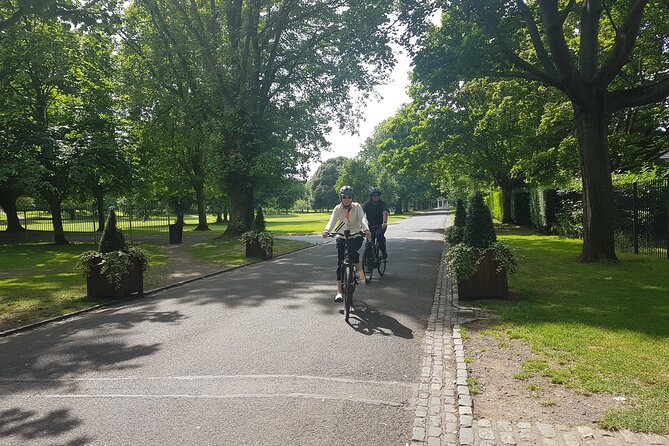
Dublin can be intense if you try to see it all on foot. On a bike, the city’s distances shrink, and you can actually follow the geographic logic of the stories—rivers, bridges, old walls, and neighborhoods that still feel like themselves.
I also like that this tour is built for context. It’s not just naming landmarks; you’ll get the why behind them. For example, Grattan Bridge is treated as a living timeline, rebuilt in 1875 on foundations from an earlier bridge, with the Custom House and river meeting points tied into how Dublin takes shape.
The second reason I think it’s a strong value: it’s private, which usually means more flexibility and more attention. Your guide can help with photos as you go, and that matters when you’re riding past places you want proof you were there.
You can also read our reviews of more tours and experiences in Dublin.

Getting rolling: meeting point, pickup, and what the start feels like
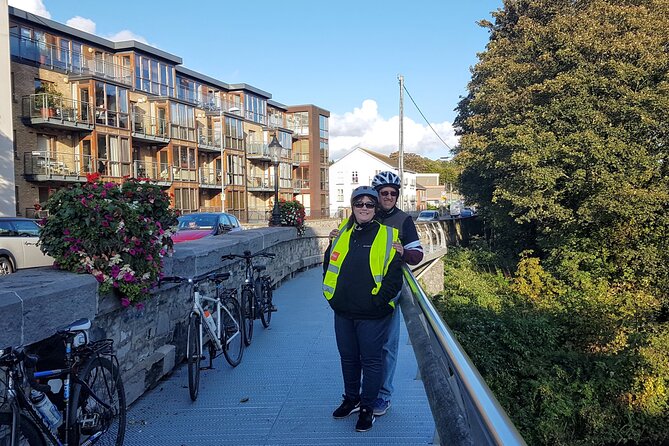
You’ll meet at Bike Stop Dublin, on Capel St (North City), with the tour ending back at the same spot. If you’re staying within 1 kilometer of the meet location, you can be met there—otherwise you’ll walk to the start point.
That little detail matters. Central Dublin has a lot of streets that can be confusing when you’re arriving for the first time. Starting at a dedicated bike shop reduces the stress and helps the tour actually start on time.
Practical note: you only need a moderate fitness level. It’s still a bike tour, so plan for steady riding and short stops rather than frequent long breaks.
Grattan Bridge and Dublin Castle: seeing centuries in the same view
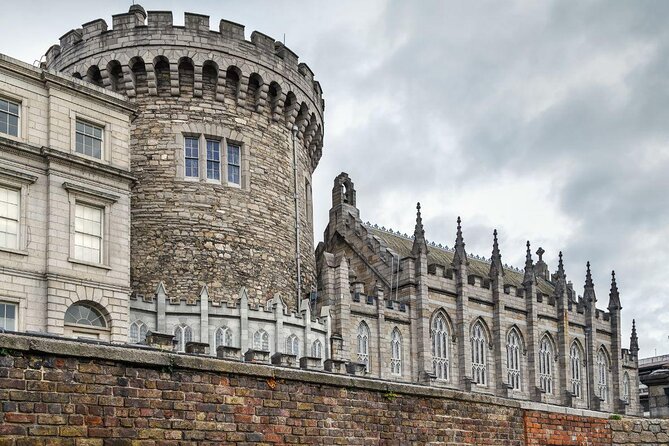
The tour kicks off at Grattan Bridge, in central Dublin. This stop is a great opener because it’s compact but layered: the bridge you stand on was rebuilt in 1875 over earlier foundations from 1755. Your guide ties in several stories around the bridge area, including the original Custom House and a hotel connection tied to a famous rock band.
If you want a “feel it in your body” geography moment, this is it. The bridge connects you to the river story of the city, and it gives you a clear mental map before you move deeper into the center.
Then you pass through Dublin Castle, where you’ll see the courtyard used as part of Ireland’s British-era administration. What I like about this stop is the contrast: you get architecture from different periods standing side by side, with remnants of early Norman rule mentioned at the confluence of centuries of Irish history.
A small consideration: the ride stays efficient, so you’re mostly viewing from key vantage points and moving along quickly. If you want extended time inside Dublin Castle buildings, you’d likely pair this with another visit later.
Dubh Linn Gardens and The 40 Steps: small stops, big stories
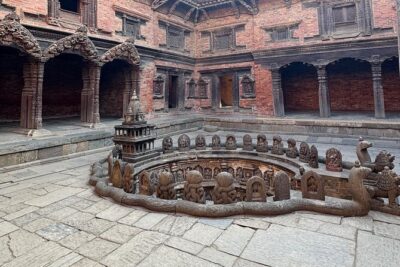
Right near Dublin Castle, the tour heads to Dubh Linn Gardens, described as a city-center oasis with “breath-away” heritage. This stop centers on the circular garden connected with the dark pool that contributes to Dublin’s name, plus nearby memorials and tributes (including the Garda Memorial and the David & Goliath Statue). You’ll also hear about the Chester Beatty Museum and Library as part of the surrounding story.
Even if you only spend about ten minutes here, it works as a reset. You go from major political power and architecture to a calmer garden space, so your brain has room to process what you just heard.
Next is The 40 Steps, another short stop with a lot of history packed in. You’ll stand at a corner meant to evoke medieval city walls (using metal plates in the streets) and learn about the birthplace of Jonathan Swift. There’s also a story about a mis-translated street and the suffragettes, including how they were arrested for throwing stones at windows.
This is one of those Dublin moments where you realize the city’s odd details are often the most memorable. It’s also a good place to practice your photo timing, because the tour pauses long enough to get something better than a blurry ride-by.
Saint Patrick’s Cathedral, Teeling Whiskey, and the working districts of the Liberties
From Saint Patrick’s Cathedral, you’ll get a view-focused stop, plus garden scenery. It’s framed as a rival to Christchurch Cathedral, and you’ll also pass the birthplace of Jonathan Swift and Norman walls that remain intact nearby.
Then the tour shifts into something more modern-and-personal: a stop at the Teeling Whiskey Distillery. The setting is described as the working-class Dublin district called the Liberties, and the distillery stop highlights a dramatic story from the 19th century—Dublin’s great whiskey fire.
This is a clever break in the itinerary. After cathedrals and medieval corners, you get a craft-and-industry story that feels connected to real daily life. Even if you don’t plan to tour a distillery inside, hearing the local event history can make the area feel more human.
Finally, you bike through the Liberties, described as one of Dublin’s oldest residential districts and the working-class heart and soul of the city. You’ll learn how it got its name and see architecture from the 19th and 20th centuries. The guide also connects the district to the Guinness business.
If you love places where commerce shaped communities, this part is a strong reason to book this exact tour rather than only doing cathedral-hopping.


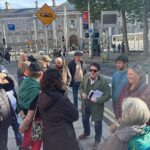
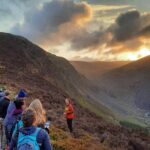
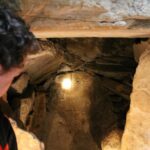
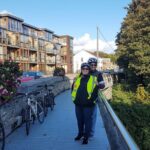
Kilmainham: modern art, old gardens, cemetery time, and Kilmainham Gaol outside
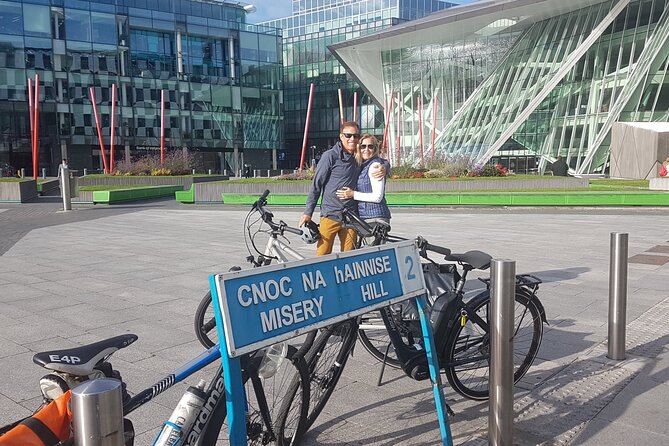
When the tour reaches Royal Hospital Kilmainham, it becomes a story about change over time. The site began as the Royal Kilmainham Hospital in the 17th century and today it’s home to the Irish Museum of Modern Art (as noted for this tour stop). You’ll also pause by the beautiful gardens overlooking Dublin.
After that, you continue along traffic-free paths and stop at Dublin’s oldest cemetery. It’s not the kind of stop where you need to read every gravestone to get meaning. The value is in the pause itself and the shift in tone.
Then you reach Kilmainham Gaol. You’ll park and gardens near it, with an outside pause by the entrance—once the site of public executions. You’ll hear stories tied to the troubling past of what’s now a famous museum.
A quick caution: this part can be emotionally heavy. Plan your day so you’re not rushing off immediately afterward. If you like quiet recovery time, slot in a relaxed meal or a slow wander afterward.
River Liffey cycleway, War Memorial Gardens, and the big urban park stretch
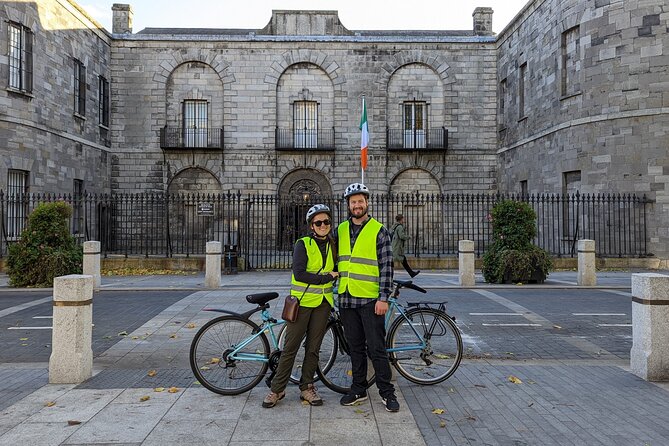
After Kilmainham, the tour moves toward War Memorial Gardens, built in remembrance of those who died in the First World War. The pace stays easy enough to absorb what you’re seeing, especially because you’re on peaceful, traffic-free pathways.
Then you continue along the safe and picturesque purpose-built cycle way along the River Liffey, continuing toward the historic village of Chapelizod. This is one of those riding segments that feels like a reward: you’re not constantly stopping to read, you’re just moving through Dublin’s calmer edges.
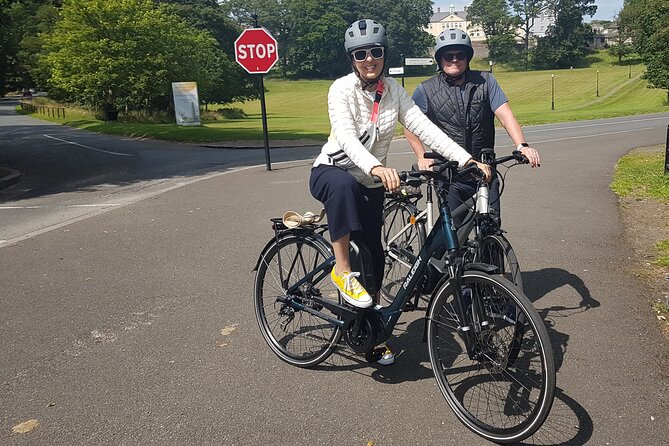
Leaving Chapelizod, you enter one of Europe’s largest urban parks through a gate in its 17th-century walls. The tour notes dedicated cycle paths and says you might spot wild deer with a bit of luck. Even if you don’t see deer, you’ll likely notice the shift immediately—airier, more open, and less built-up.
If you’re the type who gets tired of constant urban stops, this park segment is exactly the kind of breathing space that keeps the whole tour from feeling like one long history lesson.
Croppies Acre Memorial Park and the view toward Guinness
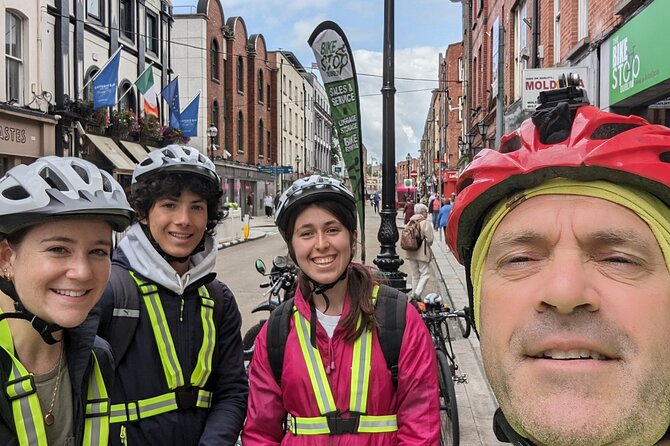
To close out the city-and-neighborhood stories, you’ll stop at Croppies Acre Memorial Park. The focus here is on folklore and rebellion memory—described as a mass burial grave for victims of the 1798 rebellion.
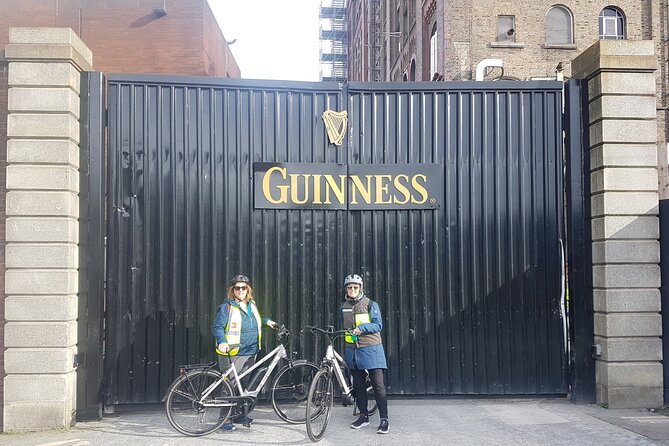
You’ll also learn about nearby Collins Barracks, the National Decorative arts and Military Museum, and you’ll view the Guinness Brewery across the River Liffey. That sight-line matters. It turns a name you already recognize into something you can place in the landscape and story of Dublin.
It’s also a good final cadence for a bike tour: you’re not just landing at one last landmark, you’re finishing with a place that ties neighborhoods, conflict, and industry together.
Price and value: what you really get for about $120
At about $120.14 per person for 2 hours 30 minutes to 3 hours 30 minutes, you’re paying for three things that matter in Dublin:
- Transportation without stress: Bike use is included, so you don’t have to hire a scooter, figure out rentals, or manage parking.
- A private guide: This is not a crowded group bus tour. Your guide can take time with your questions and help with photos.
- Extra deliverables: You get a souvenir video later with captioned photos from your route. That turns the experience into something you can share and remember beyond your phone’s camera roll.
Also worth noting: several stops list admission ticket as free during the tour. That doesn’t mean everything is free everywhere, but it does suggest the route is structured to minimize extra costs while still hitting major areas.
Snacks and drinks are not included, so bring a water plan. If you’re doing this as part of a packed travel day, a small snack you can eat later will help you avoid the mid-tour energy dip.
Photos, guide style, and why this tour feels personal
The experience isn’t just the route. It’s how you move through it.
The highlights mention that your private guide can help take photos of you throughout the tour. That’s a practical win because you’ll be on a bike and likely don’t want to constantly stop to set up a tripod. It also means you’ll get better angles than a hand-held camera at awkward seconds.
The reviews back up the guide factor. One five-star experience specifically praised Ben for being wonderful and sharing Dublin’s history in a way that clicked. When a guide can turn street corners into stories you remember, that’s where the best tour value shows up.
If you care about getting good photos and walking away with a stronger sense of where everything fits together, this setup is built for that.
When to book and how to plan your day around it
This tour runs in good weather and can be offered a different date or a full refund if weather forces a change. In practical terms, you’ll have the best experience if you schedule it after you confirm your Dublin weather outlook.
Because the tour is about 2.5 to 3.5 hours, you can comfortably pair it with:
- a lighter evening meal in the center afterward, or
- an indoor museum stop later (especially if you want to go deeper on something like Kilmainham or another site on the route).
Also, this is a private tour, only your group participates. That makes it a great fit if you’re traveling with friends or family who prefer their own pace and don’t want to wait on strangers.
Should you book this Dublin historical and heritage bike tour?
I’d book it if you want Dublin to make sense quickly. The stops are chosen to connect major landmarks with smaller corners where the city’s details show up—bridges, gardens, old walls, Swift-linked spots, and working districts like the Liberties. The bike format also makes the “more than central Dublin” parts feel doable in one morning or afternoon.
You might skip it if you’re looking for a purely museum-heavy day, or if you hate biking outdoors and prefer sitting still for long stretches. Also, since snacks aren’t included and the tour depends on good weather, plan for water and a backup day in your schedule if conditions are iffy.
If your priority is a high-quality private guide, good photo moments, and a route that mixes famous sights with quieter meaning, this is a strong choice.
FAQ
How long is the private Dublin historical and heritage bike tour?
It runs about 2 hours 30 minutes to 3 hours 30 minutes.
What does the tour cost?
The price is $120.14 per person.
Is the tour private?
Yes. It’s a private tour/activity, and only your group participates.
Does the tour include a bicycle?
Yes. Bicycle use is included.
Is there pickup available?
Pickup is offered if you’re staying within 1 km of the meet location. Otherwise, you’ll walk to the start point.
Where does the tour start and end?
It starts at Bike Stop Dublin at 37 Capel St, North City, Dublin, and ends back at the same meeting point.
Is this tour offered in English?
Yes, it’s offered in English.
What kind of fitness level do I need?
A moderate physical fitness level is recommended.
Are snacks or drinks included?
No. Snacks, refreshments, and drinks are not included.
What happens if the weather is bad?
The experience requires good weather. If it’s canceled due to poor weather, you’ll be offered a different date or a full refund.