REVIEW · LISBON
Private Full-Day Historical Tour of Medieval Évora
Book on Viator →Operated by Outing Portugal · Bookable on Viator
Medieval Évora feels like a time machine in motion, and this private full-day trip mixes top sights with an easy, well-timed route for first-timers. I love how the guide connects the Roman-era layers to medieval power and everyday life, and I love the conversation—great for history buffs who like to ask follow-up questions. One consideration: Cathedral of Évora and the Chapel of Bones have separate entry fees, so your final per-person total will be a bit higher.
You start with pickup from your accommodation and ride out in an air-conditioned vehicle for about 8 hours, with stops paced so you can actually enjoy them. It’s private (only your group), in English, and the guide style tends to be chatty and responsive—think Diogo-level enthusiasm from past outings—so it works well if you want a day that feels tailored even while sticking to a solid plan.
In This Review
- Key highlights you’ll feel from the first stop
- Why Évora is worth that long ride from Lisbon
- Getting there smoothly: pickup, WiFi, and pacing
- Entering Évora’s UNESCO historic center like a local
- Cathedral of Évora: granite, timing, and a building that took its time
- Capela dos Ossos: quick visit, heavy atmosphere
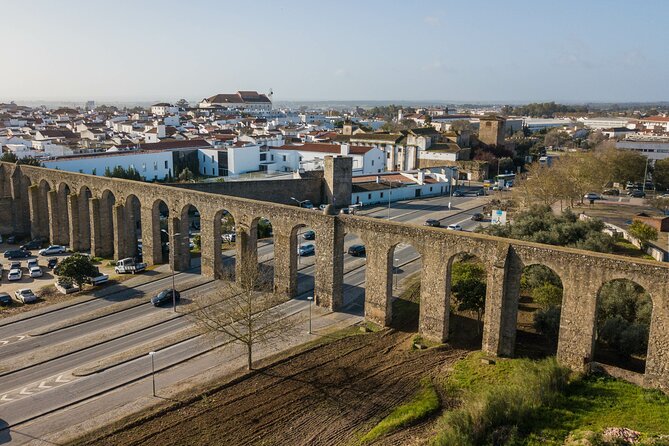
- The Áqua de Prata Aqueduct: water power from the 1500s
- Praça do Giraldo: a main square that keeps the day human
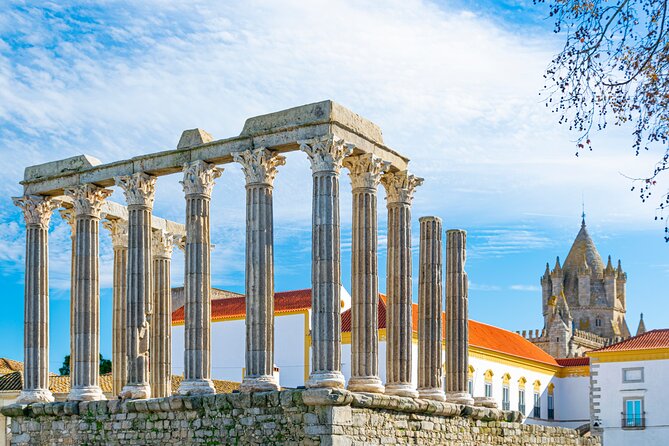
- Templo Romano de Évora (Templo de Diana): the Roman layer you can still recognize
- Palácio de Dom Manuel: short stop, sharp dynastic context
- Price and value: what $187.84 buys you in real terms
- Who this tour fits best (and who might want another option)
- Practical tips so you enjoy it more
- Should you book this private Évora medieval day trip?
- FAQ
- How long is the Private Full-Day Historical Tour of Medieval Évora?
- Is pickup included?
- Is the tour private?
- Are admission tickets included for all stops?
- What additional costs should I expect?
- Is the tour offered in English?
- Does this tour require good weather?
Key highlights you’ll feel from the first stop
- UNESCO historic center in a walkable “city-museum” setting so you don’t waste time hunting for landmarks
- A guide who answers questions on the spot and explains the political shifts behind the buildings
- Free-entry major sights sprinkled through the day, with only two paid monuments
- Cathedral built over centuries (started in 1186, consecrated in 1204, finished later)
- Capela dos Ossos—brief, unforgettable, and deeply tied to the local convent complex
- Prata Aqueduct views plus a quick stop at Praça do Giraldo to reset your eyes and feet
Why Évora is worth that long ride from Lisbon
Évora is one of those places where you can feel different eras stacked on top of each other. You’ll move from Roman-era traces to medieval church power, then end up seeing how later rulers kept building on the same ground.
What I like most is that the city doesn’t ask you to be an expert. Even if you only know the basics, the guide gives you the “why” behind what you’re seeing—who held power, why certain buildings were made, and how the city stayed important over time.
And yes, it’s a long day. But the route is efficient enough that you’re not spending hours in transit without payoff.
You can also read our reviews of more tours and experiences in Lisbon.

Getting there smoothly: pickup, WiFi, and pacing
This is set up as private transportation, with pickup based on your accommodation location. You also get an air-conditioned vehicle (useful if you hit Évora on a hot day), plus WiFi onboard to keep everything easy while you’re headed out of Lisbon.
The day runs about 8 hours, and the stops are short enough to keep energy up. You’re not stuck in a single museum for half a day; instead, you’ll get a sequence of sites that each tell a piece of the bigger story.
One practical tip: since this includes a mix of church interiors and outdoor squares, wear shoes you can trust. Évora looks compact on the map, but old streets can be a little uneven.
Entering Évora’s UNESCO historic center like a local
Your first big moment is the well-preserved historic core, known as one of Portugal’s monument-rich city centers—and recognized as a UNESCO World Heritage Site. Expect a “city-museum” vibe: streets and corners that feel curated by centuries of rebuilding, reuse, and respect for older foundations.
This portion matters because it gives you context before you step into specific monuments. Once your bearings are set, the later stops—cathedral, bones chapel, Roman temple—start making more sense. It’s like learning the theme before the individual verses.
If you like history explained in plain language (not a lecture), this opening tends to be a good start. You’ll get orientation fast and then build on it.
Cathedral of Évora: granite, timing, and a building that took its time
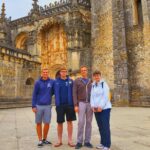
The Se Catedral de Évora (Cathedral of Évora) is classified as a National Monument, and it’s the kind of place where dates matter. Work began in 1186, it was consecrated in 1204, and it wasn’t completed until 1250—so you’re looking at a structure that grew up over generations.
The cathedral is also granite, which gives it a solid, grounded feel compared with lighter stone churches. You’ll spend about an hour here, with enough time to see the main features without rushing through the details that make it special.
Two things to plan for:
- Entry to the cathedral is not included, so budget the extra cost (listed as €4.00 per person).
- Church interiors can be cooler and darker than you expect, so if you care about photos, bring a phone/camera that handles low light well.
Capela dos Ossos: quick visit, heavy atmosphere
Next up is the Chapel of Bones, Capela dos Ossos, integrated into the Convent and Church of São Francisco in Évora. This is one of the best-known monuments in the city, and it’s famous for making a point—quietly, and in a very direct way.
You’ll have about an hour here. That’s usually enough time to process what you’re seeing, read the context if it’s available inside, and step back when it starts to feel intense.
Entry is also not included (listed as €6.00 per person). If you’re traveling with kids, or if the subject matter is likely to bother someone in your group, this is the part where you’ll want to talk it through before you arrive.



The Áqua de Prata Aqueduct: water power from the 1500s
After the cathedral and chapel, you get a change of pace with the Aqueduto da Agua de Prata, inaugurated on March 28, 1537. This aqueduct was built in the first half of the 16th century and reportedly took about six years to complete.
It’s not just an engineering trivia stop, either. The aqueduct shows how a city planned for growth—bringing water from around 18 km away toward Herdade do Divor.
You’ll spend around 30 minutes here, and it’s a good breather in the middle of the day. If your walking stamina is limited, this segment is a relief because it’s shorter and more outdoors-view focused.
Praça do Giraldo: a main square that keeps the day human
Praça do Giraldo is the main square in Évora’s historic center. It’s an important stop because it’s where you slow down and see the city as a living place, not just a lineup of monuments.
This part is only about 30 minutes, but it works like a reset button. You’ll get a moment to stand back, watch how the space functions, and refill water if you need it.
Also, squares like this are where the guide can tie the stories together—how religious power, commerce, and royal influence all shaped the way people moved through the city.
Templo Romano de Évora (Templo de Diana): the Roman layer you can still recognize
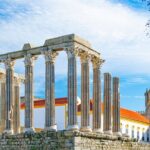
The Templo Romano de Evora—often called the Temple of Diana—is one of those sites where the structure lets you picture what the city meant during the empire period. Liberalitas Julia is tied to the idea that Évora became an important commercial hub in the time of Julio Caesar.
You’ll spend about two hours here, which is a lot more time than many Roman-temple stops. That extra time is useful because Roman architecture can feel “obvious” at first glance, and then suddenly meaningful once you understand what it signaled in its original setting—public life, status, and civic identity.
Entry is listed as free, which makes this a strong value stop. Take advantage of it by asking the guide how the Roman presence connected to what came later.
Palácio de Dom Manuel: short stop, sharp dynastic context
You’ll finish with a visit to the palace associated with King Dom Manuel I. Even in a brief time window (about 30 minutes), this stop helps you understand the monarchy line running through Portuguese history.
This isn’t a slow, linger-and-stare type of visit. It’s more like a focused historical punctuation mark—tying together the earlier religious power with the later royal imprint.
And since entry is free for this segment, you get a lot of context without adding cost.
Price and value: what $187.84 buys you in real terms
At $187.84 per person, you’re paying for a private full-day experience with private transportation, parking fees included, an air-conditioned vehicle, and WiFi onboard. On top of that, you get mobile ticketing and the flexibility of a private group setup.
The value equation is strongest if you:
- prefer not to coordinate with a larger group bus schedule,
- want a guide who can steer conversation based on your questions,
- like having comfortable transport between scattered-but-related stops.
The two costs to watch are straightforward:
- Cathedral of Évora: €4.00 per person
- Chapel of Bones: €6.00 per person
So you can expect about €10 per person in additional site entry fees.
To me, that’s a reasonable trade if you’d be paying for guided context anyway. If you’re traveling as a small group, private pricing can also feel more fair than it first looks—your money buys time and comfort, not just access.
Who this tour fits best (and who might want another option)
This tour fits best if you enjoy history explained in plain language and you like asking questions while you walk. The private format helps a lot here; you aren’t competing for attention, and the guide can keep the day moving at a pace that works for your group.
It also makes sense for couples and small families who want a full day without handling logistics, especially since pickup is included and the day is timed at roughly eight hours.
If your group is very heat-sensitive, or if your idea of a great day is long museum time rather than multiple site transitions, you might find the pacing a bit intense. The good news: the itinerary includes several shorter stops, so you’re not stuck in one place for too long.
Practical tips so you enjoy it more
- Bring a light layer. Church interiors can feel cooler than outside.
- Plan for extra entry fees for the cathedral and bones chapel.
- Use the break stops to reset your eyes after darker interiors.
- Ask your guide what to prioritize if your group is split between Roman vs medieval interests.
One more thing: since the experience depends on good weather, have a backup mindset. If conditions are poor, you may be offered another date or a refund.
Should you book this private Évora medieval day trip?
Book it if you want a high-hit day in Évora with a guide who turns buildings into stories. The combination of UNESCO streets, the granite cathedral timeframe, the Capela dos Ossos moment, and Roman-to-medieval connections makes the day feel coherent, not random.
Skip or compare if you’re on a strict budget where any add-on fees will stress you out, or if you prefer slower, deeper stays in fewer places. Also consider your tolerance for the bones chapel’s subject matter—this is the one stop with real emotional weight.
If you’re the kind of traveler who likes asking why something was built and what changed over centuries, this is an easy yes.
FAQ
How long is the Private Full-Day Historical Tour of Medieval Évora?
It lasts about 8 hours.
Is pickup included?
Yes. Pickup is offered, and the pickup details are based on your accommodation location.
Is the tour private?
Yes. It’s a private tour/activity, and only your group participates.
Are admission tickets included for all stops?
No. Admission is not included for the Cathedral of Évora and the Chapel of Bones. Other stops listed in the plan have admission ticket free.
What additional costs should I expect?
The Cathedral of Évora is €4.00 per person and the Chapel of Bones is €6.00 per person.
Is the tour offered in English?
Yes, the tour is offered in English.
Does this tour require good weather?
Yes. The experience requires good weather. If it’s canceled due to poor weather, you’ll be offered a different date or a full refund.