REVIEW · ROME
Ancient Rome Tour in a Golf Cart
Book on Viator →Operated by Luxurbe · Bookable on Viator
Golf carts cut Rome’s walking load fast. This Ancient Rome tour strings together the big names—Colosseum area, Roman Forum zone, and Circus Maximus—with a comfortable ride that keeps you moving without feeling rushed. I like the way the route mixes famous photo points (Via dei Condotti, Piazza Venezia) with lesser-seen ruins you can actually wrap your head around.
Two things stand out for me: the driver-guided format (you’re not stuck with a narrator you can’t hear), and the on-board learning through interactive reading material and headsets when needed. One thing to think about: the streets can feel a bit shaky, and bottled water isn’t included, so plan to bring a bottle if you’ll want one.
In This Review
- Key highlights worth planning around
- Starting on Via dei Condotti: the easiest launch point
- The 3-hour golf cart format: built for getting bearings
- Via dei Condotti (10 minutes): luxury street, big “Rome” energy
- Largo di Torre Argentina (20 minutes): ruins plus the cat sanctuary
- Piazza Venezia (20 minutes): the monument and the crossroads view
- Theatre of Marcellus (20 minutes): where Roman spectacle got a blueprint
- Forum Piscarium (10 minutes): the old fish market pocket
- Temple of Venus and Rome (20 minutes): huge scale, Hadrian’s statement
- Domus Aurea (20 minutes): Nero’s palace world
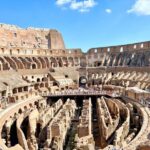
- Colosseum (20 minutes): the icon, handled in an overview-friendly way
- Imperial Forums (20 minutes): emperors left their paperwork in stone
- Circus Maximus (20 minutes): spectacle by the numbers
- Back to Via dei Condotti: turning ancient Rome into a plan
- Price and value: what you’re paying for at $84.46
- The guides: small-group energy and real communication
- When a golf cart tour is not perfect: the real considerations
- Who should book this tour
- Should you book this Ancient Rome golf cart tour?
- FAQ
- How long is the Ancient Rome golf cart tour?
- What sites will I see during the tour?
- Is pickup available?
- Is the tour conducted in English?
- Are headsets provided?
- Can I cancel and get a full refund?
Key highlights worth planning around

- Via dei Condotti fashion views early on: a 10-minute taste of Rome’s luxury street right by your meeting point
- Largo di Torre Argentina + cat sanctuary: ancient ruins and a real-world animal scene in about 20 minutes
- Long stops for photos: several sites get around 20 minutes so you’re not just passing by
- Outside viewing only: you’ll see monuments from the street and take pictures from there
- A fast way to hit the classics: golf cart gets you closer than most big tour vehicles can
- Small-group feel: up to 15 people, and the vibe can be very personal
Starting on Via dei Condotti: the easiest launch point
You start at Via dei Condotti 61, right in the heart of Rome’s luxury shopping strip (between Piazza di Spagna and Via del Corso). It’s a smart choice because you’re already in a tourist-friendly zone, and it’s easy to connect by foot or public transport.
For pickup, the guide/driver comes to you rather than you chasing a meeting point all over the block. Just wait in front of the entrance of the building at the address—no big branded sign is guaranteed—so keep your eyes open. And if traffic is heavy, arrival time can slide a little, which is normal in central Rome.
You can also read our reviews of more tours and experiences in Rome.
The 3-hour golf cart format: built for getting bearings
This tour is about 3 hours long, with the listed stop times doing most of the “real sightseeing” work. The rest of the time is travel between spots, which matters because Rome traffic and tight streets can slow a walking pace.
What you’ll love here is the balance: you’re not sitting through a lecture. You stop, you look, you get explanations, and you get time for photos at each stop. The guide also drives, so you’re dealing with one team rather than swapping between driver and storyteller.
A practical note: this is an outdoor circuit. You’ll see monuments from outside, and that can be a plus if you want a big overview without ticket lines or extra indoor time. The tradeoff is obvious—you won’t get inside access unless another separate tour does that for you.
Via dei Condotti (10 minutes): luxury street, big “Rome” energy
You’ll spend about 10 minutes along Via dei Condotti. Even if you’re not shopping, it’s a useful first stop because it immediately tells you where you are in Rome’s map: grand façades, elegant architecture, and a street that shows up in movies.
I like this kind of opener because it breaks the day into a simple rhythm. You get oriented fast, then the route starts leaning harder into the ancient core.
Largo di Torre Argentina (20 minutes): ruins plus the cat sanctuary
Largo di Torre Argentina is a historic square with Republican-era temple ruins and an important church-adjacent story: the Curia of Pompey. On this kind of stop, the key is learning what you’re looking at while you’re looking at it—so you don’t just see scattered stone and wonder what’s what.
The standout twist is the cat sanctuary. This is one of those real-life Rome details that makes the ruins feel more human and less like an empty museum set. You’ll get roughly 20 minutes here, which is enough time to take photos and still listen.
Piazza Venezia (20 minutes): the monument and the crossroads view
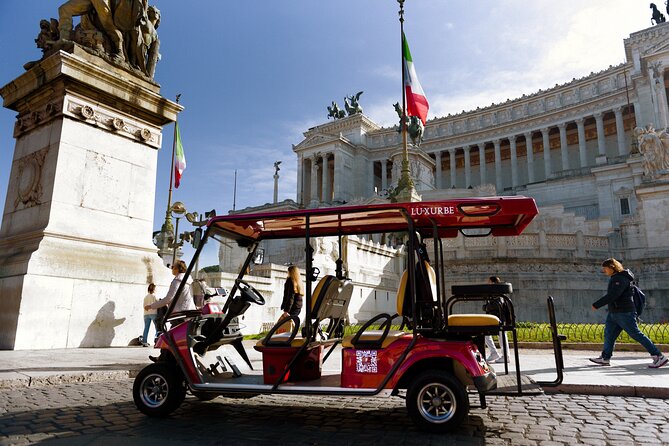
Next is Piazza Venezia, dominated by the Altare della Patria, the Victor Emmanuel II monument. You’re in a central hub of Rome, so the value isn’t only the monument—it’s the sense of how sites connect in your mind.
With about 20 minutes, you can stand where traffic funnels the city’s motion and get a clear “where should I go next?” feeling. It’s also a good place to understand sight lines toward major areas like the Forum region and Capitoline Hill.
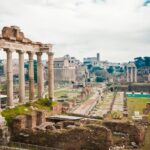

Theatre of Marcellus (20 minutes): where Roman spectacle got a blueprint
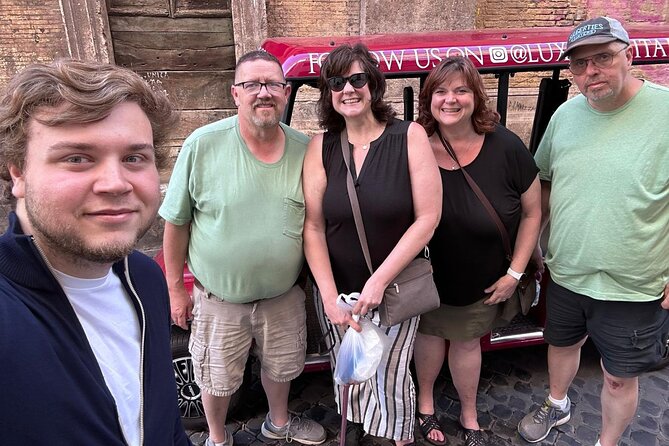
The Theatre of Marcellus is an open-air ancient theatre from the late 1st century BC. Julius Caesar commissioned it, and Augustus completed it, which gives the site a built-in lesson: Rome didn’t just build things—it refined and repurposed ideas over time.
It could hold around 20,000 spectators originally, and today you’re seeing remains that connect the dots to later Roman amphitheatres. The practical benefit of the stop length is you can step back and picture scale, rather than just snapping a quick shot and moving on.
If you’re the type who likes to understand what came before the Colosseum, this stop earns its time.
Forum Piscarium (10 minutes): the old fish market pocket
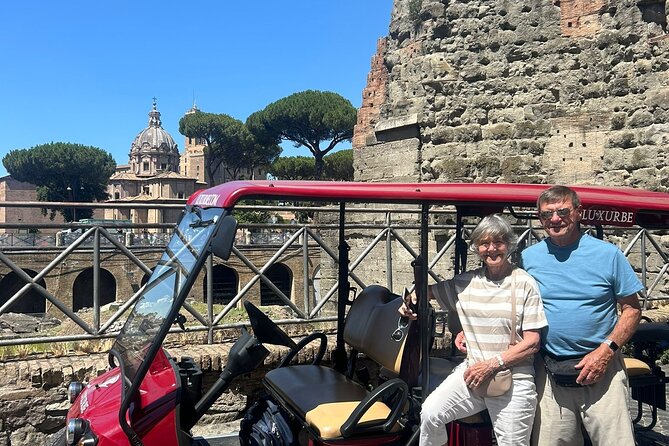
Forum Piscarium is a smaller stop (about 10 minutes), but it’s the kind of detail that makes a Rome overview feel real. This was the ancient fish market near the Roman Forum, used as a central marketplace for fish and seafood.
The ruins here aren’t about grand monuments you can’t miss. They’re about daily life—trade, food, and the rhythm of commerce. Even in a short window, having a guide explain what the space likely served helps it click.
Temple of Venus and Rome (20 minutes): huge scale, Hadrian’s statement
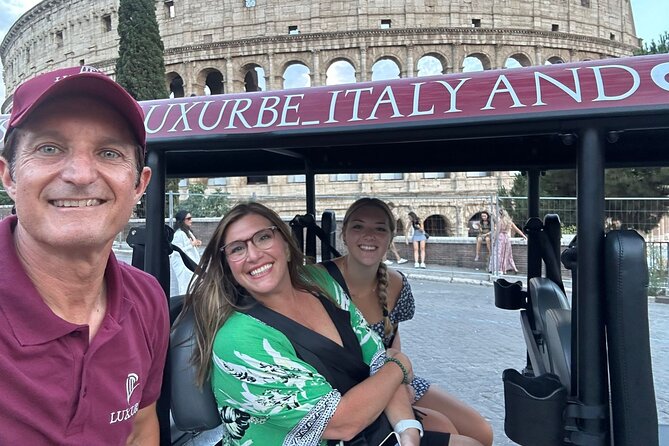
The Temple of Venus and Rome, designed by Emperor Hadrian and completed in 135 AD, is a major stop at about 20 minutes. It was dedicated to Venus Felix and Roma Aeterna and was once the largest temple in Ancient Rome.
What you’ll notice from outside is scale and design logic—why the ruins still feel “big” even without the full structure. This is also a nice contrast to the theatres and markets: it shifts the story from entertainment and trade to state-level religion and imperial messaging.
Domus Aurea (20 minutes): Nero’s palace world
Next comes the Domus Aurea, Nero’s extravagant palace complex built after the Great Fire of 64 AD. The story attached to it is all about ambition—lavish frescoes, gold-plated walls, and detailed mosaics, even if you won’t see the original rooms up close from the street.
You’re here for about 20 minutes, which is long enough to understand why this location mattered historically. The palace is hidden underground for centuries, so the stop is more about context: learning what you can’t immediately see, and why that changes how you interpret “ruins” in Rome.
Colosseum (20 minutes): the icon, handled in an overview-friendly way
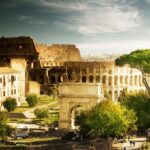
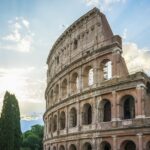
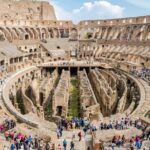
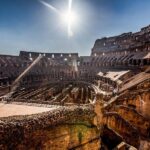
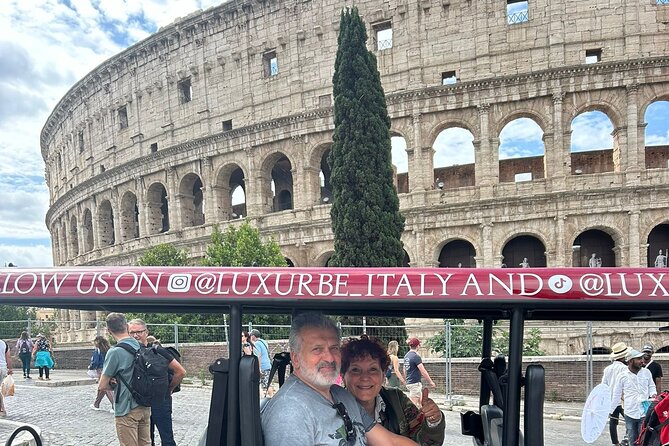
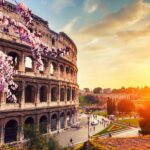
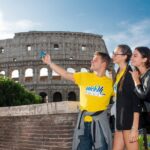
You’ll get about 20 minutes at the Colosseum. This is the obvious anchor stop, but the value isn’t only seeing the building—it’s the way the tour frames it as part of a larger system of Roman power and public life.
From what the experience emphasizes, you’ll get explanations plus time for photos, without turning the day into a stamina contest. If you’ve been walking all morning in Rome, this is a good way to see the Colosseum without arriving exhausted.
And because you’re in a golf cart loop, you also get a different angle of approach than you might on foot. It’s not the same as an in-depth museum-style visit, but for an introduction, it’s strong.
Imperial Forums (20 minutes): emperors left their paperwork in stone
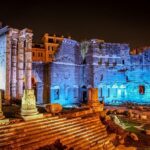
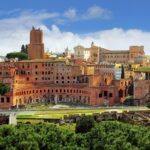
The Imperial Forums are a set of monumental public squares built across a long stretch of time, from 46 BC to 113 AD. Caesar and Trajan are among the emperors linked to these spaces, and the purpose is clear: politics, commerce, and religion all lived in the same grand zones.
You’re there for about 20 minutes, which helps because the area can feel confusing if you just wander. With the guide’s explanations, you can sort out what each forum aimed to do—how Rome organized public life at scale.
Circus Maximus (20 minutes): spectacle by the numbers
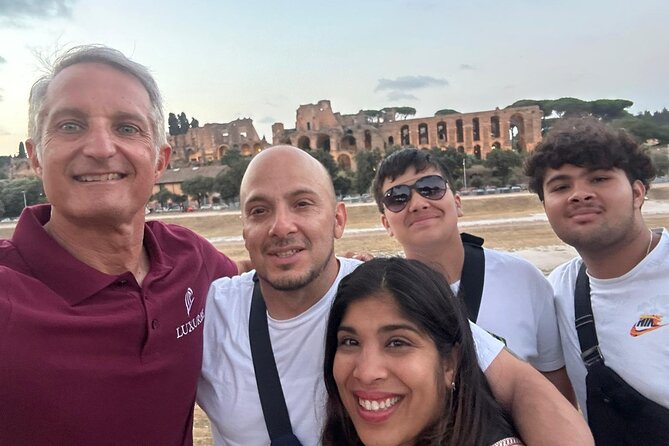
The Circus Maximus stop is about 20 minutes. This was the ancient chariot racing stadium and a huge entertainment venue, built in the 6th century BC, and it could hold over 150,000 spectators.
Today, what stays with you is the elongated shape and the idea of mass participation. It’s a different kind of Rome than temples or theatres—you’re seeing how the city functioned as an audience machine. The time allocation is good here; it takes a minute for your brain to catch up to the scale.
Back to Via dei Condotti: turning ancient Rome into a plan
The tour ends back at the meeting point near Via dei Condotti. I like that the day doesn’t fling you into a far-off neighborhood at the end. You finish where you started, so it’s easy to continue the day with dinner, shopping streets, or a follow-up walk.
It also makes it easier to plan a second day in Rome. After a loop like this, you usually know which sites you’ll want to see again at a slower pace.
Price and value: what you’re paying for at $84.46
At $84.46 per person, you’re paying for speed, comfort, and guided interpretation bundled into one ticket. The tour includes golf cart transportation, a licensed guide who also drives, interactive reading material, and headsets if needed.
Here’s why that can be good value: you’re not only “getting transport.” You’re getting a guided overview across multiple ancient zones that are spread out. Walking those distances while trying to understand layouts can eat your energy fast, and the golf cart helps you keep your mental focus on the sites.
You’re also getting a small-group cap (up to 15 people), and in some cases groups have been tiny—so you can ask questions and actually connect the dots. One practical limit: bottled water is not included, so factor that into your day. If it’s hot when you go, bring your own.
The guides: small-group energy and real communication
The biggest common thread in the best moments from this experience is the guide’s style. Names that have stood out in this tour’s past groups include Matt, Daniel, Matteo, Elena, Roberto, and Fabrizio.
What I’d take from that: you can expect personality, clear English, and a willingness to answer questions. Some guides also adapt to what you care about—so if you’re more into Roman politics, public life, or architecture, you can steer the conversation a bit during stops.
One extra tip from the way guides work here: if you want a personalized follow-up plan, ask before you finish—where to walk next, what to prioritize, and what’s worth skipping for your schedule.
When a golf cart tour is not perfect: the real considerations
There are two practical caveats to consider before you book.
First, the ride can feel a bit shaky because of the roads and the way you’re seated. If you’re sensitive to rough motion, or if you’re traveling with older adults who might feel uncomfortable, you’ll want to think twice. This isn’t framed as a safety issue in the info, but it is mentioned as a comfort factor.
Second, like any service tied to traffic and schedules, there can be operational problems. A reported no-show situation has happened in the past, so I recommend building in buffer time for your arrival day and double-checking your pickup details close to departure.
Who should book this tour
This is a great fit if you want an efficient, guided overview of central Rome’s ancient highlights without turning your day into nonstop walking. It’s especially useful for:
- First-timers who want a “big picture” Rome route
- People who want to see multiple major sites in one morning or afternoon
- Groups that include someone with limited mobility who still wants to participate
- History lovers who enjoy hearing context while they look at the stones
It may be less ideal if you’re very sensitive to motion or you specifically want longer stops inside museums and restricted areas.
Should you book this Ancient Rome golf cart tour?
Yes—book it if your top goal is an easy introduction to Rome’s headline ancient sights, with guide-led explanations at each stop and enough time to take pictures. The $84.46 price makes more sense when you compare it to the cost of piecing together multiple transportation-and-guide experiences yourself.
Do consider your comfort level with the ride and bring water. Also, arrive with a little patience: Rome traffic can change pickup timing, so don’t schedule a strict next commitment right after.
If your Rome trip needs a clean, guided hit of the classics—without the exhaustion—this golf cart loop is one of the smartest ways to start.
FAQ
How long is the Ancient Rome golf cart tour?
It’s about 3 hours.
What sites will I see during the tour?
You’ll pass and stop for photos and explanations near Via dei Condotti, Largo di Torre Argentina, Piazza Venezia, the Theatre of Marcellus, Forum Piscarium, the Temple of Venus and Rome, Domus Aurea, the Colosseum, the Imperial Forums, and Circus Maximus.
Is pickup available?
Pickup is offered. If you book a custom pickup, your driver will contact you shortly before arrival.
Is the tour conducted in English?
Yes, it’s offered in English.
Are headsets provided?
Interactive reading material is included, and headsets are provided if required.
Can I cancel and get a full refund?
Yes. You can cancel up to 24 hours in advance for a full refund.