REVIEW · HO CHI MINH CITY
Private Half-Day Trip: Cu Chi Tunnels War History Tour
Book on GetYourGuide →Operated by MILLENIUM TRAVEL CO.,LTD · Bookable on GetYourGuide
Underground war isn’t a museum story here. I love the private guide setup and the chance to see how the tunnels actually functioned, plus the practical payoff of optional AK47/MK16 shooting. The one real drawback is that parts of the tunnel are extremely tight and this tour isn’t suitable for people with mobility issues, heart problems, or pregnancy.
You’ll get a hotel pickup from Ho Chi Minh City’s District 1 and an air-conditioned car ride out to Cu Chi, then a guided walk-and-crawl session focused on underground weapon-making, hospitals, kitchens, and trap systems. If you hate waiting around with crowds, this format is a big plus, and you also get a clear, English-speaking explanation that helps everything make sense fast.
In This Review
- Key Highlights You’ll Actually Care About
- Cu Chi Tunnels From Ho Chi Minh City: What the Half-Day Really Means
- Pickup, Drive, and the First Orientation Talk
- Inside the Underground World: Weapon Factories, Hospitals, Kitchens
- The Crawl Opportunity: What It Feels Like and How to Prepare
- How the Traps Fit Into the Story (Without Turning It Into Scare Tactics)
- Manioc Tasting: A Small Bite With Big Context
- Optional AK47, MK16, and Machine Gun Shooting: Worth It or Skip It?
- Private Guide Energy: What You Gain From Names Like Tom, Nikki, and Yen
- What’s Included (So You Don’t Get Surprise Costs)
- What to Bring and What to Avoid in the Tunnels
- Who Should Book This Private Cu Chi Half-Day Tour
- Should You Book the Cu Chi Tunnels War History Private Trip?
- FAQ
- How long is the tour?
- Is hotel pickup included?
- What does the tour include besides the tunnels?
- Are entrance fees included?
- Can I try shooting AK47 or machine guns?
- What food will I get to try?
- What should I bring?
- What’s not allowed during the tour?
- Who is this tour not suitable for?
- Is travel insurance required?
Key Highlights You’ll Actually Care About

- Private hotel pickup in District 1 with an air-conditioned car, plus water and wet tissue
- 200km underground network context given through an intro talk and a documentary film
- Weapon factories, hospitals, kitchens, and trap doors explained with a guide on hand
- Hands-on tunnel time, including an opportunity to crawl under the tunnels
- Manioc tasting for a look at what fighters ate during the war
- Optional range shooting (AK47, MK16, machine guns) for an extra fee
Cu Chi Tunnels From Ho Chi Minh City: What the Half-Day Really Means
Cu Chi is about 1.5 hours by car from Ho Chi Minh City, so even though it’s sold as a half-day trip, plan your schedule like you’re doing a solid, day-structured outing. You’ll leave from your hotel in District 1, ride out in a private vehicle, then come back after the tunnel portion and the food-and-range stop.
This timing matters because the tunnel experience is physical. You’ll be bending, crouching, and possibly squeezing through narrow spaces, so you’ll want to treat this as an “active sightseeing” outing, not a sit-and-watch kind of tour.
For me, the value here isn’t just seeing tunnels. It’s the way the transport + guide + access bundle saves you time and confusion. You’re not trying to figure out routes, ticketing, or where to stand to get a good explanation.
You can also read our reviews of more tours and experiences in Ho Chi Minh City.



Pickup, Drive, and the First Orientation Talk
Your tour starts with a pickup from a centrally located hotel in Ho Chi Minh City’s District 1. Once everyone is settled, you drive about 1.5 hours to the Cu Chi tunnels area in an air-conditioned private car.
Before you go underground, your English-speaking guide gives you an overview of Cu Chi and the legendary reputation it earned during the war era. This first briefing is more useful than it sounds. Without it, the tunnels can feel like a maze of holes. With it, you get a “why this is here” framework—how the underground space supported daily life and wartime survival.
You’ll also watch a documentary film that adds detail about the tunnels’ history and how intense the fighting in the area was. It’s an efficient way to set context without turning the day into a lecture marathon.
Inside the Underground World: Weapon Factories, Hospitals, Kitchens

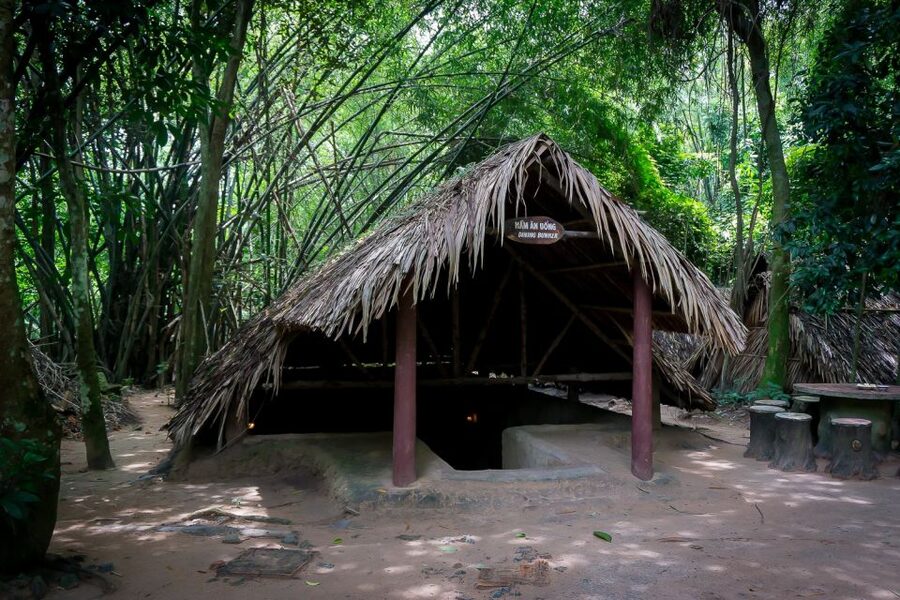
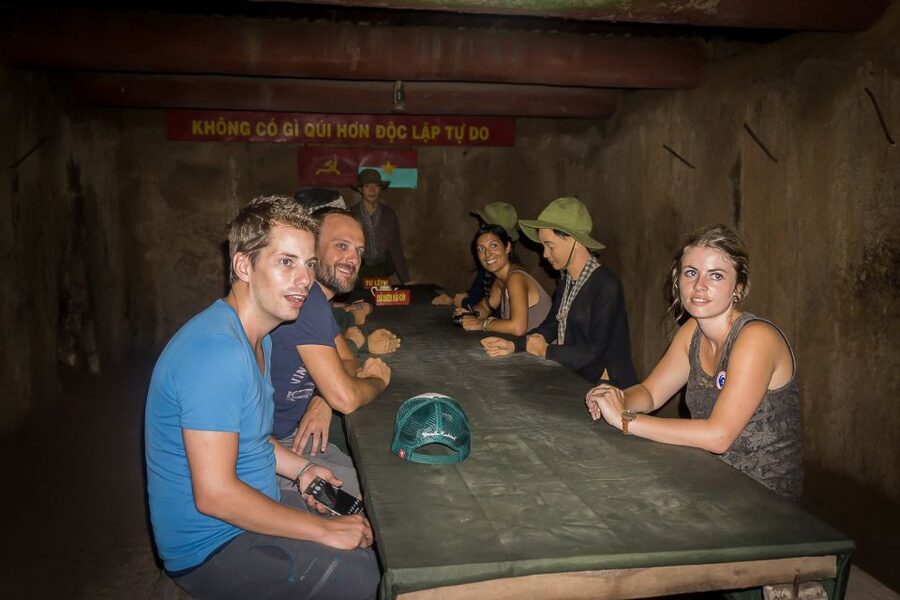
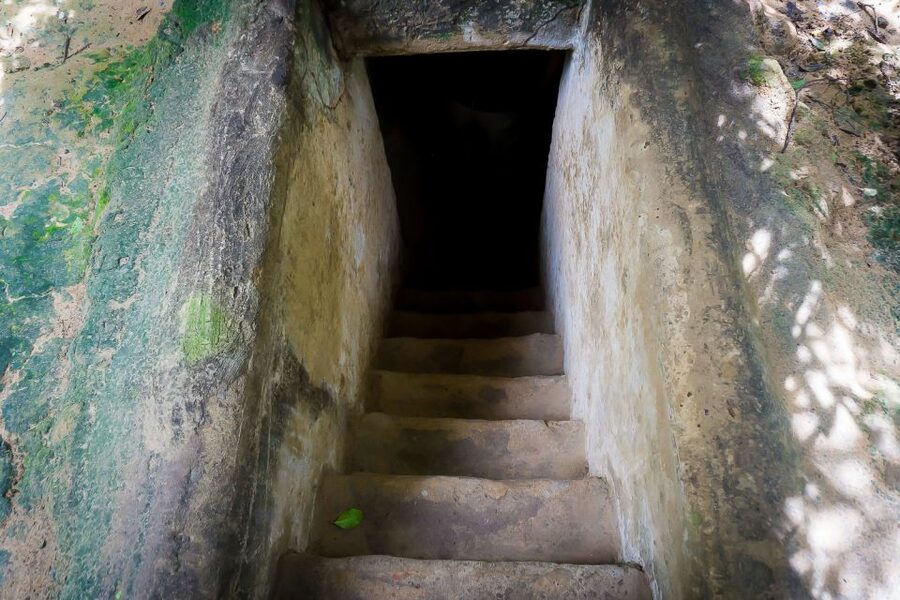
After the intro talk and documentary, you’ll move into the main tunnel system with your guide. This is where the experience becomes real, not theoretical. You’ll get to see areas that explain how Vietnamese guerrillas used the underground space for more than hiding.
The stops you can expect include:
- Weapon factory areas, where materials and tools connect to how fighters armed themselves
- Hospital spaces, which help explain how medical needs were handled during wartime conditions
- Kitchen areas, pointing to how food and daily routines were organized underground
- More practical tunnel features, like how movement and access were structured
What makes this section valuable is the mix of life-support details and defense details. Many war sites focus only on battle. Here, the explanation also covers the day-to-day systems—where people ate, where they got treated, and how the underground layout supported those needs.
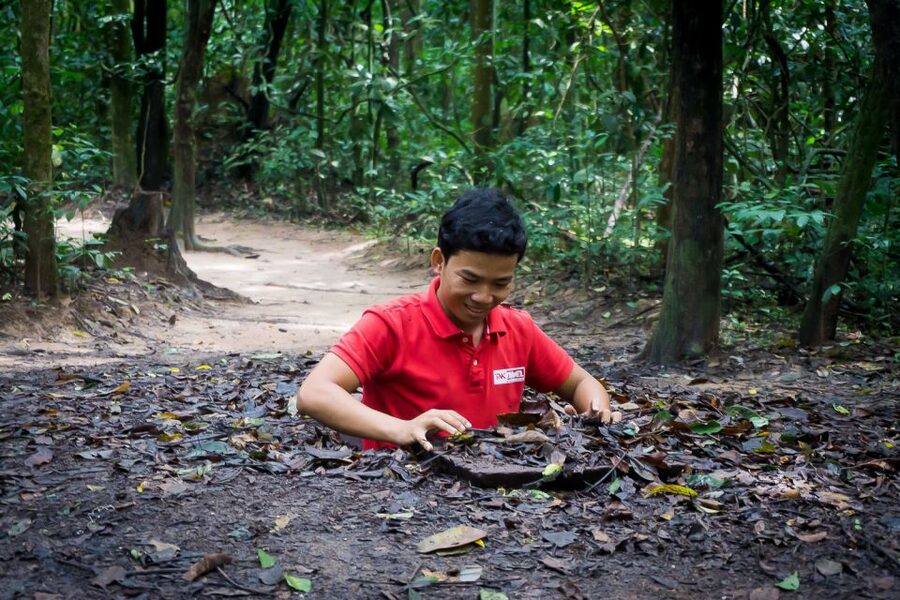
You’ll also learn about traps and trap mechanisms, including how trap doors worked. That kind of explanation is hard to get on your own because it requires knowing what you’re looking at and why it mattered.
The Crawl Opportunity: What It Feels Like and How to Prepare
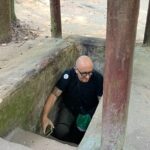
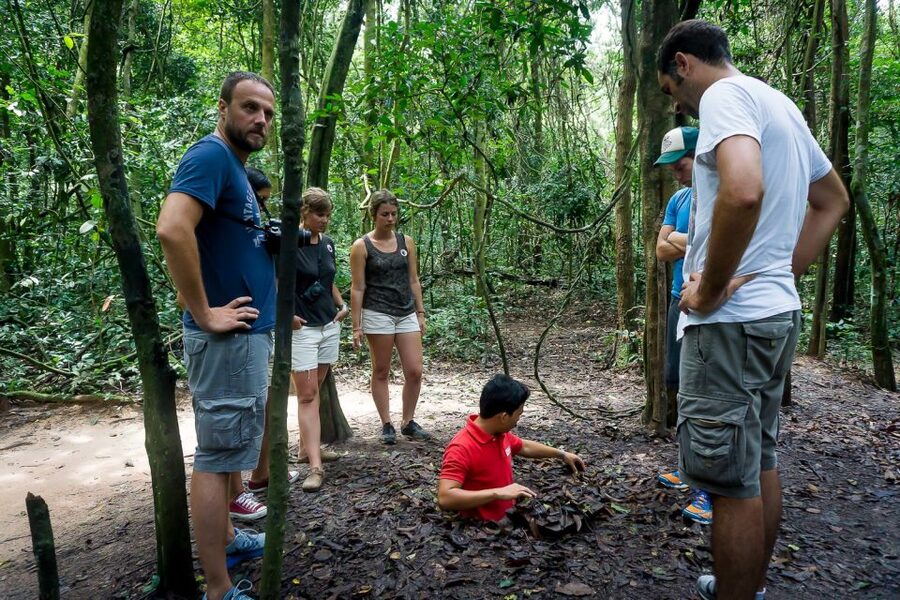
A major highlight is the chance to crawl through the tunnel system. You’ll be guided to historic tunnel sections where you can try squeezing through narrow access points and moving along the underground pathway.
This is the point where comfort planning matters most. Tight tunnels are part of the experience, and they’re exactly why the tour has restrictions for mobility impairments and people with heart problems. Even if you’re fit, expect a bit of muscle strain—especially in legs and thighs—because you’ll be moving low and slow.
Practical tip: wear comfortable shoes with good grip. Bring sunglasses and a sun hat for the surface parts, but once you’re underground, the real requirement is stable footing and the ability to move through confined space.
If you’re the type of traveler who likes “doing” instead of only “looking,” this crawl time is the emotional center of the tour. It turns the history into something you can physically understand.
How the Traps Fit Into the Story (Without Turning It Into Scare Tactics)
Traps sound like a horror-movie topic, but here they’re explained as part of a survival system. Your guide walks you through how the tunnels were used defensively and how access points could be controlled or delayed.
Trap door systems, in particular, connect the tunnels to a bigger idea: the guerrillas weren’t only hiding underground. They were shaping how an enemy could move, react, and get through spaces.
This matters because it helps you see the tunnels as a functioning environment. You’re not just walking through “interesting old passages.” You’re learning how the space could manage risk under pressure.
Just keep your mindset realistic: you’re learning the mechanics and purpose, not watching action reenactments. The guide’s job is to turn the structures into understandable cause-and-effect.


Manioc Tasting: A Small Bite With Big Context
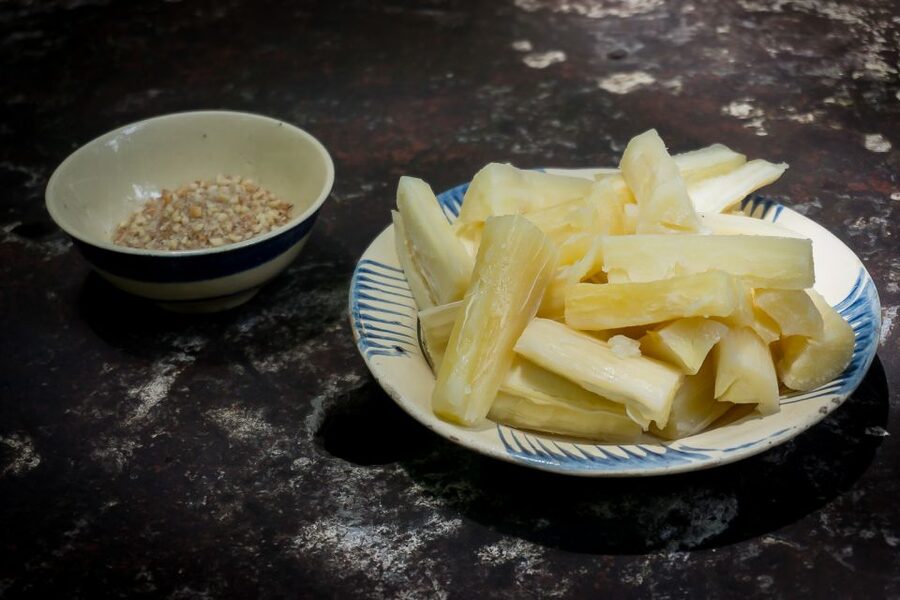
Next comes food: traditional manioc (cassava), which was a main item for war-time fighters in the Cu Chi area. The tasting break is short, but it adds a human layer that the tunnels alone can’t provide.
Food like manioc isn’t just a snack. In the context of the tour, it becomes one more example of why guerrilla life had to be practical: filling, transportable, and suited to what could be stored and prepared.
If you tend to skip “food moments” on tours, don’t do it here. This one is brief and directly tied to the story you’ve been hearing underground.
Optional AK47, MK16, and Machine Gun Shooting: Worth It or Skip It?
If you want hands-on variety, there’s an opportunity to fire weapons at a nearby shooting range. The range shooting includes options like AK47 and MK16, plus machine gun firing, but it comes with an extra cost.
Two things to keep in mind:
- You’ll only do it if you choose the shooting option, since it’s not included in the base package
- It’s a very different experience from crawling tunnels, so decide based on your interests and comfort with the activity
Is it “worth it”? For some people, it’s the adrenaline contrast that makes the day feel complete. For others, it can overshadow the history if you’re there mainly for the tunnel story. My advice: if you’re excited about understanding wartime equipment, go for it. If your goal is cultural and historical interpretation, you can still have a full, meaningful tour without it.
Private Guide Energy: What You Gain From Names Like Tom, Nikki, and Yen
With a private tour, you’re not stuck with a one-size-fits-all explanation. That comes through in the way different guides bring the story to life.
In English-speaking versions, you might meet guides like Tom or Nikki, with drivers such as Gery—people who keep the pacing sensible and the explanations clear. Another name that comes up is Yen, who’s described as offering strong historical knowledge and staying flexible with what the group wants to emphasize.
That flexibility is real value. It’s how you can spend an extra few minutes understanding a specific tunnel feature, instead of being rushed along with a crowd. It also helps if you have questions that pop up mid-tour—like why trap doors mattered or how the underground layout supported daily life.
If you like tours that feel professionally run but still adjustable, a private setup fits that style.
What’s Included (So You Don’t Get Surprise Costs)
For $67 per person, you’re getting more than a seat in a car. Included items are practical and help reduce friction:
- Air-conditioned private car
- Hotel pickup and drop-off at centrally located District 1 hotels
- Mineral water and wet tissue
- English-speaking guide
- Entrance fees
What’s not included is where you might spend extra time thinking:
- AK47/MK16/machine gun shooting at the range (extra cost applies)
- Travel insurance
- Personal expenses
- Pickup/drop-off outside District 1
- Food and beverages not mentioned in the program
Value check: if you’d otherwise pay for separate transport, pay for entry, and hire a guide, the package pricing starts to look efficient. And because you’re dealing with a site that’s easier with context, the guide is a core part of what you’re buying—not an add-on.
What to Bring and What to Avoid in the Tunnels
This tour gives you a short list, and it’s worth treating it seriously because tunnels are unforgiving.
Bring:
- Passport or ID card
- Comfortable shoes
- Sunglasses
- Sun hat
- Camera
Avoid:
- Pets
- Smoking
- Luggage or large bags
If you come with a big backpack, you’ll likely struggle with space and movement. Keep your kit small and easy to manage.
One more reality note: even with the right clothing, the crawl section is still tight by design. This is why the tour lists restrictions for mobility impairments and heart problems. If any of that applies to you, it’s best to pick a different Cu Chi option with less constricted movement.
Who Should Book This Private Cu Chi Half-Day Tour
This tour makes the most sense if you want:
- A private, no-queue style experience
- A clear, English explanation of what you’re seeing
- The hands-on element of crawling through tunnel sections
- A mix of history and small “life” details like manioc
It also works well for travelers who are time-stretched. With hotel pickup in District 1 and a return to the city after the tour, it’s a strong choice if you’re flying out the same day.
You should probably skip it if:
- You have mobility impairments, use a wheelchair, or need step-free access (the tour is not suitable)
- You’re pregnant or have heart problems
- You dislike enclosed spaces and tight movement
Should You Book the Cu Chi Tunnels War History Private Trip?
If you want a Cu Chi experience that feels organized and personal, this private half-day tour is a solid booking. The combination of an intro talk, documentary context, and guided access to weapon-making, hospitals, kitchens, and trap features gives you a story you can actually follow. Add the crawl opportunity and manioc tasting, and the day becomes more than a quick photo stop.
Book it if you’re comfortable with confined spaces and you want a guide-led interpretation in English. Skip it if you’re affected by the listed mobility or heart restrictions, or if the shooting range option doesn’t match your interests.
My call: for most visitors in good health who want value and context without the stress of crowds, this private Cu Chi tour is a smart way to spend a half-day in Vietnam.
FAQ
How long is the tour?
The drive from Ho Chi Minh City to Cu Chi is about 1.5 hours, and the tour is designed as a half-day outing. Planning around roughly five hours door-to-door is a safe expectation.
Is hotel pickup included?
Yes. The tour includes pickup and drop-off at centrally located hotels in District 1 in Ho Chi Minh City.
What does the tour include besides the tunnels?
You’ll get an intro talk, a documentary film, guided access to tunnel areas like weapon factories, hospitals, and kitchens, plus an opportunity to crawl through tunnels and try traditional manioc.
Are entrance fees included?
Yes. Entrance fees are included in the tour price.
Can I try shooting AK47 or machine guns?
You can, but it costs extra. The option includes AK47, MK16, and machine guns at a nearby shooting range.
What food will I get to try?
You’ll have a chance to try manioc, which was a main food for wartime fighters in the Cu Chi area.
What should I bring?
Bring your passport or ID card, comfortable shoes, sunglasses, a sun hat, and a camera.
What’s not allowed during the tour?
Pets are not allowed, smoking is not allowed, and luggage or large bags are not allowed.
Who is this tour not suitable for?
It’s not available for disabled people and it isn’t suitable for wheelchair users, people with mobility impairments, people with heart problems, or pregnant women.
Is travel insurance required?
Travel insurance is not included, but the tour itself lists it as not included in the package.