REVIEW · LISBON
Queer Lisbon Historical Tour
Book on Viator →Operated by Queer Lisbon Tour · Bookable on Viator
Lisbon’s queer story is written on the streets. This 4-hour historical walk connects LGBTQ+ activism, church power, dictatorship-era rules, and today’s queer politics in a way that feels human, not dusty.
I especially love how the tour mixes history with real questions about inclusion, access, and who gets protected. I also like the small-group feel and the upbeat, earnest energy from the young local organizers who keep things clear and fun.
One thing to think about: this is a walking tour with a moderate fitness level, so bring comfortable shoes and plan for the pace and stairs around hills.
Key Highlights You’ll Actually Feel
- Principe Real starts with a memorial, setting the tone for Lisbon’s LGBTQ+ past and early Pride momentum
- Hills, viewpoints, and timing show how queer spaces can change from day to night
- Padre António Vieira and church influence connect religion, regulation, and social norms
- Dictatorship-era Lisbon explains the strict family ideal and how queer resistance pushed back
- Praca Martim Moniz centers today, including how immigrants are shaping queer movements
- The walk ends in Graça at a queer-owned venue honoring Black queer resistance through Criolense Kitchen Club
In This Review
- Why This Queer Lisbon Tour Feels Like History You Can Use
- Starting at the Monument in Principe Real: Where the Tour Sets Its Tone
- Bairro Alto, Bica, and Cais do Sodré: Viewpoints and Questions About Inclusion
- Largo Trindade Coelho and Padre António Vieira: When Religion Shapes Sexual Norms
- Largo do Carmo: Revolution, Dictatorship, and the Strict Family Model
- Praca Martim Moniz: Contemporary Queer Movements and New Power From Immigration
- Ending in Graça: Black Queer Resistance at Criolense Kitchen Club
- Price and Value: What $72.29 Buys You in Real Terms
- Logistics That Affect Your Day (Not Just Fine Print)
- Who Should Book the Queer Lisbon Historical Tour
- Should You Book This Tour or Skip It?
- FAQ
- How long is the Queer Lisbon Historical Tour?
- Is the tour offered in English?
- What does the tour cost?
- Where does the tour start and end?
- Is there a guide included?
- Are there admission tickets needed for the stops?
Why This Queer Lisbon Tour Feels Like History You Can Use
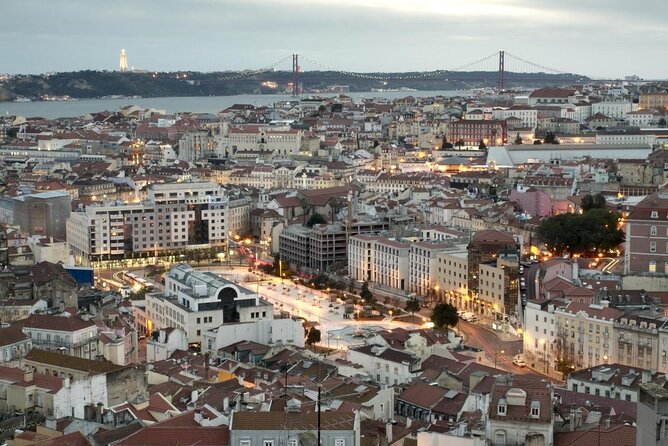
You know that feeling when a city’s history is everywhere, but it’s hard to read? This tour helps you do exactly that. You move through Lisbon and pick up context for what you see: monuments, church spaces, revolutionary sites, and neighborhoods that still carry old power structures.
What makes it stand out is the way it doesn’t treat LGBTQ+ life as a side note. It frames queer history as part of how Portugal built social rules, enforced “normal,” and later created new ways to question those rules. You leave with ideas you can spot while you keep exploring on your own.
And yes, it’s also good fun. The tone stays earnest and informative, with group energy that makes the conversations feel natural instead of like a lecture. With a small size limit of 20 people, it’s easier to stay engaged and ask questions.
Starting at the Monument in Principe Real: Where the Tour Sets Its Tone
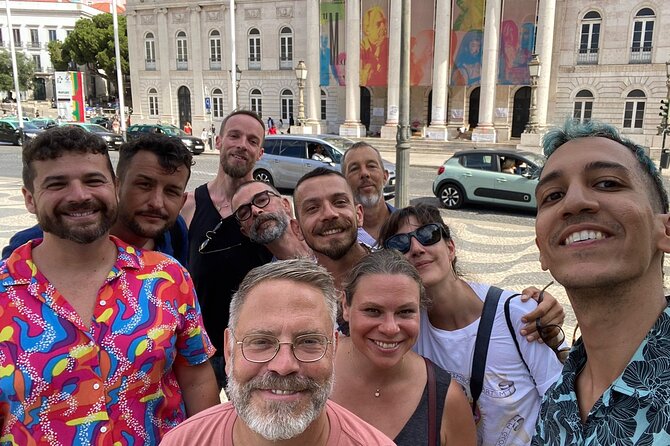
You begin at the Juniper tree arbor in Misericórdia and then gather near the monument honoring victims of homophobia. That opening matters. It’s not just a starting point on a map, it’s a reminder that queer history is tied to real harm, real fear, and real organizing.
From there, the guide connects the beginnings of the LGBTQ+ movement in Portugal to public demonstrations, including the first Pride March. You get the sense that activism didn’t appear out of nowhere. It formed through pressure, community risk, and people deciding that visibility and rights were worth demanding.
What you’ll get from this first stop
- A clear starting context before you start walking through neighborhoods
- A reason to pay attention to symbols you might otherwise skim past
- A calm moment to think before the tour moves into more confrontational topics
One practical note: this stop is about reflection and grounding, not a long visit. If you arrive early, use the time to get comfortable with the meeting spot so you can settle quickly.
You can also read our reviews of more tours and experiences in Lisbon.



Bairro Alto, Bica, and Cais do Sodré: Viewpoints and Questions About Inclusion

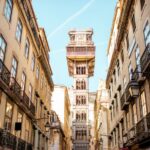
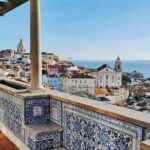
After Principe Real, you head toward the areas that shape Lisbon’s daily pulse and nightlife rhythm. The walk takes you through Bairro Alto, Bica, and onward toward Cais do Sodré, with pauses for conversation and a viewpoint where you can see the hills and the city’s spread.
Here’s where the tour starts pushing beyond facts and into interpretation. You talk about how queer neighborhoods change from day to night, which is useful because it affects how you experience Lisbon yourself. During the day, the streets might feel quieter and more “ordinary.” At night, the same areas can feel charged with community life, social risk, and belonging.
The guide also raises tougher themes, like how patriarchal and colonial mindsets still show up in behavior. This is where you get the tour’s signature style: it asks you to consider whether inclusion is truly for everyone, not just for those with the most social safety or cultural power.
You’ll hear questions that stick:
- Who feels included in Portugal’s queer spaces, and who gets left out?
- How do old power ideas affect what people call acceptance?
Why this part is valuable for you
If your travel style is curious, this stop helps you see Lisbon as a living set of negotiations, not a fixed story. You’ll likely notice that some signs of openness come with limits.
Small drawback: because this segment includes social themes, the conversation can feel intense for a walk break. If you want purely light sightseeing, this may be heavier than you expect.
Largo Trindade Coelho and Padre António Vieira: When Religion Shapes Sexual Norms
At Largo Trindade Coelho, the tour points out the monument of Padre António Vieira. Then it widens the lens to the church’s role in regulating sexuality and shaping societal attitudes toward homosexuality and anything that deviates from the norm of homogeneity.
This stop is important because it connects public institutions to private life. Instead of treating stigma as vague prejudice, the tour links it to regulation and authority. You start to see how “morality” becomes a rule system that affects who gets freedom and who gets judged.
What I’d pay attention to here
- How the tour frames church power as cultural influence, not just theology
- How the topic ties to later sections on dictatorship and family ideals
- How symbols in public spaces can represent enforcement, not just faith
The time here is short, so you don’t get a textbook lecture. You get just enough context to understand why the next stops matter.
Largo do Carmo: Revolution, Dictatorship, and the Strict Family Model
Next you move to Largo do Carmo, where the tour highlights the site connected to the Portuguese revolution. From that starting point, the guide shifts into the dictatorship that lasted for a long stretch of time in Europe and how that regime shaped societal mindsets.
The key detail here is the strict family model: man, wife, and happy children, with nothing different allowed. This section gives you language for why certain social expectations feel stubborn even when laws change. When institutions insist on one acceptable form of family, queer identities don’t just face social misunderstanding. They face an engineered standard of normal.
You also learn about resistance of key LGBTQ+ figures during the dictatorship era. Even with limited time at each location, the tour keeps returning to the same point: queer people were not passive under pressure. They fought, organized, and refused the story that they should disappear.
Why this stop is worth your attention
It helps you connect the dots between public rule-making and the everyday pressures queer people faced. If you’re the type who likes to understand the “why,” this is a major payoff.
Consideration: the topic is serious. If you’re traveling with someone who prefers light travel only, have a quick talk beforehand so expectations match.
Praca Martim Moniz: Contemporary Queer Movements and New Power From Immigration

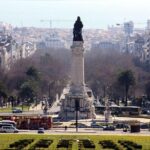
At Praca Martim Moniz, the tour shifts to the present. You talk about contemporary queer movements challenging structures and raising questions, and you also bring in the role immigrants play in strengthening those movements in Portugal.
This is a smart pivot because it avoids ending the story with history alone. Lisbon today is shaped by new arrivals, new communities, and new alliances. The guide’s framing makes you think about queerness as something shaped by migration, language, class, and belonging—not just personal identity.
You’ll also get a clearer sense of how activism can change in tone and strategy. Some movements focus on visibility. Others focus on safety, resources, community spaces, or challenging institutions.
What you can do with this info after the tour
When you explore Lisbon on your own, you’ll likely be more alert to how different communities use public space: who gathers, who speaks up, and what kinds of spaces feel safer or more welcoming.




Ending in Graça: Black Queer Resistance at Criolense Kitchen Club
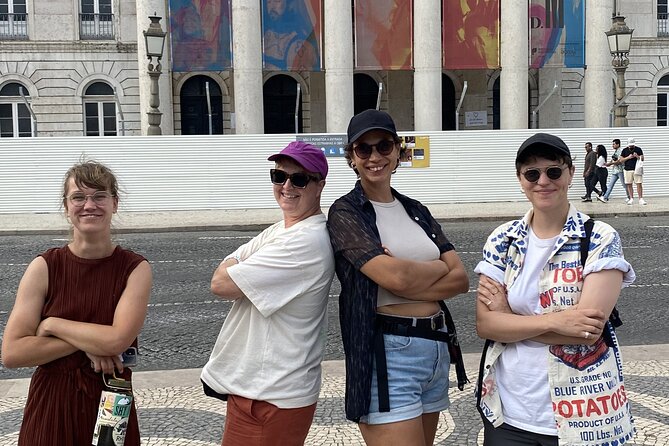
The walk finishes in Graça, near Sao Vicente, at a queer-owned venue. The tour pays homage to Black queer resistance that Criolense Kitchen Club has brought to the Graça neighborhood, and you also learn why this area is significant to the LGBTQ+ community.
This ending is powerful because it’s not only memorializing the past. It connects queer history to present-day cultural work—food, community organizing, and visibility through a venue that people can actually experience.
It also broadens the tour’s lens. You’re reminded that LGBTQ+ history isn’t one single story. Black queer resistance adds another layer: it brings together queer identity, race, and community survival strategies, shaping how spaces form and how solidarity shows up.
Practical advice for the end
Since the tour ends at a venue in Graça, plan your next step around what you want next: a snack, a sit-down break, or simply time to wander nearby while the conversation is still fresh.
Price and Value: What $72.29 Buys You in Real Terms
The price is $72.29 per person for about four hours, and that time matters. You’re not paying for a single viewpoint or one monument stop. You’re paying for a connected route across multiple neighborhoods, with a guide who brings each location into conversation with the next.
You also get:
- An updated Queer Map of Lisbon (PDF)
- A Portuguese and English-speaking local guide
- A mobile ticket for the experience
That PDF can be especially useful because it gives you a way to keep exploring after the tour, instead of treating the walk as a one-time event.
The group size cap (up to 20) adds value too. Smaller groups usually mean less rushing and more room for questions, and you feel that kind of pace here.
One more value note: the scheduled stops are listed as admission ticket free. That helps keep your costs predictable and makes the tour feel like a “pay for guidance” experience rather than a “pay for entry fees” experience.
If you’re working with a tight Portugal budget, this is a reasonably priced way to get context that would be hard to assemble on your own.
Logistics That Affect Your Day (Not Just Fine Print)
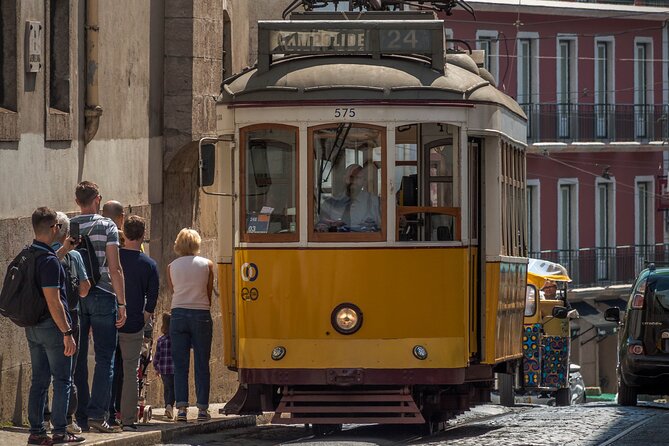
This tour is offered in English, and you’ll be walking through central Lisbon areas with a moderate fitness level. You’ll want shoes you can handle for a few hours in hilly neighborhoods, plus the normal stop-and-start pace.
The start point is the Juniper tree arbor in Misericórdia, 1250-095 Lisboa. The tour ends in Graça. That matters because you’ll likely want to plan your dinner or next activity near the end rather than rushing all the way back to wherever you’re staying.
The experience runs on good weather. If conditions are poor, you’ll be offered a different date or a full refund, so don’t lock in a super-tight schedule that same afternoon.
Finally, there’s no included dinner. You can pay for your own meal and drinks at the restaurant. I’d treat the ending as a chance to grab something nearby rather than assuming it’s a full meal deal built into the cost.
Who Should Book the Queer Lisbon Historical Tour
Book this if you want LGBTQ+ history tied to actual locations in Lisbon, not just generic storytelling. It’s also a great fit if you like tours that ask questions about inclusion and power rather than stopping at facts.
It’s especially suitable for you if you:
- enjoy walking tours with strong themes
- want context for monuments, religious sites, and major political places
- like hearing how activism evolves from past to present
Skip it (or match expectations) if you only want casual sightseeing with minimal heavy topics. This tour includes dictatorship-era oppression and church influence on sexuality, so it’s not neutral or purely cheerful.
Should You Book This Tour or Skip It?
If you care about understanding how Lisbon got shaped—politically, socially, and culturally—this tour is a solid choice. For the price, you get a lot of connective tissue: where LGBTQ+ movement stories began, how authority enforced norms, and how today’s queer activism looks in practice.
I’d book it if you want a guided route that helps you see the city more clearly after you leave. I’d think twice only if you strongly prefer low-intensity, light topics.
FAQ
How long is the Queer Lisbon Historical Tour?
It lasts about 4 hours.
Is the tour offered in English?
Yes, it is offered in English.
What does the tour cost?
It costs $72.29 per person.
Where does the tour start and end?
It starts at the Juniper tree arbor in Misericórdia, Lisbon, and ends in Graça, Lisbon.
Is there a guide included?
Yes. A Portuguese and English-speaking local guide is included.
Are there admission tickets needed for the stops?
The stops listed for the tour are shown as Admission Ticket Free.