REVIEW · BOSTON
Boston: Freedom Trail History Tour and Brewery Taste
Book on Viator →Operated by Hub Town Tours · Bookable on Viator
Freedom Trail history tastes better with beer. This 2.5-hour Boston walk strings together Freedom Trail landmarks in an efficient route, and I like that the tour doesn’t stop at sightseeing—it ends with Democracy Brewing for a beer, seltzer, or mocktail tasting plus New England lunch. One consideration: it involves standing and walking, so if you struggle with that for extended stretches, it’s not a great fit.
I also like the small-group feel. The tour runs with a maximum of 25 people, and the guide’s style matters here—names like Gianna, Nick, and Jon/John come up for their clear storytelling and the way they make room for questions.
At $79 per person, this is priced like a focused guided experience, not just a self-guided stroll. Since beer/seltzer/mocktail tasting and all-in New England lunch are included, you’re really paying for history guidance plus a full meal stop, not only a walk.
In This Review
- Key points before you go
- Why this Freedom Trail history-and-taste combo makes sense
- Starting at Faneuil Hall: the Revolution story begins with crowds
- Boston Massacre site: where the story turns from debate to violence
- Old South Meeting House: the roots of the Boston Tea Party
- Benjamin Franklin statue and the oldest trail landmarks nearby
- Granary Burying Ground and Boston Common: revolutionary places you can feel
- The Democracy Brewing tasting and all-in New England lunch stop
- Price and value: what $79 includes (and what it saves you)
- Who this tour suits best (and who should choose differently)
- Should you book the Freedom Trail History Tour and Brewery Taste?
- FAQ
- How long is the Freedom Trail History Tour and Brewery Taste?
- What does the $79 price include?
- Where do I meet the guide, and where does the tour end?
- What time does the tour start?
- Is it accessible if I have trouble standing for a long time?
- Does the tour run in bad weather?
Key points before you go
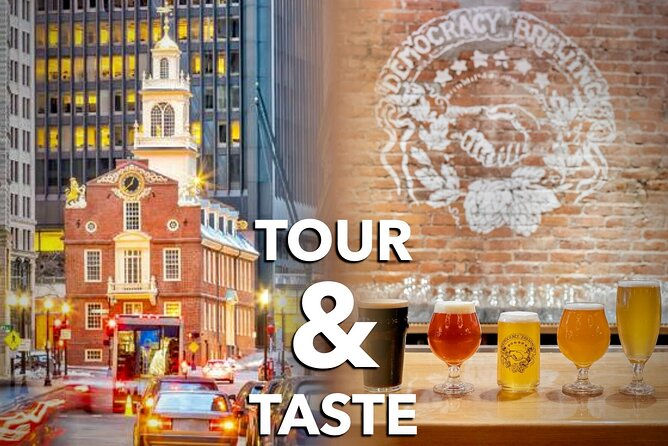
- 11 of 16 Freedom Trail landmarks, covered in one convenient downtown route
- Finish at worker-owned Democracy Brewing with beer, seltzer, or mocktail tasting
- All-inclusive New England lunch in a private dining room at the brewery
- Small group format (max 25) that keeps the pace easy and question-friendly
- A history story arc running from big colonial gathering points to revolutionary turning moments
Why this Freedom Trail history-and-taste combo makes sense
Boston’s Freedom Trail can feel like a lot when you’re doing it alone. You get the idea fast, but it’s easy to miss the why behind the buildings—especially when the street signs and brick paths blur together.
This tour is built for that exact problem. You’ll cover 11 of the 16 official landmarks in a single, guided walk, which means less planning and more time understanding what changed and why it mattered. And because you end inside Democracy Brewing, the history lands while you’re still in a relaxed, food-and-drink moment.
I also like the practical rhythm. You hit key points, then you break for a meal. It’s not just a history lecture that spills into dinner. It’s history with a real pause that helps you keep your energy for the full route.
Finally, the tour is offered in English and uses a mobile ticket, which makes it easier to stay hands-free as you navigate downtown.
You can also read our reviews of more tours and experiences in Boston.

Starting at Faneuil Hall: the Revolution story begins with crowds
Your meet-up point is historic Faneuil Hall Marketplace (121 South Market Street). Look for the black-and-white Coach banners opposite Quincy Market—that’s the easiest visual cue for finding the group.
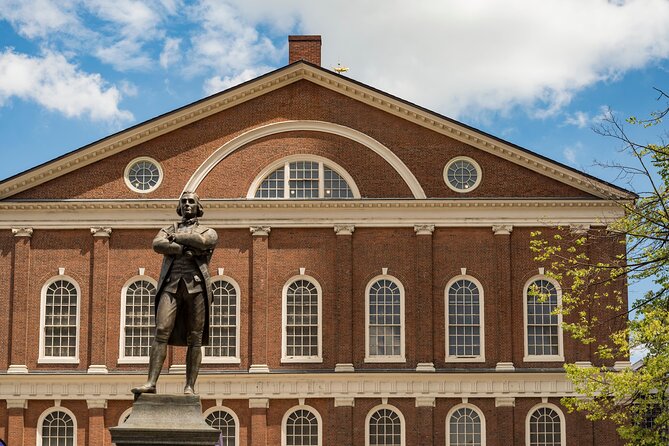
This stop works as a strong opening because Faneuil Hall is tied to public gathering and civic action. It’s a tourism hub today, but it started as a place for community meetings back in 1742, and it’s known as the Cradle of Liberty. The marketplace itself dates to 1826, so you’re standing in an area that’s been active for a long time.
The value here is context. When your guide frames this location as a place where people gathered to discuss the future, the rest of the walk starts to feel connected, not like random stops.
If you’re the type who likes taking your bearings quickly in a big city, this start helps. You begin at a recognizable anchor, then the tour carries you along the Freedom Trail logic toward more tense and revolutionary locations.
Boston Massacre site: where the story turns from debate to violence
Next up is the Boston Massacre site, with the tragedy tied to 1770 and British soldiers killing five Bostonians. Even without extra theatrics, this kind of stop changes the tone of the whole route.
This is one of those moments where having a guide matters. The site isn’t just a marker; it’s a point in time that explains why relationships between colonists and British authorities broke down into something sharper.
You’ll also notice how your guide connects what happened here to the bigger colonial atmosphere. The tour stays focused on the years that led toward the American Revolution, so the story keeps moving forward instead of looping back.
One small practical note: this is still a walking tour, so you’ll want comfortable shoes even if the pace is described as easy. Your time at each stop is limited, so you’ll be standing and looking around more than you might on a museum-only day.
Old South Meeting House: the roots of the Boston Tea Party
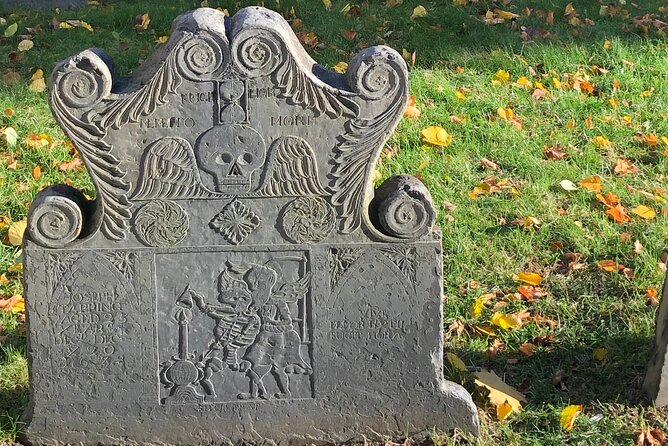
Old South Meeting House is next, and it’s there for a reason. It’s a Congregationalist meeting house from 1729, and it’s listed as the origin site of the Boston Tea Party in 1773.
Again, the history-to-streets connection is the point. Meeting houses like this weren’t just religious buildings on a map—they were places tied to community decisions and public action. When your guide explains the setting, it helps you understand how political conflict played out in real physical spaces.
You’ll also pass other notable landmarks in the same general area, including the former publishing house of Ticknor & Fields (1718). There’s also a reference to Boston politics as a central force for more than a century starting in 1865—so the tour doesn’t treat the revolutionary era like an isolated blip. It frames Boston as a city where governance and public debate had long legs.
If you like American history that feels tied to geography, this stretch is a strong one. You’re watching the story progress in real downtown locations instead of reading about it after the fact.
Benjamin Franklin statue and the oldest trail landmarks nearby
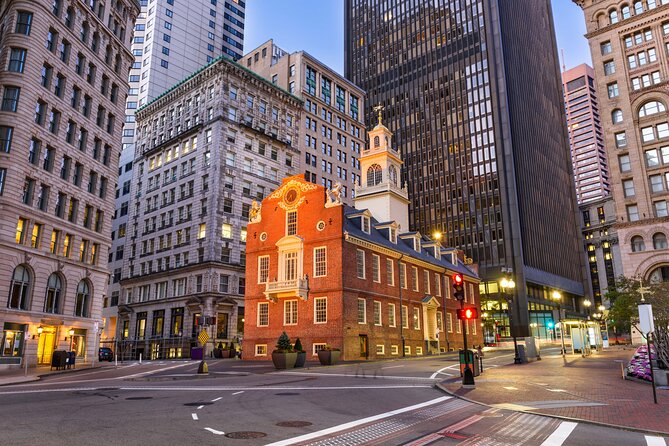
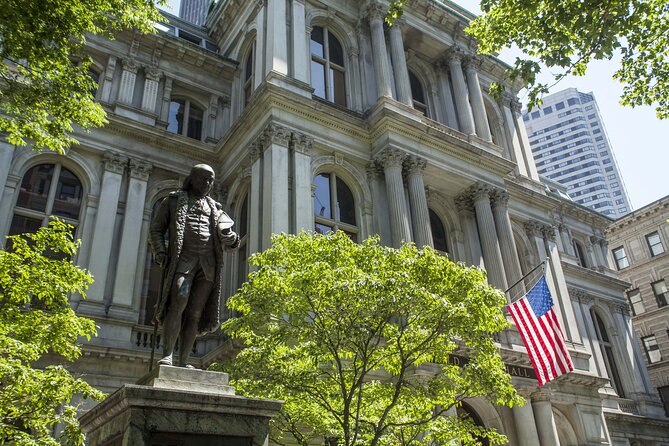
After Old South, you’ll reach the Statue of Benjamin Franklin area. This segment is short, but it ties together several Freedom Trail landmarks that set the tone for early Boston.
One stop in the mix is the Boston Latin School, with dates listed as 1635. Another is First Church of England in Puritan Boston, listed for 1686 and 1754. Those details help you see how Boston’s early institutions formed and re-formed.
You’ll also encounter Boston’s first burying space (1630) and the oldest Freedom Trail landmark. That’s a powerful moment because it grounds the story in the people who lived in early Boston—not just the conflict that came later.
This is the kind of part where I suggest you slow down for a second and let your guide’s phrasing land. The names and dates can look like simple plaques, but when your guide connects them to the overall revolution timeline, they start to feel like chapters.
If you’re traveling with teens or anyone who doesn’t love long history explanations, this is a good segment to perk them up. Cemeteries, early schools, and religious institutions tend to be easier to relate to than abstract politics.



Granary Burying Ground and Boston Common: revolutionary places you can feel
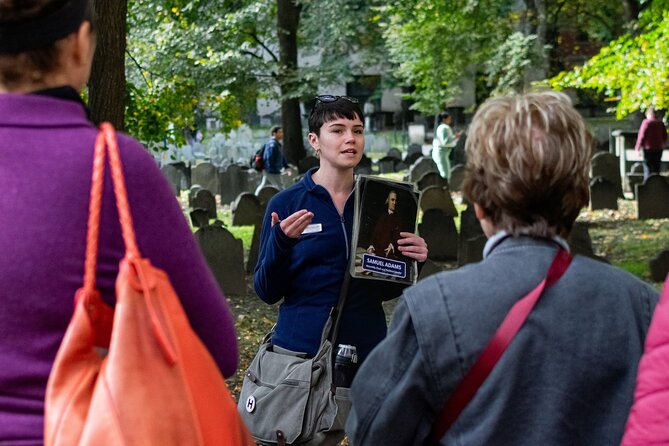
Granary Burying Ground is where the route leans into the people behind the timeline. It’s described as Boston’s third-oldest burying ground, with Revolutionary Boston’s final resting place noted for 1660.
You’ll also have nearby references that keep the atmosphere moving: an active church and the tallest building in 19th-century Boston (1809). Then there’s mention of the Massachusetts state capitol with the Hub of the Solar System (1798). These aren’t random add-ons—they help you see how civic and cultural identity continued to build after the revolutionary period.
One of the best parts of this stretch is that it’s a walk through places that are still in use or still tied to Boston’s everyday life. You’re not just imagining. You’re looking at locations that still function as real parts of the city.
Boston Common comes next, and it’s a big finish to the walking portion. It’s labeled as the oldest public land in the Americas, and it’s tied to Boston’s communal grazing pasture starting in 1634. After the tension of the revolution-era sites, this stop gives you breathing room—physically and mentally.
Even if you’re not a big park person, Boston Common helps you reset before the meal stop. It’s also an easy place to gather yourself before heading indoors for tasting and lunch.
The Democracy Brewing tasting and all-in New England lunch stop
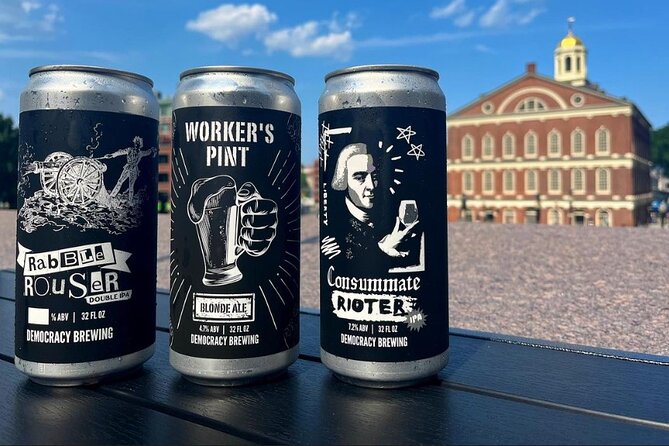
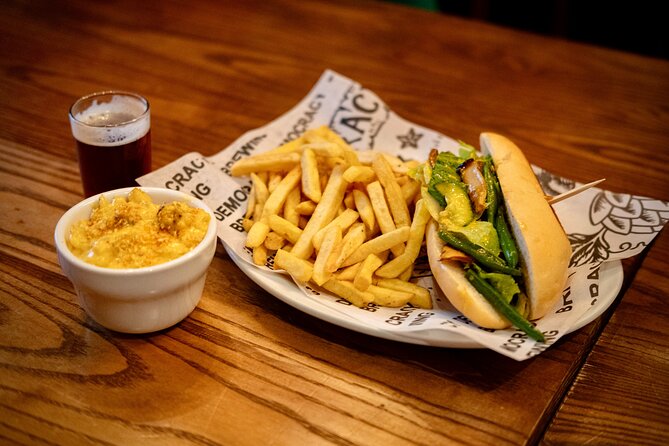
The tour ends at Democracy Brewing at 35 Temple Pl. You’ll go inside for the tasting and the meal, which keeps things simple and avoids a “walk somewhere else for lunch” scramble.
What’s included here is straightforward: beer, seltzer, or mocktail tasting, plus all-inclusive New England lunch in a private dining room. That matters for value. A lot of history tours tack on food as an afterthought, which can cost you more than you expected once you factor in drinks and hunger.
I also like that Democracy Brewing is described as worker-owned and community-minded. That doesn’t magically replace the history lesson, but it does make the final stop feel like part of the same thoughtful plan: you finish with something local and cared for, not just a generic restaurant stop.
If you don’t want alcohol, you’re not stuck. The tasting option includes seltzer or mocktail, so you can still participate fully without it turning into a decision you have to agonize over.
This is also where the pacing pays off. By the time you arrive, you’ve covered the major landmarks and the lunch helps lock in the whole day’s story. It’s a nice rhythm for a short Boston visit.
Price and value: what $79 includes (and what it saves you)
$79 per person for about 2.5 hours can sound like a lot until you see what you’re getting. This price includes the guided walk covering 11 of 16 Freedom Trail landmarks, plus the tasting and the lunch.
Free admission tickets are listed for the walking stops, which also helps. Your day isn’t shaped around buying multiple entry fees on the fly. Instead, you pay once and get a structured route with set timing.
The other big value driver is meal inclusion. All-in New England lunch plus a tasting means you’re budgeting one price for the entire experience. If you’re traveling with a group or with someone who tends to snack constantly, this is the kind of inclusion that prevents the usual “we spent more than we planned” problem.
One thing to keep in mind: the tour is not listed as covering North End & Charlestown. So if those neighborhoods are top on your Boston wish list, you might pair this with something else rather than expecting this tour to cover everything.
Who this tour suits best (and who should choose differently)
This works best if you want a guided Freedom Trail overview without committing to a full self-planned day. You’ll get the essentials across the key revolution-era stops, and you end with food and tasting instead of stretching into an all-day project.
It also suits you if you like asking questions. The group size is capped at 25, and the experience has a reputation for feeling more personal than you might expect from a city walking tour.
It may not be ideal if standing is difficult for you. The format includes walking and extended standing at multiple points, so it’s not marketed for visitors who struggle with that.
If you’re traveling solo, it’s still a good choice because you’ll have a guide and a clear route. If you’re traveling with someone who gets bored by long history content, the short stop timing plus the later brewery finish often keeps attention from slipping.
And if you’re in Boston only briefly, this is a solid way to get meaningful coverage of the Freedom Trail’s big moments while still leaving time for the rest of your day.
Should you book the Freedom Trail History Tour and Brewery Taste?
Book this if you want a guided Freedom Trail route that hits major landmarks in a manageable time window and ends with a real meal stop at a worker-owned brewery. It’s a good value when you compare it to paying for a separate lunch and trying to plan the trail on your own.
Skip it if you know you can’t comfortably handle walking and standing for extended stretches. Also, if North End and Charlestown are must-dos for you, plan those separately since this experience doesn’t cover them.
If you’re on the fence, it helps to know it’s often booked ahead (on average, about 17 days). For popular dates, that’s your cue to lock it in rather than waiting for perfect timing.
FAQ
How long is the Freedom Trail History Tour and Brewery Taste?
It runs about 2 hours 30 minutes, with stops along the Freedom Trail landmarks and a final tasting and lunch at the end location.
What does the $79 price include?
The price includes coverage of 11 of 16 Freedom Trail landmarks, a beer/seltzer/mocktail tasting, and all-inclusive New England lunch. Guide gratuity is optional, and period-costume guides are not included.
Where do I meet the guide, and where does the tour end?
You meet at 121 S Market St, Boston, MA 02109, at historic Faneuil Hall Marketplace. The tour concludes inside Democracy Brewing at 35 Temple Pl, Boston, MA 02111.
What time does the tour start?
The start time is 11:00 am.
Is it accessible if I have trouble standing for a long time?
The tour requires a moderate physical fitness level and is not recommended for travelers who have difficulty standing for extended periods.
Does the tour run in bad weather?
It requires good weather. If it’s canceled due to poor weather, you’ll be offered a different date or a full refund.