REVIEW · KYOTO
Kyoto UNESCO World Heritage Sites 1d Tour from Osaka/Kyoto
Book on GetYourGuide →Operated by VIP Japan Tour · Bookable on GetYourGuide
Gold, bamboo, and temples in one day. This tour strings together Kyoto’s top UNESCO sites with a tight schedule and a guide who adds context along the way, so the famous sights actually make sense. I love the Kinkakuji gold-leaf drama against the Mirror Pond reflection, and I also love how the day is organized to hit the big moments efficiently.
My second favorite part is the scale at Sanjusangendo. You get to see 1,001 golden Kannon statues, including the eerie little detail of how each figure is uniquely carved—plus the idea that one face may look like someone you love.
One drawback: it’s a long 9–10 hour day with fixed stops and set walk times. If you’re the kind of person who wants to linger, you’ll need to shop smart and accept that you won’t have unlimited time in every temple.
In This Review
- Key things I’d focus on before you go
- The big picture: a Kyoto UNESCO day that stays efficient
- Kinkaku-ji Golden Pavilion and the Mirror Pond reflection moment
- Arashiyama: Bamboo Grove, Tenryuji, and the Togetsukyo Bridge viewpoint
- Bamboo Grove
- Togetsukyo Bridge
- Tenryuji Temple and free time
- Extra photo stop: Kimono Forest
- Time to eat and shop
- Sanjusangendo’s 1,001 golden Kannon statues
- Kiyomizudera wooden stage views and the Otowa Waterfall stop
- Koyasunoto Pagoda
- Otowa Waterfall
- Ninenzaka and Sannenzaka shopping streets
- Kobe Beef lunch: when the A5 upgrade is worth it
- Timing, group size, and how to avoid stress on the day
- Should you book this Kyoto UNESCO World Heritage day tour?
- FAQ
- What UNESCO sites does this tour cover?
- How long is the tour?
- Is lunch included?
- Are temple tickets included?
- What languages are the guides?
- Where do I meet the group?
- What if it’s crowded, or traffic is bad?
Key things I’d focus on before you go
- Four UNESCO World Heritage stops in one day, so you don’t waste time choosing between districts.
- Kinkakuji’s Mirror Pond reflection is the photo moment, but the calm around it makes it more than a snapshot.
- Arashiyama timing matters—bamboo, bridge views, and Tenryuji give you both forest and temple atmosphere.
- Sanjusangendo’s 1,001 Kannon statues turn a temple visit into a strange, moving experience.
- Kiyomizudera’s wooden stage gives you skyline views, and the Otowa Waterfall is a built-in break.
The big picture: a Kyoto UNESCO day that stays efficient
Kyoto can feel like a choose-your-own-adventure city. This tour keeps it simple by covering the classic highlights tied to UNESCO status, then grouping them in a logical route so you’re not crisscrossing the city all day.
The most useful part is the balance of “wow” and meaning. You’re not only getting visuals like the gold pavilion and bamboo grove—you’re also getting a guide who can connect what you’re seeing to the way Kyoto thinks about religion, art, and space. A guide named Kaytu, for example, is noted for explaining history in a way that helps the stops click.
The group is described as small, and you ride in an air-conditioned vehicle. That matters in Kyoto, where heat and crowds can make a self-guided day feel like a treadmill. Here, the transit is handled for you, and you spend your energy where it counts: at the temples and in the view corridors.
You can also read our reviews of more tours and experiences in Kyoto.

Kinkaku-ji Golden Pavilion and the Mirror Pond reflection moment
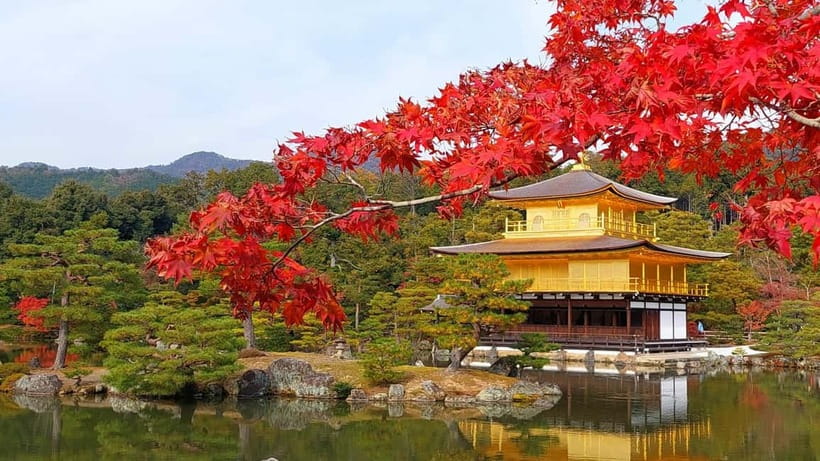
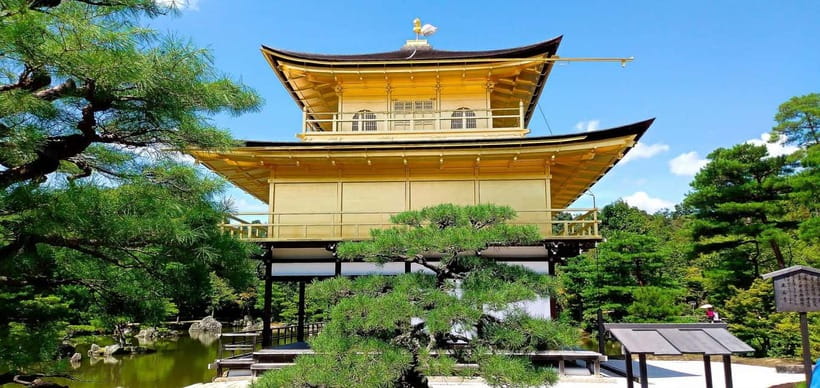
Kinkaku-ji is the kind of place that looks unreal until you see it in real life. The top two floors are covered in shimmering gold leaf, and it sits with the Mirror Pond close by—so the composition becomes almost ceremonial: gold on one side, reflection on the other.
You’re scheduled for about 40 minutes, which is short enough to keep things moving, but long enough to do two things well:
- Look up at the pavilion’s gold-leaf layers and notice how the structure reads from different angles.
- Walk around the pond area to catch the reflection effect from the viewpoint that feels most balanced.
If you’ve seen photos before, don’t skip the on-site feeling. The gold has a physical presence, and the pond reflection makes the whole scene calmer and more symmetrical than a typical temple courtyard.
Practical note: in a short visit, you’ll get more out of staying focused—take your key photos early, then slow down for the details after. Waiting until the last minute usually turns a beautiful place into rushing.
Arashiyama: Bamboo Grove, Tenryuji, and the Togetsukyo Bridge viewpoint
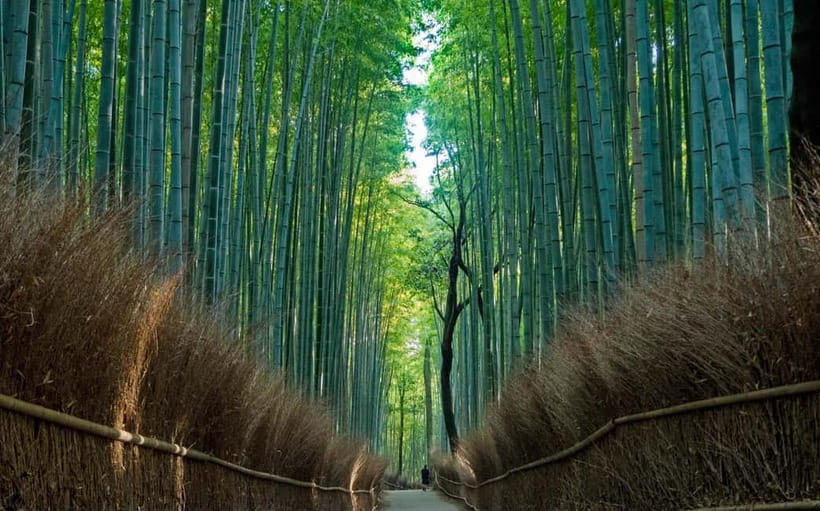
After Kinkaku-ji, the tour heads west to Arashiyama, one of Kyoto’s most famous zones for nature-meets-culture. This is where you shift from gold to greenery, and the emotional tone changes fast—in a good way.
Bamboo Grove
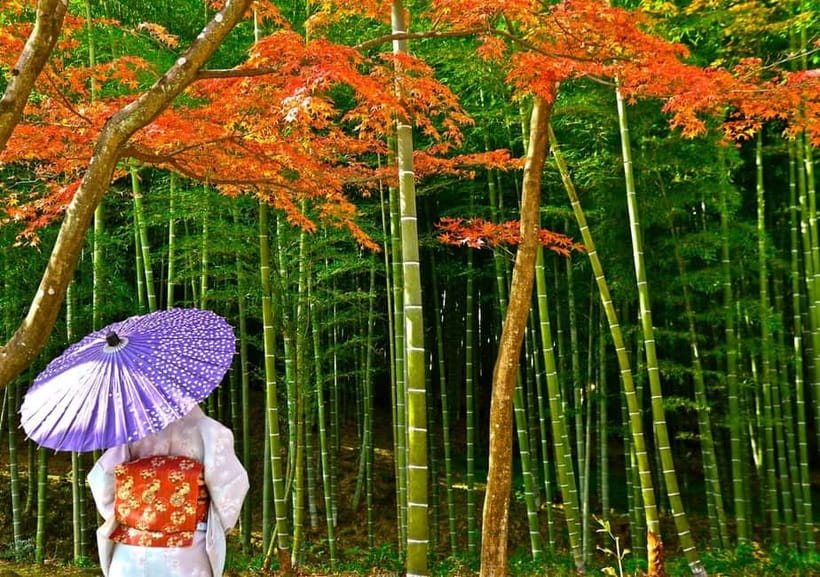
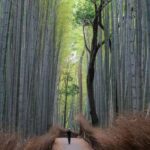
You walk through the world-famous bamboo grove where tall stalks create a tunnel of green. The experience isn’t just visual. The sunlight filters down and the sound of wind through bamboo gives it a quiet, almost cathedral-like rhythm. Even if you’ve seen bamboo photos online, the scale in person is the real deal.
Togetsukyo Bridge
You’ll also have time for a photo stop at Togetsukyo Bridge, known as the Moon Crossing Bridge. The best use of this time is to position yourself for the wider mountain-and-river view, not just for one bridge close-up. The bridge acts like a frame, and it’s part of why people come to Arashiyama in the first place.

Tenryuji Temple and free time
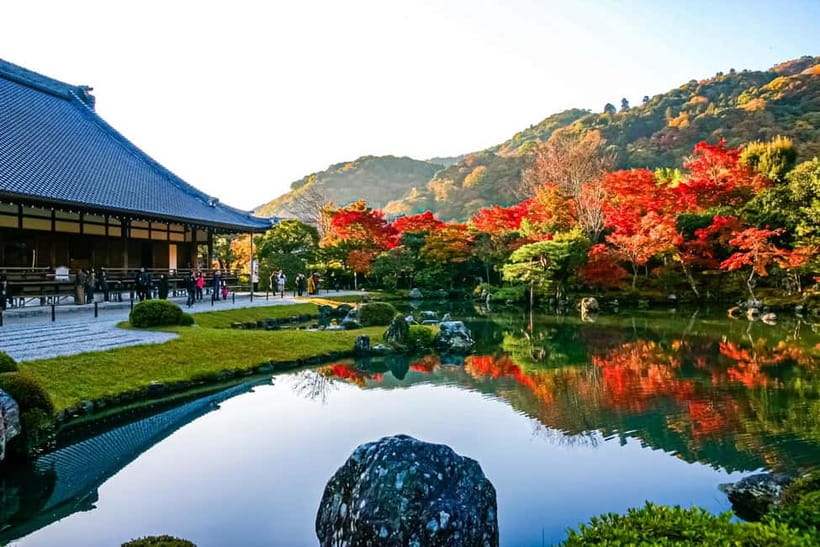
Tenryuji is included with a visit plus free time for sightseeing. This gives you room to slow down and wander without feeling like you must keep moving every minute. Since the tour offers a mix of guided direction and free movement, you can adjust depending on your style—photo-first or temple-first.
Extra photo stop: Kimono Forest
There’s a photo stop connected to the Kimono Forest area. Expect this to be more about quick shots and atmosphere than a deep temple walk, and plan your time accordingly.
Time to eat and shop
Arashiyama also includes free time plus shopping opportunities. That’s helpful because it’s your biggest block of time outdoors and walking, and you’ll want flexibility for snacks, souvenirs, and rest.
A single caution: Arashiyama can be crowded on popular days, and the bamboo grove is a classic bottleneck. If you want your photos without stress, be ready to move with the flow and avoid stopping in the middle of narrow paths.
Sanjusangendo’s 1,001 golden Kannon statues
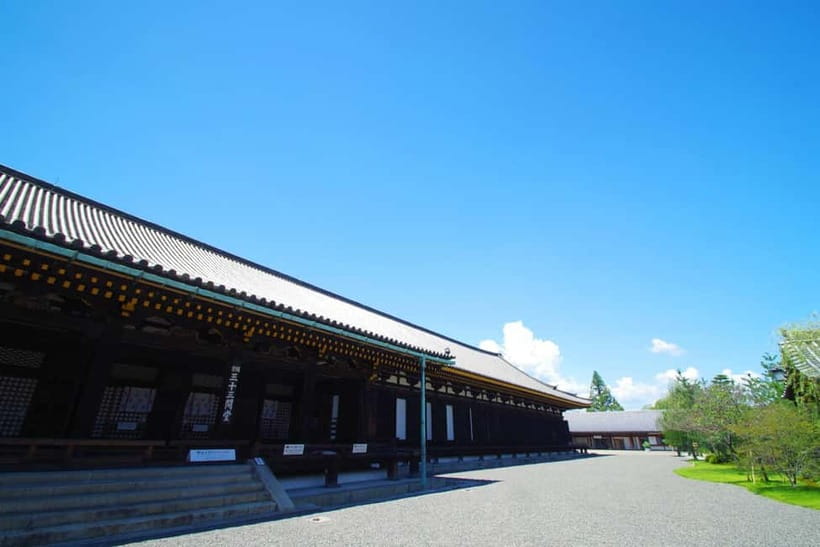
Sanjusangendo is where the tour turns from scenic to strange—in the best way.
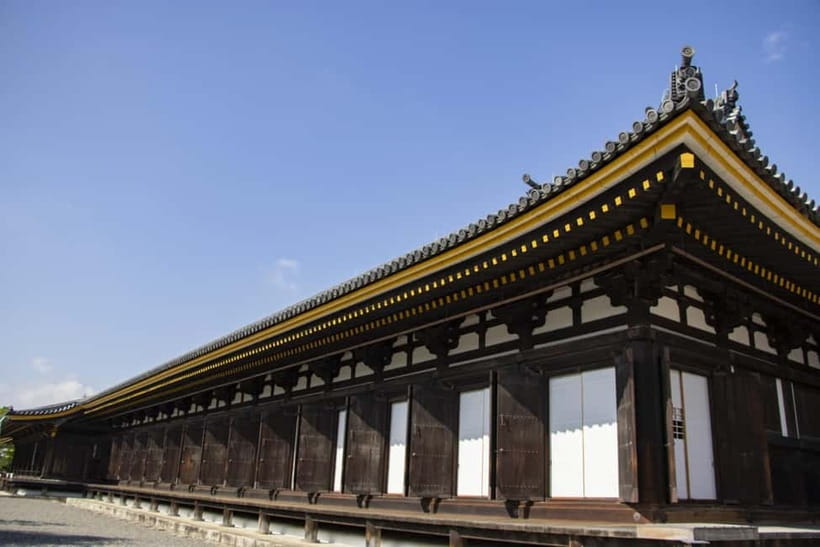
You’re scheduled for about 40 minutes inside Japan’s longest historic sanjusangen-do. The headline is 1,001 life-sized statues of Kannon, the Goddess of Mercy. Each golden figure is uniquely carved, which means this isn’t just repetition for decoration. It’s more like an entire army of compassion, with enough uniformity to feel overwhelming and enough variation to keep you staring longer than you expect.
There’s also a famous idea connected to the thousand faces: you may find one that resembles someone you love. Whether you interpret that as spiritual, poetic, or just a memorable story, it gives the hall emotional weight.
In a short time, your strategy should be simple:
- Take in the whole hall first so you understand the scale.
- Then focus on details for a few minutes—one or two groups of statues—so your brain doesn’t get overloaded and start zoning out.
If Kiyomizudera is the sweeping view temple, Sanjusangendo is the deep-feeling indoor one. The day benefits from that contrast.
Kiyomizudera wooden stage views and the Otowa Waterfall stop
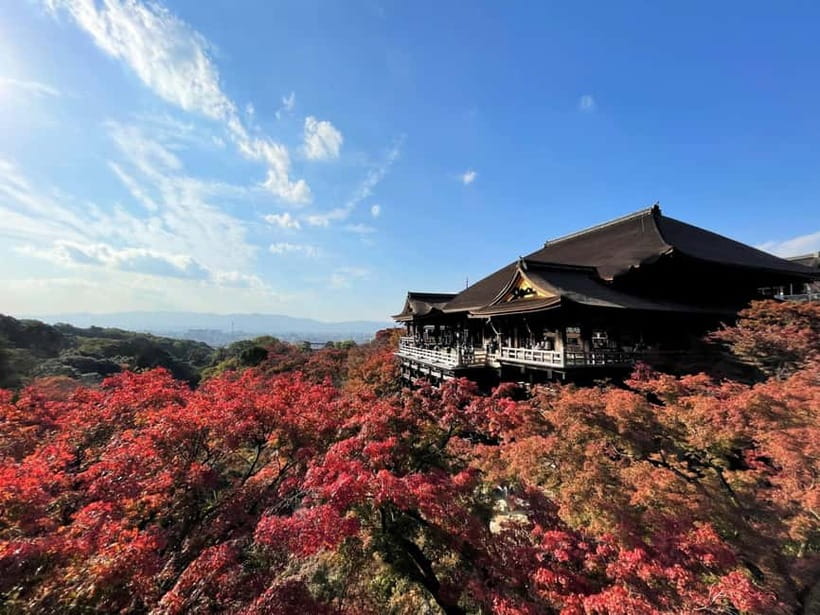
Kiyomizudera (also called the Temple of Pure Water) is a major finish to the tour, with about 80 minutes at the site. The signature feature is its massive wooden stage built without a single nail, which is the kind of engineering detail that feels impressive even when you’re not a “tech facts” person.
From that stage, you get panoramic views of Kyoto’s skyline, often framed by seasonal scenery. The tour gives enough time for you to take it in without feeling like you’re sprinting.
Koyasunoto Pagoda
You’ll also visit the Koyasunoto Pagoda at the complex. That helps you stretch your time beyond just the main stage, and it’s a good option if you want a slightly quieter moment after the main viewpoint.
Otowa Waterfall
Before you leave, there’s the chance to visit the Otowa Waterfall to drink its sacred water. The idea is that the water brings health, longevity, and success. Even if you treat that as more tradition than guarantee, it’s still a meaningful pause in the middle of a long day.
Ninenzaka and Sannenzaka shopping streets
After Kiyomizudera, you head into the classic street areas for shopping and browsing (Ninenzaka and Sannenzaka). This is your chance to pick up small gifts, snacks, or souvenirs while the energy of the evening crowd is building.
If you’re tempted to buy everything, set a budget before you start walking. These streets are great for browsing, but the scale of options can make it easy to spend more than you planned.
Kobe Beef lunch: when the A5 upgrade is worth it
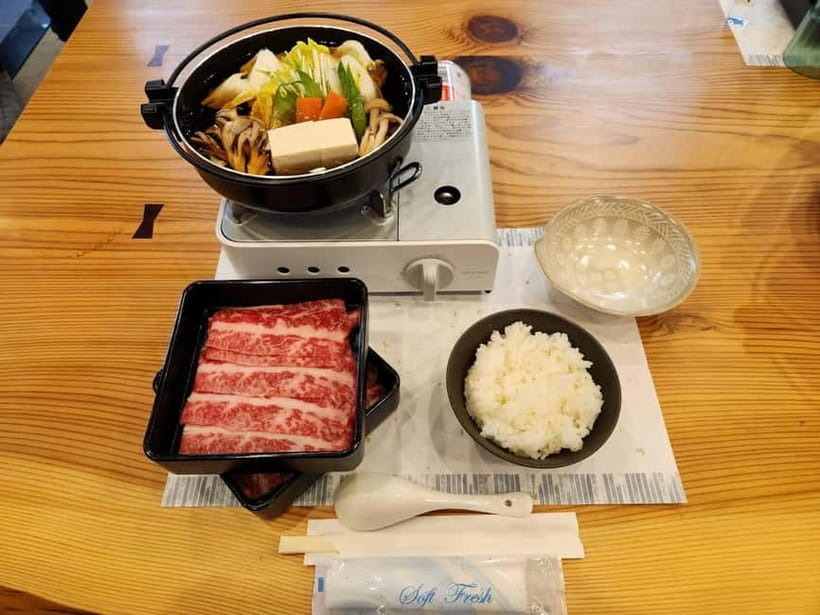
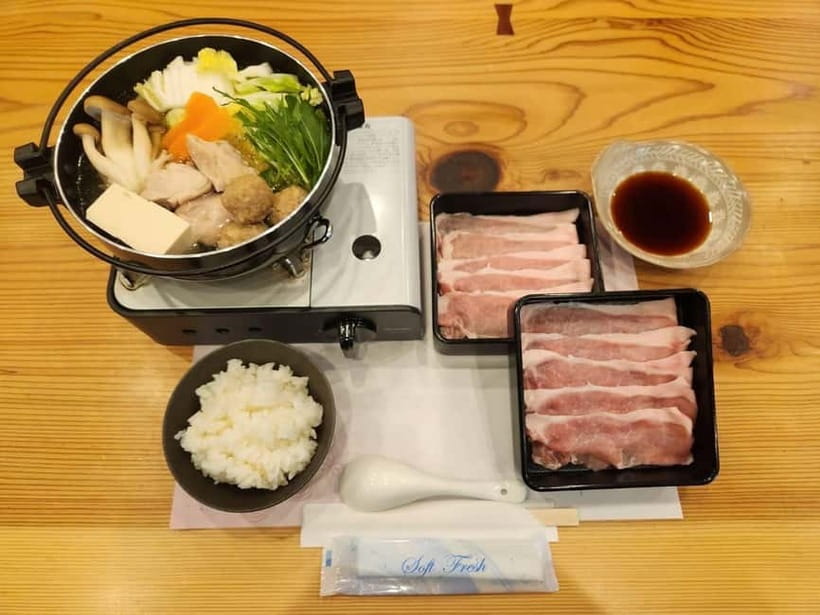
The tour offers an optional Kobe Beef lunch, described as A5 ranked and world famous. If you love food, this is one of the best “value-per-memory” upgrades you can make during a sightseeing day. You’re not just getting lunch—you’re getting a specific, high-end experience tied to Japan’s wagyu reputation.
A5 Kobe Beef is known for marbling and a melt-in-your-mouth texture. The payoff you’re looking for is flavor: rich umami and refined sweetness. In a day packed with walking and temples, that kind of meal can be the reset button you need before the afternoon.
On the other hand, if you’re traveling with a tight budget or you’re not excited by premium meat, you can treat lunch as optional and choose what fits you. The day still works without the upgrade, and you’ll have free time in Arashiyama for other options.
My practical advice: if you choose the Kobe Beef lunch, commit to it and plan your shopping so you’re not too full to enjoy the later streets.
Timing, group size, and how to avoid stress on the day
This tour runs 9–10 hours and departs regardless of weather or traffic unless the operator notifies you otherwise. That’s important: Kyoto can throw curveballs. Severe traffic on holidays or bad weather can reduce planned attractions without refund.
So, plan your expectations for a “packed but well-paced” day, not a slow travel day. You’re also asked to arrive 10 minutes before departure, and delays or being late aren’t accommodated in the sense that the tour won’t wait.
Since guides speak English and Chinese, you’ll get help moving through the sites and understanding what you’re seeing. And because it’s small group, you’re more likely to get a smooth experience than on a giant bus tour, even though you’ll still be in popular zones.
Two tips that make the whole day easier:
- Wear shoes you trust for temple stairs and museum-floor walking. You’ll do a lot of it.
- Keep your photo expectations realistic. Iconic stops (like Kinkakuji reflection and bamboo) attract crowds, so plan to move with the group and get your shots early.
Should you book this Kyoto UNESCO World Heritage day tour?
Book it if you want a single-day plan that hits the big UNESCO names without forcing you to coordinate transportation, tickets, and sequencing yourself. The value is strongest when you care about iconic Kyoto visuals and want a guide to explain what those places mean—especially if you appreciate history-focused commentary (and if you’re lucky enough to get Kaytu).
Skip it or choose a different style if you hate time limits. The day is long, and each major site has a fairly tight window (about 40 minutes for Kinkakuji and Sanjusangendo, about 80 minutes for Kiyomizudera, and free time blocks mixed in elsewhere). It’s excellent for checking off top highlights, but it’s not built for deep, slow study.
If you’re the kind of traveler who likes structure with room to wander, this is a strong pick. You’ll leave with the gold pavilion, the bamboo calm, the 1,001 statues feeling, and Kiyomizudera’s wooden-stage skyline all on one timeline.
FAQ
What UNESCO sites does this tour cover?
This tour focuses on Kyoto’s UNESCO World Heritage highlights including Kinkaku-ji, Arashiyama (Tenryuji area included), Sanjusangendo, and Kiyomizu-dera.
How long is the tour?
The duration is about 9–10 hours (approximate) and can vary with traffic and conditions.
Is lunch included?
Lunch is included only if you select the lunch option. The upgrade is A5-ranked Kobe Beef lunch.
Are temple tickets included?
Kinkakuji Temple and Sanjjusangendo Temple tickets are included.
What languages are the guides?
The live guide speaks English and Chinese.
Where do I meet the group?
You’ll choose between two start locations: VIPヴィラなんば or 京都VIPラウンジ. The meeting point can vary by the option you book.
What if it’s crowded, or traffic is bad?
The tour departs regardless of weather/traffic conditions unless you’re notified otherwise. In severe traffic situations caused by holidays or adverse weather, there may be a reduction in planned attractions without refund.