REVIEW · MARRAKECH
Cultural Heritage of Marrakesh
Book on Viator →Operated by Morocco Friendly Tours · Bookable on Viator
Marrakech hits fast, then makes sense. This half-day private tour is a smart way to see the parts of the city that most first-timers miss, with a guide like Bassam turning Jemaa el-Fnaa into a place you can actually understand, plus real architecture rewards at Koutoubia Mosque. The trade-off is simple: at about 3 hours 30 minutes total, you’ll have to keep your pace brisk if you want time for photos and a few shop stops.
I also like that it stays practical. You get a professional guide, a map of Marrakech, a mobile ticket, and a tight loop that ends where you start, so you can move through the Medina with less stress and more context.
In This Review
- Key Things That Make This Marrakech Heritage Tour Worth It
- Getting Your Bearings at Jemaa el-Fnaa Square
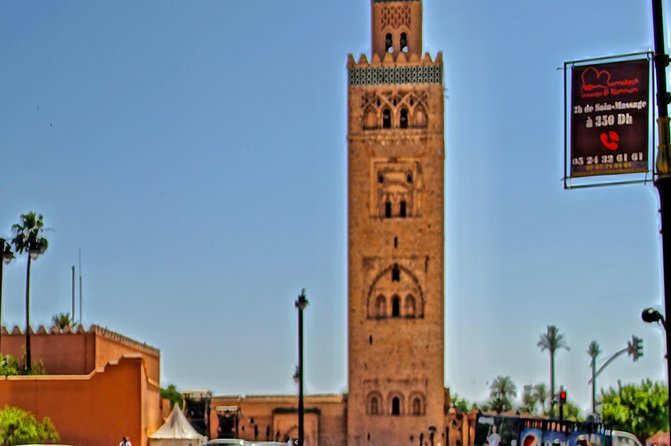
- Koutoubia Mosque: A 12th-Century Landmark You’ll Recognize Fast
- Medersa Ben Youssef: A Real Look Into an Islamic School
- Bahia Palace: Si Moussa, Ba Ahmad, and El Bahia
- Medina of Marrakech Souks: Markets You Can Actually Name
- Price, Group Size, and the Value of a Private Guide
- Timing, Location, and How to Plan Your Half Day
- Who This Private Marrakech Heritage Tour Suits Best
- Should You Book This Marrakech Cultural Heritage Tour?
- FAQ
- How long is the Marrakech cultural heritage tour?
- Is this tour private or shared?
- What is the group size?
- What’s included in the price?
- Are entrance tickets included for all stops?
- Where does the tour start?
- Is there a mobile ticket?
- Is lunch included?
- What are the cancellation rules?
Key Things That Make This Marrakech Heritage Tour Worth It
- UNESCO Jemaa el-Fnaa in context: not just sights, but how the square functions in daily life
- Koutoubia Mosque architecture: Almohad-era design and a 70-meter minaret landmark
- Medersa Ben Youssef highlights: a look at the old Islamic school with dormitory rooms
- Bahia Palace story: Si Moussa and Ba Ahmad, plus the tribute behind El Bahia
- Medina souks you can target: dyers market, leather market, and blacksmiths
Getting Your Bearings at Jemaa el-Fnaa Square
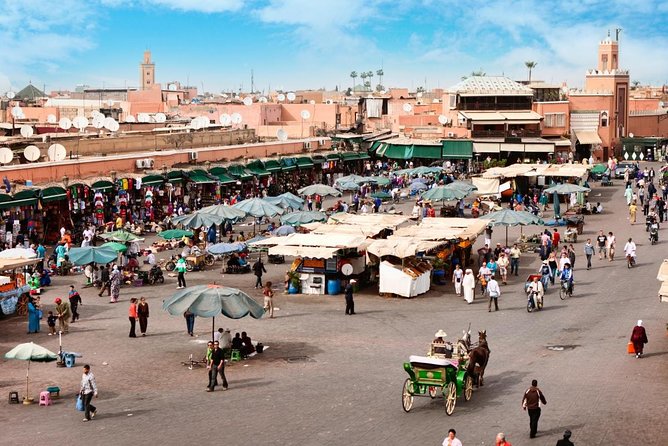
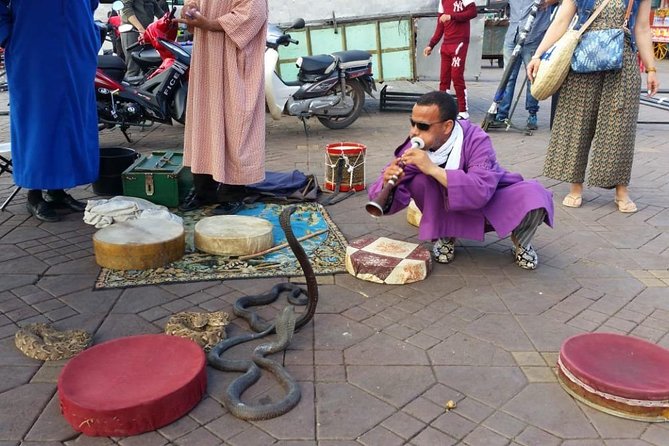
Jemaa el-Fnaa is the heart-beat of Marrakech’s Medina, and this tour starts there on purpose. You’ll walk into the square’s energy and then get help reading what you see: snake charmers, fortune tellers, musicians, and orange juice sellers all form part of a lived-in public space, not just a photo-op backdrop.
What I like most is that you don’t just stand and watch. With a guide, the square becomes a reference point. You’ll understand why people gather here, what you’re likely to run into as you keep walking through the Medina, and how to time your wandering so you don’t feel overwhelmed. Admission is included for this stop, and the visit is kept to about 10 minutes, which is perfect if you’re trying to get oriented without getting stuck in the noisiest zone for too long.
One consideration: Jemaa el-Fnaa can feel crowded and intense. If you prefer quiet, this is still manageable because the stop is short. Use it as your launchpad, then let the rest of the tour cool the pace.
You can also read our reviews of more tours and experiences in Marrakech.


Koutoubia Mosque: A 12th-Century Landmark You’ll Recognize Fast
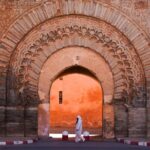
Next up is Koutoubia Mosque, an Almohad dynasty project from the 12th century. The minaret is the headline here: about 70 meters tall, and visible enough that you can often spot it while you’re moving around the city.
Your guide frames what you’re seeing, especially the Andalusian-style architectural details. The goal isn’t just to admire the exterior. It’s to learn how the Almohads used form and proportion to create one of Marrakech’s most identifiable silhouettes.
This stop is brief (around 10 minutes), but that length works well. You get the landmark moment, you learn the basic story, and you don’t waste half your morning standing in one spot when the tour’s value comes from moving to multiple sites.
Admission is included, so you’re not juggling extra entry questions mid-itinerary.
Medersa Ben Youssef: A Real Look Into an Islamic School
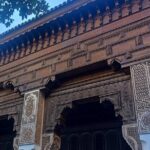
Medersa Ben Youssef is one of those Marrakech stops that makes the city feel deeper in a way you can sense immediately. It’s a 16th-century Islamic madrasa, basically an old school tied to religious study and community life.
You’ll spend about 30 minutes here, with an emphasis on what’s still memorable: dormitory rooms and the Moroccan architecture that frames daily spaces. This is the point in the tour where you start seeing Marrakech as more than monuments. You start seeing how education, worship, and design shaped everyday life.
The entrance ticket for this stop is not included, so plan for that cost. Still, it’s often worth it because you’re not just seeing decorative craft—you’re seeing how design supported living and learning.
Practical note: because this stop isn’t bundled, double-check the entry requirement with your guide before you go in, especially if you’re trying to minimize stop-and-start interruptions.
Bahia Palace: Si Moussa, Ba Ahmad, and El Bahia
Bahia Palace is the kind of place where the architecture does the storytelling for you. It’s considered a masterpiece of Moroccan design, and the tour gives you the key names that make it click.
The palace was built during the reign of a former chamberlain, Si Moussa, and later enlarged during his son Ba Ahmad. The expansion is described as a tribute to his favorite wife, El Bahia. When you know that, the palace feels less like a standalone attraction and more like a long personal project shaped by power, taste, and family priorities.
You’ll have about 40 minutes here, which feels about right. This is a slower stop compared to the square and mosque. It’s also the best place for photos that show interior detail and the kind of patterned design Marrakech is known for.
Admission is free for this stop, which is a nice value perk. Even with a short timeframe, Bahia Palace is where the tour’s “wow” factor usually shows up—ornate woodwork, tile-like surfaces, and interior layout that rewards even a quick visit.
Medina of Marrakech Souks: Markets You Can Actually Name
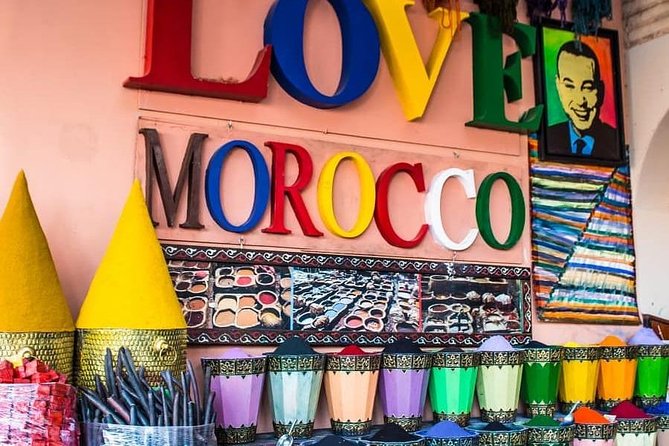
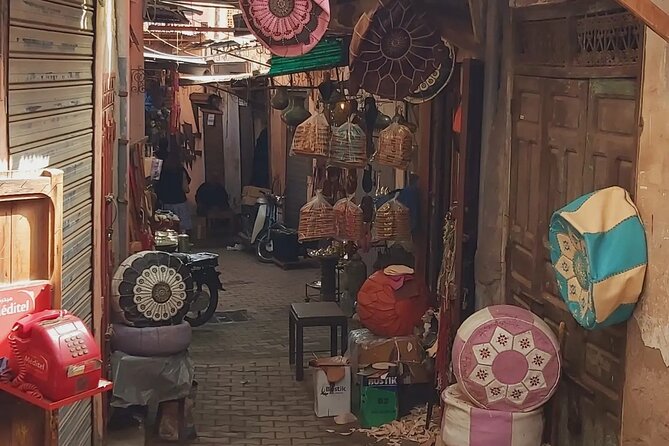
After the palace, the tour turns into a practical Medina walk through souks and markets. This part matters because Marrakech can be confusing fast. A guide helps you focus on meaningful stops instead of randomly wandering until you’re tired and lost.
You’ll spend about 1 hour exploring the old Medina and passing key markets, including:
- Dyers market
- Leather market
- Blacksmiths market
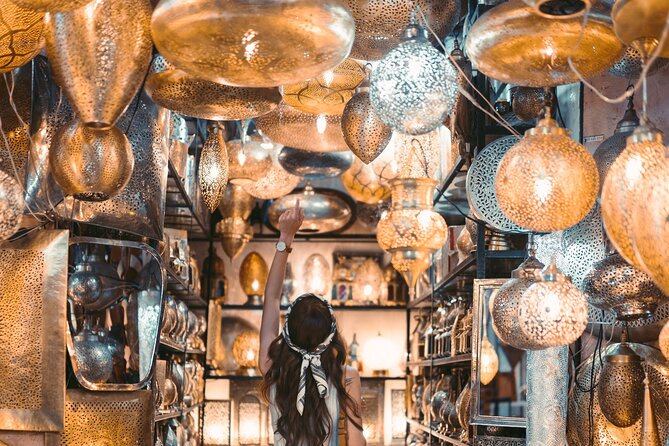
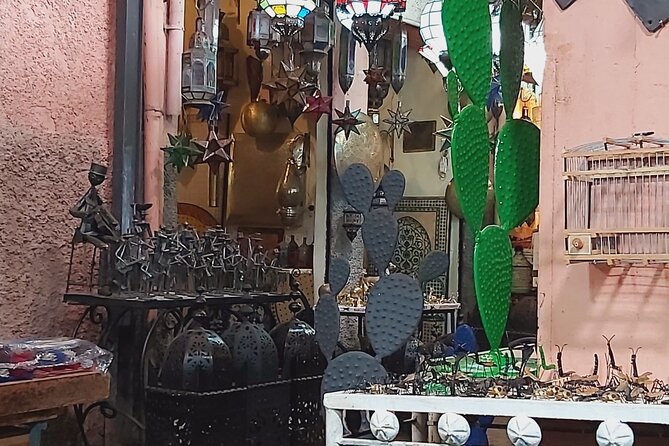
The value here is not only what you see, but how you understand it. Different crafts cluster together, which affects how the street looks, how people move, and what kinds of goods you’ll spot. It also helps you shop with intention rather than just browsing everything that catches your eye.
Admission is included for this stop, and the tour is structured so you end back at the meeting point, which keeps the session feeling contained. That’s a big deal if this is your first time in the Medina.
One thing to keep in mind: the souks are active and can be intense. The guide helps you navigate, but you may still want to keep expectations realistic—this is a living marketplace, not a museum corridor.

Price, Group Size, and the Value of a Private Guide
The price is $92.92 per group, up to 7 people, for about 3 hours 30 minutes. That pricing structure is the first thing that makes this tour feel practical: if you’re traveling with even a small group, you can spread the cost and get a true private experience.
You’re also paying for more than “someone who walks with you.” You’re paying for interpretation at several key sites:
- turning Jemaa el-Fnaa from chaos into context
- giving Koutoubia’s historical and architectural framing
- connecting Medersa Ben Youssef to the idea of an old Islamic education system
- making Bahia Palace’s names and story feel relevant
That’s why the guide matters so much here. The strongest praise tied to this tour is for the guide experience, including the standout performance of Bassam, with people highlighting his knowledge and engagement. That kind of guiding can make a short tour feel complete instead of rushed.
Also worth noting: the tour includes a map of Marrakech. That’s not glamorous, but it’s genuinely useful. You’ll leave with something you can use immediately after the tour to keep exploring with less guesswork.
If you’re deciding whether it’s good value, think like this: you’re getting five major stops in a single loop, plus multiple entrance situations (some included, some free, one not included). A private format at this price can be a better deal than stitching together separate tickets and trying to coordinate your own route.
Timing, Location, and How to Plan Your Half Day
This tour is designed as a half-day cultural circuit, so planning matters. The itinerary is compact, with short visits at Jemaa el-Fnaa and Koutoubia, a medium stop at Medersa Ben Youssef, and a longer palace visit at Bahia Palace, before ending with an hour in the souks.
It starts at ArganaJ2H6+CPV, Jamâa el-fnna, Number 18, Znikat Rahba, Marrakech 40000, Morocco. It ends back at the meeting point. That back-to-start format is a lifesaver when you want to keep the rest of your day flexible.
In terms of scheduling, the average booking time is about 73 days in advance. That suggests this tour has steady demand, so it’s smart to reserve early if you’re aiming for specific dates.
The tour uses a mobile ticket, which helps reduce paperwork hassles on the day. It’s also near public transportation, so you’re not locked into a taxi-only plan.
Who This Private Marrakech Heritage Tour Suits Best
This tour is a great fit if:
- It’s your first time in Marrakech and you want a fast orientation.
- You like architecture and want help interpreting what you’re looking at.
- You want a guided Medina path through meaningful markets, not random wandering.
- You’re traveling with up to 7 people and want a true private group format.
It’s also a good choice if you don’t want a full-day commitment. With a total duration of about 3 hours 30 minutes, you still get momentum without sacrificing your evening plans.
If you only want one or two major attractions, this might feel like too much in too little time. But if your goal is to learn the lay of the land, this itinerary is built for that job.
Should You Book This Marrakech Cultural Heritage Tour?
I’d book it if you want a guided, first-time-friendly introduction that connects major landmarks—square, mosque, school, palace, and crafts—into one coherent story. The short stop at Jemaa el-Fnaa and Koutoubia gets you oriented fast, and the time at Medersa Ben Youssef and Bahia Palace is where the cultural value really lands.
The main reason to hesitate is the pace. At 3.5 hours, you’re not getting a long, unhurried visit to every site. But if you treat it as a foundation tour—then continue exploring on your own afterward—you’ll get a lot for your money.
FAQ
How long is the Marrakech cultural heritage tour?
It lasts about 3 hours 30 minutes.
Is this tour private or shared?
It’s private. Only your group participates.
What is the group size?
The group can include up to 7 people.
What’s included in the price?
A professional tour guide and a map of Marrakech are included. Some admissions are included, while others are not, depending on the stop.
Are entrance tickets included for all stops?
Jemaa el-Fnaa and Koutoubia Mosque include admission tickets. Medersa Ben Youssef does not include admission. Bahia Palace is free. The Medina of Marrakech/souks stop includes admission ticket.
Where does the tour start?
The meeting point is ArganaJ2H6+CPV, Jamâa el-fnna, Number 18, Znikat Rahba, Marrakech 40000, Morocco.
Is there a mobile ticket?
Yes, the tour uses a mobile ticket.
Is lunch included?
No, lunch is not included.
What are the cancellation rules?
You can cancel for a full refund up to 24 hours in advance of the experience start time. Within 24 hours, the amount paid is not refunded.