REVIEW · LISBON
Tomar, Alcobaça and Batalha – 3 Unesco Heritage Sites – Private
Book on Viator →Operated by Van Go Tourism · Bookable on Viator
Hilltop castles in one long day.
This private 3-site UNESCO trip makes medieval Portugal feel real, fast. I love the way you cover three UNESCO World Heritage stops in about 10 hours, without the hassle of figuring out schedules on your own, and I love that the day includes key admission tickets plus an air-conditioned van. One thing to consider: it’s a packed itinerary with no lunch included, so you’ll want to plan for food between stops or bring snacks.
The best part is the human scale: you get undivided time with a private guide who connects the dots between Templars, Renaissance art, and monastic power. You’ll start at 8:00am with hotel pickup in Lisbon (and also the Fátima area), then move stop to stop with bottled water and onboard WiFi.
In This Review
- Key things that make this UNESCO day work
- A 3-in-1 UNESCO day from Lisbon: Tomar, Batalha and Alcobaça in one go
- Castelo de Tomar: the Templars Castle overview in 30 minutes
- Convento de Cristo: Renaissance portals, Manueline symbolism, and Templar spaces
- Batalha Monastery: guided focus on why UNESCO put it on the map
- Alcobaça Monastery: Cistercian calm with meaning
- Private transportation that keeps the day from getting stressful
- Tickets included: what you save, and what you still need to plan
- How to pace a 10-hour UNESCO marathon without feeling rushed
- Who this tour fits best (and who might want to choose differently)
- Should you book Tomar, Alcobaça and Batalha UNESCO private trip?
- FAQ
- What time does the tour start?
- Is pickup included, and where does it pick up from?
- Which UNESCO sites are included?
- Are admission tickets included?
- Is lunch included?
- Is this a private tour?
- What is the cancellation policy?
Key things that make this UNESCO day work
- Three UNESCO sites, one itinerary: Tomar, Convento de Cristo, Batalha, and Alcobaça, all in a single day
- Templar-to-Renaissance connections at Convento de Cristo, including the Manueline Window symbolism
- Guided visits where it counts at Batalha and Alcobaça, not just quick look-and-go time
- Stress-free pickup and drop-off across Lisbon hotels, apartments, and ports, plus Fátima area pickup
- Admission tickets included for Convento de Cristo, Batalha, and Alcobaça, so you don’t hunt for timed entry
- A guide who sets the tone: names like Joan, Juan, Susana, Jorge, Joao, and Suzanne show up in the feedback as patient and clear
A 3-in-1 UNESCO day from Lisbon: Tomar, Batalha and Alcobaça in one go
If you only have one day to spare, this is the kind of plan that makes sense. Instead of choosing one monument and calling it a trip, you get a full arc of Portuguese sacred architecture, from fortress mood to monastic focus.
The route is built around four main stops: the hilltop Castelo de Tomar (about 30 minutes), the Convento de Cristo inside the Templars Castle (about 1 hour), Batalha Monastery (about 1 hour 30 minutes), and Alcobaça Monastery (about 1 hour 30 minutes). The rest of the day is transportation time in a comfortable, air-conditioned vehicle—important because you’ll spend hours in transit if you’re trying to do this independently.
Private guides also change the experience. You’re not stuck listening to a headset mix of other people’s pace. Guides highlighted in the feedback—like Juan (patient and kind), Susana (personable and informative), and Jorge (good historical context)—tend to focus on explanation that helps you read what you’re seeing instead of just scanning stonework.
You can also read our reviews of more tours and experiences in Lisbon.


Castelo de Tomar: the Templars Castle overview in 30 minutes
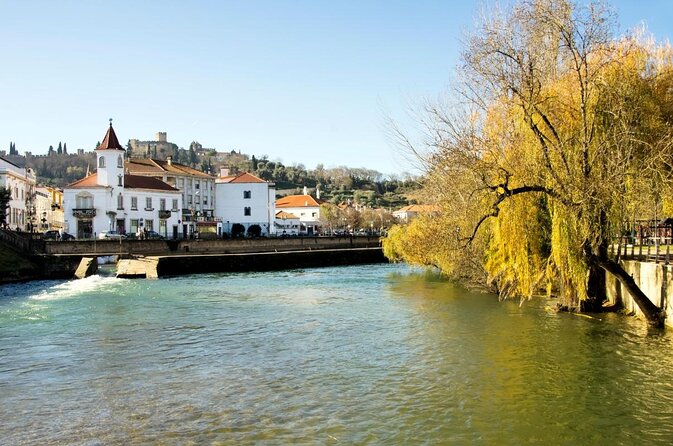
Stop one is Castelo de Tomar, also called the Templars Castle. It sits on a hill, which means you start with the big-picture vibe: strong walls, fortress geometry, and the feeling that this place was built to hold ground.
With only about 30 minutes here, you’re not doing a long wander. Instead, think of it as orientation. This is where your guide can frame what you’ll see next inside the castle complex, especially the Templar layer that runs through Convento de Cristo.
Practical tip: wear shoes you’re comfortable walking in. Hilltop sites often mean uneven ground and steps, and your time is scheduled tightly across multiple monuments. If you’re someone who likes to slow down and linger, you may find 30 minutes feels short—but that’s also why the day works as a 10-hour sprint without feeling chaotic.
Convento de Cristo: Renaissance portals, Manueline symbolism, and Templar spaces
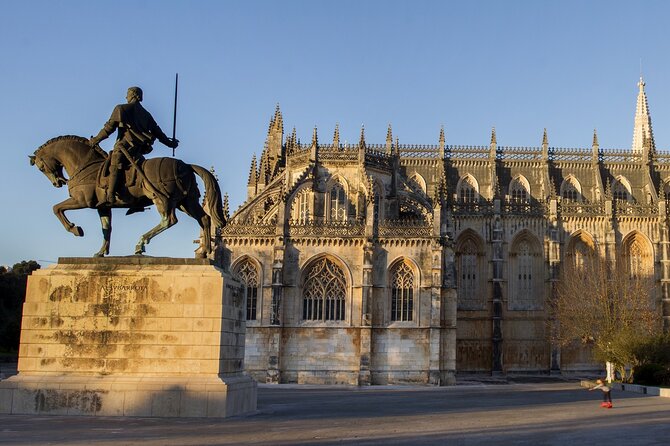
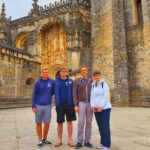
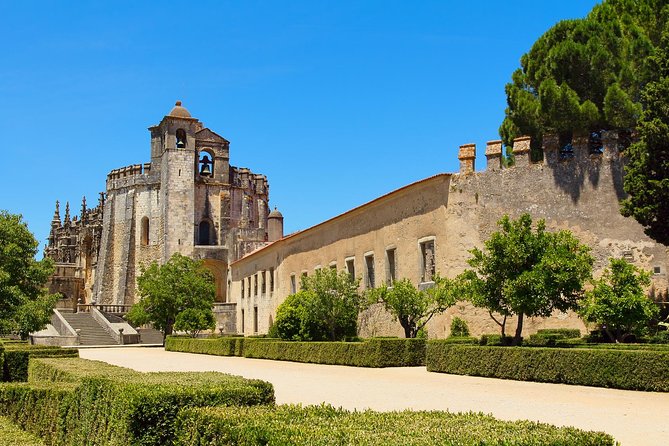
Next up is the star building for this itinerary: Convento de Cristo, inside the Templars Castle. This stop is where the day shifts from defensive to artistic—and where the guide’s storytelling really pays off.
You’ll spend about 1 hour here, and the visit is focused on specific details, not just big halls. The tour highlights the Renaissance portal depictions, and it pays special attention to the Manueline Window in the Chapter Hall. That combination matters because Manueline style is a visual language—ornament that’s both decorative and meaningful. When you learn what to look for, the architecture stops being wallpaper and starts acting like a message.
The visit also points out the Main Cloister and spaces connected to Templar rituals. Even if you don’t know the history beforehand, a good guide can make the religious and cultural layers line up in your head. The overall effect is that Convento de Cristo becomes more than a beautiful church complex. It becomes a working map of Portuguese religious identity as it changed over time.
One consideration: this is a busy stop visually, and you’ll be moving through several key areas in an hour. If you’re the type who wants to spend a long time photographing or reading every plaque, you may want to bring your attention back to what your guide is pointing out rather than trying to “capture it all.”
Batalha Monastery: guided focus on why UNESCO put it on the map
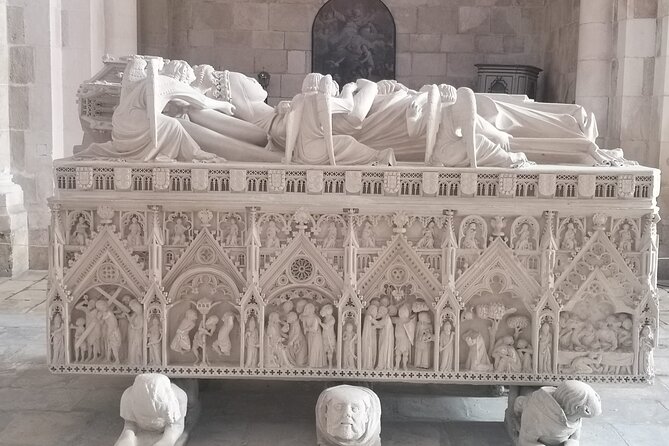
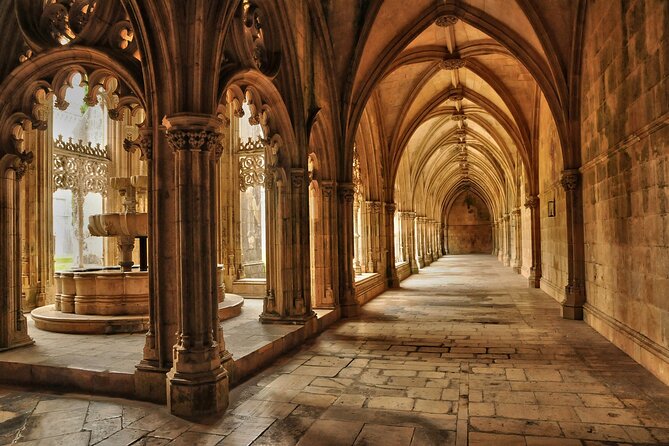
Then you head to Batalha Monastery, with about 1 hour 30 minutes for a guided visit. This monastery has that feeling of grand ambition. The building looks like it was designed for impact—light, stone, and detail all working together.
The key here isn’t just seeing the big view. It’s getting your bearings with a guide so the monument makes sense. A guide like Joao or Susana (both named in the feedback) tends to slow things down just enough to explain the religious context behind the architecture and the different layers of what you’re looking at.
Because the time is set, you don’t get stuck in the trap of long, unplanned wandering. You get a route through the most important parts, with explanation built into the walk.
Practical tip: bring patience for the schedule. Batalha is one of the stops where your energy will be tested a bit—especially if you’ve been up since 8:00am. The best strategy is to keep water handy, keep moving with the group pace, and let the guide do the interpretation work.
Alcobaça Monastery: Cistercian calm with meaning
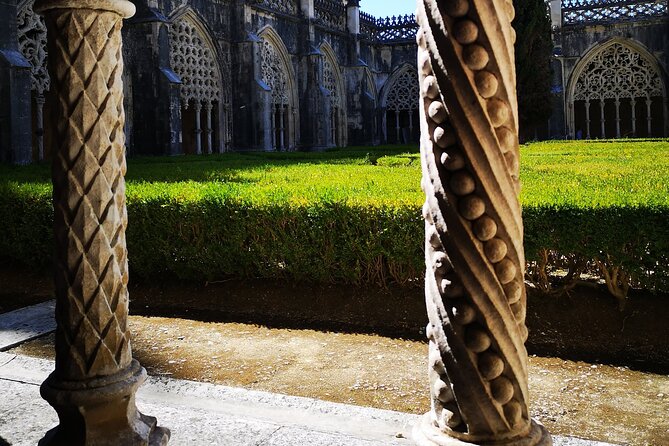
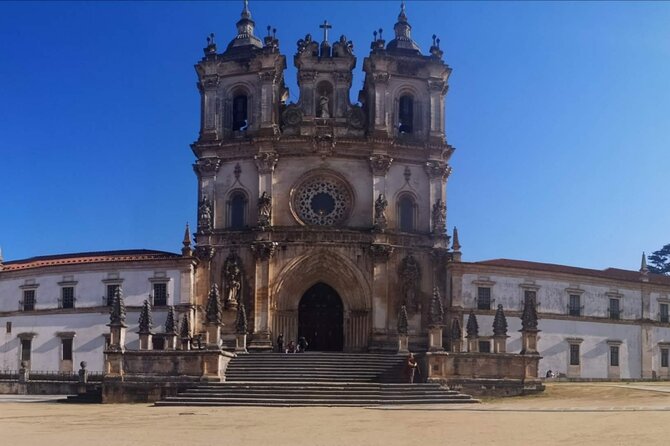
Your final monument is Alcobaça Monastery, another UNESCO-listed site, also with about 1 hour 30 minutes for a guided visit. If Batalha feels dramatic, Alcobaça often reads as more controlled and ordered. That contrast is useful on this itinerary. You’re not stuck in one style for the entire day.
Again, the value isn’t just entry. A guided walk helps you connect what you see to how monastic life shaped the spaces. The tour is designed so you don’t just look at stone surfaces—you understand why the building is arranged the way it is, and what religious history you’re stepping into.
This stop is also a good moment to take a breath. By this point, you’ve already visited Tomar and Convento de Cristo, so your brain is ready to compare. When you can compare, the day starts to click.
If you’re traveling with someone older or less mobile, this is where pacing matters. The feedback includes examples of guides being patient with older visitors, like the case where Juan was kind and careful with an 85-year old. A private guide also means you can ask for small adjustments without feeling like you’re delaying a busload.




Private transportation that keeps the day from getting stressful
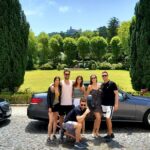
This trip runs as a private experience with private transportation and hotel pickup and drop-off. That matters more than it sounds.
Between Lisbon-area hotels, the time needed to reach Tomar, and then moving from stop to stop, your day can turn into an exhausting transport puzzle. Here, you’re riding in an air-conditioned vehicle with WiFi onboard and bottled water. It’s not just comfort—it’s energy management.
Starting at 8:00am also helps. You’re getting into the sites earlier than you would if you tried to self-drive and coordinate entry times. And since this tour covers multiple major monuments, starting early is one of the few real ways to avoid feeling rushed later.
You’ll also want to remember that it’s private, meaning only your group participates. That’s a big deal for families, couples who want conversation time, or anyone who doesn’t want to listen to a crowd while trying to understand what they’re seeing.
Tickets included: what you save, and what you still need to plan
Let’s talk value, because the price can look high until you see how the day is structured.
You pay $336.82 per person, and the itinerary includes admission tickets for Convento de Cristo, Batalha, and Alcobaça. It also includes private transportation, WiFi, air-conditioning, and bottled water. On a multi-monument day, those admissions and logistics can easily become the difference between a smooth trip and a frustrating one.
What’s not included is lunch. That’s the main cost you’ll still need to handle. Because your day is scheduled from morning into the afternoon, your best bet is to think ahead: either eat before you start (if your pickup timing allows) or plan a practical meal stop outside the tour time. If you prefer simple, bring a small snack so you’re not running on empty while walking through historic spaces.
Also note: the tour is offered in English, and confirmation comes at booking. It’s also built for people who want to go; it says most participants can join.
How to pace a 10-hour UNESCO marathon without feeling rushed
This is a full day. Expect about 10 hours total, including transit. The stop durations are specific, and the schedule is built for coverage.
Here’s how I’d pace it so you enjoy the day instead of just completing it:
- Focus on the featured details your guide points out, especially at Convento de Cristo (portal depictions and the Manueline Window).
- Take your photos, but don’t let photos turn into a detour. When you’re on a tight schedule, a guide’s explanation can be the part that stays with you.
- Drink water during transit and between stops. The vehicle provides bottled water, but you’ll still want to pace yourself on walking days.
- Wear comfortable shoes. Castelo de Tomar sits on a hill, and historical complexes can mean steps and uneven surfaces.
Small humor helps here: this is not the day for “I’ll just pop in for ten minutes.” It’s a planned route, and that’s why it works.
Who this tour fits best (and who might want to choose differently)
This private UNESCO route is a strong match if you want:
- Maximum sites in one day without dealing with route planning
- A guide who connects details to history, so monuments feel understandable
- A calmer experience than group tours, thanks to private transportation and your own pacing
It may be less ideal if you:
- Hate schedules and prefer slow, unbroken time at one site
- Need lots of breaks and longer sit-down times, since it’s structured and keeps moving
If you’re traveling as a couple, with older parents, or with a small family group, private access is often the best way to keep everyone comfortable while still seeing the big monuments.
And the guide quality matters. Feedback highlights that guides like Joan, Susana, Juan, Jorge, and Joao were friendly, patient, and effective at turning the sites into something you can actually follow. That kind of guiding makes the difference on a day like this, where you have limited time and lots of visual information.
Should you book Tomar, Alcobaça and Batalha UNESCO private trip?
I think you should book this if you want a smart one-day UNESCO hit with minimal stress. It’s not just four stops on a map. It’s a guided day built around meaningful architecture: Templar roots at Tomar and Convento de Cristo, then major monastic monuments at Batalha and Alcobaça.
Book it if you value admissions taken care of, hotel pickup and drop-off, and a private guide who can explain what you’re seeing—especially the standout details at Convento de Cristo like the Renaissance portal depictions and the Manueline Window in the Chapter Hall.
Skip it or consider a different option if you’re the type who wants to linger for hours at one site or you know you’ll struggle with a long day and a lunch gap. In that case, pick fewer stops and give yourself room.
FAQ
What time does the tour start?
The tour starts at 8:00am.
Is pickup included, and where does it pick up from?
Yes. Pickup is offered in all Lisbon hotels, apartments, and ports, and also in the Fátima area.
Which UNESCO sites are included?
You visit Castelo de Tomar, Convento de Cristo, Batalha Monastery, and Monastery of Alcobaça.
Are admission tickets included?
Yes. Admission tickets are included for Convento de Cristo, Batalha Monastery, and Alcobaça Monastery.
Is lunch included?
No. Lunch is not included.
Is this a private tour?
Yes. It is a private tour, and only your group participates.
What is the cancellation policy?
You can cancel for a full refund up to 24 hours before the experience’s start time.