Rome by golf cart is pure ease.
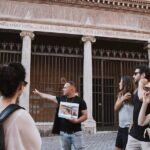
This small-group ride trades long walks for wraparound views and close-to-the-action photo moments, while a guide narrates the story behind each landmark so it feels more than sightseeing. I especially like the way the group stays capped at seven, which keeps the tour from feeling rushed or crowded. The main thing to watch is that some stops are photo-first and traffic can affect timing, so you may not control every shot as tightly as you want.
You’ll get a smooth route that strings together big icons like the Colosseum and Trevi Fountain without the stress of figuring out transport between them. I also like that the guides adapt, and the best ones bring a mix of humor, clear explanations, and real Rome details you can carry into the rest of your trip. The trade-off: it’s an efficient overview with mostly exterior viewing, so if you’re hoping for inside entries, you’ll want to plan those separately.
In This Review
- Key things that make this tour worth your time
- Why a seven-person golf cart beats big-bus Rome days
- Start smart: Largo Gaetana Agnesi to Campo de’ Fiori
- Colosseum photo moment: the value of a guide with real ties
- Past Rome’s earliest days: quick rides with real city clues
- Circo Massimo and an outdoor history of everyday Rome
- The ancient theater stop: why it has windows
- Pantheon area: outside viewing plus a clever dry-rain explanation
- Trevi Fountain: the coin photo stop and the traffic reality
- Spanish Steps and Piazza Navona: film stories, Bernini fountains, and food ideas
- The panoramic garden finish: what you do next with the energy you saved
- Price and value: is $163.33 fair for 2.5 hours?
- Who should book this Rome golf cart tour
- Should you book it? My straight advice
- FAQ
- What’s the duration of the golf cart tour?
- How much does it cost, and is bottled water included?
- What language is the tour offered in?
- How many people are on the tour?
- Does the tour include tickets or entry inside the sites?
- How much time do you spend at each landmark?
- What happens at the Pantheon stop?
- Is there anything that can affect Trevi Fountain photo time?
- Are tips included in the price?
- What’s the cancellation policy?
Key things that make this tour worth your time
- Seven-person cap keeps the cart ride cozy and easier to ask questions
- Photo-first stops at the Colosseum, Trevi, and Spanish Steps help you plan your camera time
- Guides with Colosseum roots bring specific stories you won’t pick up from generic signage
- Pantheon is viewed externally, with a short guide video explaining why it stays dry
- Trevi timing depends on traffic, so the best photos happen when roads cooperate
- Departure time options help you fit Rome’s main sights around your day
Why a seven-person golf cart beats big-bus Rome days
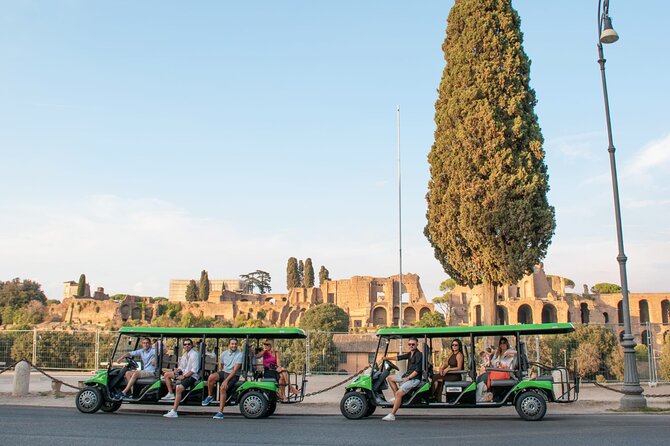
Rome can be a lot on your feet. Stones underfoot, sudden hills, crowds around the obvious sights. This is the kind of tour that makes sense when you want the big hits without spending half the day marching.
The golf cart format matters. You get a more cinematic view than a standard bus or a crowded walking group, and you’re close enough to landmarks to actually frame good photos without doing gymnastics. The wraparound sightlines also make the drive feel like you’re watching Rome unfold, not just commuting between stops.
The max of seven is the other win. Small groups usually mean the guide can slow down when people have questions, and you’re less likely to get swept along at someone else’s pace. In the reviews, guides like Vladimir, Vitaliy, Federico/Frederico, Antonio, and Vitale come up again and again for keeping things friendly and moving in a way that feels controlled, not chaotic.
The only real drawback is also part of the charm: you’re on city streets, so the plan is flexible when traffic and pedestrian flow shift.
You can also read our reviews of more tours and experiences in Rome.
Start smart: Largo Gaetana Agnesi to Campo de’ Fiori
The tour starts at Largo Gaetana Agnesi (near public transportation) and ends at Campo de’ Fiori. That routing is handy because Campo de’ Fiori is a great place to continue your day by foot, grab a meal nearby, or jump onto a quick next plan.
Because you have different departure times available, you can choose a slot that makes sense for your energy level. If you’re traveling with jet lag, a shorter late-day window can be easier than cramming Rome’s best sights into the hottest part of the afternoon.
Also, the tour is English-offered and you’ll receive confirmation at booking. Service animals are allowed, and the tour notes that most travelers can participate, which covers a wide range of visitors looking for a lower-stress way to get oriented.
Colosseum photo moment: the value of a guide with real ties
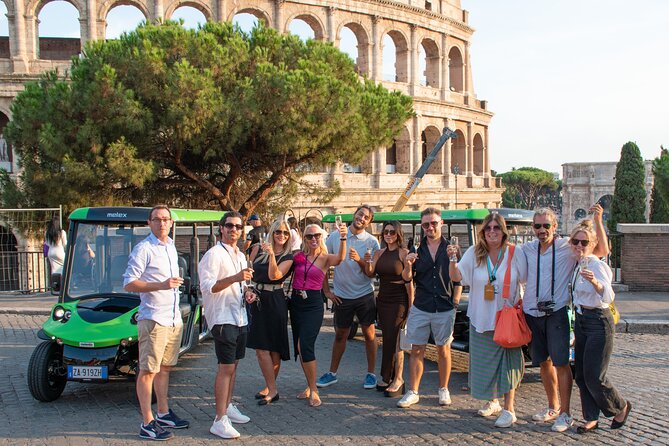
Most Rome tours mention the Colosseum. This one treats it like the starting point for understanding the city.
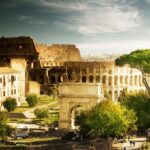
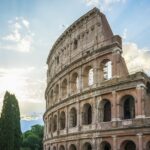
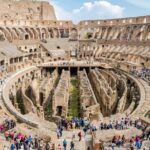
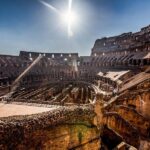
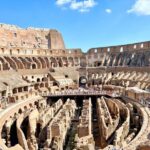
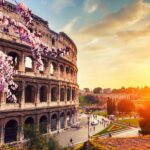
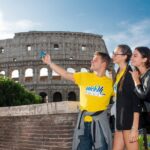
You’ll begin with a view of the Colosseum and get a quick story about gladiators and the arena. It’s outside viewing, so you’re not waiting on big entry lines. But what you’re buying is context: how the place worked, what the spectacle meant, and how to read it once you’ve seen it.
A standout detail here is that the guides started their guiding careers at the Colosseum, so the explanations tend to feel grounded instead of generic. Even if you’ve read about gladiators before, you’ll likely pick up story angles that connect the Colosseum to Rome’s wider political theater.
In practice, this stop works well for two reasons:
- It gets you to the iconic moment early, when you still have fresh attention.
- It sets a baseline for the rest of the route, so later stops feel like parts of the same puzzle.
One caution: you’ll be at the Colosseum area for about 10 minutes, so use that time deliberately. If you care about photos, take one wide shot first, then circle back for tighter framing while the group stays together.
Past Rome’s earliest days: quick rides with real city clues
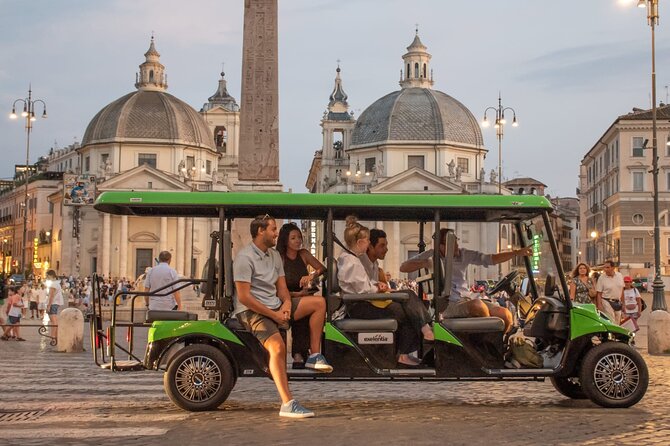
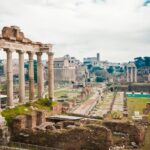
After the Colosseum, you glide through central Rome with panoramic views and stories that connect the modern streets to Rome’s earliest eras. This is where the golf cart really earns its keep. You’re moving fast enough to cover ground, but the guide narration gives you something to hold onto.
The tour includes:
- A ride past the birthplace of Rome
- Brief pauses for scenery
- Notes about emperors’ palaces and how power shaped where buildings went up
You also get that small-group benefit again: if you ask questions, the guide can steer the story to what you care about—politics, daily life, architecture, even how the Romans thought about water and public space.
Time here is short, so think of it as orientation. It’s not the stop where you go deep. It’s the stop where you learn what to look for later when you wander on your own.
Circo Massimo and an outdoor history of everyday Rome
Next comes Circo Massimo, the ancient chariot racing track. The idea isn’t just to say, hey, here’s an old stadium. You get a vivid sense of what the races felt like, plus help spotting where key parts like the finish line area used to be.
There’s also a playful element. The stop includes a fun photo moment and the guide teaches you a little trick involving a fountain, framed in a Roman way. Even if you’re not into performance history, the sillier bits are often what make this kind of tour memorable because they break the pattern of yet another formal explanation.
Expect another short pause—around 10 minutes—so show up ready. If you want a clean shot, look first for the best angle, then let the guide talk while you frame. You’ll get the story and the photo without feeling like you’re multitasking under pressure.
The ancient theater stop: why it has windows
Between Circo Massimo and the Pantheon area, the tour includes an ancient Roman theater you’ll see up close. You’ll learn about its architectural beauty and how performances played into Roman life.
The guide also points out a detail that makes you look twice: why those windows exist. That kind of explanation is exactly why a good guided exterior stop beats an app or a self-walk. Rome is full of structures that look obvious only after someone tells you what to notice.
Is it a long stop? No. It’s designed to keep momentum so you still hit all the major highlights within the 2 hours 30 minutes. But the payoff is that the stops feel connected, not random.
Pantheon area: outside viewing plus a clever dry-rain explanation
The Pantheon stop is one of the reasons this tour works for first-timers. It’s one of Rome’s best-preserved ancient buildings, and you’ll get the classic exterior views: you’ll spot the famous oculus and hear a story about how the monument has lasted.
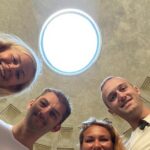
One important limitation: you won’t go inside. Instead, the guide shares a short private video explaining a real phenomenon—why it doesn’t rain inside the Pantheon, linked to a Roman design effect often described like a fireplace-style air flow.
Even as an exterior experience, that added explanation is worth it. It turns the Pantheon from a famous photo background into something you can understand. You leave thinking: okay, now I know what I just looked at, and why it matters.
Use your time at this stop to get:
- One wide shot capturing the dome shape
- One tighter shot that frames the oculus area
- A “mental note” for what you want to verify later if you return
Trevi Fountain: the coin photo stop and the traffic reality
Trevi Fountain is always on the list, but this tour approaches it with a specific goal: a great photo plus the stories behind the tradition.
You’ll do a wish-coin moment and learn about the traditions tied to the fountain, then get time to enjoy the surrounding atmosphere. There’s also a photography-focused angle: guides have a knack for finding angles that lead to better shots, described in reviews as a hawk-eye for timing and composition.
Here’s the catch you should plan for: the tour notes that the best Trevi photo results are possible only when traffic allows. Translation: if the streets are gridlocked and pedestrian flow is heavy, your timing may shift. That doesn’t mean you’ll miss the stop, but it can change how relaxed you feel while hunting the perfect frame.
My practical advice: treat Trevi as a “get one keeper” stop, not a perfection contest. One wide fountain shot, one close detail shot, and one group photo usually covers it. Save any ultra-specific angles for a second visit.
Spanish Steps and Piazza Navona: film stories, Bernini fountains, and food ideas
The Spanish Steps stop is about more than climbing a few steps or pausing in the square. You get a guide-led look at why the area matters and what you’re seeing beyond the postcard layer.
You’ll also get:
- A few minutes to people-watch
- A group photo moment
- Stories tied to Hollywood films, Roman history, and local life
This matters because Spanish Steps can feel busy and slightly touristy if you just arrive with no context. With a good guide, the place becomes a scene where different eras overlap—social life, fashion, media, and Roman street culture.
Then you head to Piazza Navona, where the tour focuses on Bernini fountains and the charm of street performers. You’ll have a chance to spot details like the river gods and take more photos while the guide talks through what you’re seeing.
One practical plus: the guide can recommend a spot in the area for an authentic Italian lunch or dinner, right in the heart of Piazza Navona. That’s not just a random restaurant plug. It’s a shortcut that helps you keep the rest of your day from turning into a late-night scramble.
The panoramic garden finish: what you do next with the energy you saved
The tour ends with a peaceful panoramic garden stop. This is a smart design choice. After covering heavy hitters like Trevi and the Spanish Steps, you get a calmer moment above the city for final photos and a breather.
This final stop is where the “value” of the golf cart becomes obvious. You’re not exhausted from hours of walking, so you can actually use the rest of your evening well—wander, grab gelato, or plan a museum visit without feeling like your legs are done.
If you book a later departure, you might also catch Rome’s changing light. Some guides have been praised in reviews for night tours with Rome lit up, and those dusk-to-night transitions can turn the whole route into a different kind of memory.
Price and value: is $163.33 fair for 2.5 hours?
At $163.33 per person for about 2 hours 30 minutes, you’re paying for three things Rome usually forces you to figure out the hard way: time, comfort, and guided context.
You are not buying a long museum day. You are buying:
- Small-group transportation (capped at seven)
- Expert guide narration in English
- Bottled water
- External viewing of major landmarks like the Colosseum, Spanish Steps, and Trevi Fountain
That can be good value if you’re in one of these situations:
- It’s your first day and you want to get your bearings fast
- You’re squeezing multiple neighborhoods into a short trip
- You’d rather spend your energy on one or two deeper visits later than on transit and walking between icons
It’s less ideal if you only want ticketed interior access. Since the major stops are external and Pantheon is outside with a video explanation rather than an entry, you’ll likely still want separate plans if you want to go inside Rome’s big-name sites.
Also, this tour is often booked around 41 days in advance, which is a polite way of saying spots can go. If your dates are set, don’t wait until the last week.
Who should book this Rome golf cart tour
This tour is a strong fit if you want:
- A low-stress overview of Rome’s key sights
- Plenty of photo stops without endless walking
- A guide who answers questions and keeps the ride lively
It’s also a solid option for families and mixed-age groups. The reviews highlight adult families enjoying it, and the format tends to work well when not everyone wants the same walking pace.
If you’re the type who likes to linger for long periods at one monument, you might feel the time pressure. But if you’re balancing Rome’s “must-sees” with enough time to explore afterward, this structure is exactly what you want.
Should you book it? My straight advice
Book it if you want Rome’s highlights with less effort and more story. The small group size, the golf cart view, and the guide talent you’ll run into—like Vladimir, Vitaliy, Federico/Frederico, Antonio, and Vitale—are the kind of combination that makes an overview feel like it’s worth your money.
Hold off or plan differently if:
- You want mostly inside-the-building experiences
- Your trip schedule is so tight that a traffic-shaped timing shift at Trevi Fountain would ruin your day
- You prefer long, silent wandering over guided structure
If you’re trying to choose a first Rome tour or an efficient second-day plan, this is one of the cleaner ways to see the city without turning your whole trip into logistics.
FAQ
What’s the duration of the golf cart tour?
The tour runs about 2 hours 30 minutes.
How much does it cost, and is bottled water included?
It costs $163.33 per person, and bottled water is included.
What language is the tour offered in?
The tour is offered in English.
How many people are on the tour?
The tour has a maximum of 7 travelers.
Does the tour include tickets or entry inside the sites?
The tour focuses on major landmarks from outside, and it does not include going inside the Pantheon.
How much time do you spend at each landmark?
Most stops are around 10 to 15 minutes, including Colosseum, Circo Massimo, the Pantheon area, Trevi Fountain, and the Spanish Steps.
What happens at the Pantheon stop?
You’ll admire the Pantheon from outside and your guide will share a short private video explaining why it never rains inside, using the effect the Romans mastered.
Is there anything that can affect Trevi Fountain photo time?
Yes. The tour notes that Trevi Fountain photography timing depends on traffic.
Are tips included in the price?
No. Tips are not included.
What’s the cancellation policy?
Free cancellation is available up to 24 hours in advance for a full refund.
If you want, tell me your travel dates and whether you prefer an earlier or later departure, and I’ll help you pick a good slot based on how this route plays through Rome.