REVIEW · ROME
Ancient Rome with Archaeology – Small Group Only
Book on GetYourGuide →Operated by LeonardoDC · Bookable on GetYourGuide
Rome makes more sense when you read its ruins.
This small-group Rome tour is built around archaeology and history, so the monuments stop feeling like disconnected postcards and start feeling like one long urban story. You’ll walk the big-name sights and also learn why they took their particular shape, time by time, from older village beginnings to imperial power.
Two things I really like: first, the guide, LeonardoDC, brings a clearly structured historical introduction and explains how the buildings evolve, not just what they are. Second, the experience is tailored to your pace and interest, with discussion that can move beyond stones into daily Roman life and how art and architecture carried messages—especially if you speak Portuguese (he’s Brazilian, and the tour runs in English or Portuguese). Small group size also matters here: it keeps the pace human and makes questions easier to fit in.
One catch to plan for: this tour does not include going inside the monuments or tickets. You’ll see a lot from viewpoints and archaeological areas, but if you want interior access, you’ll need to add that separately.
In This Review
- Key things to know before you go
- Why this Rome walk works: ruins with a timeline attached
- The 2.5-hour route: from Piazza Mattei to the Theatre area
- Colosseum area: seeing more than an icon
- Imperial Fora: where power got staged in stone
- Roman Forum: the city’s political heartbeat
- Capitoline Hill and the Campidoglio viewpoint: symbols you can read
- Palatine Hill context: the “why” behind the imperial world
- Theatre of Marcellus archaeological area: the fitting final chapter
- What makes LeonardoDC different in the way the tour is taught
- Who this tour suits best (and who might want something else)
- Price and value: $49 makes sense for the story-focused format
- Tips to get the most from this kind of archaeology tour
- Should you book Ancient Rome with Archaeology (Small Group Only)?
- FAQ
- How long is the Ancient Rome with Archaeology tour?
- What’s the group size?
- Where do we meet?
- Where does the tour end?
- Which key sites are covered?
- Does this tour include tickets or entry into monuments?
- What languages are available?
- Is the walking difficult?
- Can I cancel for a full refund?
- Is there a reserve now, pay later option?
Key things to know before you go
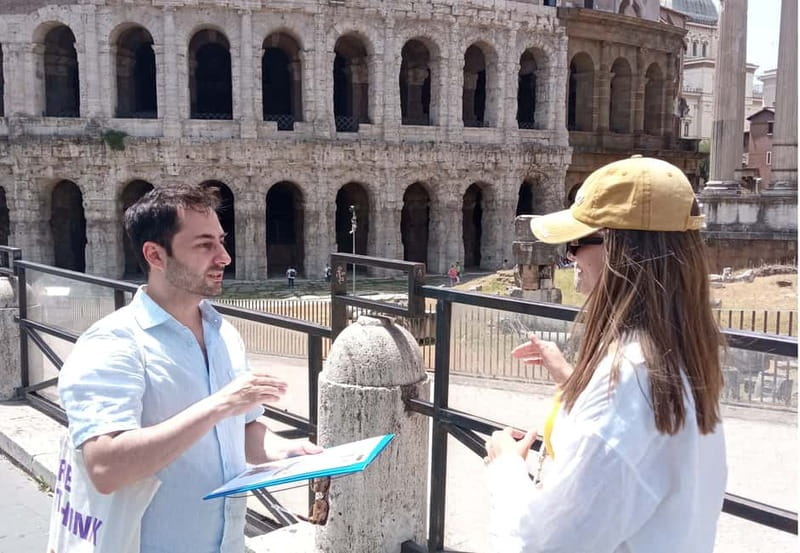
- Archaeology-first storytelling that connects sites across time, not just facts about single buildings
- LeonardoDC’s structured timeline approach, designed to help you place what you see
- Small group of up to 6, with a pace that stays flexible to your interests
- The route ends at an archaeological area near the Theatre of Marcellus, Temple of Apollo, and Porticus of Octavia
- No monument entry tickets included, so manage expectations about inside access
Why this Rome walk works: ruins with a timeline attached
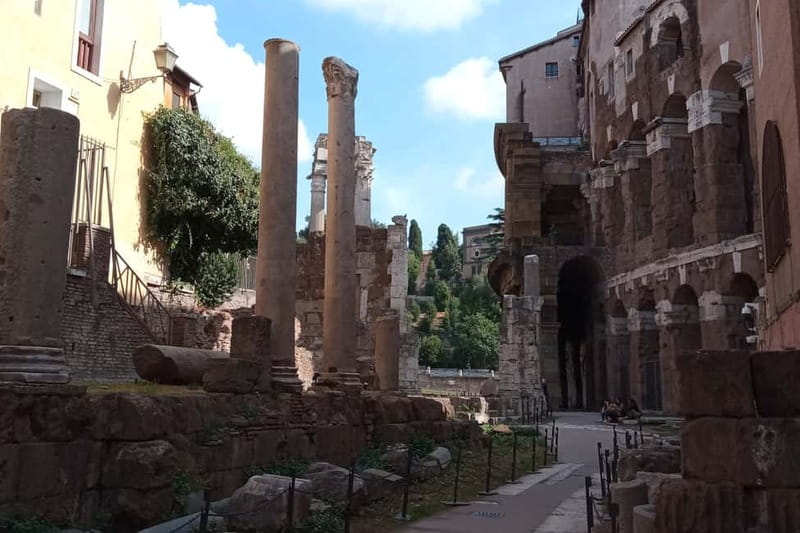
Rome is a city where the skyline is dramatic, but the real magic is underground and at ground level. This is not a rush-through “see the sights” tour. It’s a guided walk where the guide keeps tying the monuments to how Rome changed—politically, socially, and architecturally—as centuries stacked on top of each other.
What makes it satisfying is the method. You don’t just get “this was built in that period.” You get the why: why a new power needed new spaces, why older structures were reused or transformed, and how art and engineering choices shaped what Romans wanted people to feel. That’s where archaeology earns its paycheck, because ruins become evidence, not decoration.
If you care about how cities grow, this tour helps you build a mental map. And if you’re the type who keeps seeing the same monuments on every itinerary and wonders what you’re missing, the archaeological explanations give you a reason to look twice.
You can also read our reviews of more tours and experiences in Rome.
The 2.5-hour route: from Piazza Mattei to the Theatre area
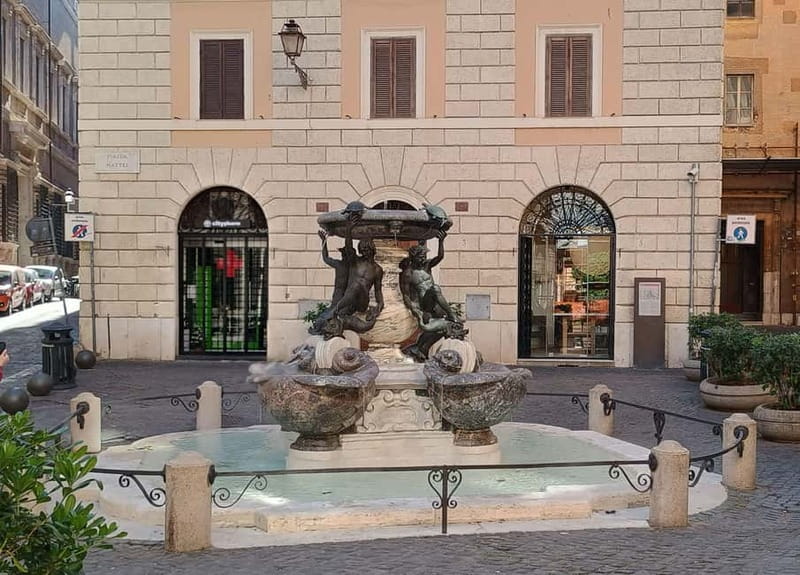
You start at Piazza Mattei, 1, right by the Fountain of the Turtles. It’s a straightforward meeting point, and it also puts you in a classic “Rome center” zone where walking feels natural.
The walk then strings together some of the city’s most important civic and symbolic spaces: the Colosseum area, the Imperial Fora zone, the Roman Forum complex, Capitoline views, and finally the Theatre of Marcellus archaeological area. Along the way, you’ll also hear about places you can physically see and places the guide can contextualize as part of the broader topography—especially the Palatine Hill area and the cluster of five Imperial Fora.
Important expectation-setting: you’ll be guided through viewpoints, guided sightseeing, and archaeological areas. The pace is described as light walking suitable for all ages, and the tour is set up for wheelchair accessibility as provided by the city. Still, Rome’s sidewalks can be uneven, so comfortable walking shoes help you enjoy the explanations without friction.
Colosseum area: seeing more than an icon
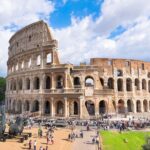
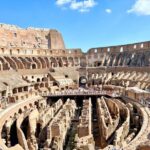
The Colosseum is one of those monuments that almost feels like background noise before you study it. This tour aims to remove that effect by tying the Colosseum to the wider imperial building program.
At the Colosseum stop, the guide gives you the “how to look” lens. You learn what you’re seeing in terms of function and status—why an amphitheater belongs to a specific kind of power display, not just entertainment. It’s also a setup moment: once you understand the Colosseum as part of a larger civic machine, the next stops start clicking into place instead of feeling like a list.
Even if you’ve seen photos before, plan to slow down here. When the explanation hits engineering and architectural logic, the stone details feel less random. And because you’re with a small group (up to 6), you should get time to ask what something means rather than just moving along.
Imperial Fora: where power got staged in stone
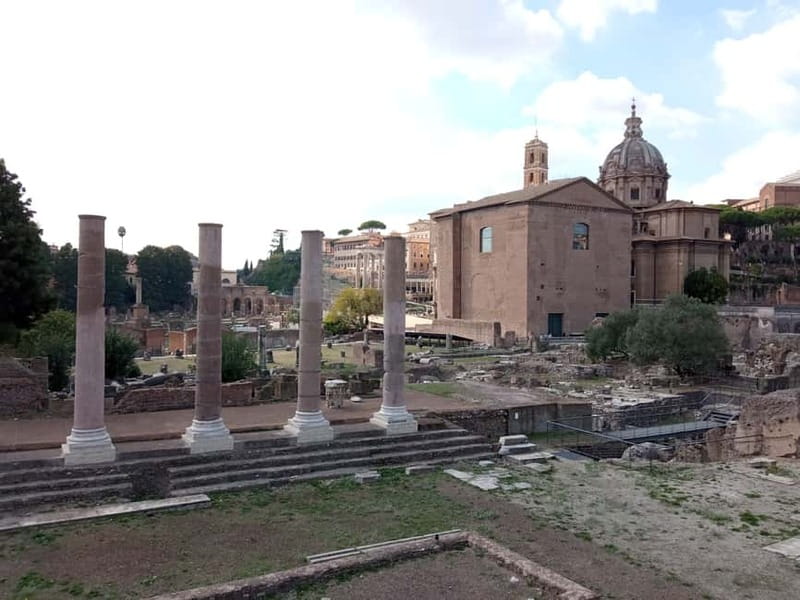
After the Colosseum zone, you’ll move into the Imperial Fora area. This is where Rome stops being a collection of separate monuments and starts feeling like an urban plan with a message.
The guide focuses on how the Imperial Forums relate to each other and to the Forum tradition before them. You’ll be guided through viewpoints and guided sightseeing for about half an hour in this zone, which is just enough time to connect the dots without exhausting you.
What I like about this section is the emphasis on evolution. You’ll hear how the architecture signals who ruled, how space was organized for public life, and how art and design were used to communicate authority. Even if you’re not a specialist, the archaeological framing helps you understand what’s missing and why the remains still matter.
Roman Forum: the city’s political heartbeat
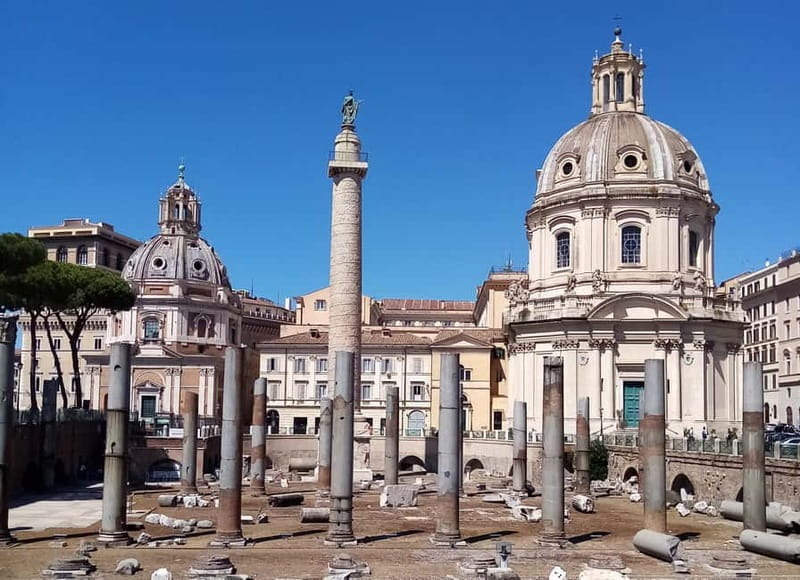
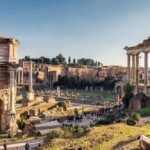
The Roman Forum stop is built for understanding the timeline effect—how Rome’s center shifted and why certain buildings became powerful symbols.
Here, the focus is on the Forum as a living civic core: a place for law, public messaging, and elite competition, where architecture carried meaning. You’ll get a guided look designed to help you see temples and basilica-type structures as parts of a system, not stand-alone ruins.
If you’re worried about information overload, this is where the tour’s structure helps. You get the big picture, then you get pointed attention on what to notice at each vantage point: layout, how monumental spaces reinforce hierarchy, and how archaeological evidence clarifies what we can and can’t assume.

Capitoline Hill and the Campidoglio viewpoint: symbols you can read
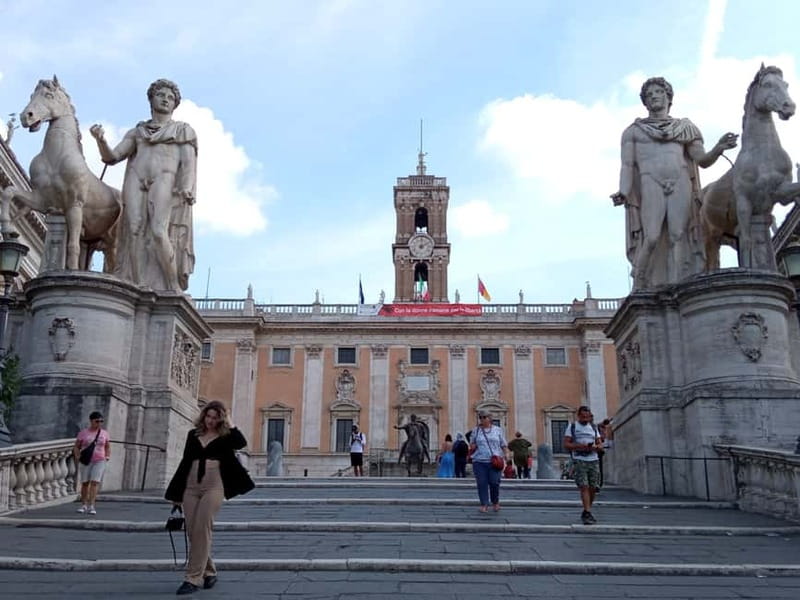
Next comes Piazza del Campidoglio on Capitoline Hill. This stop is less about a single ruin and more about reading Rome’s symbolism and location choices.
From the Capitoline viewpoint, you can understand why this area mattered. It’s the kind of place where your body position matters: you’re standing where political authority and visual dominance naturally connect. The guide uses that advantage to explain how Rome’s leaders wanted the city to look—and to feel—centered around power.
If you enjoy art history, this is one of the best zones for that mindset. The tour treats architecture as communication. You’re not just looking at stone; you’re learning how form and placement help rulers project control.
Palatine Hill context: the “why” behind the imperial world
You also get Palatine Hill context as part of the overall route narrative. Even when you’re not “inside” every area, you can still understand why Palatine matters: it sits at the heart of Rome’s shift toward imperial residence and authority.
What makes this useful is that the guide doesn’t treat Palatine as trivia. You’ll connect it to the larger story: how the city’s geography and monumental building projects supported the idea of who belonged at the center.
This part is especially handy if you’ve ever looked at Rome’s sites and thought, How do these all fit together? The Palatine framing ties residential power to civic architecture, so you start seeing Rome as one interconnected system.
Theatre of Marcellus archaeological area: the fitting final chapter
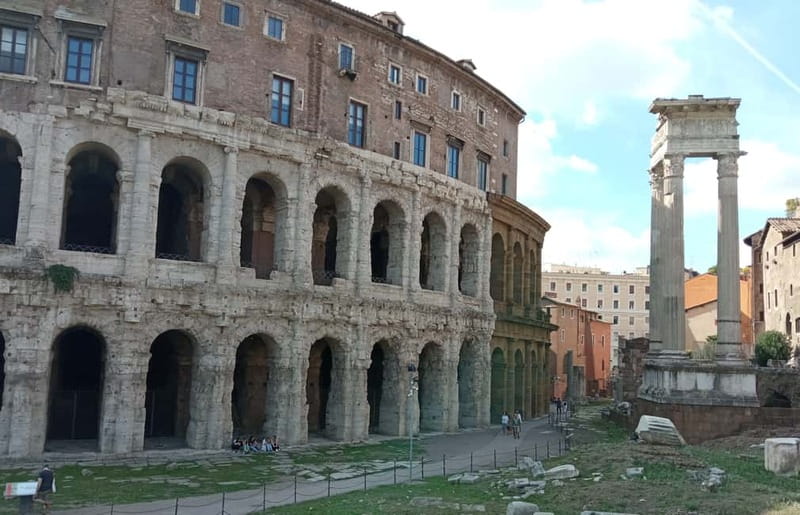
The tour closes at the archaeological area of the Theater of Marcellus, finishing at a zone that includes the Temple of Apollo and the Porticus of Octavia. This ending choice feels smart because it helps you see continuity: Rome’s cultural and political spaces reused, transformed, and left traces.
The guide also brings in the area’s later history context, including that this archaeological space leads into the footprint of the former Jewish Ghetto. That’s a reminder that ruins aren’t only about ancient Rome. They’re also about how later generations lived on top of—and around—earlier worlds.
One practical note: since the tour ends at an archaeological area and not with monument interior time, it’s a good place to take photos and absorb explanations at a slower pace. If you plan your day around the walk, you’ll finish with a sense of closure rather than a sudden sprint to the next stop.
What makes LeonardoDC different in the way the tour is taught
The guide, LeonardoDC, is at the heart of this experience. The strongest praise you’ll see for the tour style is about clarity and structure: he gives a historical introduction with a timeline feel, then uses it to make the monuments understandable as a process.
A standout detail from his approach is how he uses visual supports—like pictures of original monument appearances—to help your imagination handle what’s now broken, missing, or altered. He also uses a map-like way of organizing periods and rulers, so you can place what you’re seeing without guessing.
The other big advantage: he adjusts to your interests, pace, and time. So if you’re more into architecture and political storytelling than everyday life, the explanations can lean that way. If you ask follow-up questions, he doesn’t treat the tour like a monologue.
Finally, the language option matters in Rome. The tour runs in English and Portuguese, and his Brazilian background can make Portuguese sessions feel especially natural and flowing.
Who this tour suits best (and who might want something else)
This works really well for you if:
- You want the big names (Forum, Colosseum, Imperial Fora) but also want the connections explained
- You care about how archaeology tells history through what remains
- You like a guided walk that stays friendly and discussion-friendly in a small group
It may not be the right fit if:
- You want guaranteed time inside the Colosseum or inside the Forum structures
- You prefer a longer, ticket-based “full access” day where most time is spent indoors
Because the tour is 2.5 hours, it also suits people who want real content without swallowing an entire day.
Price and value: $49 makes sense for the story-focused format
At $49 per person for a 2.5-hour, small-group guided walk, the best way to judge value is against what you get.
You’re paying for:
- A carefully paced route across multiple major zones
- Archaeology-based explanations that make the monuments connect
- A small group limited to 6 participants, which usually means more attention and less rushing
You’re not paying for:
- Monument entry tickets or inside access
So the value is strongest if you’re happy to see the monuments from viewpoints and archaeological areas while you learn the “why.” If you want interior access to be the main event, you may find a ticket-included tour fits you better. If you want to understand what you’re seeing before you go looking for interiors on your own, this is a great way to prime your brain.
Tips to get the most from this kind of archaeology tour
A few practical moves help you enjoy it more:
- Bring a bottle of water and plan for sun. Even a light walk can feel warm in Rome.
- Wear shoes that handle cobblestones without complaint. You’ll move between zones and viewpoints.
- Come with at least one question. Something like why this site was chosen, or how a certain monument changed across time. The guide can build on that.
- If you plan to visit inside monuments later, treat this tour like your “map and meaning” session. You’ll recognize elements faster.
If you’re the kind of traveler who likes to keep a loose plan, this tour pairs well with a self-guided museum stop afterward, where you can connect the art and architectural ideas to objects you see up close.
Should you book Ancient Rome with Archaeology (Small Group Only)?
I’d book it if you want to understand Rome, not just photograph Rome. The big win is the archaeological storytelling across the Forum-to-imperial-to-theatre arc, taught by LeonardoDC with a clear timeline approach and a discussion-friendly pace. The small group size also makes the experience feel more personal than the usual mass walk.
I wouldn’t book it as your only Rome monument plan if interior access is a top priority. Since no tickets or inside entry are included, you’ll want to add those experiences separately if you care most about being inside the Colosseum or key interior spaces.
If you’re okay seeing the monuments from viewpoints and archaeological areas while learning how they evolved, this is a strong value at $49 for a focused 2.5-hour session.
FAQ
How long is the Ancient Rome with Archaeology tour?
The tour lasts about 2.5 hours.
What’s the group size?
It’s a small group limited to 6 participants.
Where do we meet?
You meet at Piazza Mattei, 1, right by the Fountain of the Turtles.
Where does the tour end?
There are two drop-off locations: Via Nicola Salvi, 65, 00184 Roma RM, Italia, and Piazza del Colosseo.
Which key sites are covered?
You’ll see the Roman Forum, Colosseum area, Imperial Fora, Capitoline Hill area, and the Theatre of Marcellus archaeological area, including the Temple of Apollo and Porticus of Octavia.
Does this tour include tickets or entry into monuments?
No. The tour does not include going inside the monuments or tickets for them.
What languages are available?
The live tour guide offers English and Portuguese.
Is the walking difficult?
No. It’s described as light walking suitable for all ages, with physical accessibility provided by the city.
Can I cancel for a full refund?
Yes, free cancellation is available up to 24 hours in advance for a full refund.
Is there a reserve now, pay later option?
Yes. You can reserve now and pay later, with the option to book your spot without paying today.