REVIEW · CAIRO
A Week In Egypt: Pyramids, Felucca Cruise And Ancient Temples
Book on Viator →Operated by Egypt Best Vacations · Bookable on Viator
Egypt’s past, packed into seven days. This week strings together Pyramids of Giza, a felucca cruise, and the big-name temples in Cairo, Aswan, and Luxor. You get the classic sights without feeling totally lost in logistics.
Two things I like a lot: the pyramid day is built around the Giza Plateau and the Sphinx, with time that feels purposeful, and the Nile time feels genuinely relaxing, including the kind of warm onboard feel people highlight with the Nubian sailors. I also like that guide quality seems to matter here, with names like Super Mo and Essam showing up in feedback.
One consideration: the pace is brisk because you’re moving by domestic flights and changing bases (Cairo → Aswan → Luxor → Cairo). If you prefer slower travel with fewer transitions, this schedule may feel like you’re always on the move.
In This Review
- Key Highlights You’ll Feel Fast
- Why This “Cairo to Luxor” Week Works in 7 Days
- Cairo Airport Arrival That Sets the Tone
- Pyramids of Giza and the Sphinx: The Day You’ll Remember Forever
- Saqqara’s Step Pyramid of Djoser: Egypt Before the Big Ones
- Flying to Aswan: High Dam, Philae, and the Unfinished Obelisk
- The Felucca Cruise on the Nile: Real Relaxation, Not Just Transport
- Kom Ombo and Edfu: Twin Gods and the Temple That’s Still Very Intact
- West Bank Luxor: Valley of the Kings, Hatshepsut, Colossi of Memnon
- Karnak and Luxor Temple: Where the Walls Start Talking Back
- Back to Cairo: Egyptian Museum, Citadel Views, and Khan El-Khalili
- Price and Value: Is $1,400 a Fair Deal for This Much Moving?
- Who This Tour Fits Best
- Should You Book This Week in Egypt?
- FAQ
- How long is the A Week In Egypt tour?
- Where does the tour start and where does it end?
- Is pickup offered?
- Does the price include domestic flights?
- Are meals included?
- Are admission tickets included?
- What type of physical condition do I need?
- How big is the group?
- Does the tour depend on weather?
- How much notice is needed for a full refund?
Key Highlights You’ll Feel Fast
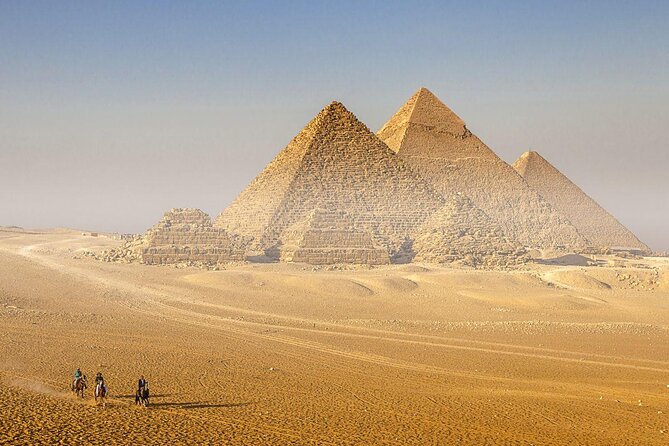
- Giza Plateau + Sphinx day that’s not just a photo stop
- Felucca cruise time on the Nile with lunch and dinner on board
- Philae Temple reached by a short boat ride to the island
- Twin temples at Kom Ombo, paired with a crocodile-focused museum
- Luxor classics on the West Bank and in the Karnak/Luxor temple zones
Why This “Cairo to Luxor” Week Works in 7 Days
This kind of trip can go two ways: either you see a lot and feel rushed, or you go slow and miss the big anchors. This one is designed for the middle ground. You cover the sites that most people come for, and you still get some real downtime on the Nile.
I also like that the itinerary is structured around distinct geographic chunks. Cairo is for pyramids and city culture. Aswan is for engineering-era Egypt plus Isis at Philae and time on the river. Luxor is for tombs and temple walls that still look like they were built yesterday.
And because the group is capped at 16 people, you’re less likely to spend your day stuck behind a crowd stampede. Still, it’s popular Egypt, so expect to share space with other visitors at major landmarks.
You can also read our reviews of more tours and experiences in Cairo.



Cairo Airport Arrival That Sets the Tone
Your week begins at Cairo International Airport, where an Egypt Best Vacations representative helps with arrival and visa regulations. Then you transfer to your hotel with some free time before the first big day hits.
That first “buffer” matters. Egypt can feel overwhelming the moment you land, especially if you’re juggling paperwork, cash, and questions about where to go next. Having someone meet you reduces the mental load so you can actually enjoy the trip.
You also get a small modern convenience: mobile ticket support. It doesn’t replace real-world hustle, but it can help you get moving faster once tours start.
Pyramids of Giza and the Sphinx: The Day You’ll Remember Forever
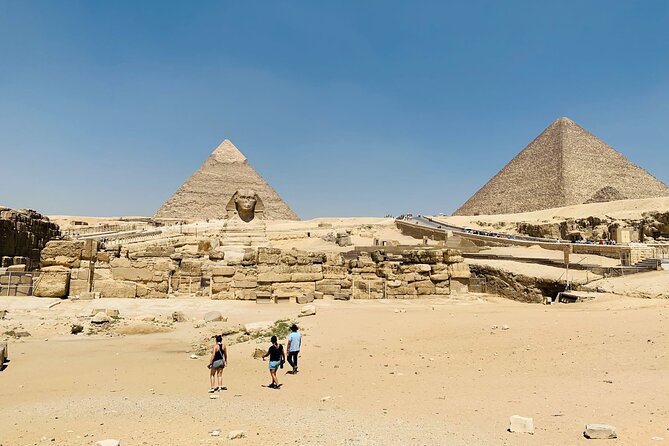
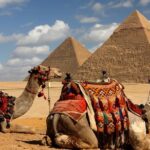
The Giza Plateau day is built around the Great Pyramids of Khufu, Khafre, and Menkaure, plus the Sphinx. This is the morning-and-midday anchor for a reason: it’s one of the few places on earth where scale changes how you think.
What I like about this approach is that it doesn’t treat the pyramids like a single stop. You get guided context on how the pyramids were constructed and why they were built. That short historical frame makes the shapes and angles easier to read with your own eyes.
There’s also a big value moment that you should plan for in advance: the day includes learning about seeing inside the pyramid (the tour description signals an inside look). Even if you’re not claustrophobic, you’ll want to mentally prep for that change in atmosphere.
Saqqara’s Step Pyramid of Djoser: Egypt Before the Big Ones
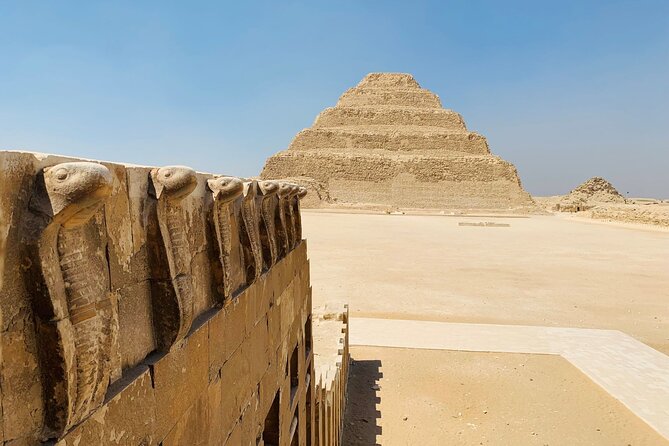
After Giza, the trip moves to Saqqara, specifically the Step Pyramid of Djoser. This site is different energy from Giza. Instead of the mature, famous pyramid forms, you’re looking at an earlier stage of pyramid-building—often described as the first pyramid in human history.
Saqqara also ties into the idea of Egypt’s necropolis scale. It served as the cemetery of Memphis, Egypt’s early capital, and the area stretches a huge distance. Even if you don’t memorize every measurement, you’ll feel how “a whole city of the dead” works.
One practical benefit: combining Giza and Saqqara in the same trip helps you spot what changed over time. You’re not just ticking off monuments; you’re comparing an evolution.
Flying to Aswan: High Dam, Philae, and the Unfinished Obelisk
On the way south, you take a domestic flight from Cairo to Aswan, and your day opens with the Aswan High Dam. This is engineering history, not ancient temples, and I think that contrast is smart. The High Dam is described as protecting Egypt from the Nile’s extremes—high floods and low floods that could mean famine.
That context matters because it reframes the Nile from a postcard river into the backbone of survival and politics. It’s the same river that later shapes the sites you’ll visit on the cruise.
Next comes Philae Temple, known as the Pearl of Egypt in the tour description. You reach it via a short boat ride to Philae Island. The temple is tied to the popular cult of Isis, with the tour explanation noting her image was ferried over periodically to reunite symbolically with Osiris.
Then you end the day at the Unfinished Obelisk in the granite quarry. I like this stop because it shows craft before it becomes a finished monument. You get to see evidence of how ancient Egyptians worked, and the whole thing feels less like spectacle and more like a workshop left behind.




The Felucca Cruise on the Nile: Real Relaxation, Not Just Transport
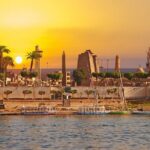
The cruise is the emotional center of this week. After visiting the Unfinished Obelisk, the tour sets sail on your felucca, with lunch and dinner on board. You also stop on the banks for a peaceful night, turning the Nile into your day’s main character instead of the background.
This is where the trip’s value shows. You’re not spending the Nile hours trapped in a bus. You’re moving slowly enough that you can actually watch the river approach each landmark, even when the landmarks are just silhouettes along the shore.
The feedback around the experience also points to something you can feel right away: a relaxed onboard tone and friendly handling from the Nubian sailors. That kind of warmth makes a difference when you’re sharing a small boat and trying to settle in.
Kom Ombo and Edfu: Twin Gods and the Temple That’s Still Very Intact
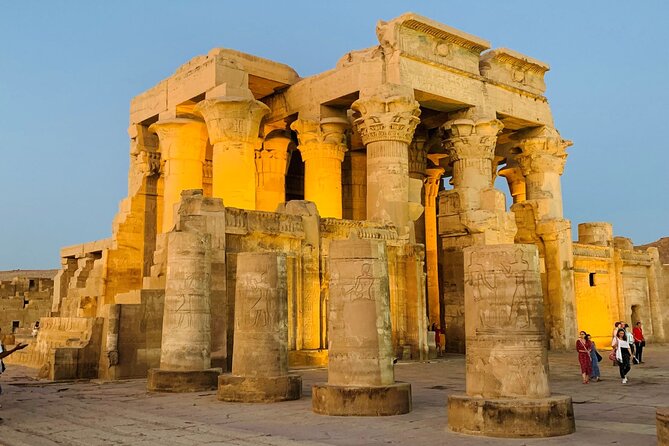
After breakfast and disembarkation, you drive to Kom Ombo for the Temple of Kom Ombo and a crocodile museum. The tour explains the temple is dedicated to the two triads connected to Horus and Sobek. One side is associated with Sobek (crocodile deity) and the other with Horus the Elder, with consorts and their son listed as part of the temple’s narrative.
Even if hieroglyphs aren’t your thing, a guided breakdown like this helps you understand why two different belief systems share one temple complex. It’s more readable than it looks when you know what you’re standing in front of.
Then you move to Edfu for the Temple of Horus, which the tour describes as very intact. You also hear about elements that existed in the past but changed with time—like the sacred lake now vanished under modern houses. The exterior and interior walls are covered with reliefs and hieroglyphs, and you get a quick tour inside, which is the right pace for an all-day temple circuit.
This day can be emotionally tiring, but Edfu’s intact condition helps. When a temple is preserved, you’re not constantly imagining missing pieces—you’re reading what’s actually there.
West Bank Luxor: Valley of the Kings, Hatshepsut, Colossi of Memnon
Luxor’s West Bank is where Egypt turns from monument viewing into storytelling. You start with the Valley of the Kings, described as one of the biggest highlights in Luxor and one of the most important necropolises for pharaohs of the 18th to 20th Dynasties.
I like the way the tour frames the place name: the ancient Egyptians called it Ta-Iset-Ma’at, meaning the Place of Truth. When you hear that kind of phrasing, the valley feels less like a random scatter of tomb entrances and more like a carefully chosen setting for belief.
The tour also points out the burial range—Tuthmosis I as the first pharaoh buried there and Ramses XI as the last. That helps you understand this wasn’t one tomb; it was a long-running tradition.
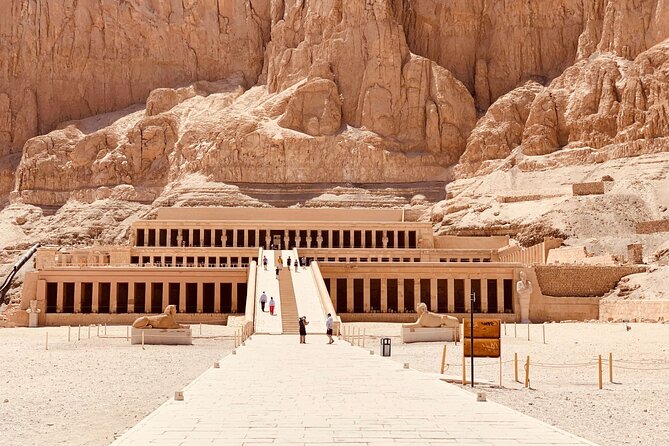
Next is the Temple of Hatshepsut at Deir el Bahari. The tour highlights her as a ruler who supported divine favor and prosperity, and it notes her focus on arts more than military power. It also explains that her funerary monument is set in a valley linked to Hathor.
Later, you visit the Colossi of Memnon. The tour explains these are the remains of what used to be the mortuary temple of Amenhotep III—now mostly gone. That contrast can feel sad, but it also helps you visualize what scale once looked like when the West Bank wasn’t an archaeological open-air puzzle.
Karnak and Luxor Temple: Where the Walls Start Talking Back
After lunch, you head to Karnak Temple. The tour description gives you a helpful sense of how enormous it is: many separate temples across roughly 1700 years of expansion and around 300 acres of area. Even without absorbing every detail, standing inside that complex teaches you something: Egyptian temple building wasn’t one project. It was a generations-long habit.
Karnak is also explained as the chief sanctuary and much larger than any other monument in Egypt, honoring Amun-Re. With the guide’s framing, you’ll likely notice how architecture and inscriptions reinforce a single purpose while still reflecting different rulers over time.
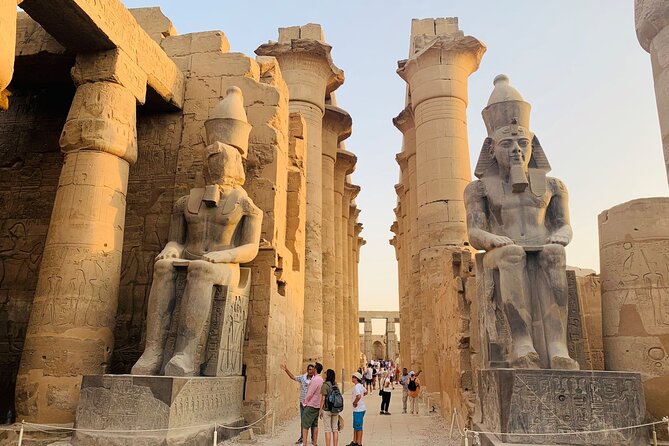
Then the day ends at Luxor Temple, built by Amenhotep III and expanded by Ramses II, with later additions attributed in the tour description to other sovereigns including Tutankhamun and Alexander the Great. This is a great closer because it links “temple as power” to “temple as memory.” The walls feel like they’re keeping receipts.
Back to Cairo: Egyptian Museum, Citadel Views, and Khan El-Khalili
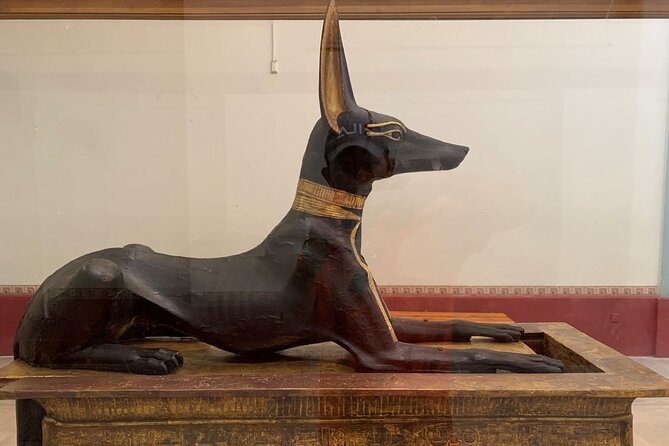
Not everyone needs another big museum after temple days, but the Egyptian Museum of Egyptian Antiquities is one of the few places on earth where you can connect what you saw outside with objects made to represent beliefs and power. The tour description says it holds more than 120,000 pieces spanning Ancient Egyptian history.
You’ll spend about 3 hours there, and the museum is organized on two floors. The ground floor is described as designed for heavy stone pieces like giant statues, sarcophagi, and coffins. That kind of layout helps you avoid museum fatigue because you can group what you want to see.
Then you move to Cairo Citadel of Saladin. The tour describes it as defending Cairo against the Crusaders and serving as a government seat until the British colony era in 1882. It sits on a steep hill about 75 meters above the east side of Cairo, and below the hill is Salah Ad-Din Square, which the tour description says was the site of medieval horse-market and sword-makers, plus a bazaar and hippodrome.
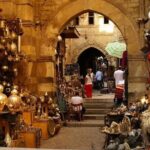
Finally, you finish at Khan El-Khalili, described as one of the oldest and largest bazaars in the Middle East. The tour gives specific boundaries and explains that the terms Khan and Muski are used interchangeably by foreigners and Egyptians, even though they refer to adjoining bazaar areas.
For me, that last market stop is more than shopping. It’s a chance to decompress and pick up small reminders of daily life, not just pharaonic monuments.
Price and Value: Is $1,400 a Fair Deal for This Much Moving?
At $1,400 per person for about a week, the key question is what you actually get for your money. This tour includes air-conditioned vehicle, domestic flights, and multiple meals: breakfast, lunch, and dinner (plus breakfast on several days). It also includes admissions for major stops like the pyramids day, plus many temple days.
That matters because transportation and entry fees can quietly turn an “affordable” Egypt plan into a pricey one. Here, you’re paying for the heavy lift: flights between cities, guided time at major monuments, and meals so you’re not constantly making quick decisions under pressure.
The group size cap at 16 people also supports better value. Smaller groups usually mean more time with your guide and less chaos during key moments—especially around places like Giza, Karnak, and the West Bank.
The tradeoff is pace. You do get a lot of sites, but you also accept that this is not a slow, lingering Egypt road trip. If you’re the kind of person who gets cranky after too many early logistics, you might want a longer trip.
Who This Tour Fits Best
This is a strong fit if you want a true highlight route through Egypt—Giza, Saqqara, Aswan/Philae, and Luxor temples—without having to script every transport day yourself.
It also makes sense if you’re going solo or as a small group and you like having a plan. The presence of guides (with names like Super Mo and Essam appearing in feedback) suggests the tour company leans on human support, not just a timetable.
If you’re someone who wants to spend many hours sitting in one site and taking photos slowly, you may feel a bit squeezed. But if you prefer action with context and a few clear rests (like the felucca portion), this week hits a good balance.
Should You Book This Week in Egypt?
I’d book it if you want the classic Egypt storyline in one clean package: pyramids and Sphinx in Cairo, a Nile cruise that actually slows time down, then Luxor’s tomb-and-temple highlights, and finally Cairo’s museum and markets.
I’d think twice if you’re sensitive to frequent transitions. Domestic flights and changing bases are part of the deal here, and the tour calls for moderate physical fitness.
If you match the pace, you’ll come away with a week that feels like it covered the big chapters, not just the biggest landmarks.
FAQ
How long is the A Week In Egypt tour?
The tour runs for about 7 days.
Where does the tour start and where does it end?
It starts at Cairo International Airport and ends with a transfer to Cairo International Airport for your final departure.
Is pickup offered?
Yes, pickup is offered, along with assistance at arrival in Cairo.
Does the price include domestic flights?
Yes. Domestic flights are included as per the itinerary.
Are meals included?
Yes. The tour includes breakfast, lunch, and dinner (with some meals noted as not included when they are not part of the plan).
Are admission tickets included?
Admission tickets are included for many key stops, and some items are marked as free within the plan.
What type of physical condition do I need?
The tour description says travelers should have moderate physical fitness level.
How big is the group?
The experience has a maximum group size of 16 people.
Does the tour depend on weather?
Yes. The experience requires good weather, and if canceled due to poor weather, you’ll be offered a different date or a full refund.
How much notice is needed for a full refund?
For a full refund, you can cancel up to 6 days in advance of the experience start time.