REVIEW · TBILISI
Jewish Heritage Walking Tour with Kosher Wine Tasting
Book on Viator →Operated by Views Georgia Tours · Bookable on Viator
A Jewish history tour in Tbilisi feels like time travel. I like how the focus stays practical and human, with David Baazov Museum artifacts and clear, story-driven stops. I also enjoy that the afternoon ends with a Georgian wine tasting moment, so the tour doesn’t feel like homework.
One possible wrinkle: the Little Synagogue on Kote Afkhazi Street can be closed sometimes, so the visit may not always happen. If that’s a must-see for you, keep a little flexibility in your schedule.
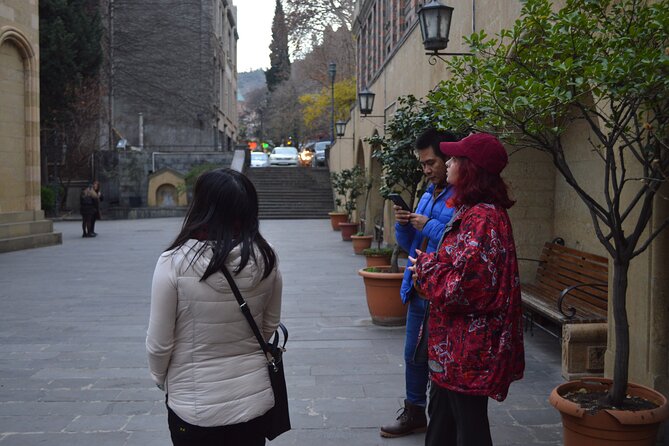
The tour is run by Views Georgia Tours, starts at 3:00 pm, and keeps the group to a max of 15 people—so questions stay easy and the pace stays relaxed.
In This Review
- Key highlights you’ll care about
- Why this route works in Tbilisi (and doesn’t waste your time)
- David Baazov Museum: the heart of Georgian Jewish life
- The Great Synagogue of Tbilisi (built 1904, still used today)
- The Little Synagogue on Kote Afkhazi Street (when it’s open)
- Wine tasting finish: Georgian wine included, kosher option for extra
- Price and value: what you’re really paying for
- The pacing: short stops, clear structure, easy questions
- Who should book this tour (and who might skip it)
- Practical tips for a smooth 2:15 afternoon
- If you love history, the guide matters
- Should you book? My honest take
- FAQ
- How long is the Jewish Heritage Walking Tour in Tbilisi?
- Where do I meet for the tour?
- What’s included in the tour price?
- Is the wine tasting included, and is kosher wine available?
- Do I need to be Jewish to join the tour?
- What if I need to cancel—can I get a refund?
Key highlights you’ll care about
- David Baazov Museum stop (30 minutes) with admission included, and it’s the main event of the route
- Great Synagogue of Tbilisi built in 1904, still active today with daily prayers and weddings
- Little Synagogue at Kote Afkhazi Street, tied to Jewish communities arriving from different countries
- Wine tasting at the end: traditional Georgian wine is included, kosher wine is available for an additional fee
- Small group size (max 15) makes the explanations easier to follow in English
- Route is short and focused, ending back at the meeting point after about 2 hours 15 minutes including travel
Why this route works in Tbilisi (and doesn’t waste your time)
Tbilisi is great for wandering, but this tour gives you a guided structure so you don’t spend your whole afternoon guessing what you’re looking at. The timing is tight on purpose: three heritage stops plus the walk between them, then a tasting finish. Expect about 2 hours 15 minutes total (including travel time).
You’ll start at Lado Gudiashvili Square at 3:00 pm and end back there. That matters if you’re fitting this around other plans—no awkward “now you’re across town” scramble.
Also, it’s in English and capped at 15 travelers. That small-group size makes a difference when you’re dealing with history that has lots of dates, names, and community links.
You can also read our reviews of more tours and experiences in Tbilisi.



David Baazov Museum: the heart of Georgian Jewish life
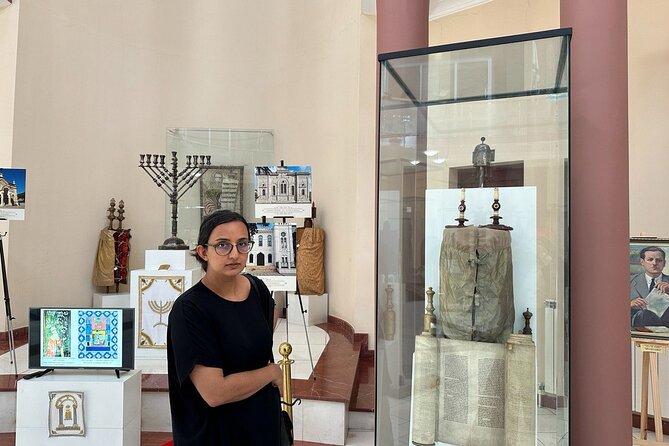
The museum stop is the standout for a reason. It’s where you get the “why it matters” behind everything you’ll see outside—because the collections show how Jewish communities in Georgia lived, worked, and shaped culture over centuries.
You’ll spend about 30 minutes here, with the museum ticket included. This isn’t just a quick hallway look; it’s the part of the tour that helps you connect religious identity with everyday life—things like shared community ties and the long relationship between Georgian Jews and Georgian society.
If you’re the type who likes history that feels tangible (objects, artifacts, real evidence), this is the stop that delivers. And if you’re not that person, don’t worry: a good guide can turn dates into a story you’ll actually remember.
I especially like that the tour frames this as a two-way relationship. The museum setting helps you understand connections, not just isolated facts.
The Great Synagogue of Tbilisi (built 1904, still used today)
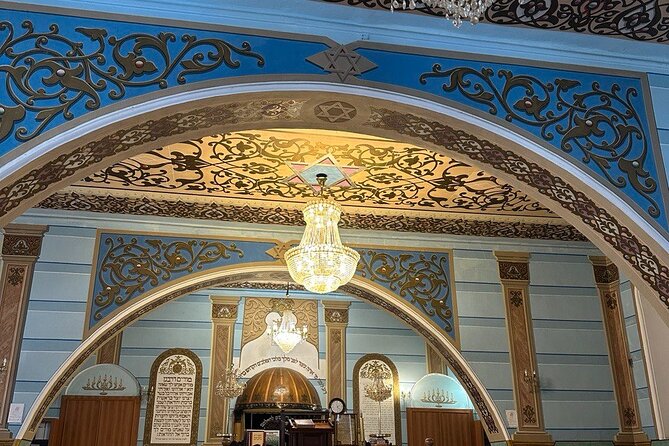
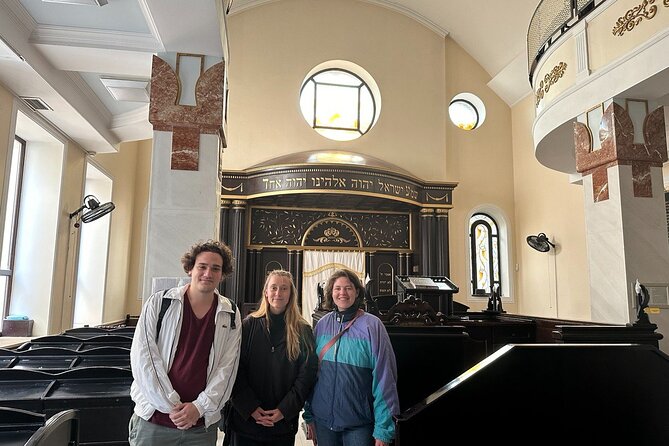
Next you head to the Great Synagogue of Tbilisi, built in 1904. This is more than an architectural landmark. It functions today, which changes how you should look at it: you’re not only seeing heritage, you’re seeing something with ongoing community life.
You’ll get about 20 minutes here, and the admission is free. That free entry time is useful because it leaves room for questions and orientation—when and why synagogues like this were built, and what it means that it’s still a working place of worship.
One practical note: if you’re sensitive to religious spaces, keep your voice low and follow whatever guidance your guide gives in the moment. Even on a short stop, this place deserves calm attention.
This is also a good “anchors and map” stop. After the museum, the synagogue helps your brain file the story into the right categories: community structures, religious life, and continuity.
The Little Synagogue on Kote Afkhazi Street (when it’s open)
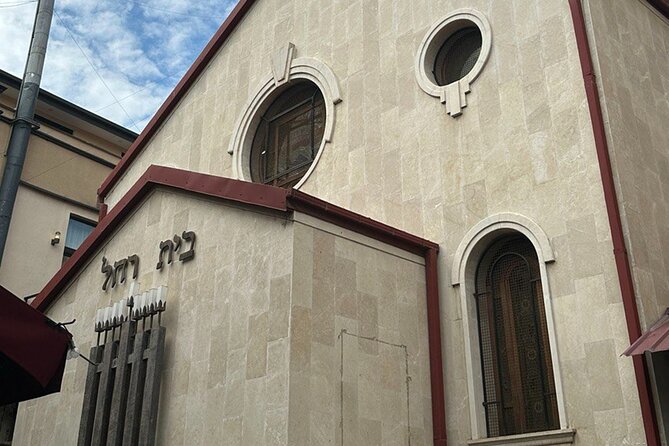
The last big heritage stop is the Little Synagogue at Kote Afkhazi Street. The idea here is simple: it represents how Jewish residents in Tbilisi included people coming from different places, and how those groups built shared community spaces.
You’ll also get about 20 minutes. Like the Great Synagogue, it’s typically free to enter—but here’s the caution.
The Little Synagogue is sometimes closed, and your guide may not be able to visit it during your specific tour time. The opening schedule is outside the tour’s control, and if it’s not possible, the tour adjusts.
So how do you handle that as a traveler? If this stop is a top reason you booked, plan for disappointment—and keep your expectations flexible. If you just want a good sense of Tbilisi Jewish heritage as a whole, losing one small stop shouldn’t wreck the overall value, because the museum and the main synagogue do most of the heavy lifting.
Wine tasting finish: Georgian wine included, kosher option for extra

After the heritage stops, you end with wine tasting—a good way to close the afternoon on something cultural and shared. The tour includes Georgian wine tasting for 18+, and kosher wine is available as an option for an additional fee.
Here’s why I think this works: it gives you a low-pressure moment at the end. Instead of rushing out to find a café, you get one structured “treat” while your guide can still connect it to the local context.
Two practical things to know:
- You’ll need to be at least 18 for the tasting alcohol.
- The tour includes traditional Georgian wine tasting, and the kosher wine tasting costs extra.
If you’re curious about kosher wine but want to control your spending, this is a nice clear choice: take the included pour or add the kosher option. No complicated mystery pricing.
And yes, this is a walking tour. So don’t plan to treat the tasting like a full night out—think of it as a cultural finish, not a sprint.



Price and value: what you’re really paying for
At $51.99 per person, this isn’t bargain-bin pricing for a walking tour. But it can still feel fair once you look at what’s included.
You get:
- Museum admission included (the most ticketed-value stop on the route)
- Guide service
- Wine tasting (traditional Georgian wine included for 18+)
- The tour duration includes travel time
- English service
- A small group (max 15), which improves the experience per minute
So you’re mostly paying for two things: guided storytelling and the museum entry. The synagogues are free entries, but guidance is what makes you notice details you’d otherwise miss on your own.
If you love independent exploring, you could try to DIY these stops. But you’ll still need to figure out what to pay attention to, and that’s where a good guide earns the money fast—especially in a city where names and communities can blend together quickly.
The pacing: short stops, clear structure, easy questions
This tour is designed to feel manageable. Even though Jewish heritage in Tbilisi has plenty of layers, the tour holds a steady pace: 30 minutes at the museum, then two 20-minute synagogue stops, plus the walking between.
That structure helps for two reasons:
1) You’re not stuck in one place for too long.
2) You keep building context stop to stop, instead of collecting random facts.
In my view, the best part of small-group tours is how easy it is to ask a quick follow-up without feeling like you’re interrupting a bus-load. This one keeps the group small, so your questions get heard.
Who should book this tour (and who might skip it)
I’d suggest this tour if you want Jewish heritage in Tbilisi with an organized, story-first path. It’s also a strong choice if you’re visiting for a limited number of hours and want maximum value per stop.
A major bonus: you don’t need to be Jewish to enjoy it. The focus is broad—how Georgian Jewish communities contributed to culture and how the Georgian and Jewish stories connect. If you’re a history and culture traveler, this should click.
I’d consider skipping it only if:
- You want a long, slow museum experience (this is timed)
- You’re only interested in one synagogue and don’t care about the museum context
- You’ll be very upset if the Little Synagogue visit can’t happen
Practical tips for a smooth 2:15 afternoon
A few small things will make the day go easier.
First, plan to be at Lado Gudiashvili Square a few minutes early. The tour starts at 3:00 pm, and it loops back to the meeting point at the end, so you won’t have to figure out where to regroup mid-route.
Second, if you’re adding kosher wine, consider that it’s an extra fee. The included wine is already part of the experience, so you can decide based on your budget right then.
Third, bring a calm, respectful mindset for worship spaces. Even if the stops are short, you’re stepping into places that are active for daily life.
Finally, remember this tour uses a mobile ticket, and it’s near public transportation. Service animals are allowed, and the tour notes that most travelers can participate—so you should be able to join without special complications.
If you love history, the guide matters
One name worth noting is Teona, the guide mentioned in the experience’s feedback. The comments highlight her as the reason the tour feels clear and approachable—like you’re getting guided context rather than a list of dates.
That’s what you want for a topic like this. Jewish Georgian history involves community movement, identity, and long-time relationships. A good guide keeps it understandable and organized, especially in a language setting where names and places can otherwise blur.
Should you book? My honest take
Book it if you want a short, structured way to understand Jewish heritage in Tbilisi—especially if the David Baazov Museum is on your must-do list. The museum + synagogues combo is efficient, and the wine tasting gives the tour a warm ending.
Pass (or at least keep your expectations flexible) if the Little Synagogue is the only thing you care about. Since it’s sometimes closed, you might not see it on your tour.
For most travelers, though, the value is in the pacing and the way the tour connects the sites into one story, not in rushing from one photo spot to the next.
FAQ
How long is the Jewish Heritage Walking Tour in Tbilisi?
The tour lasts about 2 hours 15 minutes, including travel time between stops.
Where do I meet for the tour?
You meet at Lado Gudiashvili Square, Tbilisi, Georgia, and the tour ends back at the meeting point.
What’s included in the tour price?
The tour includes the museum ticket, guide service, and wine tasting (traditional Georgian wine tasting for 18+). Kosher wine tasting is available for an additional fee.
Is the wine tasting included, and is kosher wine available?
Yes, wine tasting is part of the experience for guests 18+. Traditional Georgian wine tasting is included, and kosher wine tasting can be added for an extra cost.
Do I need to be Jewish to join the tour?
No. The tour is designed so that it can be enjoyed by anyone interested in exploring Georgian and Jewish heritage in Tbilisi.
What if I need to cancel—can I get a refund?
You can cancel for a full refund if you cancel at least 24 hours before the experience’s start time (local time). If you cancel later than that, the amount paid is not refunded.