REVIEW · TBILISI
Ancient Georgia Group Tour: Mtskheta,Jvari, Gori, Uplistsikhe
Book on Viator →Operated by Imperial Tours · Bookable on Viator
One day can feel like a time machine. You’ll pair early Christianity at Jvari and Svetitskhoveli with the Soviet-era shock of Gori’s Stalin Museum, then finish in the rock-cut world of Uplistsikhe.
I like how this trip is built for real site time: you get 40 minutes at Jvari, 30 minutes at Svetitskhoveli, and about 1 hour chunks at Gori and Uplistsikhe. I also love the practical comfort for a long day—an air-conditioned vehicle with WiFi—and the chance to learn from guides such as David or Natalia who keep a group moving without losing the story.
The main catch is the long day (roughly 9 to 10 hours) and the possibility of dual-language narration, which can make explanations feel slower if you only want English.
In This Review
- Key highlights to expect
- Why this Ancient Georgia loop feels like a time machine
- Starting in Tbilisi: pick-up at Abano St and a 9–10 hour rhythm
- Jvari Monastery: the Mtkvari–Aragvi confluence viewpoint you’ll remember
- Gori’s Stalin Museum: how a Soviet-era stop lands in Georgian culture
- Uplistsikhe cave town: climbing the rocky bank and choosing good shoes
- Svetitskhoveli Cathedral in Old Mtskheta: Saint Nino’s church and major relics
- Price and what you truly get for $24
- Tips that prevent problems: scarves, leg coverage, and wet-rock caution
- Who should book this tour (and who should plan differently)
- Should you book? My practical take
- FAQ
- What is included in the tour price?
- How long is the tour, and what time does it start?
- Where do we meet for the tour?
- How much are the admissions for the paid sites?
- Is the tour offered in English?
- What if the weather is bad?
Key highlights to expect
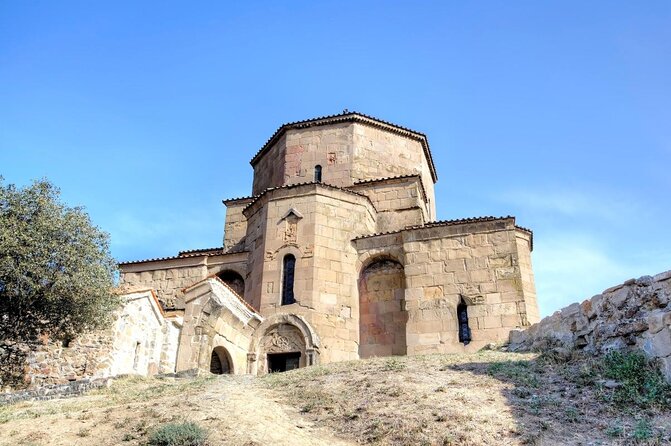
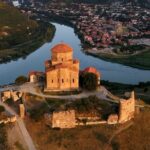
- Jvari’s hilltop viewpoint over the confluence of the Mtkvari and Aragvi rivers
- A focused stop in Gori at Stalin’s birthplace museum, with set visiting time
- Uplistsikhe’s cave-town ruins carved into a rocky riverbank
- Old Mtskheta’s Svetitskhoveli Cathedral with legendary relics and major Georgian significance
- Small-group feel with a maximum of 15 people
- Comfort on the road via an air-conditioned vehicle and WiFi onboard
Why this Ancient Georgia loop feels like a time machine
This is the kind of day trip that quietly teaches you how Georgia layers its past. One moment you’re standing above the river meet-up where stories of faith helped shape the country. Next you’re in Gori, confronting the life and legacy of Joseph Stalin—an era Georgia still has to live with. Then you shift gears again to Uplistsikhe, where buildings were literally carved into stone, moving you from politics and relics to craft and survival.
If you want your Georgia trip to go beyond the capital, this itinerary is a strong way to do it. You’ll leave Tbilisi in the morning and return the same day, hitting major sites around Mtskheta and Gori without you having to plan rides or connections.
You can also read our reviews of more tours and experiences in Tbilisi.
Starting in Tbilisi: pick-up at Abano St and a 9–10 hour rhythm
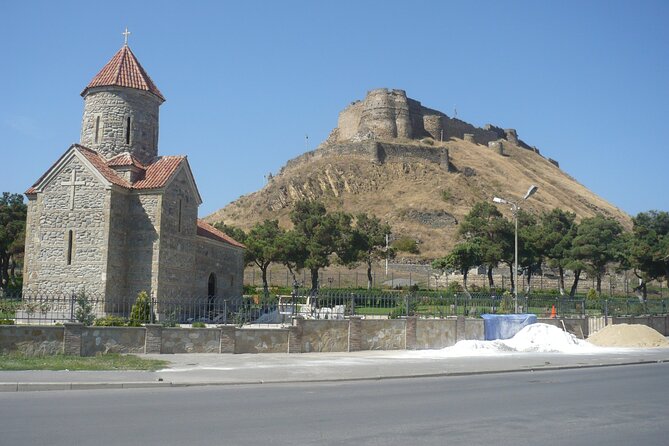
You’ll meet at 15 Abano St, Tbilisi, with the tour starting at 9:00 am and ending back at the same meeting point. That matters more than it sounds. When a day trip loops back to the same spot, you don’t burn time figuring out where to get to next.
The tour runs about 9 to 10 hours total, and transportation time is built into that schedule. In practice, that means you should plan for a full day even if each site visit is shorter. You’ll have enough time to look closely and take photos, but this isn’t a slow museum crawl.
Comfort is covered. You’re traveling by air-conditioned vehicle, and WiFi on board helps if you want to check directions later or just keep your phone battery sane.
One more real-world note: this is a group tour capped at 15 travelers. That size is often the sweet spot—small enough for interaction, big enough that you’re not waiting around forever.
Jvari Monastery: the Mtkvari–Aragvi confluence viewpoint you’ll remember
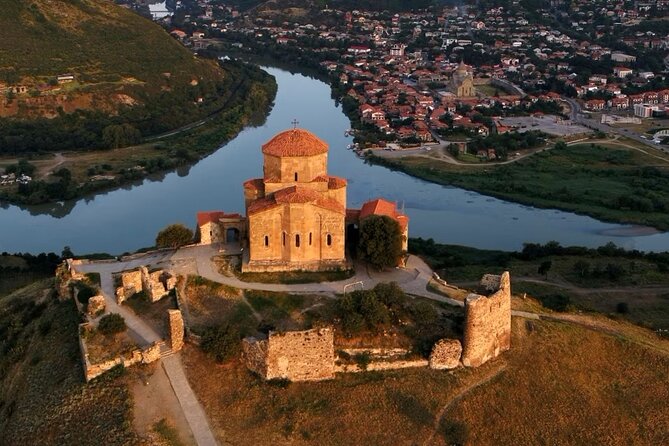
Jvari Monastery is where the day starts feeling special. You’ll visit for about 40 minutes, and admission is free. The setting does the heavy lifting: it’s at the confluence of the Mtkvari and Aragvi rivers, so you get a natural panorama that helps you understand why people built places of worship on high ground.
Here’s what to focus on during your visit:
- The river meeting point below you: even if you only catch it in snapshots, the geography tells the story. Rivers often shaped travel routes, power, and settlement.
- The monastery’s position: you’re not just looking at a building. You’re looking at why this spot mattered.
Jvari is also a good warm-up for the rest of the day. It sets you up to notice a theme you’ll see again in Mtskheta: Georgian Christianity didn’t just appear indoors. It took root in landscape, stone, and route.
Practical tip: religious sites may require respectful dress. I’d bring a scarf and something that covers shoulders. For churches, leg coverage can matter too—especially if you’re a man and don’t want last-minute scrambling at the entrance.
Gori’s Stalin Museum: how a Soviet-era stop lands in Georgian culture
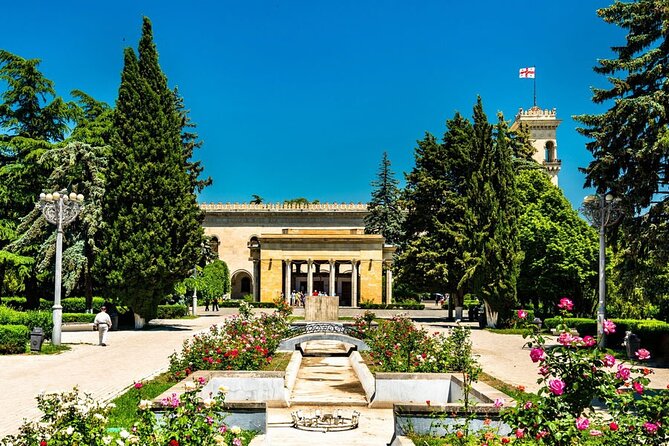
Then the day pivots hard. You’ll head to Gori for the Stalin Museum with about 1 hour onsite. Admission is not included, and the cost is listed as 15 GEL per person.
This stop can feel emotionally jarring in the middle of a day tour focused on ancient monuments. But that’s also why it’s worth doing. Georgia’s 20th century isn’t a footnote. You’re seeing how a birthplace became a national narrative space—one that Georgia must interpret from the present.
A couple things make the museum’s story unusually direct. The complex opened in 1957, and the house where Stalin was born had a memorial museum opening in 1937, during his lifetime. That detail helps you understand the museum’s tone isn’t just retrospective. It was set up while the world was still actively shaped by him.
What I’d do with your hour here:
- Don’t try to read everything cover-to-cover. Instead, pick sections that match what you want to learn—his early life framing, the context around the memorial, and how the state presented him.
- Take a breather after. The day swings back toward religion and ancient architecture, so a few quiet minutes helps you recalibrate.
Also note a small setup drawback you might run into: some museums don’t provide the kind of audio help you’d expect. If you’re the type who likes headphone narration, you might find this stop less comfortable than others.
Uplistsikhe cave town: climbing the rocky bank and choosing good shoes
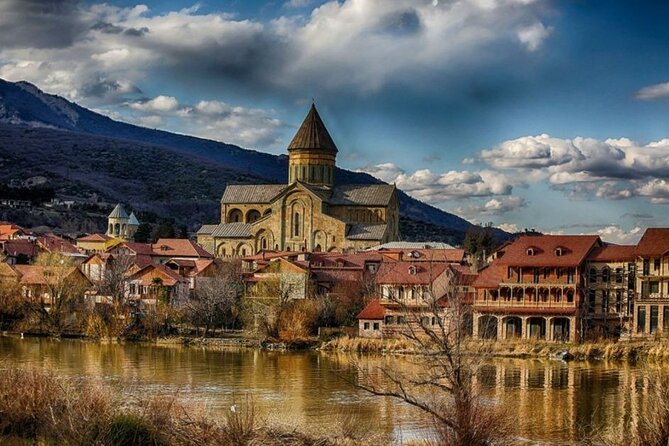
Uplistsikhe is the physical highlight of the day. You’ll spend about 1 hour on-site, plus there’s a lunch break at a local restaurant tied to the Uplistsikhe time window (with lunch not included in the tour price).
Uplistsikhe itself has an admission fee of 15 GEL per person (not included). The site is built on a high rocky left bank of the Mtkvari River, and it’s known for structures spanning from the Early Iron Age to the Late Middle Ages. What I like about the description is that it signals this wasn’t a single-style place. You get a unique mix of rock-cut traditions linked with areas such as Anatolia and Iran, plus the co-existence of pagan and Christian architecture.
Now for the part that matters for comfort: Uplistsikhe isn’t a flat stroll. You’ll be walking among uneven ground and rock-cut features. On a wet day, that can get slippery. The tour experience notes this challenge in practical terms—traction matters.
My advice:
- Wear shoes with real grip. If your soles are smooth, save yourself a fall-prone moment.
- If you have mobility limits or get nervous on stairs and rock steps, this stop may be harder than the cathedral or monastery.
- Bring a light layer even if it’s warm in Tbilisi. Stone sites can feel cooler in shaded cutouts, and then warmer in open areas.
If you want your photos to look good, aim for viewpoints that show the carving style, not just the entrances. The best scenes are often the ones where you can see how the town was carved into the slope.

Svetitskhoveli Cathedral in Old Mtskheta: Saint Nino’s church and major relics
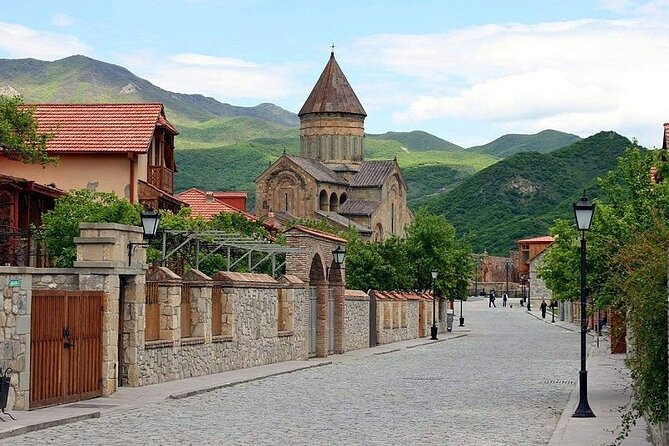
After Uplistsikhe, you’ll end at Svetitskhoveli Cathedral in Old Mtskheta for about 30 minutes. Admission is free, and this is one of the most historically significant stops on the route.
Svetitskhoveli is often described as the First Georgian Church, erected on a spot said to be chosen by Saint Nino. This stop isn’t only about architecture. It’s about legends and material culture tied to faith.
The cathedral is said to house precious relics, including what is believed to be Christ’s Mantle, a 4th-century baptismal font, and a piece of cedar wood salvaged from the original structure. Even if you only half-believe the traditions, the way the site preserves meaning is the real point. Georgia doesn’t treat its sacred locations like empty shells; they are treated like carriers of memory.
A time-saving strategy for your 30 minutes:
- Start by orienting yourself in the main area first.
- Then look for the relic-related stories your guide points out.
- Save your longer photos for moments that don’t block others—inside and around religious spaces, patience pays off.
Dress matters here too. If you already have a scarf for Jvari, you’ll be ahead of the game.
Price and what you truly get for $24
At $24 per person, this tour prices itself as value travel. It’s hard to beat that when your day covers multiple major locations outside the city—plus included ride comfort.
Here’s what your money includes:
- WiFi on board
- An air-conditioned vehicle
- Group tour format with an English-speaking guide
- Time for transportation built into the full day (roughly 9 to 10 hours)
- Mobile ticket
Here’s what your money does not include:
- Stalin Museum admission (15 GEL)
- Uplistsikhe admission (15 GEL)
- Lunch (you visit a local restaurant; lunch cost is not included)
So the real cost question is admissions plus lunch on top of the $24. Still, even with those add-ons, you’re paying for a full, guided route across big names—Jvari, Gori, Uplistsikhe, and Svetitskhoveli—in one day without needing to drive yourself.
If you’re traveling with a friend and hate splitting rides, this kind of guided bundle tends to win. If you’re the type who only wants one or two “must-sees,” you might feel the schedule is packed. But for most first-time visitors who want the broad sweep, the value is solid.
Tips that prevent problems: scarves, leg coverage, and wet-rock caution
This tour is generally manageable for most people, but a few practical details can make it smoother.
Bring a scarf for church visits.
Religious sites may ask for head coverage. Many sites provide scarves, but it’s easier if you bring your own clean one. The same goes for leg coverage. Some entrances expect covered legs, and men may have a tougher time finding a scarf-large-enough option for leg covering on the spot.
Choose grip-first shoes.
Uplistsikhe is the stop where footwear can make or break your comfort. If the weather turns damp, slick rock is a real issue. I’d treat this as non-negotiable.
Expect a full-day pace.
Even with short visits—40 minutes at Jvari and 30 at Svetitskhoveli—you’ll still be on the move. Use that time to snack smart before you’re stuck in a long touring rhythm, and plan to hydrate.
Watch for language mixing.
The tour is offered in English, but there’s a real chance you’ll hear other languages too. If you prefer a strict English-only narration, check in before you go. If you’re flexible, the guide switching can still be a benefit for group harmony.
Who should book this tour (and who should plan differently)
This works best for you if:
- You want a single-day sampler of Mtskheta, Gori, and Uplistsikhe from Tbilisi.
- You like guided storytelling that ties sites to larger Georgian themes.
- You’re comfortable with moderate walking and a bit of climbing at Uplistsikhe.
You might plan a different option if:
- You have mobility limitations or know you struggle with uneven ground and rock steps. Uplistsikhe is the main concern.
- You’re very time-sensitive and hate any chance of the day running long. Language mixing and logistics can stretch the schedule.
If you’re traveling with kids, this itinerary can still work because the site visits aren’t endlessly long. Just be ready for the physical demands of Uplistsikhe.
Should you book? My practical take
I’d book this tour if you want maximum Georgia per day, with organized stops and enough time to see what matters at each place. Jvari and Svetitskhoveli give you the sacred context, Uplistsikhe gives you the stone-and-people creativity, and Gori brings in the 20th-century reality you can’t skip if you’re trying to understand the country as a whole.
I wouldn’t book it blindly if you’re picky about language or if you’re uncomfortable with climbing. Those are fixable issues—bring the right shoes, pack a scarf, and confirm how the guide handles language.
For most visitors, though, this is a strong value way to get out of Tbilisi and into the places that shaped Georgia.
FAQ
What is included in the tour price?
The tour price includes WiFi on board and an air-conditioned vehicle. It does not include lunch or the paid admissions at the Stalin Museum and Uplistsikhe.
How long is the tour, and what time does it start?
The tour lasts about 9 to 10 hours and starts at 9:00 am. It returns you back to the meeting point in Tbilisi.
Where do we meet for the tour?
You meet at 15 Abano St, Tbilisi, Georgia.
How much are the admissions for the paid sites?
Admission for the Stalin Museum is 15 GEL per person, and admission for Uplistsikhe is also 15 GEL per person. Jvari Monastery and Svetitskhoveli Cathedral are listed as free.
Is the tour offered in English?
Yes. The tour is offered in English.
What if the weather is bad?
This experience requires good weather. If it’s canceled due to poor weather, you’ll be offered a different date or a full refund.