REVIEW · TBILISI
Tbilisi old town & soviet heritage – Private driver-guided Tour
Book on Viator →Operated by 11 Regions • Georgia · Bookable on Viator
Tbilisi reveals itself fast, with good wheels. I like the hotel pickup plus the smooth private transport, because you spend your energy on sights, not searching for them. I also like that you get an English-speaking driver who keeps the day moving, even when you want extra photo stops in between.
One possible drawback: the route is packed with a lot of key stops in a half day, so comfy shoes matter and you’ll want to pace yourself—especially once you’re up around Narikala Fortress.
In This Review
- Key things that make this tour work
- Getting oriented in Tbilisi Old Town with a private driver
- Metekhi Cathedral: where the medieval vibe starts
- Holy Trinity Cathedral: the big Georgian showpiece
- The Chronicle of Georgia, often called Georgian Stonehenge
- The aerial tramway and Narikala: Tbilisi views in minutes
- Shardeni Street and Jumah Mosque: cultures side by side
- Dry Bridge Market and Meidan Bazaar: browse like a local shopper
- Rustaveli Avenue, the Bridge of Peace, and the Soviet-shaped city center
- Rezo Gabriadze Marionette Theater: a clock tower with timing built in
- Abanotubani sulfur baths and Bazari Orbeliani: end with atmosphere and food
- The guide factor: why this tour feels more like hospitality than sightseeing
- Price and value: does $77.93 per person make sense?
- Should you book this private Tbilisi Old Town and Soviet heritage tour?
- FAQ
- What’s the duration of the private tour?
- What time does the tour start?
- Is hotel pickup included?
- Is the tour private?
- What language is the tour guide?
- Are any attraction tickets included?
- What’s included in the price besides the guide?
- Is there any physical activity involved?
- Can I cancel for a refund?
Key things that make this tour work
- Private driver-guided pacing: you’re not stuck waiting for a big group shuffle.
- English support all day: explanations land fast, from churches to street life.
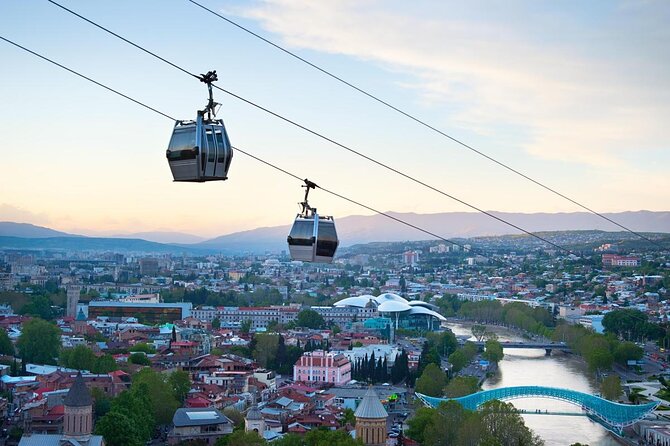
- Tramway included: the quick cable car ride saves time and gives you city views right away.
- Old Town + center mix: you see medieval lanes and the more official, Soviet-era feel of the main avenue.
- Photo-friendly stops: built-in moments for balconies, domes, and panoramas.
- Markets for real shopping time: Dry Bridge and Meidan Bazaar give you places to browse, not just pass by.
Getting oriented in Tbilisi Old Town with a private driver
This is the kind of half-day tour that helps you understand Tbilisi, not just check boxes. You start with pickup from your hotel or apartment in Tbilisi, then ride in an air-conditioned car between areas. Bottled water is included, and there’s WiFi onboard, which sounds small until you’re trying to look up bus times or map your next stop.
Because it’s private, the day is easier on your head. You’re not stuck behind slow walkers, and you can ask for a quick stop when you spot a balcony, a viewpoint, or a street photo opportunity. The tour runs about 5 to 6 hours, starting at 9:30am, so you avoid the worst of midday crowds and heat.
One thing I’d plan for: you’ll do some walking, and a good chunk of Tbilisi’s best sights sit on slopes. The tour lists moderate physical fitness as a requirement, so think comfortable walking shoes and a light layer you can remove when you’re in and out of churches.
You can also read our reviews of more tours and experiences in Tbilisi.
Metekhi Cathedral: where the medieval vibe starts
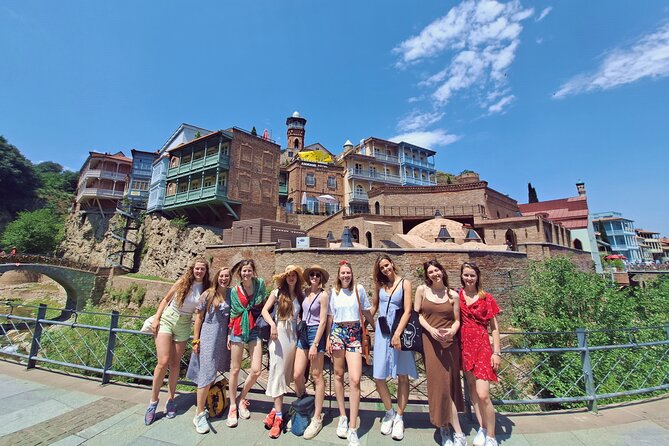
You begin at Metekhi Cathedral, a 13th-century church complex perched above the city. This is where Tbilisi’s story feels real: narrow streets, close-up balconies, and colorful building fronts that look like they were designed for wandering.
What you’ll like here is the flow. You don’t just arrive at a monument; you move through the Old Town fabric around it—so the church doesn’t feel isolated. Admission is free, which makes it an easy first stop before you start spending time and energy.
A practical note: churches are working places of worship. Plan on modest dress and a calm pace, and you’ll enjoy the atmosphere instead of feeling rushed.
Holy Trinity Cathedral: the big Georgian showpiece
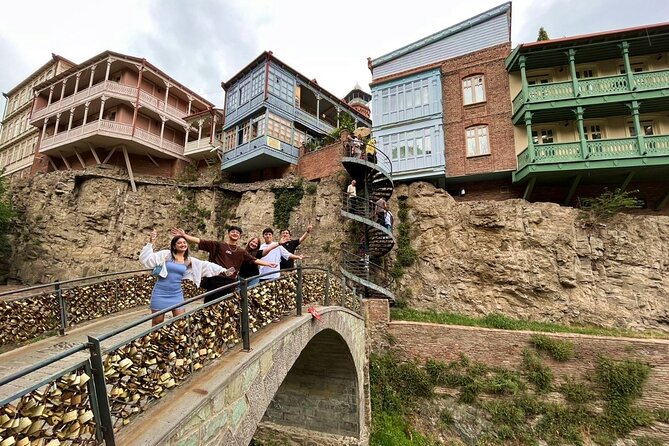
Next comes Tbilisi Holy Trinity Cathedral, and it’s hard to miss. It’s listed at 101 meters tall, and visually it dominates the skyline in a way that quickly tells you why it’s the most noticeable attraction in the city.
This stop is also efficient: admission is free, and you get around 30 minutes to see the exterior and take in the scale. Even if you’re not the type to linger at religious sites, this one gives you a clear landmark for orienting yourself later. It also helps connect what you’ll see next—the Chronicle monument and the fortress viewpoints—because everything is tied to elevation and visibility in Tbilisi.
The Chronicle of Georgia, often called Georgian Stonehenge
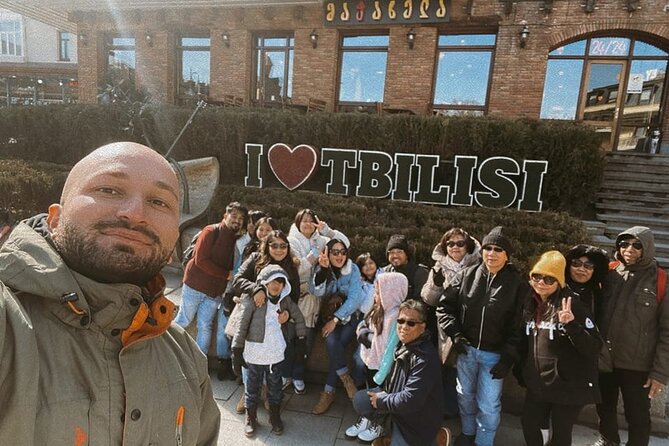
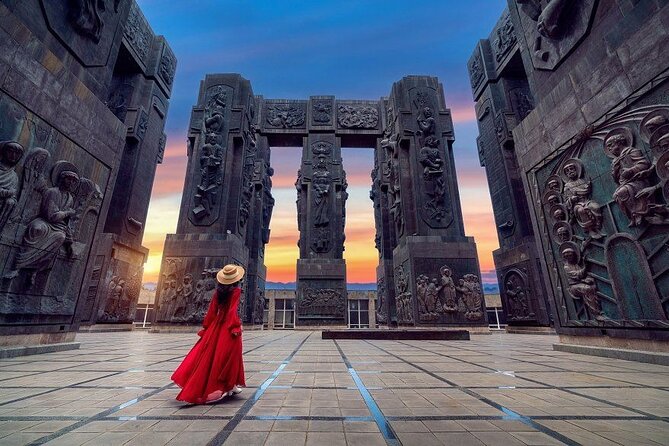
Then you reach Chronicles of Georgia, where 16 massive pillars summarize the story of Georgia’s rulers and also scenes from the life of Jesus. It’s described as often called Georgian Stonehenge, and you’ll understand the comparison fast: it feels like monumental history translated into stone.
You’ll get about 30 minutes here, and because the monument is outdoors, it’s a good break in the day. The best way to enjoy it is to move slowly along the pillars and let the scenes guide your reading. Since admission is free, you can spend your time without guilt.
If you’re traveling with kids or anyone who gets bored with details, the “story in stone” concept is easier to follow than it sounds. It’s basically built-in storytelling, with the architecture acting like a storyboard.
The aerial tramway and Narikala: Tbilisi views in minutes
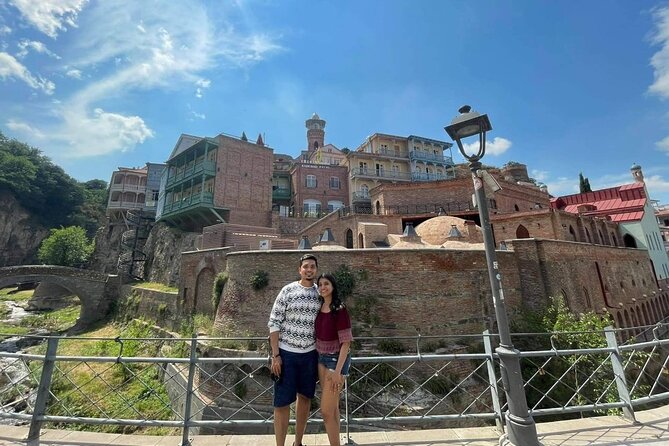
After the city’s historic landmarks, you get a time-saving treat: the Aerial Tramway. The ride is short—about a couple of minutes—and the ticket is included. It connects Rike Park to Narikala Fortress, which means you get elevation fast and spend less of your day climbing.
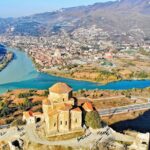
Once you arrive, the main payoff is Narikala Fortress. This is one of Tbilisi’s most known ancient sites, and the “heart and soul” nickname fits because the views are the real attraction. You get a clear look over the city’s layers: river, rooftops, and Old Town streets that suddenly make sense from above.
Your time here is around 15 minutes, so I’d aim to do two things: get one steady panoramic shot, then turn and take a few shorter angles. That way you capture both the skyline and the texture of the historic area below.


Shardeni Street and Jumah Mosque: cultures side by side
From Narikala, you shift back toward Old Town energy, and the walking becomes more street-level. Shardeni Street is a pedestrian favorite, and for good reason—it’s a place where you can just stroll, stop for photos, and watch daily life happen without needing a ticket.
Right nearby you also visit Jumah Mosque, noted as the only Muslim shrine in the city. It’s a simple red brick mosque and listed as a place of worship for both Sunni and Shia Muslims. You’ll spend less time here—about 5 minutes—but it adds an important contrast to the Orthodox cathedral-focused route earlier.
A tip for this section: even if you’re moving quickly, slow down at doorways and corners. Tbilisi’s charm often comes from the details—door frames, tiled surfaces, and the way different buildings meet at street corners.
Dry Bridge Market and Meidan Bazaar: browse like a local shopper
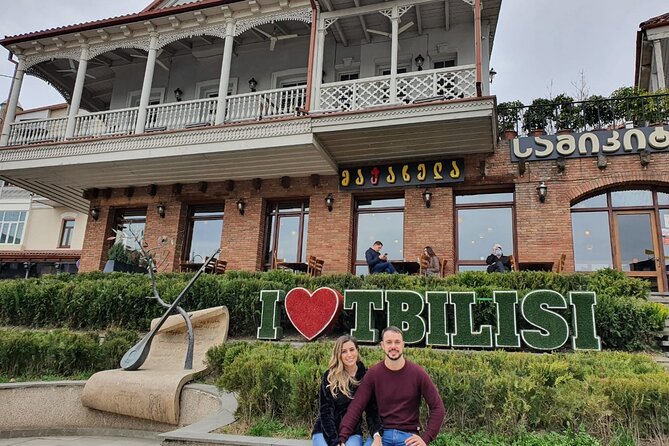
Now you hit the part of Tbilisi that’s fun even when you’re not buying. Dry Bridge Market is described as a must-see flea market in the historical part of the city. Expect old coins, postcards, dishes, paintings, books, accessories, vintage phones, and cameras.
You’ll get around 30 minutes here, and the day also includes another Dry Bridge stop later for extra browsing time. That’s a smart setup because markets reward repeat passes. You spot something the first time, then come back when you’ve seen what else is around and can judge value better.
Then there’s Meidan Bazaar, an underground tunnel-shop experience. It’s focused on Georgian-made items—wine, handcrafted socks, postcards, jams, sauces, spices, and tea. It’s also listed as having typical Georgian tourist items, but in a market style that feels practical: you can compare brands and gifts in one place without jumping across the city.
If you want souvenirs that actually fit your trip, this is where you’ll spend your time. If you only want one or two gifts, set a quick budget before you start walking, because the selection can make you forget the plan.
Rustaveli Avenue, the Bridge of Peace, and the Soviet-shaped city center
To match the tour theme of Soviet heritage, you’ll also spend time near Shota Rustaveli and the broader central area. There’s a Shota Rustaveli statue stop and time on the main avenue, listed at about 1,500 meters long. The area is described as having governmental, public, cultural, and business buildings along the avenue.
Even without a deep lecture, you’ll feel the vibe shift. This part of the city reads more official and civic than Old Town. It’s a good way to see how Tbilisi isn’t only medieval lanes and hillside views—it also has a modern center shaped by big institutions and wide streets.
Then you’ll cross the Bridge of Peace, a pedestrian bridge connecting Old Town to Rike Park. It’s relatively young, opened for public in 2010, so it’s not Soviet-era, but it does show a key point: the city keeps layering new designs onto older geography. It’s an easy 10-minute stop that helps you connect where you’ve been with where you’re headed next.
Rezo Gabriadze Marionette Theater: a clock tower with timing built in
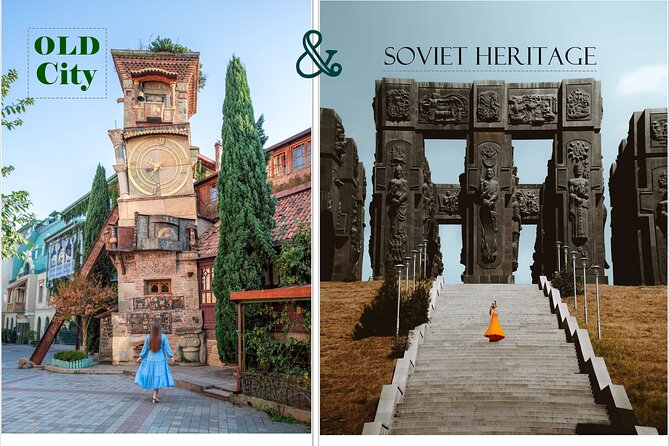
One of the most memorable stops is Rezo Gabriadze Marionette Theater, centered on a clock tower covered in hundreds of tiles. It’s instantly recognizable, and the show is tied to the hour.
The tower’s description includes an angel that comes out with a small hammer to ring the bell every hour. There’s also a small puppet theatre inside, and the show times are listed: noon and 7pm. Your tour time may not land exactly on those show moments, but the stop is worth it because the architecture does the storytelling even if you miss the puppet portion.
This stop is ideal if you like playful details. It’s also a good pause point—short enough to keep the flow, but distinctive enough to keep the day from becoming just temples and viewpoints.
Abanotubani sulfur baths and Bazari Orbeliani: end with atmosphere and food
As you make your way through the lower Old Town, you arrive at Abanotubani, Tbilisi’s sulfur bathhouse area. This is a “visit card” zone with dome-shaped roofs and tiled facades. The bathhouses sit below ground level, with only the beehive-like domes visible on the surface.
Here’s the key practical detail: admission isn’t included. So treat this as a look-and-decide stop. You’ll enjoy the outside atmosphere, and if you want to go in, you’ll need to plan for that separately.
Then the tour wraps at Bazari Orbeliani, described as combining 35 modern food facilities and a food hall with restaurants offering Georgian and international cuisines. You’ll spend about 25 minutes there, and for many people this is the best kind of ending: not a hard stop in a monument, but a chance to grab a meal or snack while you’re still energized from the day.
This is also where you can use whatever you learned on the route. If the guide hinted at flavors or local favorites, this is the moment to test them without overthinking.
The guide factor: why this tour feels more like hospitality than sightseeing
A big part of the value here is the human factor. The experience is described as private driver-guided, with a guide service and onboard WiFi, and the day is timed tightly. When it works, it feels smooth and friendly.
In the field, guides including Giga and Timo are highlighted for extra local tips on food and traditions, and for turning the day from a generic highlight run into something more personal. Other guides like Makho and Goga are noted for energy and for tailoring the pace, including supporting families with kids and an elderly person.
What that means for you: you can bring your priorities—great photos, calm museum-like pacing, or more street life—and expect the guide to adjust within reason. Private tours are only worth the price when the person steering them actually pays attention to your needs. This one is built around that.
Price and value: does $77.93 per person make sense?
At $77.93 per person for about 5–6 hours, the value depends on what you’d otherwise pay and how much you value convenience.
Here’s what you’re getting that’s harder to replicate cheaply:
- Hotel pickup and drop-off (no taxi math, no time lost)
- Private transportation plus onboard WiFi and bottled water
- English-speaking guide service
- Most listed sights have free admission, so your money goes toward time and logistics
- The aerial tramway ticket is included
If you’re a couple, a small family, or a group of friends, private transport can actually be good value compared with doing multiple independent taxis plus paid guided entries. And because so many stops are free, your day doesn’t turn into an admissions bill.
The only real cost risk is optional add-ons like the sulfur baths at Abanotubani, which aren’t included.
Should you book this private Tbilisi Old Town and Soviet heritage tour?
Book it if you want a half-day plan that mixes Old Town character with a look at the more official center—plus you like the idea of a guide who keeps things moving and explains what you’re seeing in practical terms.
I wouldn’t book it if you’re the type who wants long, slow museum-style wandering with no schedule pressure. This day is built for highlights, views, and street-level browsing, not for disappearing into one neighborhood for hours.
If you’re visiting Tbilisi for the first time, this tour is an efficient way to build your mental map fast—then you can come back later on your own for the slower, deeper experiences that you’ll know you actually want.
FAQ
What’s the duration of the private tour?
It runs about 5 to 6 hours.
What time does the tour start?
The start time is 9:30am.
Is hotel pickup included?
Yes. The tour offers pickup from your hotel or apartment within Tbilisi.
Is the tour private?
Yes. It’s a private tour, and only your group participates.
What language is the tour guide?
The tour is offered in English.
Are any attraction tickets included?
The aerial tramway ticket is included. Most other listed stops have free admission, while admission to Abanotubani sulfur baths is not included.
What’s included in the price besides the guide?
Included items are bottled water, private transportation, WiFi on board, and tour guide service.
Is there any physical activity involved?
You should have a moderate physical fitness level. There’s walking and some elevation involved around the Old Town and fortress area.
Can I cancel for a refund?
Yes. You can cancel up to 24 hours in advance for a full refund.