REVIEW · ROME
Ancient Rome Guided Walking Tour: Colosseum, Forum and Palatine
Book on Viator →Operated by Gray Line I Love Rome by Carrani Tours · Bookable on Viator
Rome’s big stories, in walking form.
This Ancient Rome Guided Walking Tour strings together Palatine Hill, the Colosseum, and the Roman Forum in about three focused hours, with headsets that help you catch every bit of guide talk. I like that you get pre-booked Colosseum entry (so you spend less time stuck in lines), and I also like the small-group feel capped at 20 people. The main drawback to plan for is that it is not a casual stroll: there are hills and stairs, and the meeting spot can take a little effort to find in a crowded area.
You’ll start on one of Rome’s oldest hills and build forward in time—founding myths, imperial showmanship, then the place where politics and religion once ran the city. The tour runs in English and includes Colosseum tickets, a reservation fee, and wireless audio, with optional departure times depending on the season. If you’re sensitive to walking on medium-hard surfaces (and possibly rain) or you have mobility limits, you’ll want to reconsider or choose another format.
In This Review
- Key highlights to look for
- What You’ll See on This Colosseum Forum Palatine Walk
- Meeting Point and Timing: Where You Start Really Matters
- Palatine Hill: Rome’s Oldest Neighborhood and the Founder Story
- Entering the Colosseum: Pre-Booked Tickets and Practical Viewing
- Roman Forum: Politics, Religion, and What Was Buried
- Pacing, Fitness, and What the Walk Feels Like
- Headsets and Guide Style: How to Get the Most Out of Audio
- Price and Value: Is $71.65 a Smart Deal?
- Who This Tour Suits Best (and Who Might Skip It)
- Should You Book This Ancient Rome Guided Walk?
- FAQ
- How long is the Ancient Rome guided walking tour?
- What’s included in the tour price?
- Do I need to buy Colosseum tickets separately?
- Where do I meet the guide?
- What time does the tour start?
- Is the tour in English?
- How much walking is involved, and is it accessible?
- What should I bring for entry?
- What if there are security delays?
- How big is the group?
Key highlights to look for
- Pre-booked Colosseum entry: less waiting at the ticket moment, plus reserved time handling.
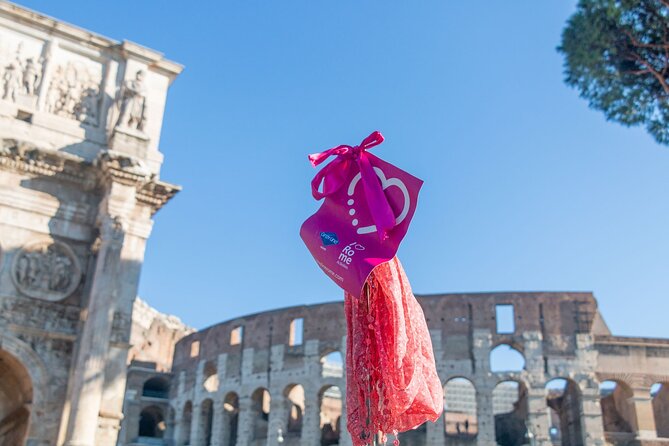
- Wireless headsets: built for noisy ruins and crowded viewpoints.
- Palatine Hill first: it gives you context before you step into the Colosseum.
- Forum monuments with explanation: Temple of Julius Caesar and the House of the Vestal Virgins come with meaning.
- Small group (max 20): easier listening and photo stops than the huge crowds.
What You’ll See on This Colosseum Forum Palatine Walk
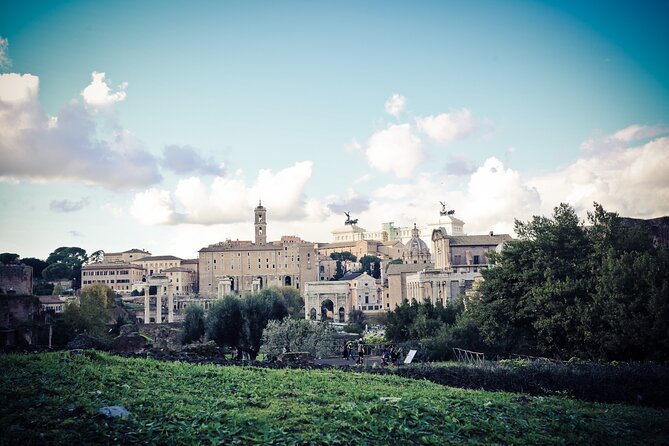
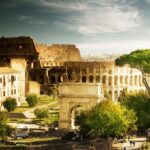
This tour is designed like a guided timeline. You begin at the Palatine Hill—Rome’s early heart—then move to the Colosseum, and finish in the Roman Forum, the political and religious core of the empire. Walking this order helps because you’ll understand why the Colosseum was built where it was, and why the Forum matters even after the empire fell.
The half-day format is also practical. With an around-three-hour schedule, you’re not trapped all day indoors or stuck in museum lines, and you can still build the rest of your day with gelato, viewpoints, or a slower self-guided loop.
One more plus: the tour ends in the area of the Forum rather than sending you back the way you came. That makes it easier to keep exploring after your guided time, especially if you want to linger at the exact spots your guide highlighted.
You can also read our reviews of more tours and experiences in Rome.
Meeting Point and Timing: Where You Start Really Matters
Meet your guide near Via delle Terme di Tito, 75 (00184 Rome), with the tour ending at Via dei Fori Imperiali. From April 1, 2025, the meeting point shifts to Colle Oppio Park (inside the park, corner of Via Nicola Salvi). If you’re traveling in those date ranges, double-check the correct location so you don’t burn your energy searching.
Plan to arrive a bit early because security checks can cause delays. You’ll also need a valid passport or ID document matching your booking name, and if you have a pacemaker you’ll need a certificate for admission. These aren’t “nice to have” details; they can affect whether you get in smoothly.
Timing changes by season too. The tour starts at 2:30 PM during certain months, and at 1:30 PM during others—so make sure your phone calendar matches your exact tour date. One small timing mismatch can turn into a stressful scramble in the middle of a crowded archaeological zone.
Palatine Hill: Rome’s Oldest Neighborhood and the Founder Story
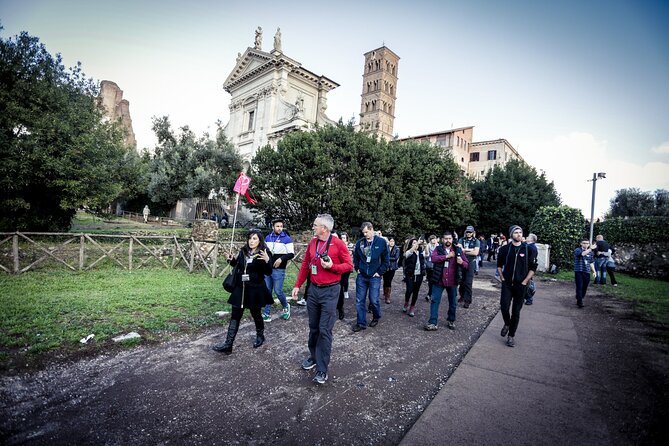
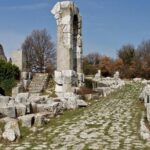
Starting on Palatine Hill is a smart move. It sits between the Velabro and the Roman Forum, and it’s one of the oldest parts of the city—now an open-air museum with constant layers of meaning underfoot. Before you see the Colosseum’s scale, you’ll get the mythology and the geography that made this hill central to Rome.
You’ll hear the legend tied to the wolf and the founding story of Romulus and Remus. Even if you don’t care about myth for its own sake, it helps you understand why Romans loved linking power to destiny and place.
This stop also sets your expectations for walking. The terrain is outdoor and uneven, and the archaeological area involves medium-hard floors, so comfortable shoes matter. If it’s a hot day, this first hill stop is a good moment to pace yourself, sip water if you brought it, and use any shaded pauses your guide offers.
Entering the Colosseum: Pre-Booked Tickets and Practical Viewing
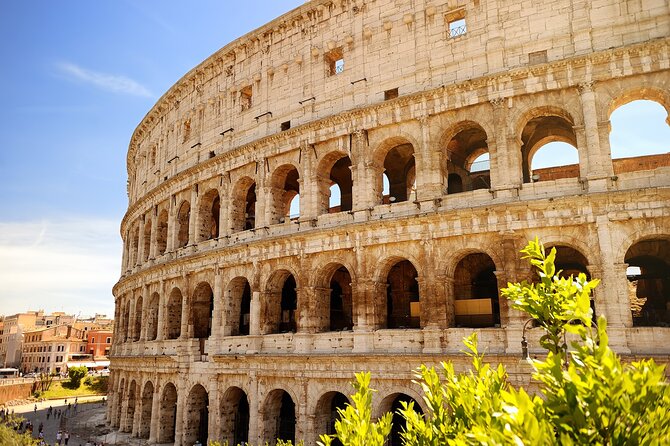
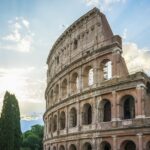
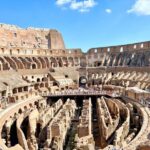
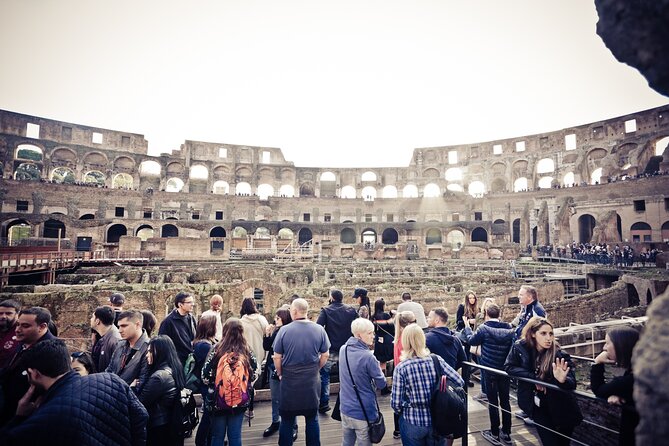
The Colosseum is the headline, but what makes this tour work is what happens around the headline. You enter using your pre-booked tickets, and your guide explains how the amphitheater developed in the AD 70–80 period—before the modern engineering tools we take for granted.
Your guide also connects design to audience experience. You’ll hear it could once hold around 80,000 spectators, which is easier to picture when someone frames the structure for you instead of you guessing from the arches and stone alone.
This is where headsets pay off. Wireless audio helps you catch commentary even when other tour groups are crowding the same viewpoints. Still, be aware that you may occasionally lose reception when moving through certain built-up areas, so keep your head oriented toward your guide when you’re stopping.
If you like architecture, this part will feel especially satisfying. The Colosseum is basically a giant lesson in how Rome used repetition, geometry, and access routes to handle crowds. Even if you already know the basics, hearing the story in real time makes the stones feel like a designed system instead of random ruins.
Roman Forum: Politics, Religion, and What Was Buried
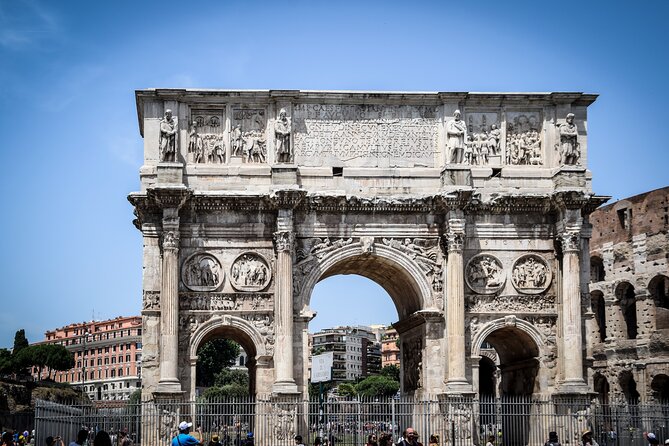
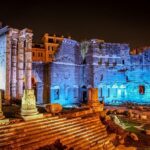
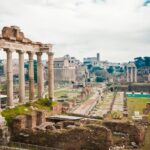
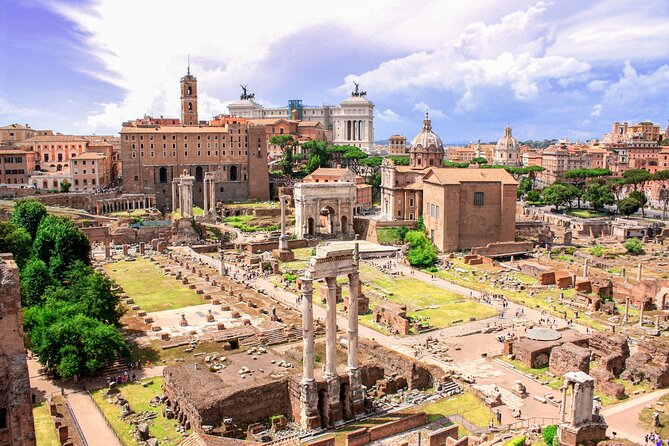
Finishing in the Roman Forum turns your visit from spectacle to governance. This area was once the center of public and religious life, which makes it more than a scenic collection of columns. When the empire fell, the Forum fell into oblivion and was buried gradually, and excavations didn’t begin until the 20th century.
Your guide points you toward key highlights, including the Temple of Julius Caesar and the House of the Vestal Virgins. Those names don’t mean much until someone explains what kind of authority and ritual life happened there—who mattered, what was performed, and how power was displayed in daily routines.
The Forum also rewards a slower eye. Even with a guided pace, this space can be visually busy, so your best strategy is to stop when your guide stops, then take a few extra seconds to look around. If you’re tempted to rush for photos, resist it—some of the most useful context comes from the exact angle your guide chooses.
This stop is also a reality check on time. You get about an hour here, so you’ll walk away knowing the main points, not having the whole site to yourself. If you want more, you can usually extend your exploration after the tour ends in the Forum area.

Pacing, Fitness, and What the Walk Feels Like
This tour is labeled as moderate fitness. That matches what you’ll actually experience: hills, stairs, and a fair amount of outdoor walking across uneven ground. One helpful note is that group size is capped at 20, which generally makes it easier for a guide to keep everyone together.
Heat and humidity can matter, especially for afternoon starts. Some people recommend choosing earlier departure times when available because it can mean fewer crowds and more comfortable temperatures. If you’re visiting in summer, plan clothing that lets you move comfortably and be ready for rain or shine.
The best guides in this type of tour also manage pacing well. In the feedback, the strongest experiences mention guides creating shade breaks, keeping the group attentive, and making sure people could hear clearly. If your group includes older visitors, the guide’s ability to slow down at the right moments can make a noticeable difference.
If you have impaired mobility, the tour is not recommended. The combination of stairs, uneven surfaces, and outdoor stairs/ramps makes it hard to do “partway” like you might in a flatter city museum.
Headsets and Guide Style: How to Get the Most Out of Audio
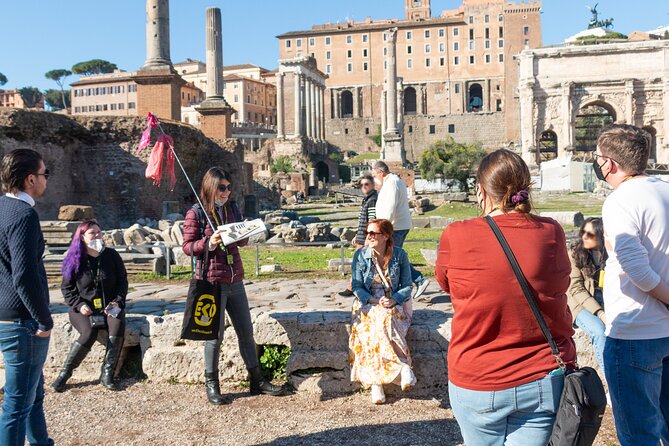
Wireless headsets are included, and they’re the difference between reading stones and actually following the story. With so many overlapping voices in the Colosseum and Forum, headsets help you stay locked into your guide’s explanations.
Guide delivery can still vary. Some people found certain guides easier to understand than others, especially with accents. If you’re hearing-sensitive, arrive on time, keep your headset adjusted, and don’t be shy about asking for a fix if the audio feels off.
Audio quality also depends on movement. If your signal drops when you’re packed close to structures, you’ll catch up by stepping into the areas where your guide stands to explain.
The best part of a good guide is not facts alone—it’s how they frame what you’re looking at. You’ll get context for why the Colosseum was built, how the Forum operated, and what these buildings meant for real Roman life.
Price and Value: Is $71.65 a Smart Deal?
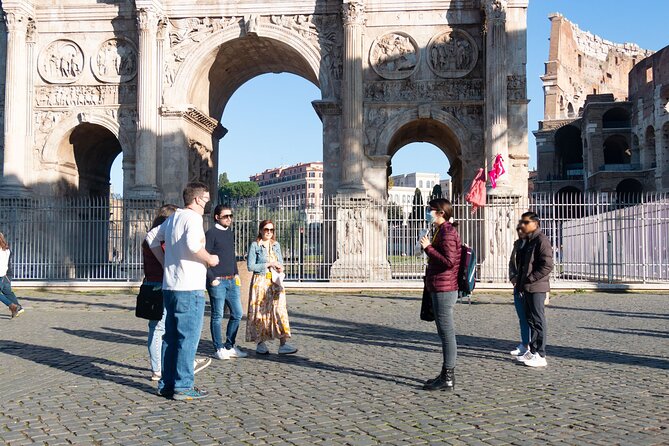
At $71.65 per person, this tour is priced for people who want guided access without doing the legwork themselves. The included Colosseum entrance ticket is valued at €18, and there’s a reservation fee valued at €2, so a big chunk of the paid price covers what it costs to get you into the Colosseum with reserved handling.
That leaves the rest of what you pay covering the guide, headsets, and the coordination that makes three major sites work in about three hours. If you’ve tried booking Rome entry tickets separately, you know how time-consuming it can be to line up reservation times with a realistic walking route. This tour is built for convenience: show up, get scanned, walk with a guide, and move on without making a second plan.
Also consider that it’s commonly booked far ahead. On average, people reserve this about 67 days in advance, which is a sign that you’ll benefit from planning early rather than waiting until the last minute.
Who This Tour Suits Best (and Who Might Skip It)
This tour fits best if you want first-time orientation with a guide. It’s perfect for seeing the main trio—Palatine Hill, Colosseum, Forum—in a way that connects founding stories to imperial power and then to how the city governed itself.
If you care about architecture, this is a strong match too. The Colosseum explanations and the Forum’s layout make it easier to understand how Rome engineered movement and public life.
Families can also find it useful when the guide keeps kids engaged and builds in photo pauses. In the feedback, guides are praised for pulling people in, not just reciting dates.
If you’re traveling with someone who needs step-free routes or has limited stamina, you should think twice. The tour isn’t set up for impaired mobility, and the walking load is real.
If you hate organized group pacing, this might feel too structured. You get a good amount of walking and listening packed into a short window, so it’s not the best fit for total wanderers.
Should You Book This Ancient Rome Guided Walk?
I’d book it if you want a high-value route through the biggest ancient landmarks with guided context and audio support. The pre-booked Colosseum entry plus headsets is the practical combo that makes the ruins feel navigable instead of overwhelming.
I’d skip it or choose a different format if you have mobility limits, if you know you struggle with stairs and hills, or if you’re the type who needs long, slow time in each ruin. For that style of trip, you may prefer self-guided tickets plus a separate guide for one site.
If you do book, your win strategy is simple: show up early at the correct meeting point, wear comfortable shoes, and stick with the group during audio explanations. Do those three things, and the Colosseum, Forum, and Palatine will click into place fast.
FAQ
How long is the Ancient Rome guided walking tour?
It’s about 3 hours.
What’s included in the tour price?
You get a guided tour of the Colosseum and archaeological area, a professional guide, wireless audio headsets, and Colosseum entrance tickets plus a reservation fee. Food and drinks are not included.
Do I need to buy Colosseum tickets separately?
No. Colosseum entrance ticket and reservation fee are included in the tour price.
Where do I meet the guide?
The start is at Via delle Terme di Tito, 75, 00184 Roma RM, Italy, and the tour ends at Via dei Fori Imperiali. From April 1, 2025, the meeting point becomes Colle Oppio Park, Via delle Terme di Tito corner of Via Nicola Salvi, inside the park.
What time does the tour start?
The tour starts at 2:30 PM during certain date ranges, and at 1:30 PM during other date ranges. Your exact start time depends on the day you book.
Is the tour in English?
Yes, it’s offered in English.
How much walking is involved, and is it accessible?
It involves walking on medium-hard floors and includes hills and stairs. It’s not recommended for individuals with impaired mobility.
What should I bring for entry?
You must present a valid passport or ID document matching your booking name. If you have a pacemaker, you’ll need to show a certificate.
What if there are security delays?
Due to heightened security measures, you may experience delays in clearing security checks, so arriving early helps.
How big is the group?
The tour has a maximum of 20 travelers.