REVIEW · ROME
Ancient Rome Guided Tour: Colosseum, Forum and Palatine
Book on Viator →Operated by Gray Line I Love Rome by Carrani Tours · Bookable on Viator
Rome’s power places in one half day.
What makes this Ancient Rome tour so fun is the way it strings together the big symbols of the empire in just a few hours. I love the wireless headsets—it’s the difference between enjoying the story and straining to hear it—plus the start from the Palatine heights with views over the Forum and Circus Maximus. One drawback: it’s a very active walk with stairs and hills, so you’ll want a moderate fitness level.
You also get a tight, guided route that keeps you moving from palace legends to gladiator-level spectacle without getting lost in the weeds. I like that the group is kept small (up to 20 people), and the tour ends in central Rome near the Colosseum, so you can keep exploring on your own right afterward. The main consideration is timing: if you miss the meeting point, you can lose access because entry rules are strict.
In This Review
- Key Highlights Worth Packing Your Energy For
- Why This Colosseum, Forum and Palatine Tour Works in 3 Hours
- Meeting at Colle Oppio: Easy Start, Early Planning
- Palatine Hill Views: Seven Hills Legends and Imperial Homes
- Entering the Colosseum: Amphitheatre of AD 72, Gladiator Stories Included
- The Arch of Constantine Moment: A Quick Detour With a Big Message
- Roman Forum: Via Sacra, Temples, and the Shape of Civic Life
- How the Group and Audio Setup Changes the Experience
- Value Check: What You’re Really Paying For
- Who Should Book This Tour (and Who Might Prefer a Slower Option)
- Should You Book the Ancient Rome Guided Tour: Colosseum, Forum and Palatine?
- FAQ
- Is this tour offered in English?
- Where do we meet for the tour?
- Are entry tickets included for the Colosseum, Roman Forum, and Palatine Hill?
- Do headsets come with the tour?
- Is the tour suitable for people with impaired mobility?
- Do I need to bring ID or a passport?
- What if I have a pacemaker?
Key Highlights Worth Packing Your Energy For
- Headsets included, so you can actually follow the guide through crowds
- Palatine Hill viewpoints first, with the Forum and Circus Maximus visible below
- Colosseum entry reserved, which helps you use your limited time well
- Forum walk focuses on core sites like the Via Sacra and Basilica Julia
- Small group size (max 20), which makes photos and pace feel more manageable
- Professional guide + audio system, built for clarity in a loud, tourist-filled area
Why This Colosseum, Forum and Palatine Tour Works in 3 Hours
If you only have half a day in Rome, this tour is built for that exact problem. You get the Colosseum, the Roman Forum, and Palatine Hill in one go, tied together with stories that make the ruins feel like a living system—not separate random rocks.
The practical win is that you’re not doing this alone. With a guide leading the thread, you’ll understand where you are and why it mattered, fast. And with headsets, you stay focused on the explanation instead of chasing someone’s voice across stone steps and tour groups.
The other win: it’s paced like a walking tour, not a museum lecture. There’s time to look up, look around, and take in the scale—especially from the Palatine Hill heights.
You can also read our reviews of more tours and experiences in Rome.
Meeting at Colle Oppio: Easy Start, Early Planning
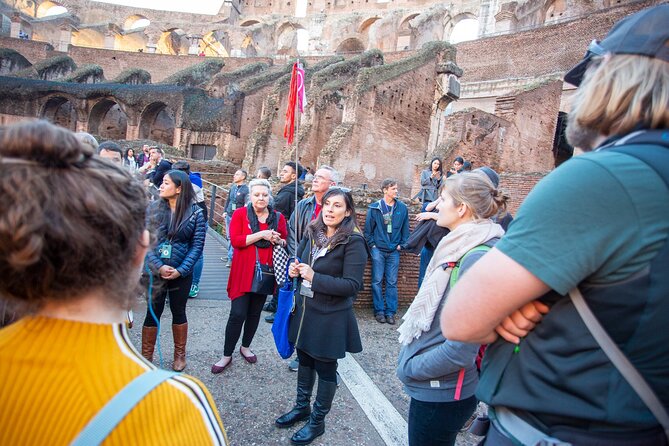
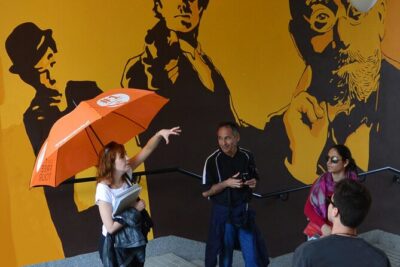
The tour meets at Colle Oppio Park (Via delle Terme di Tito, 75) inside the park area, near the corner of Via Nicola Salvi. You’re told to arrive about 15 minutes before the start, and staff carry an I Love Rome logo to help you spot the group.
This matters because the Colosseum area runs on strict entry timing. The smoother your first 10 minutes are, the less stress you’ll carry into the stairs and security lines. If you’re coming from another part of the city, I’d plan extra buffer time and let yourself be early rather than searching while the group is already moving.
Also note the tour uses a mobile ticket. That’s convenient, but it’s still worth double-checking that you can access the ticket on your phone before you leave your hotel or apartment.
Palatine Hill Views: Seven Hills Legends and Imperial Homes
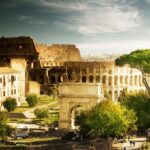
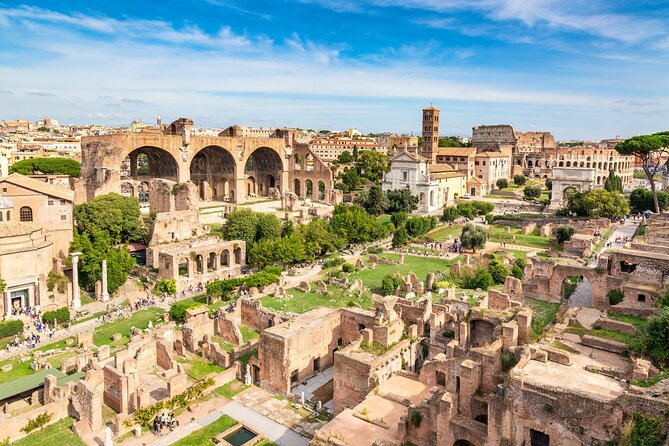
The tour begins with Palatine Hill for a reason: elevation. From up here, you can see how the Roman Forum sits in a bowl of buildings and history, and you get the famous overlook toward the Circus Maximus area below. Even if you don’t know Roman geography yet, this viewpoint helps your brain start mapping the city.
Your guide connects the setting to the seven hills of Rome legend, then moves into the hilltop ruins. You’ll spend time around major Palatine landmarks such as the Hippodrome of Domitian and the House of Augustus. Those names sound academic until you’re standing in the space where power lived—then they click.
What I like most is how Palatine Hill frames everything else. The Colosseum and the Forum can feel like separate stops if you only see them at ground level. Palatine gives you the big-picture logic: who lived here, where they held influence, and why the empire could control both daily life and public spectacle.
One consideration: Palatine Hill is not flat. You’ll want sturdy shoes and a steady pace. If you’re not comfortable with uneven ground or lots of steps, this part can feel like more work than sightseeing.
Entering the Colosseum: Amphitheatre of AD 72, Gladiator Stories Included
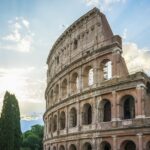
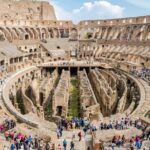
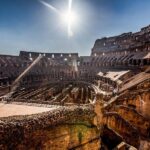
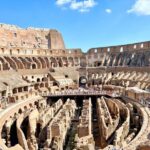
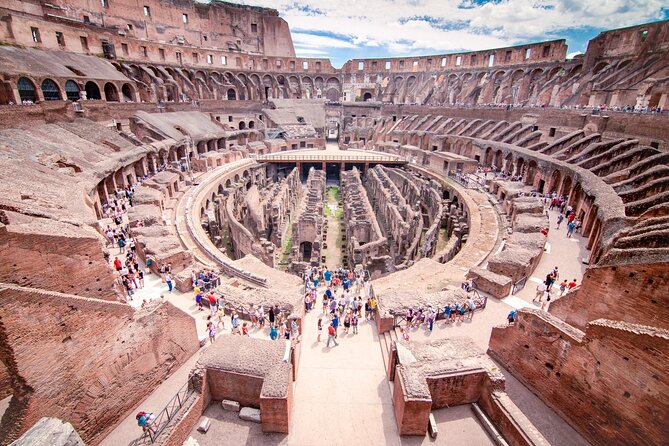
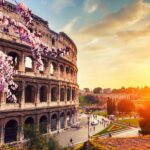
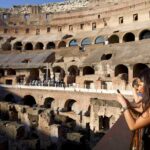
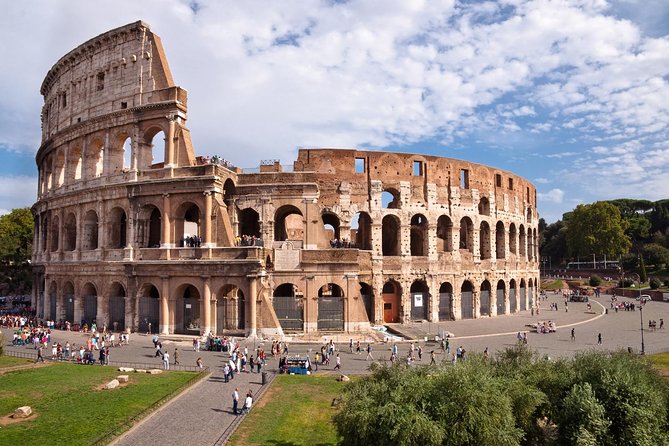
At the Colosseum stop, you get about one hour inside. The Colosseum is dated to AD 72 and originally known as the Flavian Amphitheatre, and your guide explains what makes it so remarkable and so preserved in parts.
The key here is how the guide uses the building structure to tell stories, not just recite facts. You’ll hear about gladiator games that once filled the arena and learn how this amphitheatre functioned as mass entertainment. Standing inside, the scale hits you—but the story gives it meaning.
This stop is also where your headsets earn their keep. Once you’re surrounded by other tour groups, you’ll appreciate hearing the guide clearly while you look up at seating tiers and down at the arena level.
Practical heads-up: security and crowd flow can slow things down anywhere you go in this complex. The upside is that your entry is included as part of the tour, which helps you avoid the worst of planning headaches.
The Arch of Constantine Moment: A Quick Detour With a Big Message
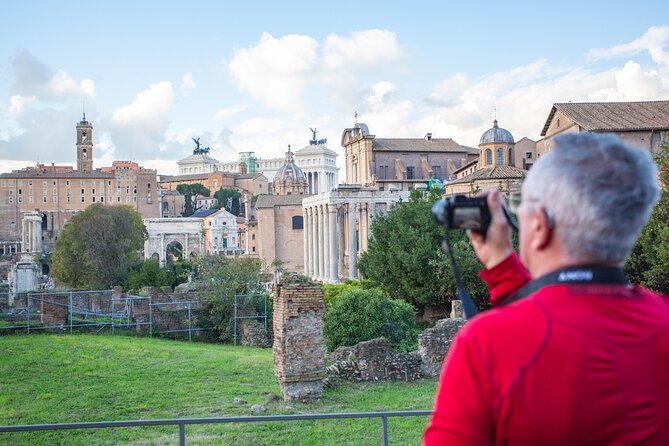
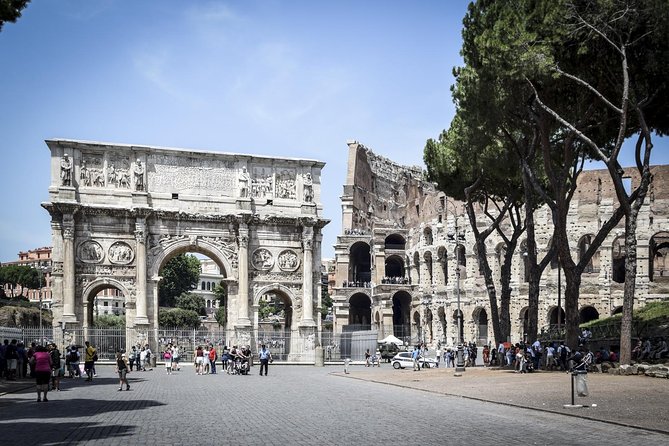
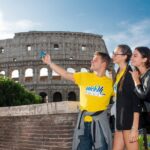
After the Colosseum, there’s a stop to see the Arch of Constantine (dated to AD 315). This is one of those Rome details that’s easy to miss if you’re moving fast on your own, but the guide uses it as a story bridge between emperors, politics, and public monuments.
Even with a short stop, it adds a layer. The Colosseum is spectacle. The Roman Forum is civic life. The arch sits in between as a reminder that rulers used architecture as branding—big declarations in stone that lasted long after the person was gone.
Roman Forum: Via Sacra, Temples, and the Shape of Civic Life
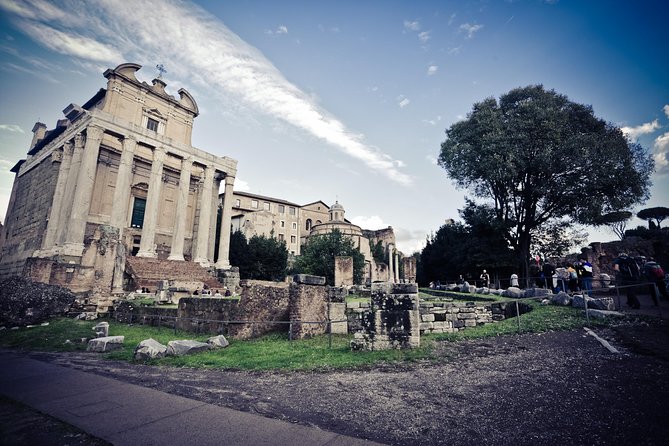
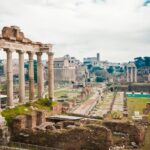
The Roman Forum is where the tour becomes most satisfying if you like understanding how daily power worked. You’ll get around one hour here, with a guided walk focused on major points such as the Via Sacra and key temple areas like the Temple of Vesta and the temples of Antoninus and Faustina.
You’ll also see the Basilica Julia, which helps explain why the Forum wasn’t only religious and political theater. It was a daily center for legal and economic life, built out of spaces where people gathered, argued, negotiated, and decided.
This part is valuable because the Forum can look confusing from street level. Ruins are fragmented. Without context, you end up taking photos of impressive fragments and leaving the meaning behind. With a guide, the route helps you follow the logic—what faced where, what was ceremonial versus practical, and why certain sites were placed where they were.
The main drawback is how physical it feels. The Forum area is active, and you’ll be walking through crowds and open sun. Plan to pace yourself and keep water in mind.
How the Group and Audio Setup Changes the Experience
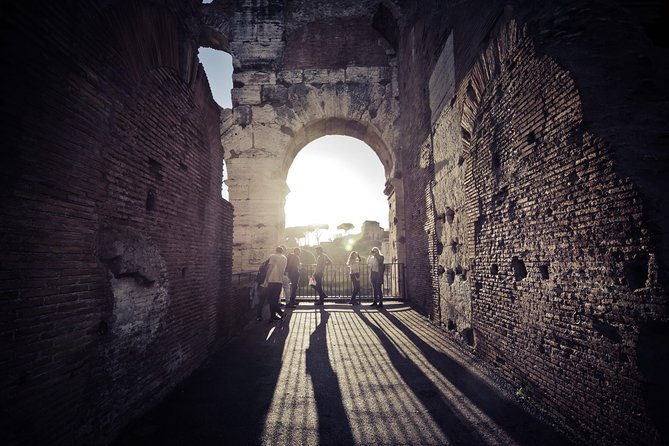
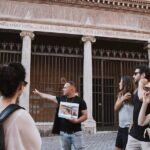
This tour is designed for clarity, not just sightseeing. Wireless headsets mean you’re not constantly trying to find the guide’s voice. That’s especially helpful at the Colosseum and Forum, where noise and crowd patterns make it easy to miss key details.
The tour also limits the group to max 20 people. Smaller groups tend to move with more rhythm, which helps at photo stops and in tighter spaces. It also keeps the guide from speaking too quickly because they’re trying to manage a bigger herd.
Another subtle benefit: a guided route keeps you from wandering into dead ends or guessing which ruins matter most. In Rome, you can absolutely spend hours and still not feel like you understood anything. Here, you get the map in real time.
Value Check: What You’re Really Paying For
At $71.65 per person for about 3 hours, the price can feel like a splurge until you break down what’s included. You’re not just paying for a guide talk. Entrance is covered for the Colosseum, Roman Forum, and Palatine Hill, and the Colosseum costs are listed as €18 per person plus a €2 reservation fee.
That means a big chunk of your total price is going into actual access and timed entry infrastructure. The remaining amount covers the guide, the headset system, and tour services that make the route work efficiently.
If you’ve ever tried to “figure it out” around the Colosseum complex on a tight schedule, you know how quickly stress costs time. This tour is a good value if you want a structured visit that turns ruins into a story without spending your limited hours researching routes and entry timing on the ground.
Who Should Book This Tour (and Who Might Prefer a Slower Option)
This fits best if you want a focused introduction to Rome’s most important ancient sites without building a self-guided plan. It’s also a smart choice for first-timers because Palatine Hill viewpoints help you orient instantly, and the Forum stops teach you what you’re looking at.
Bring a moderate fitness level. You’ll be doing a lot of walking, and parts involve stairs and uneven ground, especially around the Colosseum and Palatine. If mobility is limited, the tour is not recommended based on the operator’s guidelines.
Families can sometimes do well here too, as long as everyone can keep pace. The tour is only about three hours, which helps, but it’s still not a casual stroll.
If you’re the type who likes stories tied to specific buildings—houses, temples, monuments, and public entertainment—this tour will feel like a fast but meaningful “Rome lesson.”
Should You Book the Ancient Rome Guided Tour: Colosseum, Forum and Palatine?
Yes, I’d book it if you want maximum impact with minimum planning. The combination of headsets, reserved entry, and a route that covers Palatine Hill, Colosseum, and the Forum makes it one of the more efficient ways to experience this area in half a day.
I would hesitate if you’re worried about stairs, steep ground, or long walking in crowds. This is an active tour, and the ruins reward steady looking more than quick rushing.
If you’re ready for a guided, story-led Rome walk—complete with imperial viewpoints and a close-up look at the Colosseum—this is a strong choice.
FAQ
Is this tour offered in English?
Yes. The tour is offered in English.
Where do we meet for the tour?
You meet at Colle Oppio Park in Rome (Via delle Terme di Tito, 75, corner of Via Nicola Salvi, inside the park). You’re instructed to look for staff holding an I Love Rome logo and to arrive 15 minutes early.
Are entry tickets included for the Colosseum, Roman Forum, and Palatine Hill?
Yes. Entrance to the Colosseum, Roman Forum, and Palatine Hill is included.
Do headsets come with the tour?
Yes. Headsets (wireless audio) are included so you can hear your guide clearly.
Is the tour suitable for people with impaired mobility?
It is not recommended for individuals with impaired mobility. The tour requires moderate physical fitness.
Do I need to bring ID or a passport?
Yes. You’re required to bring your passport or ID card on the day of the tour.
What if I have a pacemaker?
If you have a pacemaker, you will need to show a certificate. Without that, you will not be admitted after screening.