REVIEW · COLOMBO
Three Ancient Kingdoms Tour | from Colombo
Book on Viator →Operated by Travceylon Leisure · Bookable on Viator
A giant rock and royal ruins in one morning. This tour is interesting because it strings together three ancient kingdoms in the Northwestern Province with real physical variety: palace grounds, a dramatic fortress climb, and a vast ruin site with an old reservoir. I like that you start early with hotel pickup and an air-conditioned ride that keeps the day moving without hassle. I also like the story thread around the Tooth Relic and how power shifted from kingdom to kingdom. The main drawback is simple: it’s a long day starting at 6:00 am, and some climbing at Yapahuwa means you should be comfortable with a moderate fitness level.
If you want Sri Lanka history that feels lived-in (not just a single stop), this route makes sense. You’ll get a strong sense of timeline too, from very early kingship through medieval upheavals, with enough breaks between sites to keep it enjoyable. Just be ready for meals and entrance fees not being included, so you’ll want to plan snacks and budget for tickets.
In This Review
- Key points to know before you go
- A 6:00 am start for three ancient capitals
- Dambadeniya: royal palace grounds and the Tooth Relic connection
- Yapahuwa rock fortress: wide stairs, carved pillars, and summit ruins
- Panduwasnuwara: ancient city ruins across 12 hectares (plus Panda Wewa)
- A short final stop: Yapahuwa’s changing capital—and why it mattered
- Price and logistics: where $85 really goes
- Who should book this Three Ancient Kingdoms tour
- Should you book Three Ancient Kingdoms Tour from Colombo?
- FAQ
- What time does the tour start?
- How long is the Three Ancient Kingdoms tour?
- Does the tour include hotel pickup and drop-off in Colombo?
- Is an air-conditioned vehicle included?
- Is lunch or any food included?
- Are entrance fees included for the sites?
- Is there water provided during the tour?
- Is this a private tour?
- What happens if the weather is bad?
Key points to know before you go
- 6:00 am pickup from Colombo keeps the schedule efficient and helps you beat the day’s heat.
- Packed-breakfast suggestion on the way to Dambadeniya is smart, since you’ll be traveling before your first stop.
- Yapahuwa’s rock fortress climb is the physical highlight, with wide staircases and carved stone details.
- Panduwasnuwara spans almost 12 hectares, so comfortable shoes matter more than you think.
- Tooth Relic connections link the stops, turning ruins into a clearer story of changing capitals.
- Private tour style for your group helps the pace feel tailored, even with fixed travel times.
A 6:00 am start for three ancient capitals
This is a 10-hour day that begins at 6:00 am. The early start matters because you’re not staying close to Colombo—you’re heading into the Northwestern Province, and the drive time adds up. You’ll spend about 2 hours getting to your first stop (Dambadeniya), then you’ll keep moving: another transfer to Yapahuwa, then onward to Panduwasnuwara, and finally a short extra stop back around the Yapahuwa area.
The value of this pacing is that you’re not trying to squeeze three major sites into a half-day sprint. Instead, you get enough time to look properly: roughly 1 hour in Dambadeniya, about 2 hours at Yapahuwa, 1 hour at Panduwasnuwara, and around 30 minutes for the additional Yapahuwa kingdom/citadel area. That adds up to a day with structure, not random wandering.
What I’d watch: the tour doesn’t include food and drinks, and the schedule starts before proper meals. The tour suggests a packed breakfast for the ride to Dambadeniya—take that advice seriously. Bring water too, even though you get a 1-liter bottle per person, because you’ll likely want extra if you’re walking and climbing in the sun.
The other “real world” factor is weather. This experience is listed as requiring good weather, and if it’s canceled for poor conditions, you’ll be offered another date or a full refund. If you’re traveling in a rain-heavy stretch of the year, I’d keep your flexibility in mind.
You can also read our reviews of more tours and experiences in Colombo.
Dambadeniya: royal palace grounds and the Tooth Relic connection
Your day’s first destination is the Dambadeniya Ancient Kingdom Museum area. The drive gets underway at 6:00 am, with about 2 hours on the road. The plan encourages you to eat a packed breakfast on the way. That’s practical: you’ll arrive ready to see rather than hunting for food immediately.
In this stop, you’re looking at the mid-13th-century kingdom peak, linked especially with King Parakramabahu II. What makes this stop click for me is that the details aren’t only about stone structures. They connect to the softer side of power—literature and culture. Parakramabahu II is associated with major Sinhalese works, including Kavisilumina and Visuddi Marga Sannasa. Even if you don’t read the texts, the point is clear: this kingdom wasn’t just military and royal—it invested in language and learning.
You’ll spend about 1 hour on site, and the highlights include:
- Recently excavated remains of the old Temple of the Tooth—including the background of where the Tooth Relic was housed.
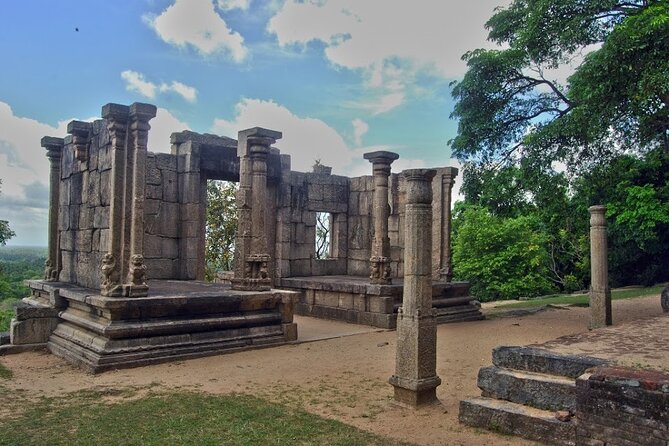
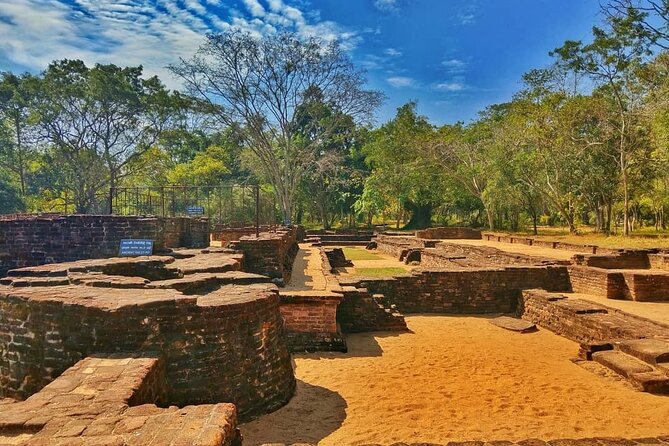
- Ruins of the royal palace complex, including elements like gardens, walls, and moats.
There’s an “aha” feeling here: palace and temple aren’t separate. They’re part of the same idea of governance and belief. You can walk through the shapes of that system, even though much of it is in ruins.
The only consideration is that this stop doesn’t last long—around 1 hour. If you like slow, detailed archaeology-style visits, you might wish you had more time. But for most people, it works as a strong primer before the bigger physical challenge at Yapahuwa.
Yapahuwa rock fortress: wide stairs, carved pillars, and summit ruins
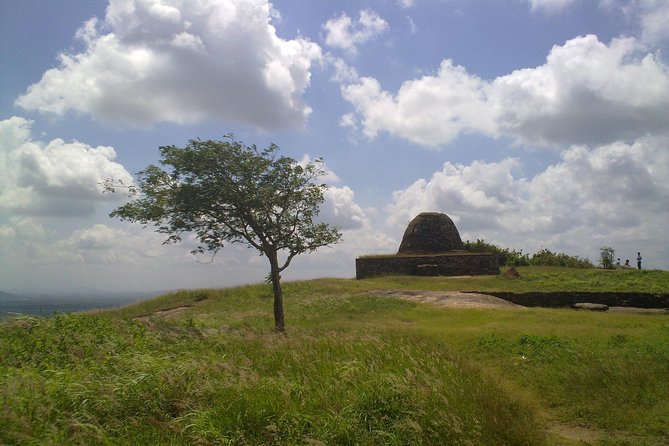
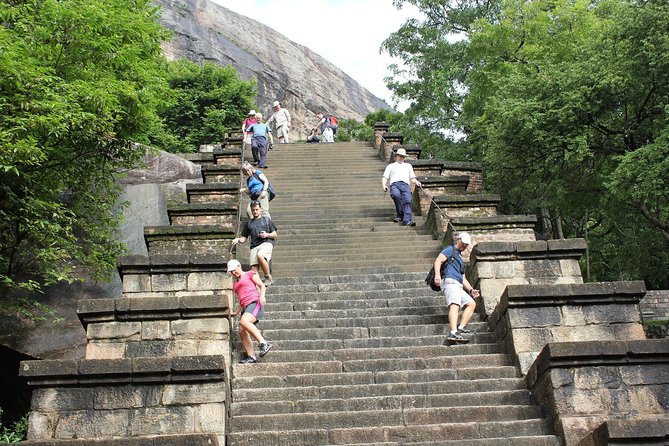
At 9:00 am you leave for Yapahuwa, arriving around 10:30 am. Yapahuwa is the standout on this itinerary because it combines views, walking, and a clear sense of defensive design. The fortress sits on a giant rock and was built in a style compared to Sigiriya—not because it looks identical, but because you’re getting that same “capital on rock” energy.
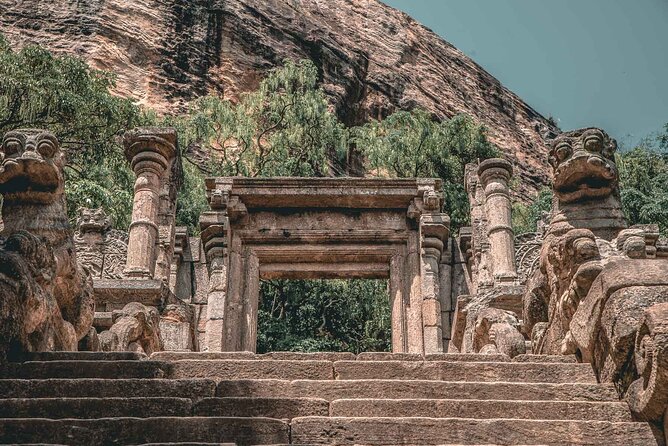
The architecture here is described as different from Sigiriya, and that difference matters when you’re actually there. Expect wide staircases, plus stone sculptures and highly detailed carvings on pillars. These details are the kind you can’t fully appreciate in a quick photo stop. You’ll want to slow down and look as you move.
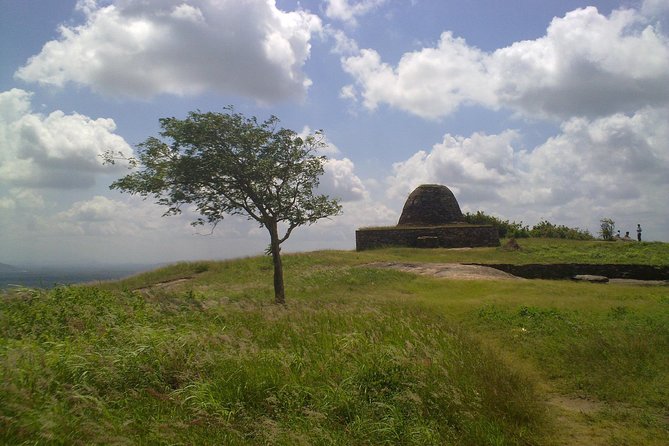
The site also has a second life as a Buddhist monastery. That shift shows up in the ruins: you’ll climb to the fortress and see the stupa ruins on the summit. The stupa area includes notable statues and imagery associated with the Kandyan era. So even though the fortress is medieval in spirit, what you’re looking at includes later layers of religious art.
You’ll have about 2 hours at Yapahuwa. For your planning, here’s the key practical thought: bring comfortable footwear and accept that this part is not just sightseeing from the shade. Some walking is up and down, and the climb to the summit is the reason the tour says to have moderate physical fitness.
If you’re traveling with knee issues or you hate steep stairs, this is the portion you should think about first. The rest of the day is relatively easier on your body by comparison.
Panduwasnuwara: ancient city ruins across 12 hectares (plus Panda Wewa)
After Yapahuwa, you’ll drive to Panduwasnuwara—a transfer of up to about 1.5 hours. Once you arrive, you get about 1 hour on the site. This stop is different from Dambadeniya and Yapahuwa because the ruins spread out over a broad area: almost 12 hectares.
That size changes your experience. You’re not just stepping into one tight complex; you’re moving through a wider historic footprint. If you’re the type who likes to understand a place by walking it, this stop will satisfy you.
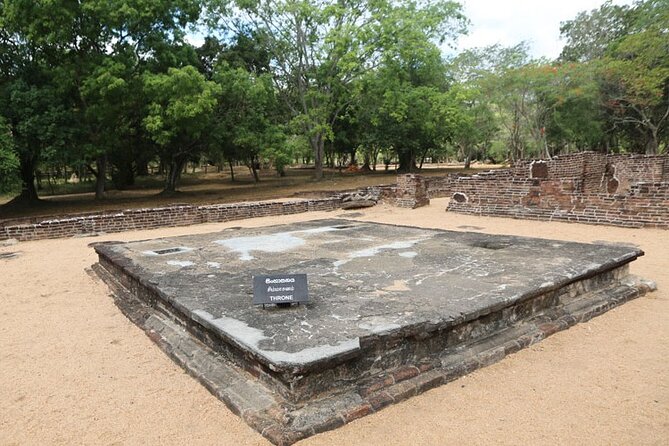
The context is also compelling. Panduwasnuwara is described as one of the earliest kingdoms, with a capital role during the 5th century BC. Later, in the 12th century, it saw renewed use, so you’ll see a mix of ruins from different periods rather than one clean layer.
Key sights include:
- A recently restored monument: a two-storied former Temple of the Tooth.
- Ruins of the royal palace.
- Panda Wewa, an artificial reservoir considered among the earliest irrigation systems made by humans.
That last part—Panda Wewa—is a reason to take your time even if you’re not a “water history” person. Irrigation engineering tells you how a kingdom fed itself and managed land. It’s a reminder that ancient capitals weren’t only about ceremonies; they ran on practical systems.
The tour also mentions a museum of Pandu at the site area, which likely helps you connect the ruins to a broader story. The one-hour timing is good for seeing the main ideas, but it means you’ll want to focus on the big features rather than trying to see every fragment.
A short final stop: Yapahuwa’s changing capital—and why it mattered
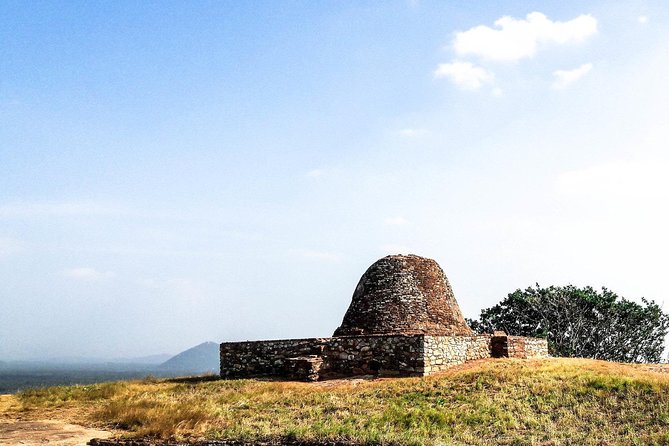
The last part includes another look at Yapahuwa as an ancient kingdom/citadel area, described as one of the ephemeral capitals of medieval Sri Lanka. This area is positioned roughly midway between Kurunagala and Anuradhapura, with a citadel built around a huge granite rock rising almost 100 meters above the lowlands.
This stop is brief—around 30 minutes—but it’s loaded with key historical turning points:
- In 1272, King Bhuvenakabahu transferred the capital from Polonnaruwa to Yapahuwa, facing Dravidian invasions from South India, and brought the Sacred Tooth Relic with him.
- After Bhuvenakabahu died in 1284, the Pandyans of South India invaded again and succeeded in capturing the Sacred Tooth Relic.
- After that, Yapahuwa was largely abandoned and became home mostly to Buddhist monks and religious ascetics.
Even if you only have half an hour, this framing changes how you interpret the earlier climb. You’re no longer just looking at a fortress; you’re looking at a political center that rose fast, shifted quickly, and then faded—power moved, beliefs moved with it, and the rock remained.
Because this is a short stop, it works best if you’ve already built context from Dambadeniya and Yapahuwa itself. If you arrive tired, you might miss the story. If you’re still fresh, it’ll land as the “why” behind the whole loop.
Price and logistics: where $85 really goes
The price is $85.00 per person, and it’s shown as commonly booked about 7 days in advance. That timing usually means you should plan ahead if your dates are fixed, especially if you want the best chance at availability.
Here’s what you get included:
- Hotel pickup and drop-off from Colombo hotels
- Transport in an air-conditioned vehicle
- An English-speaking chauffeur guide
- 1-liter water bottle per person
- Mobile ticket
- Group discounts (details depend on your group size)
What’s not included is where you’ll feel the difference:
- Food and drinks
- Entrance fees for sites
The itinerary indicates that Dambadeniya’s ticket is free, but Yapahuwa and Panduwasnuwara entrance tickets are not included (and the final Yapahuwa portion also notes not included). Translation: the tour is structured and comfortable, but you should budget for tickets and snacks.
So is $85 good value? For a long, inter-site day out of Colombo, I think it is—mainly because transport + pickup + an English-speaking guide + water are built in. Most travelers end up paying separately for rides and guide time if they do it independently. The main cost you still control is food and site admissions. If you’re a person who likes to visit properly and pay the tickets rather than rush past them, you’ll feel that value.
Quick planning tips that actually help:
- Bring a packed breakfast for the 6:00 am start.
- Wear closed shoes for stairs and uneven ground.
- Bring a hat and sunscreen; the itinerary doesn’t mention shade or long rest breaks.
- Expect to purchase food/drinks during the day and plan accordingly.
Who should book this Three Ancient Kingdoms tour
This tour fits best if you want history in motion. You’ll see multiple centers of power, and the Tooth Relic thread helps you connect the sites instead of treating each ruin as an isolated postcard.
It’s especially good for:
- People who like temples, kingdoms, and stone ruins, not just beach time.
- Travelers who enjoy a clear route and a guide who explains what you’re seeing as you go.
- Groups who can benefit from group discounts, while still keeping the experience private for your group.
It might be less ideal if:
- You strongly dislike early starts or long driving days.
- Climbing is a problem for you. Yapahuwa involves a fortress climb and stair walking.
- You’re hoping the price includes everything. Food and entrance fees are not included.
One more “fit” note: the itinerary is built around a story that changes across centuries. If you’re curious about how capitals move due to invasions and political shifts, this day will feel like a connected lecture you can walk through.
Should you book Three Ancient Kingdoms Tour from Colombo?
I’d book it if you want a single-day route that hits big themes—royal complexes, a fortress on a giant rock, and an ancient city shaped by irrigation—without making you coordinate transport yourself. The included pickup, air-conditioned vehicle, English-speaking guide, and water make the day feel controlled, and the Tooth Relic angle gives the ruins a unifying thread.
Skip it or reconsider if you’re short on stamina, hate stairs, or you prefer a slower pace with no climbing. Also be ready to pay for entrance tickets and handle meals yourself; that’s the one part you’ll feel in your wallet.
If your goal is to make the most of one day away from Colombo and you’re happy with an early start, this tour is a solid value choice.
FAQ
What time does the tour start?
The tour starts at 6:00 am.
How long is the Three Ancient Kingdoms tour?
It lasts about 10 hours (approx.).
Does the tour include hotel pickup and drop-off in Colombo?
Yes. Hotel pickup and drop-off from Colombo hotels is included.
Is an air-conditioned vehicle included?
Yes. You travel by an air-conditioned vehicle.
Is lunch or any food included?
No. Food and drinks are not included.
Are entrance fees included for the sites?
Entrance fees are not included. The first stop notes free admission, while the later stops list admission tickets as not included.
Is there water provided during the tour?
Yes. You get a 1-liter water bottle per person.
Is this a private tour?
Yes. It’s described as a private tour/activity, meaning only your group participates.
What happens if the weather is bad?
The experience requires good weather. If it’s canceled due to poor weather, you’ll be offered a different date or a full refund.
If you want, tell me your travel dates and who’s going (age range, walking comfort), and I’ll suggest whether the Yapahuwa climb is a good match for your group and how to budget for tickets and snacks.