REVIEW · MARRAKECH
The Jewish Heritage in Marrakech
Book on Viator →Operated by Az-eddine Ben jouhra · Bookable on Viator
Mellah walls still tell stories. This 3-hour Jewish Heritage in Marrakech tour connects the Mellah with real, visitable landmarks like the Slat Al Azama Synagogue and the cemetery that reflects community customs. I especially like the way the walk links architecture you can see today—balconies, tiled courtyards, and neighborhood walls—to the big movements of people that brought Jewish life to Morocco.
One potential drawback: punctuality can be a worry. In past bookings, guides have been reported late or not showing up, so I’d build in a little buffer time and stay alert at the meeting point.
In This Review
- Key things you’ll notice on this Jewish Heritage tour
- Marrakech’s Jewish Heritage: why this walk feels practical
- Mellah walk: walls, 1438 migration, and the neighborhood shape
- Slat Al Azama Synagogue: courtyard tiles, Hebrew writing, and the mezuzah
- Tinsmiths’ Square and the spice-and-souk edge of the Mellah
- Marrakesh Jewish cemetery: 16th-century layout and a custom you can read
- How long it really takes and how to pace your morning
- Price and value: what $82 buys you in Marrakech
- Guide quality matters here: Az-eddine’s track record and punctuality risk
- Should you book this Jewish Heritage tour?
- FAQ
- How long is the Jewish Heritage in Marrakech tour?
- Where does the tour start?
- What time does it start?
- Is the tour group limited in size?
- What’s included in the price?
- Do I pay for admission at every stop?
- Can I visit the Jewish cemetery on Saturday?
- Is it a mobile ticket?
- Does weather affect the tour?
Key things you’ll notice on this Jewish Heritage tour

- Mellah layout: high walls and a distinct neighborhood identity, shaped by separation policies.
- Spain to Morocco migration story: Jewish arrivals tied to 1492-era persecution and earlier waves dating to 1438.
- Synagogue details up close: hand-laid tilework, Hebrew letter décor, and a mezuzah on the doorway.
- Food-and-trade streets: the route brushes by Tinsmiths’ Square views and the spice trading atmosphere.
- A cemetery with sections by role: men, women, and children arranged by local Minhaggim tradition.
- Day-of-week matters: the cemetery is not visited on Saturday.
Marrakech’s Jewish Heritage: why this walk feels practical
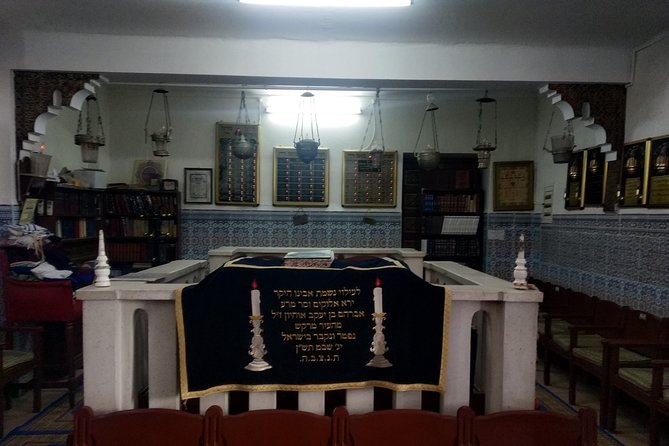
Marrakech isn’t just postcards. The city’s Jewish story shows up in street plans, building styles, and everyday trade routes. This tour is designed to make those connections in a compact 3 hours, so you’re not just collecting facts—you’re matching them to what you see outside.
I like that it’s not trying to cover every single page of Jewish history in Morocco. Instead, it focuses on a few physical anchors: the Mellah neighborhood, one synagogue, a cemetery, and the surrounding commercial streets where herbs, spices, and crafts kept the city running.
You also get a local-angle approach. The tour description emphasizes that the guide knows Marrakech well and will point out “hidden sites” and explain how the red city grew as a crossroads for caravans headed toward Europe.
You can also read our reviews of more tours and experiences in Marrakech.

Mellah walk: walls, 1438 migration, and the neighborhood shape
Your first stop is the Mellah, the old Jewish quarter concept. In Morocco, a Mellah generally meant a residential area associated with Jewish life, often surrounded by high walls. That wall-and-neighborhood design mattered. It shaped what people could access, where they felt safe, and how the city organized different communities.
The tour frames the Mellah’s story through multiple waves of migration. It highlights that Jewish communities were present for about 2,000 years in Morocco, and that new Mellahs were created across the country after periods of expulsion from Spain. One key date mentioned is 1438, tied to a large wave of Jewish immigration fleeing persecution linked to the Reconquista. You’ll also hear about the 1492 era as part of the same broader movement.
In Marrakech specifically, the Mellah is described as one of the largest in Morocco and something you can still feel in the urban layout today. There’s also a note about renewal, tied to King Mohamed VI’s interest in restoring or upgrading parts of the area. Practically, that means you’re walking through a neighborhood that has changed, not a frozen museum set.
What I love here is that the architecture isn’t just background noise. The description calls out buildings with balconies that can look Spanish or European in style. Standing there, you can compare old forms to what you see elsewhere in Marrakech and understand how migration can carry building tastes with it.
Slat Al Azama Synagogue: courtyard tiles, Hebrew writing, and the mezuzah
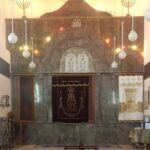
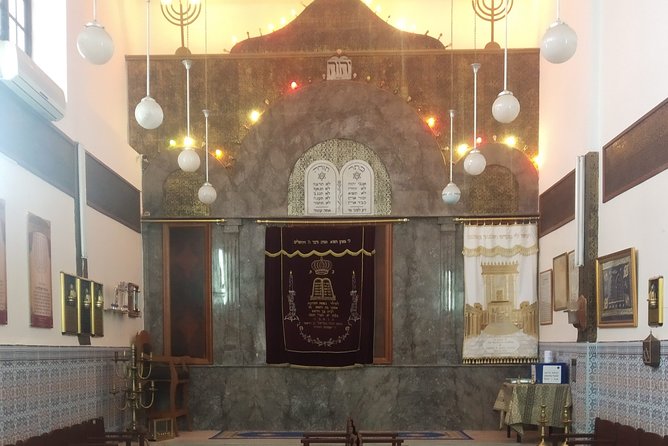
After the Mellah streets, you head to Slat Al Azama Synagogue. The experience here is more tactile than abstract. A well-tended courtyard surrounds the synagogue space, and the perimeter is lined with curtains that offer privacy for people who live or gather there.
Look closely at the walls and you’ll see hand-laid tiles with patterns concentrated especially between curtains. The tour notes that you’ll notice a Jewish atmosphere through color and design, with blues and whites showing up repeatedly. Hebrew letters along the upper parts of the walls reinforce that sense that you’re in a living religious space, not only a decorative one.
The most specific item to watch for is the mezuzah on the entrance doorway. The tour description explains what it is: a parchment inscribed with Torah verses, often placed in a decorative case and hung at Jewish home doorframes. It also mentions a wider tradition some people follow, wearing a charm around the neck for protection.
At this stop, I find the value is in learning what you’re actually looking at. Tilework can feel like “pretty walls” until someone points out what’s meant to be there. Here, you get enough detail to connect symbols to everyday practice.
Tinsmiths’ Square and the spice-and-souk edge of the Mellah
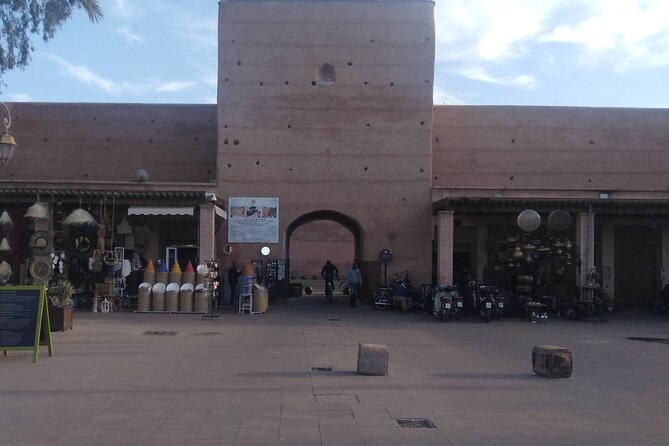
The route then shifts toward some major Marrakech sights that still tie back to the Mellah. One of the key waypoints is Tinsmiths’ Square, known as Place des Ferblantiers, which overlooks the Badi Palace area and connects visually to the spice-souk zone and the Mellah souk on the left.
Even if you’re not hunting bargains, the square’s position helps you understand Marrakech’s old city logic. The description says the square sits near an arch view toward the Badi Palace, with the entrance to the Spice Souk close by. It also notes an alley leading toward the Bahia Palace, so you’re in the middle of a web of historic power, craft, and trade.
You’ll pass by spice merchants and herbal tea sellers at the entrance of the great souk of the Mellah. The tour frames this with herbs, spices, and herbal tea as the practical trade that kept caravans and city life connected. It’s the kind of stop that works well even if you only spend a few minutes looking. Smell the air, notice how merchants group products, and then connect that to the broader story you heard earlier about Marrakech as a caravan crossroads.
There’s also mention of the Kissaria of jewellers and goldsmiths, described as Jewish creation taken over by the Muslim poRead text in the description you provided (the text cuts off there, so I’ll keep it general). The useful takeaway is this: you’re not only visiting religious sites. You’re seeing how crafts and commerce sat near the community’s home neighborhood.
Marrakesh Jewish cemetery: 16th-century layout and a custom you can read
The cemetery is a highlight because it’s so specific. The tour says it dates from the 16th century and is the largest Jewish cemetery in Morocco. That’s impressive on paper, but the real “why” is how it’s organized.
The tour notes the cemetery is divided into three distinct edges—men, women, and children. It also says it’s the only cemetery in Morocco with this kind of division, tied to a singular custom (Minhaggim) of the Jews of Marrakech. That matters because it turns burial grounds into a place where community practices are still visible.
Plan around the rule that the cemetery is not visited on Saturday. If your trip lands on a Saturday, that’s the one scheduling detail you should treat seriously, because it can change how much time you spend at this stop.
Also, keep expectations calm. A cemetery visit isn’t a shopping break or a photo booth. It’s a reflective stop where quiet manners make a difference.

How long it really takes and how to pace your morning
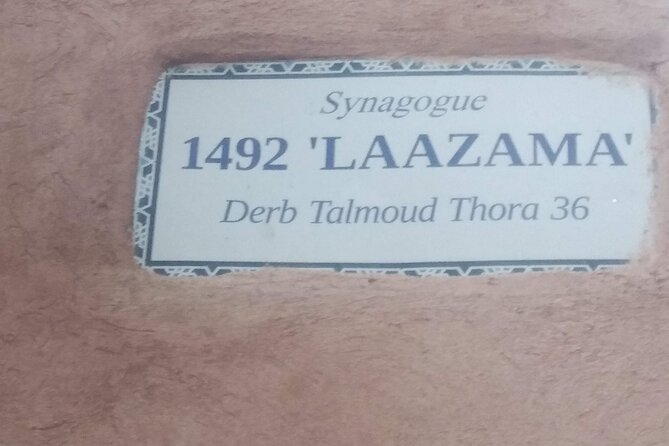
The tour is about 3 hours and is built around set stops: Mellah, Slat Al Azama Synagogue, the cemetery, plus the square/souk area that ties the religious sites to everyday streets. The Mellah segment is listed as around 1 hour 30 minutes, with the synagogue around 30 minutes and the cemetery around 30 minutes.
That timing is helpful for your planning. It means you can fit this into a morning without turning your whole day into “old city walking forever.” It also helps you decide what to pair it with after. You’ll still want time for lunch and slower wandering, since Marrakech’s medina calls for a second lap.
The group size is capped at 18 travelers, which usually keeps conversations possible and makes it easier to see details on walls and doorways. Near public transportation and starting at 9:00 am, it’s set up for a straightforward morning plan.
One more practical note: admission is mixed. The synagogue is included, while the Mellah and cemetery are listed as free admission in the stop details. That structure can make the total cost feel easier to swallow, since part of what you pay for is guiding and context rather than entrance fees.
Price and value: what $82 buys you in Marrakech
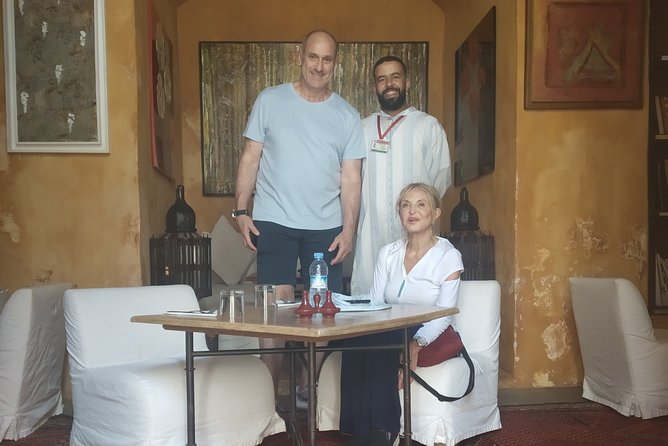
At $82 per person for roughly 3 hours, the value comes from three things: guide time, the specific site access you get at the synagogue, and the way the route links neighborhood history to architecture you can still see.
Bottled water is included, and you’ll use a mobile ticket. Those are small comforts, but they help on a medina morning when you might otherwise forget the basics and end up paying a lot for water later.
If you’re the type of traveler who likes to understand what a door symbol means, how a mezuzah is used, and why a cemetery has sections, this price can feel fair. If you want only big scenic views, you might find yourself wishing for more “wow” moments. But the tour is built around meaning, not speed-chasing.
The group cap at 18 also helps value. Smaller groups often allow you to ask questions instead of hearing a canned script and rushing to the next stop.
Guide quality matters here: Az-eddine’s track record and punctuality risk
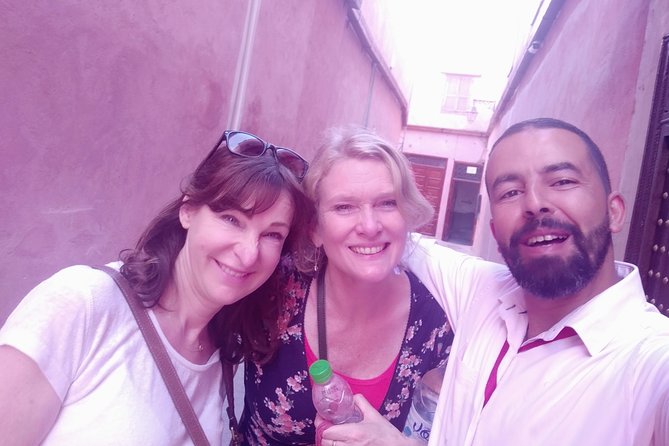
This is where I’ll be straight with you. The experience depends a lot on the guide’s delivery and whether the timing holds.
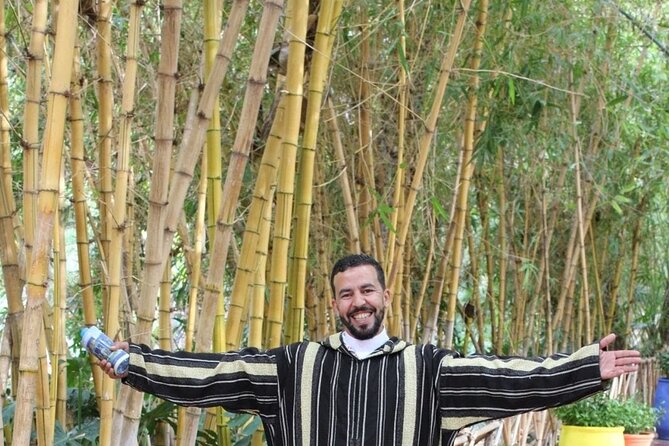
The provided operator name is Az-eddine Ben jouhra. One positive booking notes that Az-Eddine was experienced and friendly, and that the hours were enriching and well spent. That’s exactly what you want from a tour like this: clear explanations that connect symbols (like the mezuzah) to real community life.
At the same time, there are also reports of punctuality issues, including a guide being late and others not turning up. Those aren’t small details when you’re on a tight Marrakech schedule.
So here’s my advice: plan to be at Café Koutoubia early, not right at start time. Keep your phone charged and ready in case you need to contact the operator. And if you’re the type who hates uncertainty, keep your day flexible.
Should you book this Jewish Heritage tour?
I’d book it if you want a structured, respectful walk that connects the Mellah, a functioning synagogue visit, and a cemetery organized by community custom. It’s also a good fit if you like learning from details: tiles, Hebrew letters, and a mezuzah you can spot on a doorway.
Skip it—or at least go in with extra caution—if you need guaranteed punctuality and hate last-minute changes. The tour’s timing and guide consistency have shown mixed results in past bookings, and that can make a difference in how smooth your morning feels.
If you do book, go with curiosity and a calm pace. This isn’t only a sightseeing circuit. You’re reading a city through places where Jewish life left marks you can still trace today.
FAQ
How long is the Jewish Heritage in Marrakech tour?
It’s about 3 hours (approx.).
Where does the tour start?
It starts at Café Koutoubia (J2G4+2WQ, Marrakesh 40000) and ends back at the meeting point.
What time does it start?
The start time is 9:00 am.
Is the tour group limited in size?
Yes. The maximum group size is 18 travelers.
What’s included in the price?
Bottled water is included, and the Slat Al Azama Synagogue stop includes admission.
Do I pay for admission at every stop?
No. The Mellah and the Marrakesh Jewish Cemetery are listed as free admission, while the synagogue admission is included.
Can I visit the Jewish cemetery on Saturday?
No. The cemetery stop is not visited on Saturday.
Is it a mobile ticket?
Yes, the tour uses a mobile ticket.
Does weather affect the tour?
Yes. It requires good weather, and if canceled due to poor weather you’ll be offered a different date or a full refund.