REVIEW · ROME
Colosseum & Ancient Rome Guided Walking Tour
Book on Viator →Operated by Rome Walkers · Bookable on Viator
Three ancient stops, one well-paced plan. You’ll see the Colosseum, Palatine Hill, and the Roman Forum in one go, with a guide who helps the sites make sense fast, plus headsets to keep you hearing clearly in the crowd. I also like that admission tickets and reservation fees are bundled into the price. One thing to consider: expect lots of walking, cobblestones, and some stairs and inclines.
This is a smart choice when you only have part of a day and you want more than photos. The small-group cap (up to 25) makes it easier to stay together, and the guide can explain what you’re looking at while you’re looking at it. If you’re hoping for an ultra-slow stroll with minimal movement, this route may feel like a lot.
In This Review
- Key things to know before you go
- A tight route through Rome’s biggest power centers
- Where you meet (and where you’ll end)
- Entering the Colosseum: an arena built for spectacle
- The floor and the moments that matter
- Palatine Hill: Rome’s start, then Rome’s throne
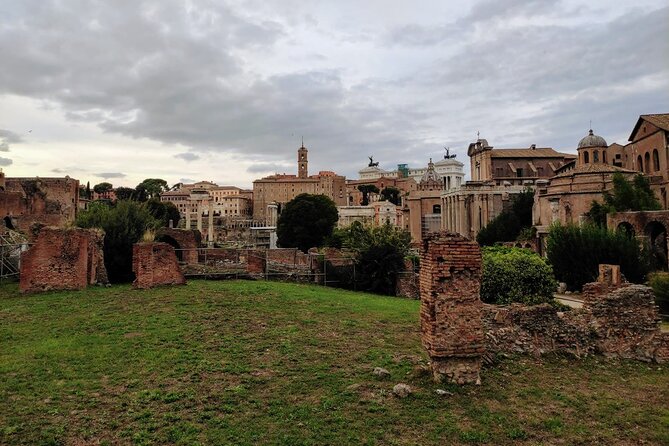
- Roman Forum: the outdoor newsroom of ancient Rome
- Price and value: what you’re paying for (and what you’re not)
- Small-group feel: the difference between hearing and guessing
- Pace and comfort: cobblestones, steps, and summer heat
- Guide style: humor helps, pictures help, accents can matter
- Who this tour is best for
- Should you book this Colosseum and Ancient Rome guided walking tour?
- FAQ
- How long is the Colosseum & Ancient Rome guided walking tour?
- What attractions are included in the tour?
- Is the tour offered in English?
- What does the price include?
- Where do I meet, and where does the tour end?
- How big is the group?
- Do I need to bring a passport or ID?
- Are food and drinks included?
- What should I wear or bring?
- Is there a cancellation window for a refund?
Key things to know before you go
- Timed entry at the Colosseum helps you avoid wasting time in the busiest parts of the day
- Headsets included so you can hear the guide over traffic, crowds, and echo
- Three classic sites in under 3 hours gives you serious value for a short Rome visit
- Small group size (max 25) makes crowd control and questions feel more manageable
- Admission tickets and fees are included so you’re not scrambling for entry later
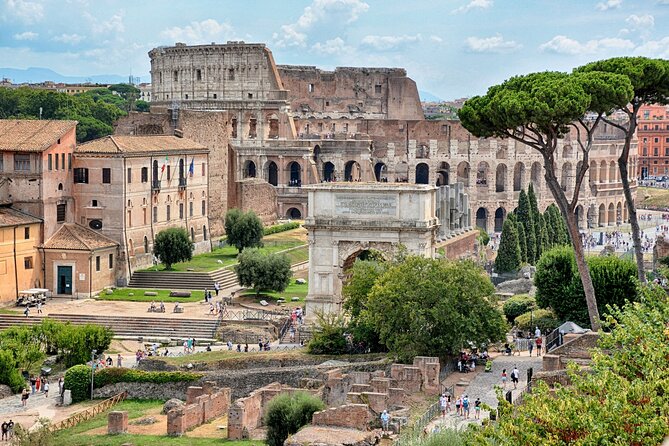
- Colosseum + Palatine + Forum is a logical history arc, not three disconnected stops
A tight route through Rome’s biggest power centers
This tour connects three of the most famous ancient sites in Rome, and it does it in a way that feels practical. You’re not just moving from landmark to landmark—you’re walking through the same story line the Romans lived: public spectacle, imperial power, and political life.
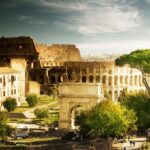
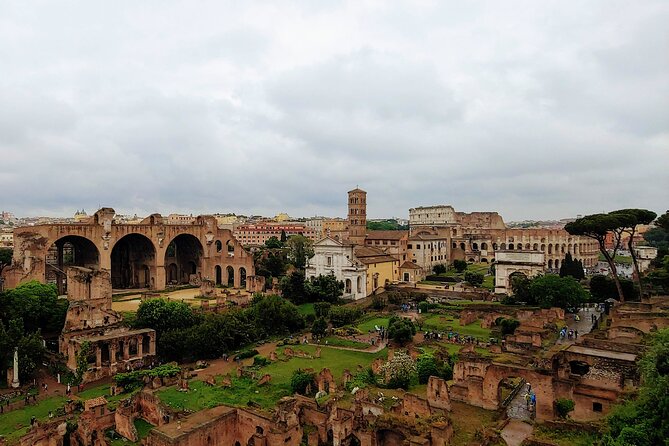
The Colosseum is your starting point: the empire’s entertainment machine, built for spectacle on an enormous scale. Palatine Hill follows, where you see why Rome chose its early location and later concentrated elite power. Then you finish at the Roman Forum, the outdoor hub where decisions happened, business was conducted, and justice was administered.
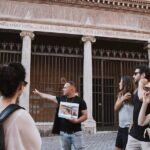
You’ll get an English-speaking live guide throughout, and the tour is designed to keep the group moving. One of the reasons this format works so well is the headset. Rome can be loud, and the Colosseum area in particular turns into a sound mix of tour groups, street noise, and footsteps. Having audio support means you’re more likely to catch the details you’re paying for.
You can also read our reviews of more tours and experiences in Rome.
Where you meet (and where you’ll end)
The meeting point is L.go Gaetana Agnesi, 5, 00184 Roma RM, Italy, and the tour ends in the Roman Forum area (00186 Rome). It’s near public transportation, which is helpful because this part of Rome is busy and parking can be a headache.
The tour runs about 2 hours 45 minutes. That time block matters: it’s long enough to cover three major sites with guided context, but short enough that you’re not spending your whole day in lines and walking loops.
Plan to arrive a little early. One of the few strict-sounding notes you should take seriously is that Colosseum and Forum entry depends on names matching your booking, and entry times for guided tickets can be unforgiving. So treat this meeting time as real, not optional.
Entering the Colosseum: an arena built for spectacle
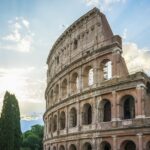
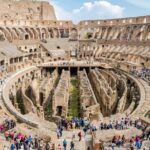
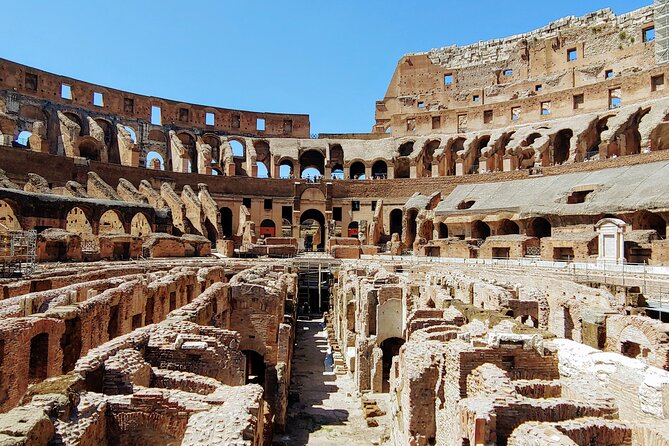
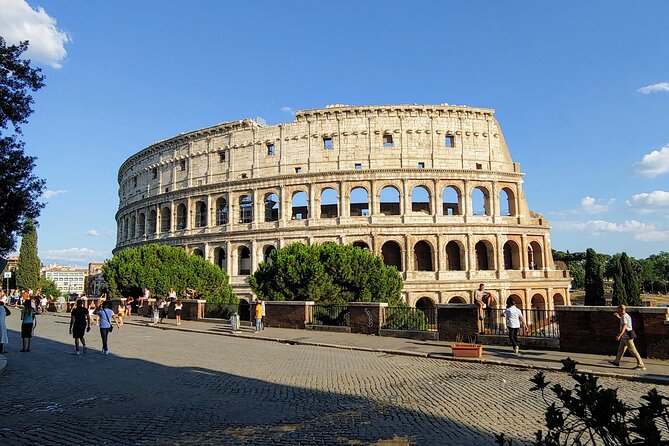
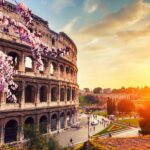
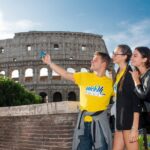
You start at the Colosseum, also known as the Flavian Amphitheatre. Your guide frames it as the greatest entertainment venue of its era, and then you get the scale behind the drama.
Here are the core facts you’ll hear as you stand inside and around the arena area:
- It was commissioned by Emperor Vespasian, built between 72 and 80 AD.
- Construction used enormous quantities of materials, including travertine, marble, and cement—over 1 million tons.
- The empire had roughly 200 entertainment venues like this across Roman territory.
- Games were paid for by the Emperor, reflecting Roman power through generosity and public spectacle.
- Over nearly five centuries, gladiators, animals, and convicts fought there.
- The inauguration games held under Titus in 80 AD lasted 100 days.
What I love about a guided approach here is that the Colosseum isn’t just one big ruin. It’s a machine: entrances, levels, and crowd spaces all existed for a reason. A good guide points out what the building likely did for the show—how people flowed, how events were staged, and why the architecture mattered to the political message.
From the guide style you might encounter, it can also become a story you can visualize. Some guides are praised for using picture books during the explanation, which is a smart move at the Colosseum because your brain needs help mapping where the action happened.
The floor and the moments that matter
One review noted that access to the Colosseum floor was a standout moment, handled well by the guide. The key takeaway for you: ask the guide early what areas you’ll be able to see during your specific slot. Colosseum access can vary by ticket type and daily operations, so your best strategy is to confirm what’s included for your departure.
Even if you don’t get extra access beyond standard viewing, this stop still delivers because your guide is there to connect what you see to what you’re imagining—rather than leaving you with a pile of questions.
Palatine Hill: Rome’s start, then Rome’s throne
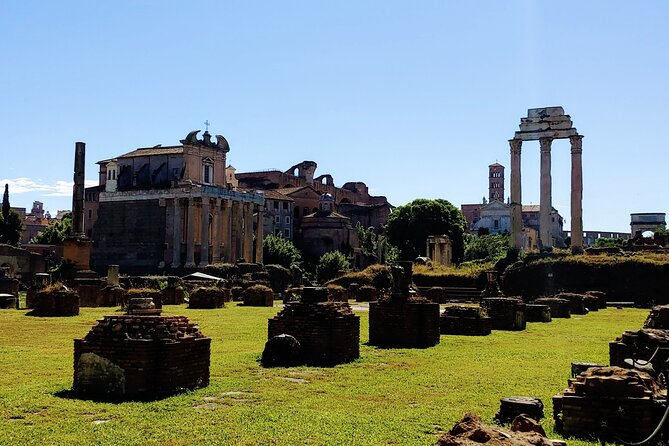
Next is Palatine Hill. This is the part of the tour where the story stretches backward, and it gets more interesting because it connects legend, geography, and the rise of imperial residence.
You’ll hear how Rome is said to have been first established here in 753 BC by Romulus, the legendary first king. Archaeology found traces of Bronze Age settlements, which supports the foundation date people often repeat. Today, you can see remains of imperial palaces—proof that Palatine didn’t just stay important; it became a prime address for emperors and notable figures.
The guide will also explain why Palatine was chosen among the seven hills. Early civilizations often preferred higher ground near rivers for early settlement. That choice gave two major advantages:
- strategic safety if military attacks came
- practical defense against floods from nearby water streams
Standing in the area, you start to understand why this hill became power geography. It’s not only about views—it’s about control, protection, and central status. A guided stop helps because Palatine can feel like scattered ruins if you’re trying to interpret everything on your own. With a guide, the same stones turn into a timeline.
Roman Forum: the outdoor newsroom of ancient Rome
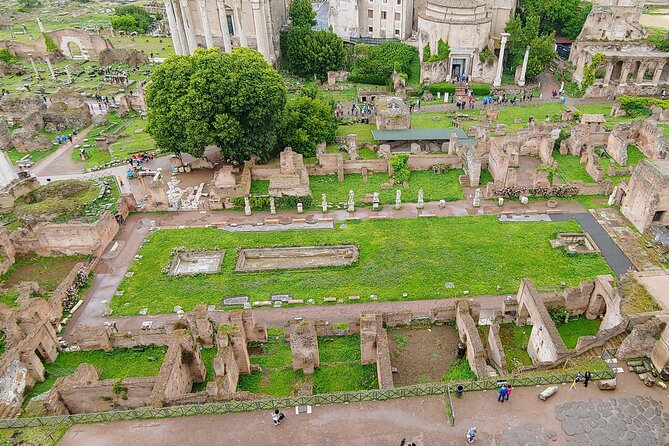
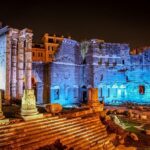
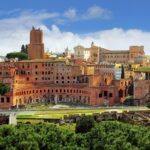
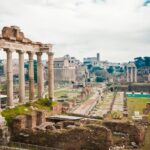
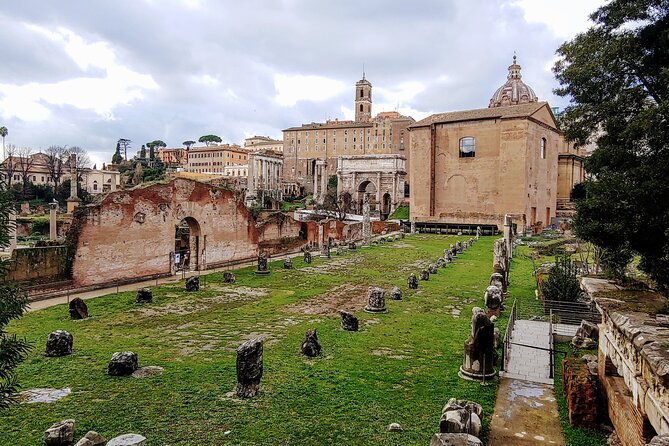
The last stop is the Roman Forum, described as the very center of Rome. Your guide treats it as more than an open plaza of ancient leftovers. It’s the place where politics, business, and justice shaped daily life.
You’ll get the big picture:
- It was an outdoor space where people gathered to discuss political and civil life.
- The area included temples, basilicas, and power palaces.
- It was where Rome’s politics were shaped, business was made, and justice administered.
- You’ll find major buildings tied to governance, including the house of the Senate and important religious and civic structures.
The value here is interpretation. If you go in cold, it’s easy to feel like you’re looking at ruins with no connective tissue. With a guide, you connect the dots: the Forum wasn’t built for recreation. It was built for decisions, and the Romans used it like an outdoor command center.
This is also where the tour’s pacing matters. Because the whole experience is timed, your guide should give you the most meaningful stops for orientation quickly. Some people want a longer Forum visit, but for a 2-hour-45-minute package, the Forum stop gives you the essentials and helps you know what you’d want to explore further afterward.
Price and value: what you’re paying for (and what you’re not)
The price is $65.33 per person. What makes it feel reasonable is what’s included: Colosseum, Palatine Hill & Roman Forum tickets and fees, plus a live guide and headsets.
The Colosseum ticket portion is listed as valued at €18, and the Colosseum reservation fee is valued at €2. That’s a clear signal that you’re not paying just for walking and talking. You’re paying for entry access and timed logistics that would take time to manage on your own—plus the guide and headset system that helps you actually use the time inside the sites.
Food and drinks are not included, so you’ll likely want to plan a snack or hydration plan around the tour. If you’re thinking of pairing this with lunch after, do it on purpose rather than letting hunger decide your pace.
Small-group feel: the difference between hearing and guessing
The tour has a maximum of 25 travelers. That limit changes the vibe. You get enough people to feel lively, but not so many that you’re swallowed by the crowd.
It also helps with crowd control. One of the big practical problems at the Colosseum is that the building area is chaotic even when everything runs on schedule. A guide’s job is to keep the group together, get you moving at the right pace, and steer you toward good viewpoints.
This is where headsets become more than a nice-to-have. When you’re packed near other tour groups, it’s hard to pick up details unless you can hear the guide clearly. The headset inclusion makes the whole experience feel more coherent.
Pace and comfort: cobblestones, steps, and summer heat
This is a walking tour with real surfaces. Reviews mention cobbled pavements, lots of walking, stairs, and inclines. That matters because the difference between 1 hour and 3 hours of walking in Rome is huge.
If you’re booking for yourself, I’d treat this as a “good walking shoes” day. Bring water, and be ready for sun exposure—one departure was described as very hot, with the guide working to keep people in shaded spots during stops.
Your best comfort strategy:
- wear shoes you trust on uneven stone
- bring water (you’ll appreciate it even if you’re not a heavy sweater)
- use a hat or sun protection if you travel in warmer months
The good news is that the tour isn’t described as rushed. Multiple guide styles were praised for managing pacing, including photo/rest moments that keep people from feeling stuck or overheated.
Guide style: humor helps, pictures help, accents can matter
Guides are a major part of the experience, and you’ll notice the difference. Past departures have been led by people like Kiara, Lumi, Juliya, Adnan, Alessandra, Giuseppe, Max, Sam, David Battaglino, Raul, and Radu. While you won’t necessarily get the same guide, you can pick up what makes the best tours work here.
Common strengths in the guidance style include:
- clear storytelling, often with humor
- explanations that help you visualize what happened in the arena or on the hill
- smart positioning for photos, including moments for everyone
One caution: with any live guide tour in English, you may find some accents harder to follow on certain days. If that happens, don’t just give up. Ask the guide to speak slightly louder or reposition so you can hear. It’s easier to fix in the moment than to lose the whole narrative.
Who this tour is best for
This guided walk is a great fit if you:
- want the “big three” ancient Rome sites in one morning/afternoon
- like history told as a story with context, not just dates
- enjoy small-group tours where you can ask questions
- don’t want to spend your precious limited time figuring out route logic and ticket access
It’s also a strong choice for first-timers. The Colosseum starts the power-spectacle story. Palatine Hill shows imperial residence and Rome’s geographic logic. The Roman Forum ties it together with politics and justice.
If you prefer freedom to wander at your own speed for long periods, you might feel the time pressure. And if walking surfaces and stairs are a problem, this route may not be your easiest day in Rome.
Should you book this Colosseum and Ancient Rome guided walking tour?
Yes, if you want a guided, time-efficient way to hit the Colosseum + Palatine Hill + Roman Forum with tickets handled and headsets included. At $65.33, you’re paying for three major entry components plus a guide who can connect what you see to what it meant in Roman life. The overall rating is very high (4.8) and the recommendation rate is strong (93%), which matches what matters here: you’re buying clarity and momentum, not just access.
I’d say book it especially if you’re visiting for the first time and you want your time to count. Before you go, do two simple things: wear comfortable shoes, and plan water for the walking-heavy parts.
FAQ
How long is the Colosseum & Ancient Rome guided walking tour?
It’s approximately 2 hours 45 minutes.
What attractions are included in the tour?
You’ll visit the Colosseum, Palatine Hill, and the Roman Forum.
Is the tour offered in English?
Yes, it is offered in English.
What does the price include?
The price includes Colosseum, Palatine Hill, and Roman Forum tickets and fees, plus a live guide and headsets. The Colosseum entrance ticket and Colosseum reservation fee are also included.
Where do I meet, and where does the tour end?
The start is L.go Gaetana Agnesi, 5, 00184 Roma RM, Italy. The tour ends in the Roman Forum area (00186 Rome).
How big is the group?
This tour has a maximum of 25 travelers.
Do I need to bring a passport or ID?
Yes. Each traveler must present a valid passport or ID document that matches the name provided at booking for entry to the Colosseum and Roman Forum.
Are food and drinks included?
No. Food and drinks are not included.
What should I wear or bring?
Plan for lots of walking, including cobbled pavements and steps/inclines. Bring water and wear comfortable shoes.
Is there a cancellation window for a refund?
You can cancel up to 7 days in advance of the experience for a full refund.